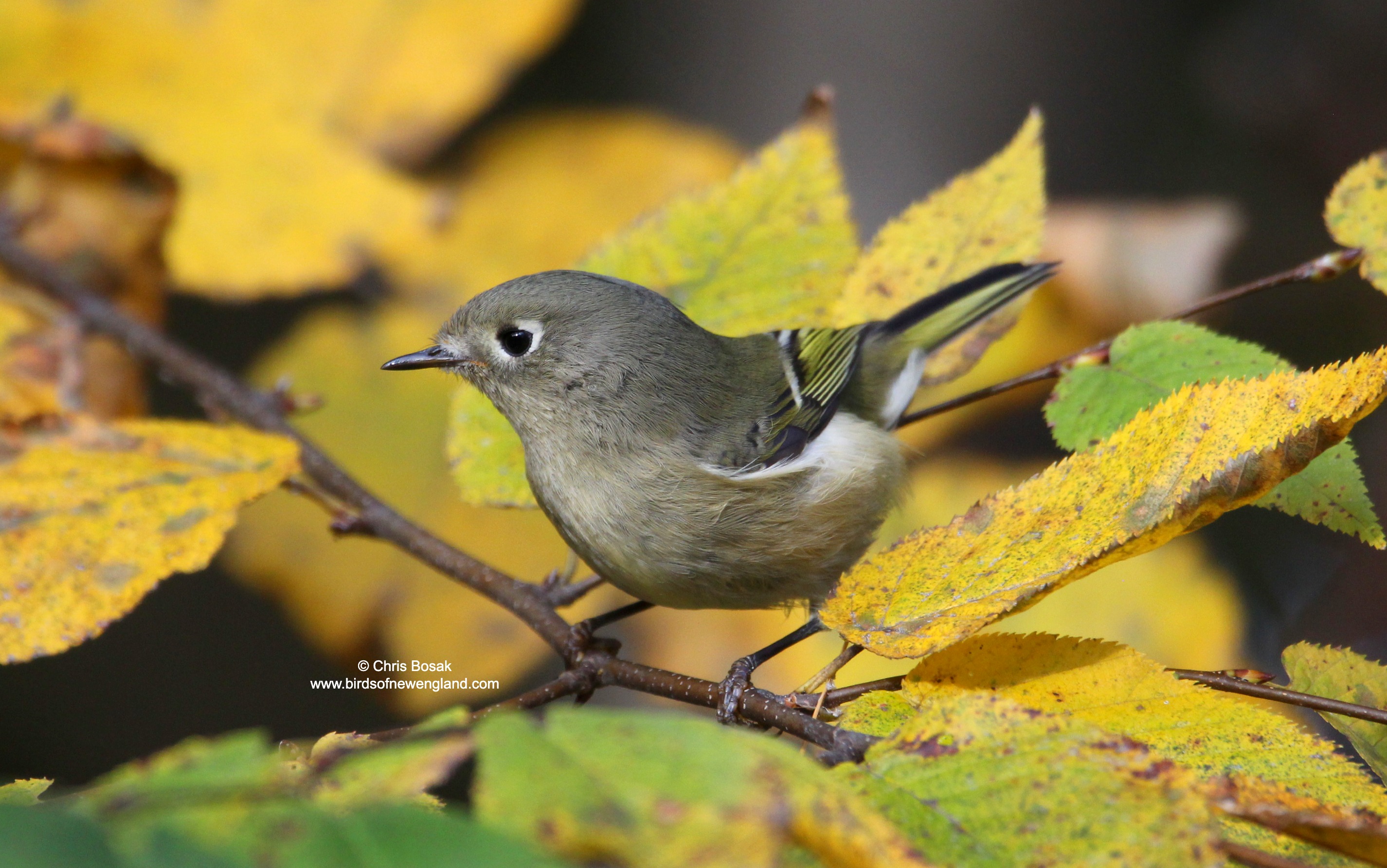
I finally got a ruby-crowned kinglet to sit still for half a second. Today’s walk was filled with white-throated sparrows and ruby-crowned kinglets.
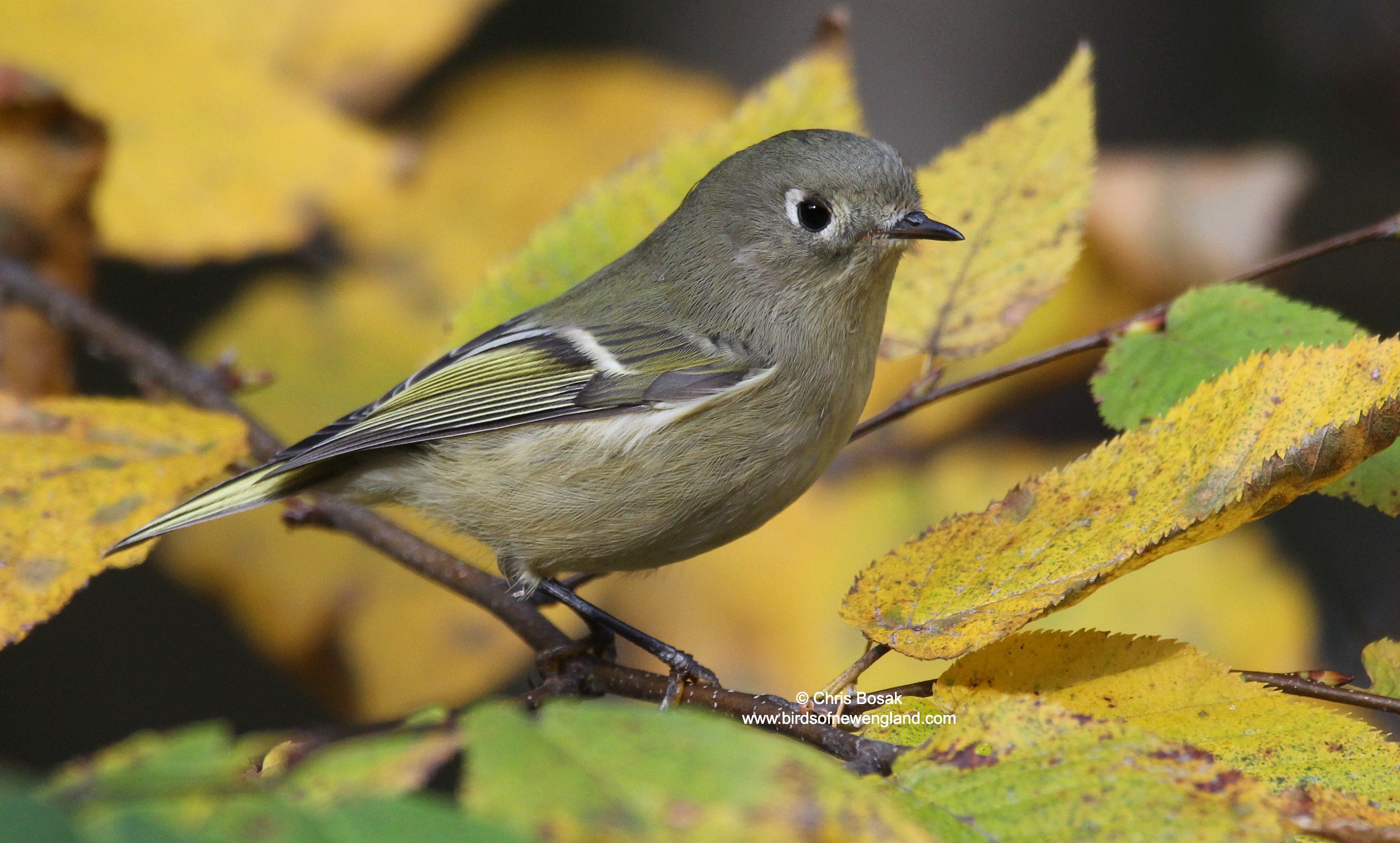
I finally got a ruby-crowned kinglet to sit still for half a second. Today’s walk was filled with white-throated sparrows and ruby-crowned kinglets.
I pulled into the lot at the park, and a small flock of dark-eyed juncos scurried into the tall grass as my wheels came to a stop. The white border on the tail makes for an easy identification of juncos, even from behind.
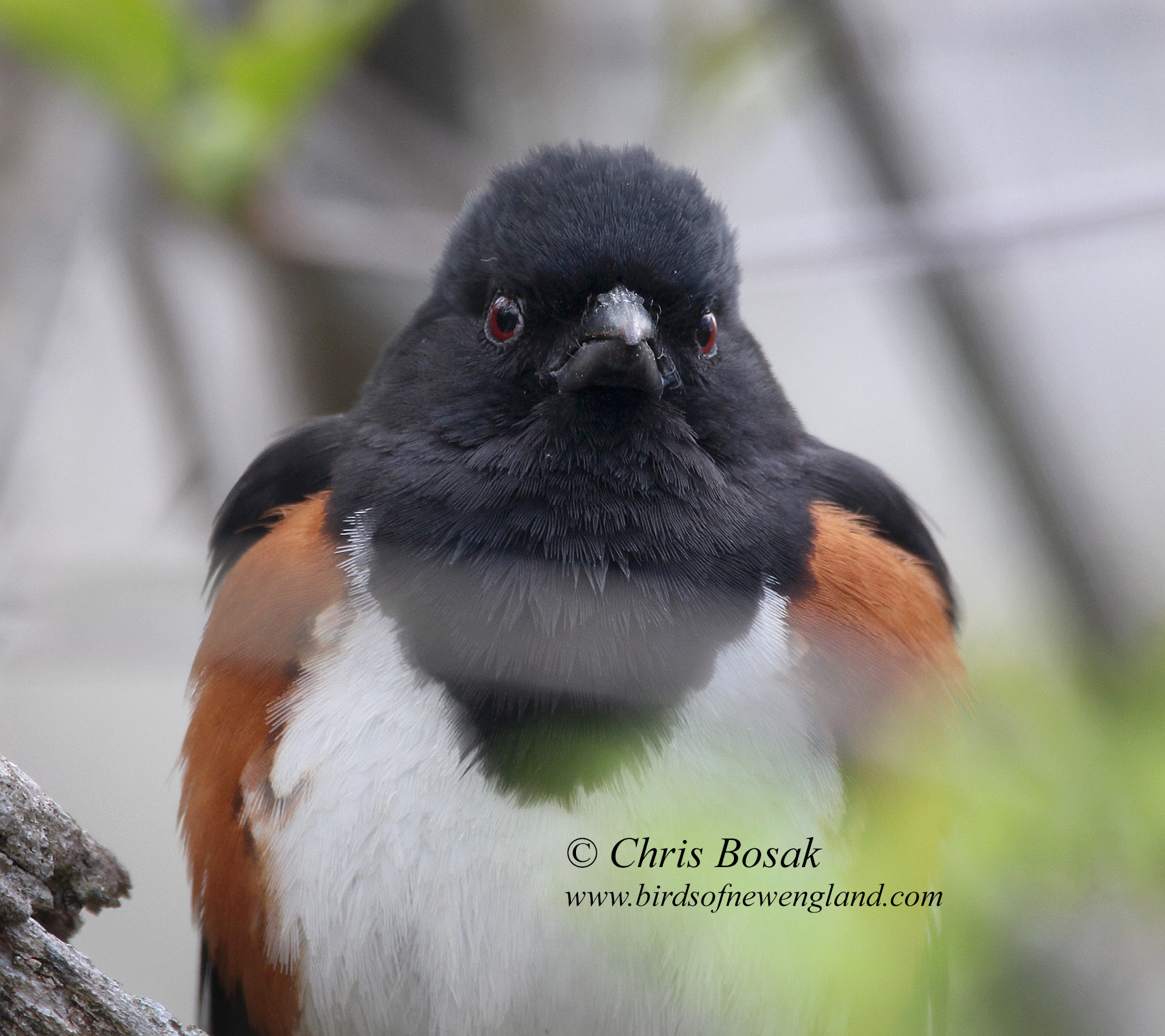
Ten minutes later, as I walked along a trail with brush on either side of me, I heard the unmistakable call of the eastern towhee: “tow-hee,” with the second part rising in pitch. I spotted the beauty a few moments later.
There is a fairly short window in New England to see both of these birds on the same day. Towhees, the vast majority of them anyway, fly south before the juncos arrive from their northern breeding grounds. Juncos do breed throughout New England, but they are much more visible and numerous when the weather gets colder. Towhees are early arrivals in the spring and late departures in the fall, offering windows to see them and juncos on the same bird walk.
Eastern towhees and dark-eyed juncos look nothing alike. They aren’t even the same size, as the towhee is larger and much bulkier. Yet they are from the same family. Even more interesting is that neither one of them looks like other members of their family.
What comes to mind when you hear the word “sparrow”? Many people likely think of a house sparrow. Even though they are not native to the U.S., they are the dominant member of the sparrow family, in terms of numbers anyway. House sparrows look like sparrows. They are mostly brownish and rather plain-looking, at least from a superficial glance.
Continue reading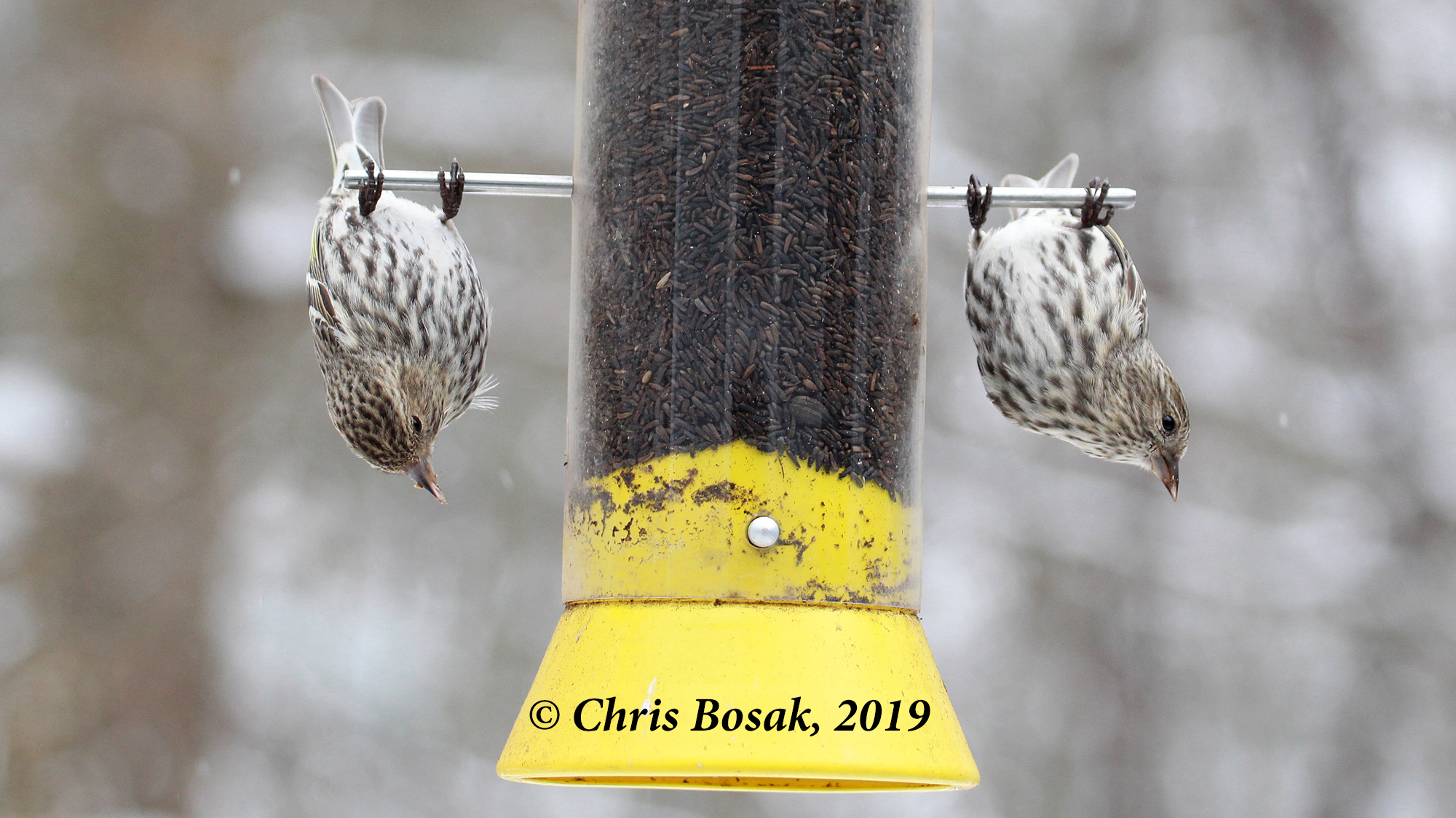
My favorite part of winter birdwatching has always been looking for waterfowl on whatever open water remains. Searching for bald eagles in those same areas has become another favorite of mine as the population of our national bird soars, and we see them more frequently.
Winter is also arguably the best time to watch feeders in the yard, although one can easily make a case for spring being the best time when the grosbeaks, buntings and other surprises arrive. Watching the feeders in winter, particularly before a storm, is a constant treat of chickadees, titmice, nuthatches, woodpeckers, cardinals, blue jays, juncos and white-throated sparrows.
In my opinion, an underrated part of winter birding is the finch irruption, or lack thereof, depending on the year. Birds such as siskins, redpolls, purple finches, crossbills, pine grosbeaks and evening grosbeaks sometimes irrupt into our region as food supply dictates. Other birds such as red-breasted nuthatches are also lumped into the category of unpredictable winter bird visitors.
Continue reading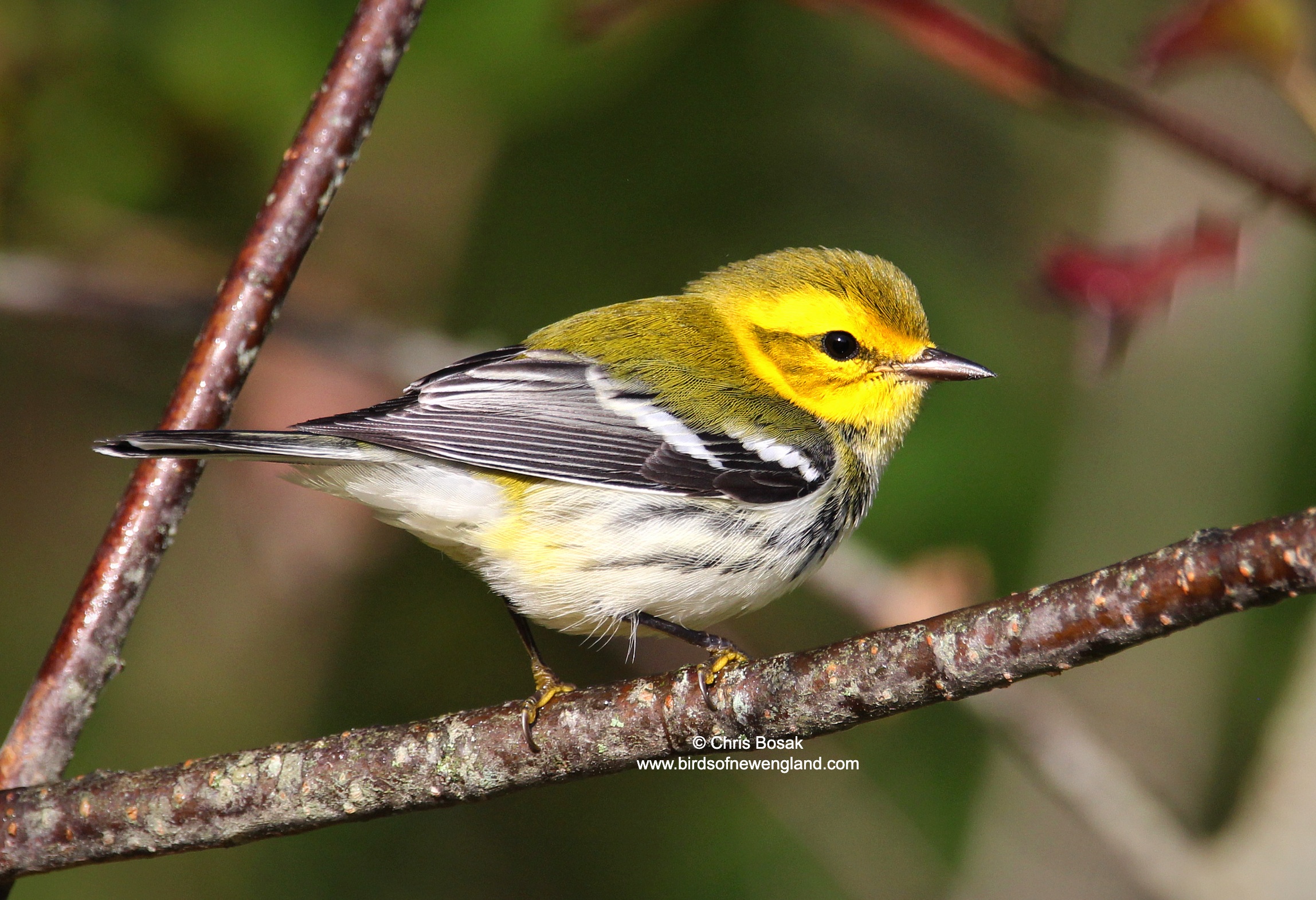
Fall is a great time to watch birds, but it’s much different than watching birds in the spring. It’s quieter, sometimes harder to find the birds and many of the birds don’t look the same.
It’s quieter because most of the birds are not singing. In the spring, birds are singing constantly as the urgency of securing a territory, finding a mate and breeding is foremost on their minds. The songs of perhaps dozens of birds overlap and it can be difficult to isolate the songs of a single species.
That urgency has long passed by the time fall comes around, and foremost on their minds is getting to their winter grounds safely. That doesn’t mean they are silent, however. Fall is when you hear more calls than songs as the birds issue warnings to other birds and try to remain in contact more quietly.
Continue reading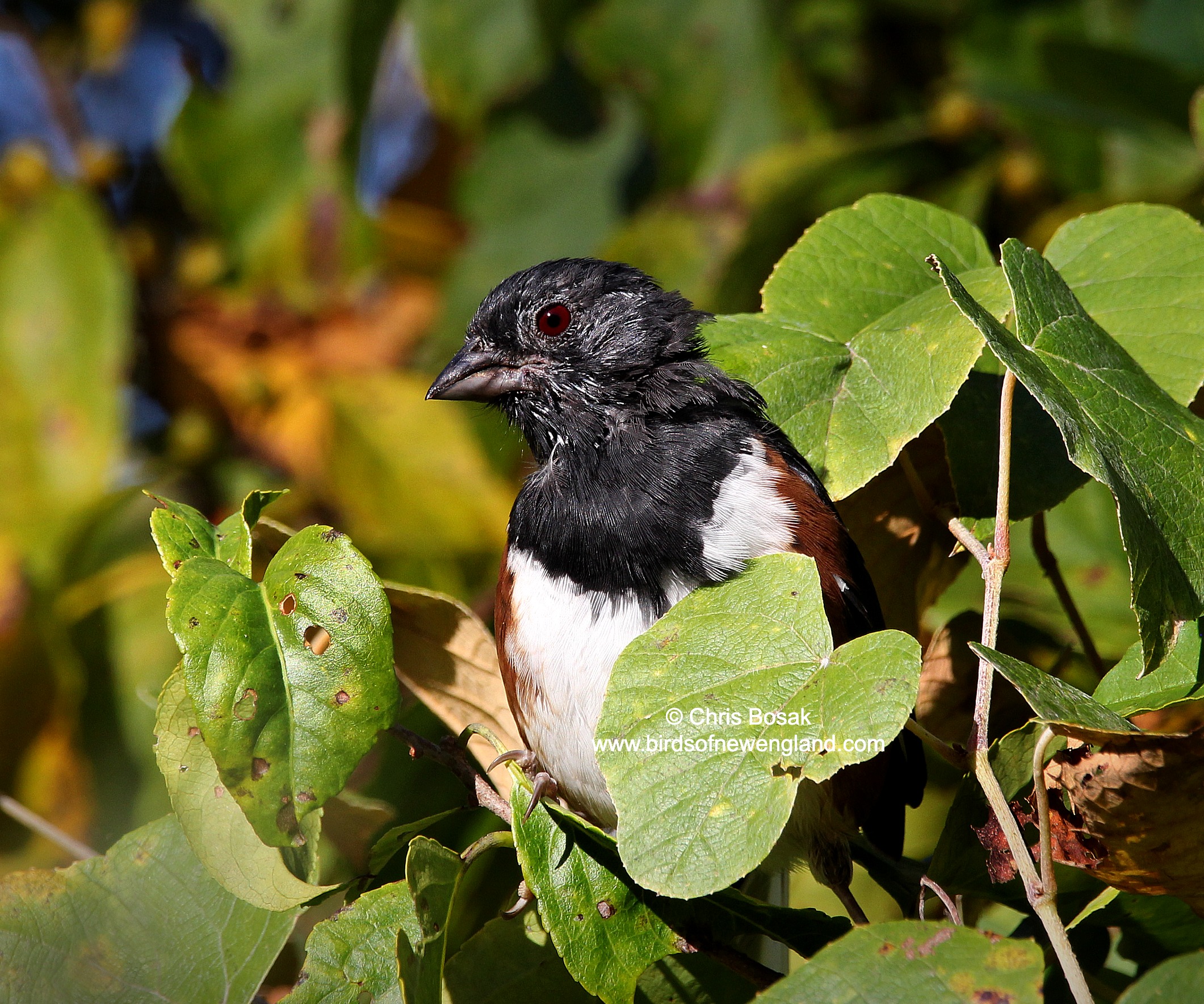
Fall bird walks can seem like a series of goodbyes to old friends.
I thought of this when I saw an eastern towhee receive an “infrequent” designation on eBird the other day. Ebird, a massive bird database, often flags birds when they are out of their territory or uncommon in an area.
I was a little surprised by the infrequent flag, as I see eastern towhees in that park quite frequently. Of course, it wasn’t because the bird is uncommon in the park, but rather it is getting late in the season for towhees.
Continue reading
A recent camping trip with my son to Pillsbury State Park yielded a slew of quality wildlife sightings.
It started right away as I made my first entry to our remote camping site on the edge of North Pond, one of the smaller ponds at the park. A greater yellowlegs, a relatively large shorebird often seen at freshwater ponds and lakes during migration, worked the shallow water around the rocks looking for morsels.
Three half-mile walks to the car and back later, I headed out for my first canoe ride. It proved to be a bit of a challenge to launch, as the extremely dry weather in New Hampshire had the pond as low as it’s been in years, according to the park ranger.
Continue reading
Other than a few sightings while on walks at local parks, I hadn’t seen a single hummingbird all spring and most of the summer.
It wasn’t for lack of trying. I put out the same feeders and filled them with the same liquid I always do: four parts water, one part sugar. They never came. Not in April or May. Not in June or July.
August was headed toward a shutout as well until one day late in the month, it all changed. And it changed in a big way. Not only did a few hummingbirds show up, but they were around constantly. They visited the feeder one at a time, of course, because god forbid they’d actually share a feeder with four ports.
Continue reading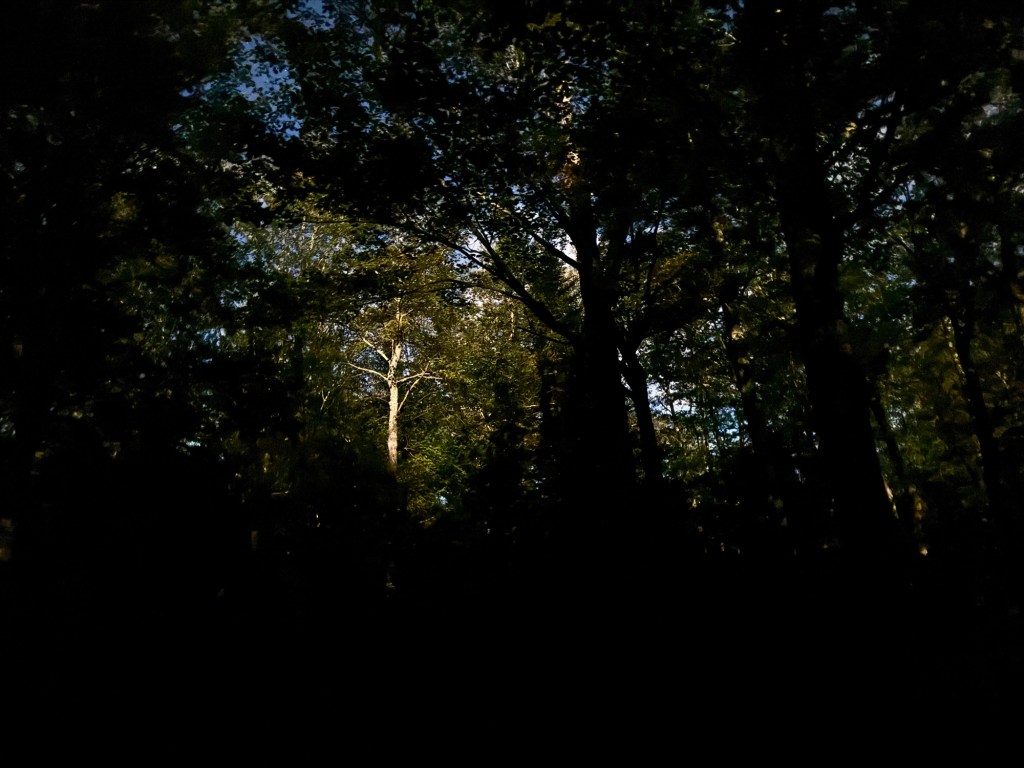
That’s not a spotlight, that’s the moon rising over the opposite tree line. It’s otherwise pitch dark. Pillsbury State Park, NH.

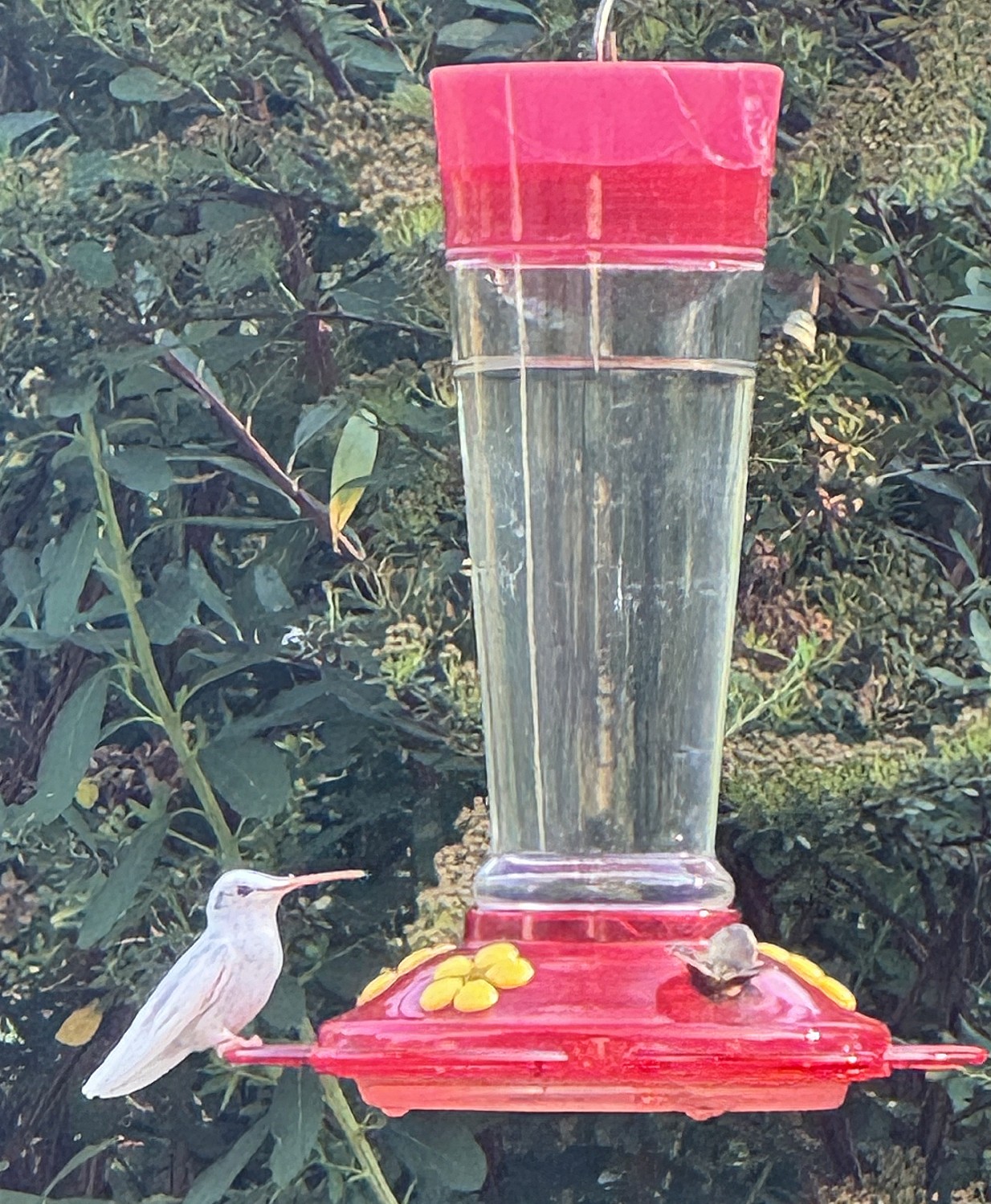
Thank you to the readers from Langdon, N.H., who sent in this photo of an albino or leucistic hummingbird. I’m guessing albino because of the pink eyes and feet, but declaring anything albino invariably brings about debate. Either way, a very cool and rare sighting.
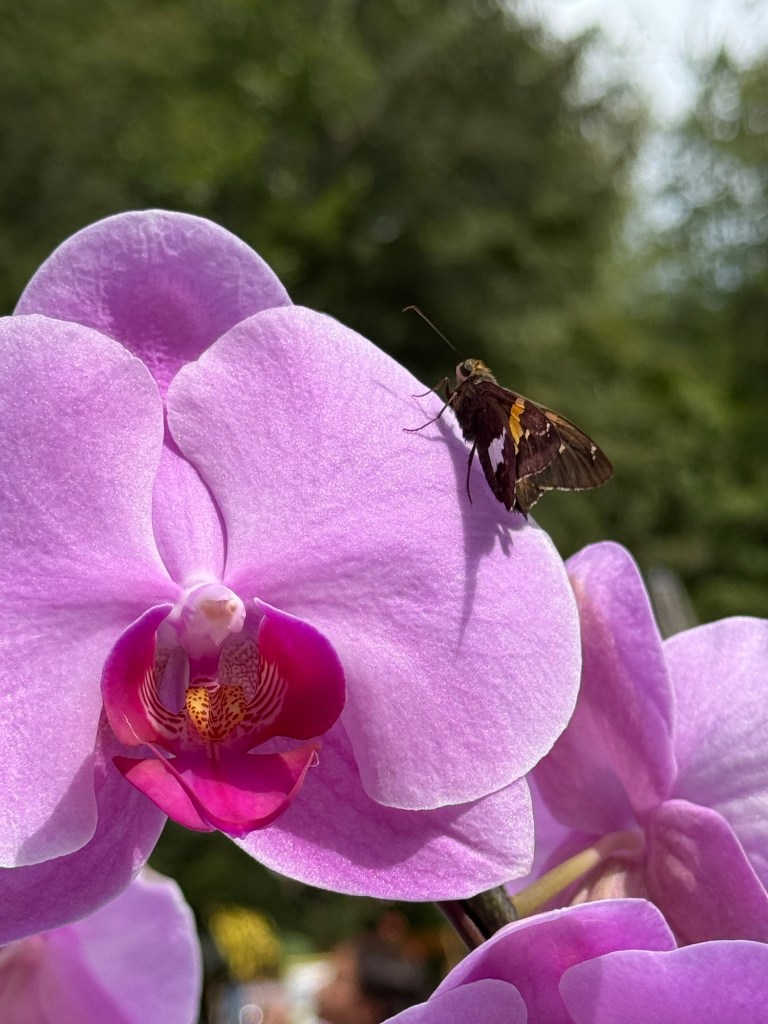
I saw this skipper on an orchid at an event this morning. Thought it looked cool, so figured I’d share it.
 Birds of New England.com