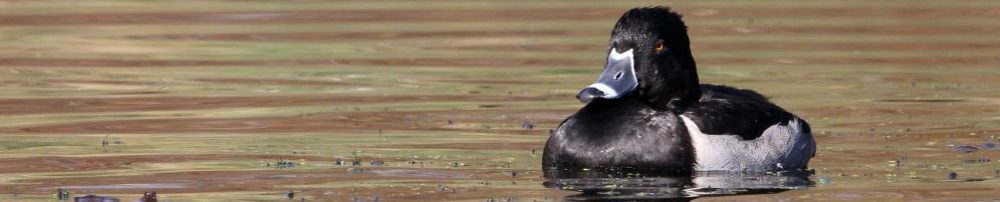
BirdsofNewEngland’s random bird thought of the day: Ring-necked Ducks

Photo by Chris Bosak Ring-necked Ducks swim at Selleck's/Dunlap Woods in Darien, March 2014.

Photo by Chris Bosak
Ring-necked Ducks swim at Selleck’s/Dunlap Woods in Darien, March 2014.

In my last post about getting out there to check out the ducks before they are gone for the summer, I listed a bunch of ducks that winter throughout New England, but breed farther north. I left off that list Ring-necked Duck. It just didn’t come to mind when I was compiling the list. Sure enough, the next day I went out for a quick bird walk and the only ducks I saw were Ring-necked Ducks. I immediately thought: Hey, I don’t think I mentioned Ring-necked Ducks in that last post.

So, finally getting its due, here you have the Ring-necked Duck, a very handsome duck that spends its winters here in New England (and well south, too) and breeds in northern New England and into Canada. As you can see from the photo, a more apt name might be Ring-billed Duck, but the scientists who named it likely had a dead specimen in hand and the ring around its neck — which is difficult to see in the field — was more visible. It took me years to stop calling it Ring-billed Duck, but I eventually got used to it.

Also, as you can see from the photo, the species is sexually dimorphic: the males and females look different. All ducks seen in New England are sexually dimorphic with the males often brilliantly colored and females usually more dull in color.

BirdsofNewEngland’s random bird thought of the day: Seeing ducks

Photo by Chris Bosak Female Hooded Merganaser at Holly Pond in Stamford, CT, Nov. 2013.

Photo by Chris Bosak
Female Hooded Merganaser at Holly Pond in Stamford, CT, Nov. 2013.

Our winter ducks will remain with us for only a few more weeks so be sure to check out your local watering holes for these birds before they are gone.
Some ducks, of course, will remain with us all summer and breed locally, but most of the ducks we have on our waters now will head far north of here shortly. Depending on what part of New England we are talking about, Mallards may be the only duck we see in the summer – with perhaps the occasional tucked away pond holding Wood Ducks. The farther north you go in New England the more duck species there will be.
So get out there and enjoy the mergansers, scaup, grebes, teal, Long-tailed Ducks, Buffleheads and Goldeneye while you can. We won’t see them again until the fall.

BirdsofNewEngland’s random bird thought of the day: Osprey coming back

Photo by Chris Bosak Osprey eats a fish at Norwalk's Calf Pasture Beach, March 26, 2013.

Photo by Chris Bosak
Osprey eats a fish at Norwalk’s Calf Pasture Beach, March 26, 2013.

Here’s another random bird thought for you.

Ospreys that are born in New England fly to their wintering grounds in South America and do not return the next summer. They come back the second summer when they are of breeding age.

New England’s Osprey population has increased tremendously — especially in coastal areas — over the last decade. Good news!

Some Osprey have returned to New England already, but most will return in late March or early April.

Have a question for my “random thoughts?” Send it to bozclark@earthlink.net

New Facebook page for www.BirdsofNewEngland.com

Photo by Chris Bosak Sanderlings and Dunlins on the shore of Long Beach in Stratford, CT, Jan. 2014.

Photo by Chris Bosak
Join the crowd and ‘like’ Birds of New England on Facebook.

To go along with this website and its accompanying Twitter page (@NewEnglandBirds), a new Facebook page has been added for BirdsofNewEngland.com. Posts to this site will automatically be announced on that Facebook page. Plus, who knows what else will end up on the page. It gives me another avenue to communitication to help spread the word about the wonderful birds and wildlife of New England.
If you have the time and inclination, please “like” the new Facebook page that accompanies this site. Type in “Birds of New England” into the Facebook search bar. Thanks and, as always, feel free to share your bird sightings and photos with me.

It’s a robin kind of winter

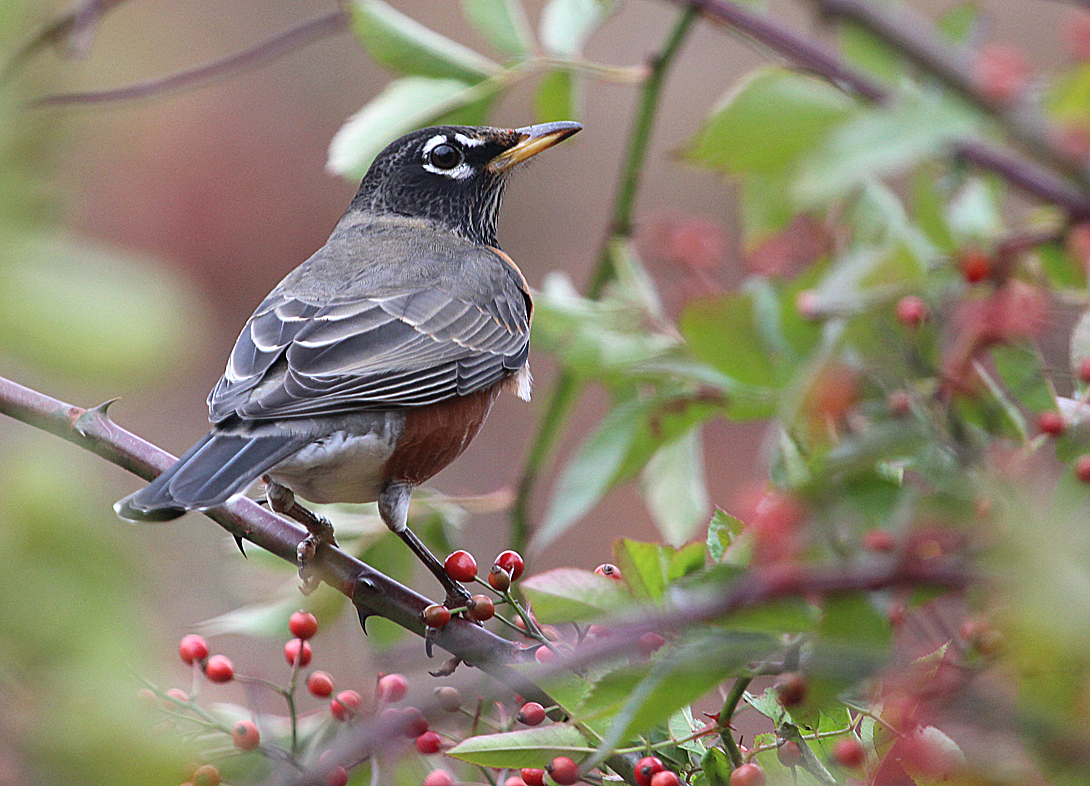
Photo by Chris Bosak American Robin in Selleck's Woods in fall 2013.

Photo by Chris Bosak
American Robin in Selleck’s Woods in fall 2013.

I’ve written a lot about American Robins this winter — and do so again in this week’s For the Birds column — but the demand for such information is great as everyone seems to be seeing tons of robins this winter.

Here’s an excerpt from the column: “True, they are known as a harbinger of spring, but American Robins are with us all year here in New England. Some robins migrate south to warmer places, but many robins stick with us throughout winter, too, surviving on berries, crab apples and other natural foods they can find in the woods and our backyards. Robins are usually found in flocks, some rather impressive, during the winter.”

Click here for the rest of the column.

It was really comments and questions from readers that prompted the column. Here are some comments I have received from readers.

Jack from Norwalk, Conn., wrote: “Saw around 10:30 this AM small flock of Robins just 30 yds West from junction of S Continue reading

A few of my snow birds

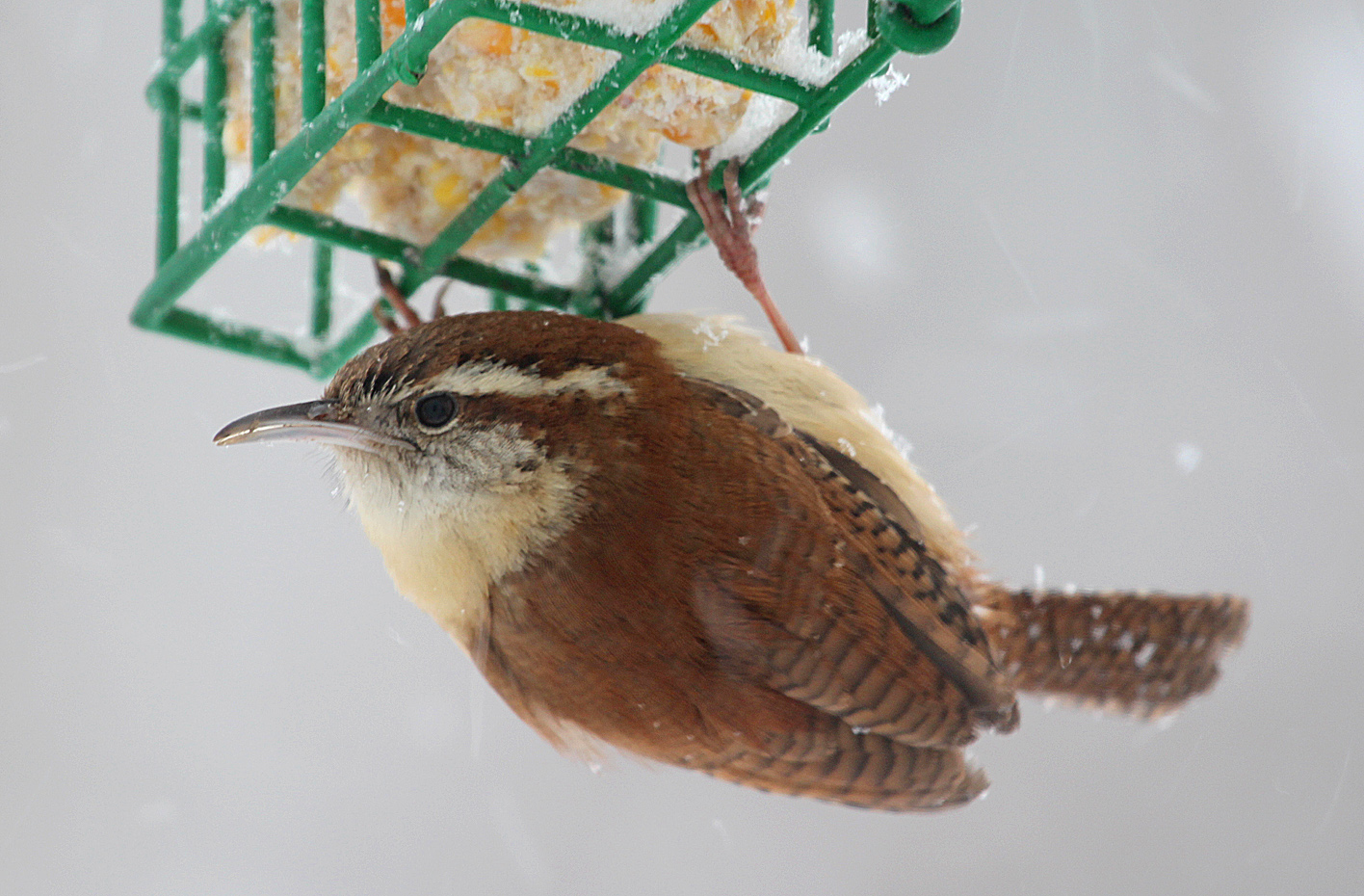
Photo by Chris Bosak A Carolina Wren holds onto the bottom of a suet cage during the February 13, 2014, snowstorm.

Photo by Chris Bosak
A Carolina Wren holds onto the bottom of a suet cage during the February 13, 2014, snowstorm.

Photo by Chris Bosak An American Tree Sparrow perches near a feeding station during the snowstorm of Feb. 13, 2014.

Photo by Chris Bosak
An American Tree Sparrow perches near a feeding station during the snowstorm of Feb. 13, 2014.

It was a busy day at the feeder on Thursday as snow fell hard and steady in the morning and afternoon in New England. It was a beautiful scene and I’m sure it played out at many feeding stations throughout the region.

I had the juncos, White-throated Sparrows, cardinals, and Mourning Doves I expected, but I didn’t see a single chickadee, titmouse or nuthatch. Very odd for winter snow day. Starlings and House Sparrows also paid a visit.

The biggest surprises were a Carolina Wren (actually, not too big of a surprise, but a welcomed sight for sure) and an American Tree Sparrow. Tree Sparrows come down to southern New England in the winter, but they are not often seen at feeders. This guy made a few brief visits, but never got real comfortable and was easily chased away by other feeder birds.


Many people are sick of the snow, I’m sure, but I love it when it comes to birding.

All in all, a good day at the feeders. How did you do with your feeders? Post a comment, or better yet, send me a photo to bozclark@earthlink.net and I’ll use it in the “Reader Submitted Photos” page on this site. 

Young Peregrine Falcon picks on the wrong bird

Photo by Chris Bosak A young Herring Gull chases away a young Peregrine Falcon at Holly Pond in Stamford in Jan. 2014.

Photo by Chris Bosak
A young Herring Gull chases away a young Peregrine Falcon at Holly Pond in Stamford in Jan. 2014.

The distance and quickness of the event yielded an admittedly lousy photo, but it’s good enough to show that this young Peregrine Falcon has a lot to learn about what prey to target.

I was at Holly Pond in Stamford, Ct., trying to get some photos of a Hooded Merganser pair swimming in a small pool of water surrounded by ice. Suddenly the entire huge flock of gulls (Ring-billed, Herring and a few Greater Black-backed) that had been resting peacefully on the ice rose into the air started making a racket. I assumed at first that someone nearby had a bag of bread to offer the birds, but they all stayed above the water.

Then I noticed that a young Peregrine Falcon had swooped in on the flock. At this point the falcon was trying to single out individual gulls to pursue. Each chase was short-lived as the falcon quickly realized it was smaller than the birds it was trying to take down. Birds of Prey taking down larger prey is not unheard of, but this falcon did not yet have the strength or experience to handle a gull. It tried on three or four bird, got scolded and chased away, and eventually gave up and perched in a nearby tree.

Hey, you can’t blame the falcon. It was hungry and tried for a big, fat meal. Besides, if you don’t try, you’ll never succeed. The falcon learned a lesson and gained some experience. That’s always good in life.

What’s a snow day without a new junco photo?

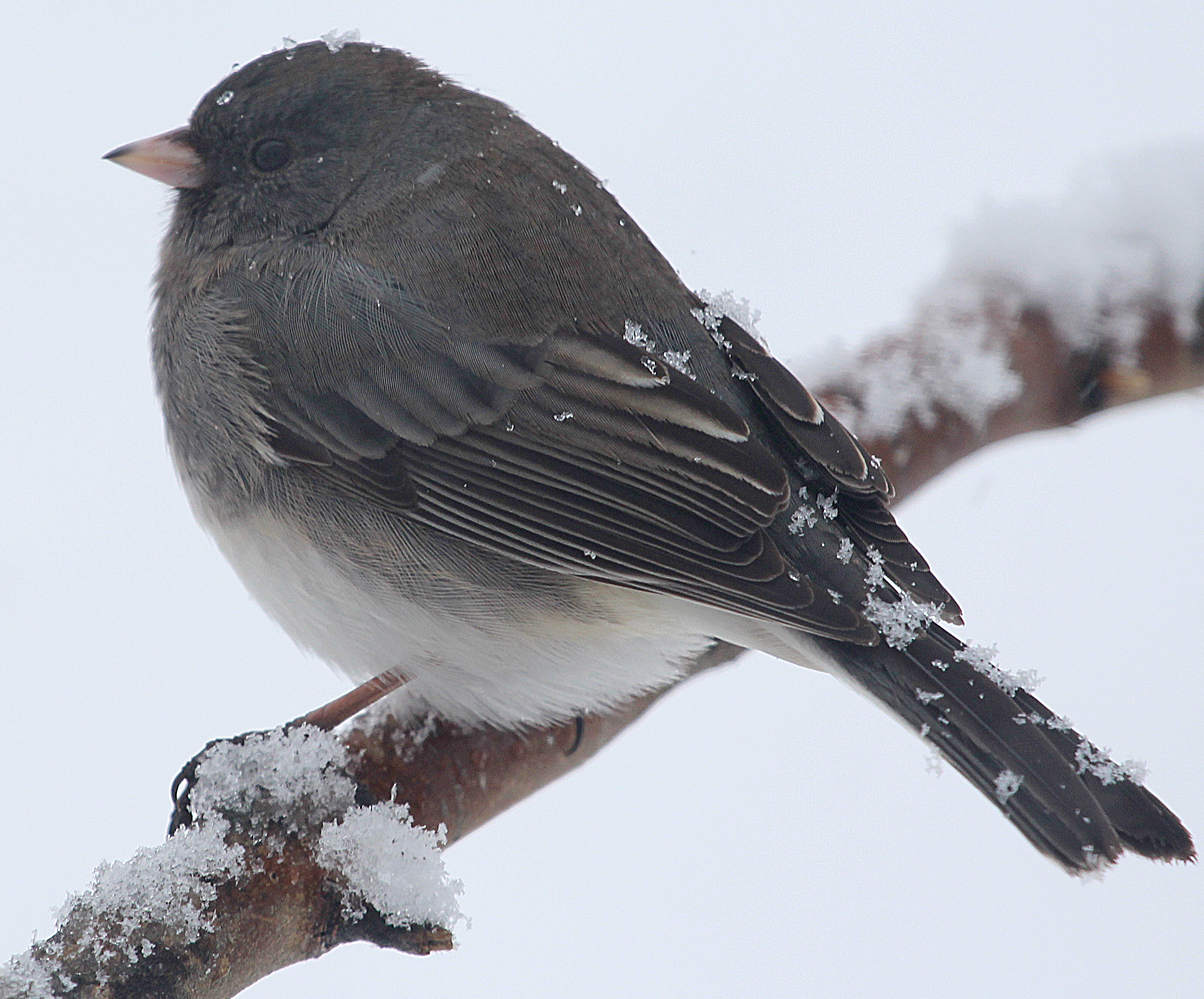
Photo by Chris Bosak Dark-eyed Junco during Jan. 2014 snowstorm.
Photo by Chris Bosak
Dark-eyed Junco during Jan. 2014 snowstorm.

When the snow flies — as it has done often this winter here in New England — you can be sure the Dark-eyed Juncos will come visit. Normally accompanied by at least a few White-throated Sparrows, juncos are typically found under bird feeders looking for fallen seeds. This snowstorm, however, I had juncos on the suet feeder, on the platform feeder and on the ground. So, of course, I had to break out the camera. What’s a snow day without a new junco photo?

Young Peregrine Falcon in flight

Photo by Chris Bosak A young Peregrine Falcon flies overhead in Norwalk, CT, Dec. 2013.

Photo by Chris Bosak
A young Peregrine Falcon flies overhead in Norwalk, CT, Dec. 2013.

I spotted this young Peregrine Falcon flying around Veterans Park in East Norwalk a few weeks ago. It had a half-eaten prey (a crow, I think) in an open part of the park about 100 yards away, but kept circling around the parking lot where I was. It even has blood on its hooked bill. As many of you know, I’ve been photographing a few Peregrine Falcons along the Norwalk River where I work. (With limited success, admittedly.) This rare and close opportunity was certainly welcomed considering the distance from which I normally have to try to photograph them. Notice the brown plumage of this youngster, as opposed to the blue-gray of the adult.

I have some more photos of this beauty in flight that I will post later.

Sanderlings and more Sanderlings

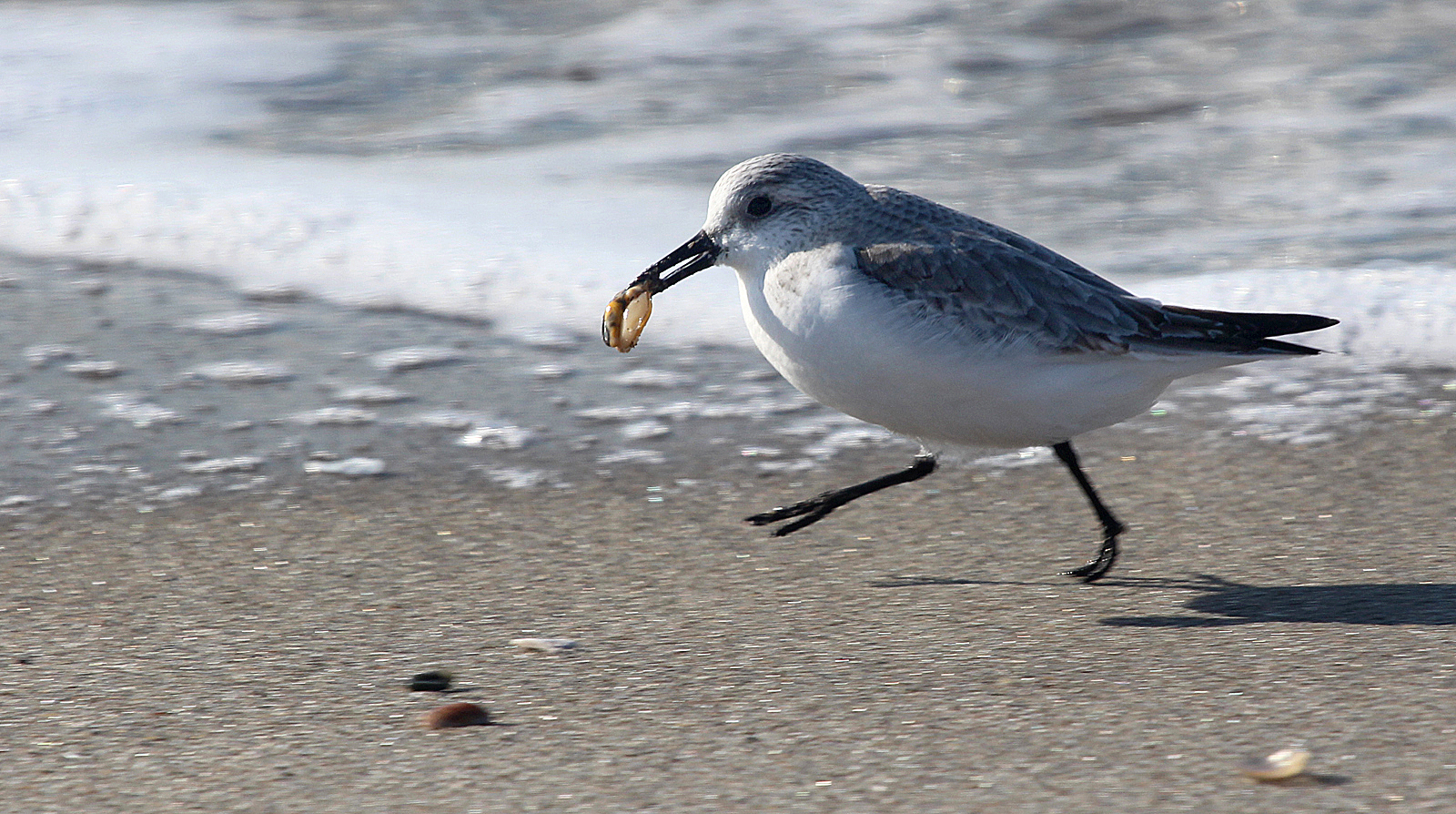
Photo by Chris Bosak A Sanderling runs along with food on the shore of Long Beach in Stratford, CT, Jan. 2014.

Photo by Chris Bosak
A Sanderling runs along with food on the shore of Long Beach in Stratford, CT, Jan. 2014.

Photo by Chris Bosak Sanderlings on the shore of Long Beach in Stratford, CT, Jan. 2014.

Photo by Chris Bosak
Sanderlings and Dunlins on the shore of Long Beach in Stratford, CT, Jan. 2014.

A recent trip to Long Beach in Stratford, CT, yielded one Snowy Owl sighting _ it was far in the distance, but still nice to see, of course. It also yielded more close-up views of Sanderlings, another bird that breeds in the Arctic. Sanderlings are small and common shorebirds that are seen along New England coastal areas from fall through spring, and even in summer at times. Sanderlings are the shorebirds you see chasing the fading waves looking for food and running away from the incoming waves. So much fun to watch.

They also make for good photographic subjects. So with that said, here are several Sanderling photos I took earlier this week. Click on “continue reading” for lots more photos. Continue reading