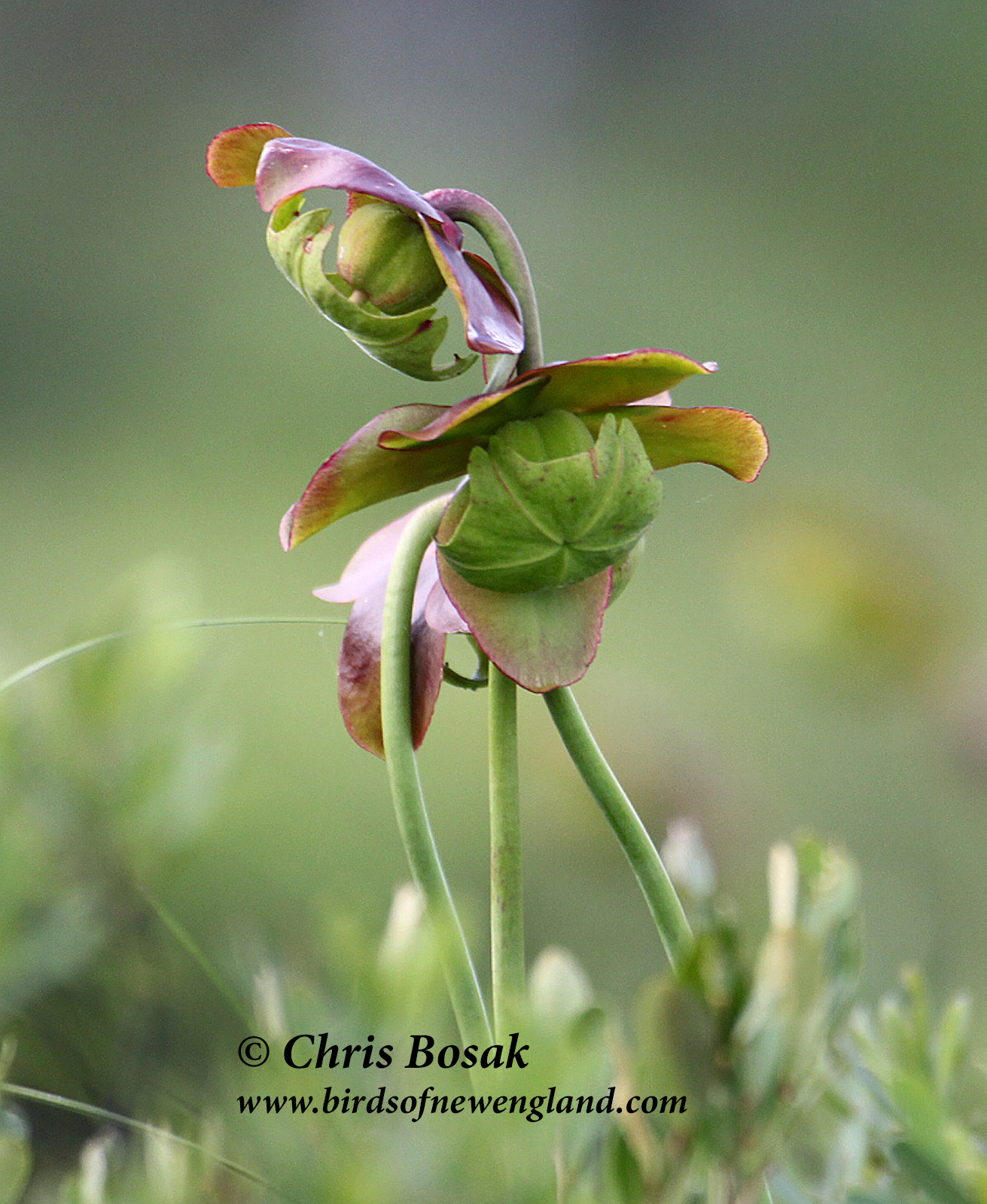
Pitcher plant at pond in northern New Hampshire.
Launching the canoe from the campsite proved to be much more difficult than I imagined. The dry summer left the pond extremely shallow, and the shoreline had receded to the point where I had to carry the canoe through several yards of muck to reach the water.
A solitary sandpiper watched the action from the opposite shoreline. Its interest faded quickly, and it went back to looking for food in the shallows.
Once on the water, I dodged a few rocks ─ some exposed and some lurking just beneath the surface ─ and eventually was able to float freely. The feeling of freedom shortly came to an end as the canoe stopped abruptly. Thick vegetation put the brakes on the effortless ride and required heavy paddling to move forward.
The pond is relatively small, so I was determined to canoe around the entire shoreline and end up back at the campsite. For the moment anyway, I put out of my mind the effort it was going to take to get the canoe back out of the water.
The thick vegetation made the going tough, but I managed to round the first bend. A young bald eagle flew overhead and landed near the top of a distant evergreen. A vast swamp and towering mountains in the background came into view. No birds, mammals or reptiles to be seen, however.
But there was an interesting sighting that drew me in. As I slogged my way toward the target, I had no fear of it flying away like a heron, plopping in the water like a turtle, running away like a deer or silently sauntering into the woods like a moose. It was a plant. It wasn’t going anywhere.
I don’t normally get excited about seeing plants, although I understand why many people do. It was a purple pitcher plant, or more accurately, several purple pitcher plants. I hadn’t seen pitcher plants in many years, mostly because I haven’t been in my canoe as much as I’d like.
Pitcher plants are named after the container that holds liquid, not the baseball player that stands on the mound. The pitcher-shaped leaves attract and trap insects. They are one of New England’s few carnivorous plants.
According to Massachusetts Audubon’s website, “Its vase-shaped leaves are 4-10 inches long. Peer inside one of these leaves and you’ll see a bacteria-laden soup. Insects fall into this fluid and are digested; they can’t escape because the walls are lined with downward-pointing hairs.”
I don’t typically find plants interesting, but it’s hard not to be fascinated by carnivorous plants. For those of a certain age, like me, we can remember the advertisements for Venus flytraps in the backs of comic books. The plants, of course, were depicted as menacing creatures daring any insect to come close. I guess that’s where my fascination started.
Pitcher plants do not look menacing, but they do stand out among the shorelines of ponds, fens and bogs with their rich maroon or purple color. They live in wet, acidic places where the soil is poor in nutrients. The insects they “eat” supplement their diet.
Purple pitcher plants are hardy enough to handle cold winters and can be found throughout New England, from Connecticut through Maine. They grow low to the ground in clusters. While not as flashy a wildlife sighting as a rare bird or regal mammal, pitcher plants have a beauty, mystery and intrigue that makes their story fascinating.
Sometimes the allure comes from unexpected sources, but New England nature never disappoints.