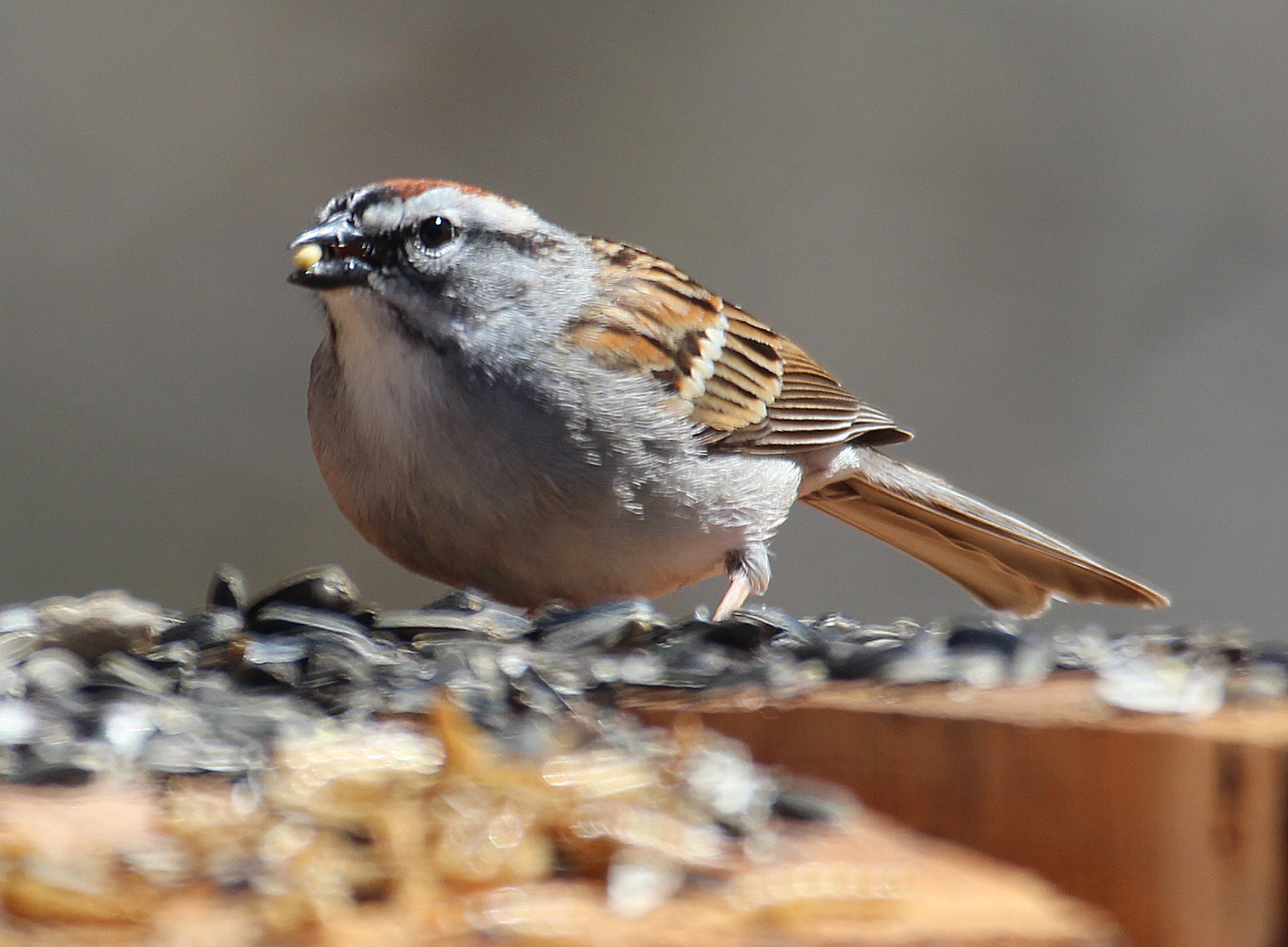
Chipping Sparrow visits homemade feeder

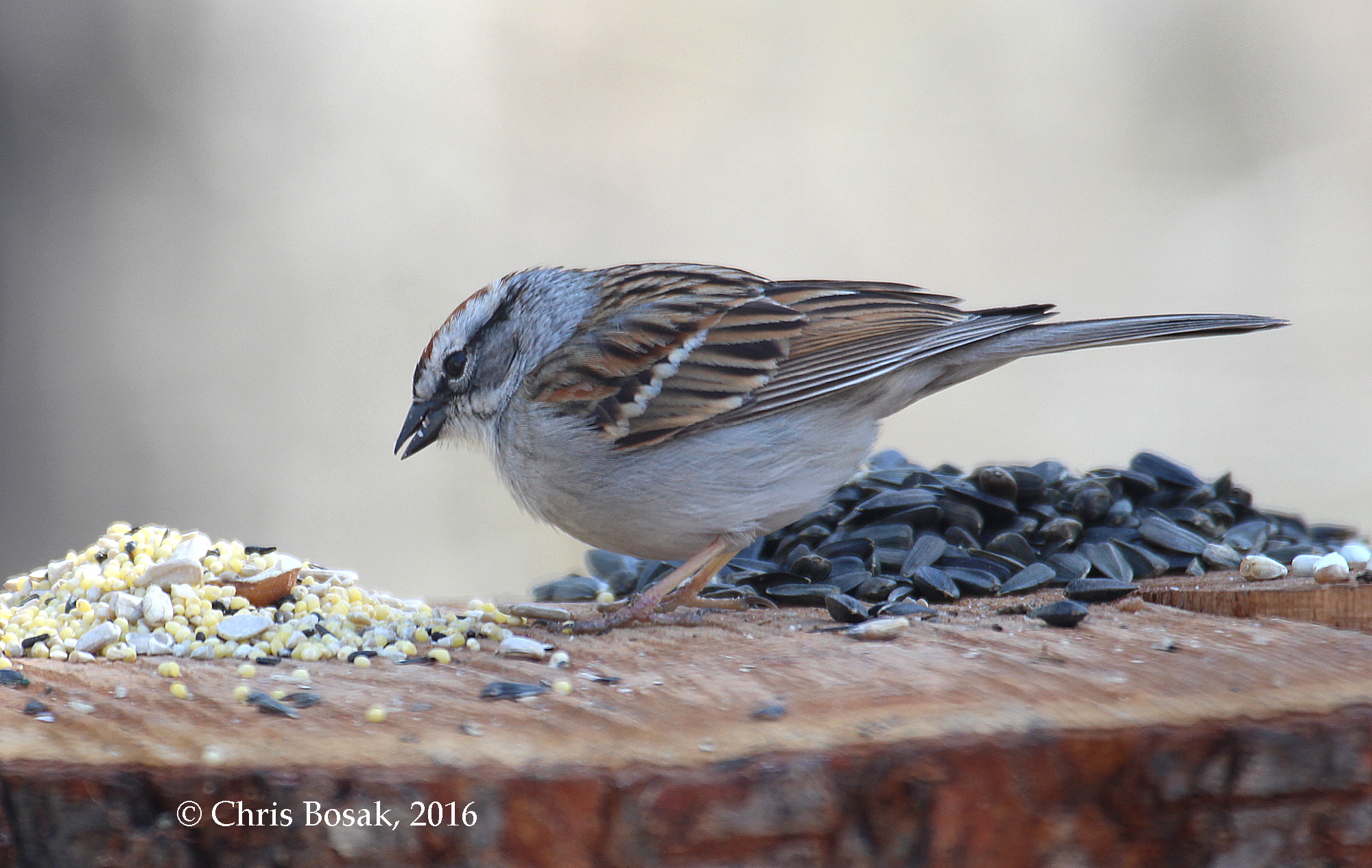
Photo by Chris Bosak A Chipping Sparrow visits a homemade birdfeeder in Danbury, Conn., April 2016.

Photo by Chris Bosak
A Chipping Sparrow visits a homemade birdfeeder in Danbury, Conn., April 2016.

With all the talk of warblers lately it’s easy to overlook the other birds visiting us this time of year. One such non-warbler that has been around in large numbers is the Chipping Sparrow. It’s a handsome, small sparrow and nests throughout New England. It will visit feeders to eat seeds. I’ve had at least four visiting regularly over the last week or so.

The above photo shows a Chipping Sparrow visiting one of the platform birdfeeders I made in the backyard.

Enjoy the spring migration and let me know what you’re seeing out there.

Photo by Chris Bosak A Chipping Sparrow visits a homemade birdfeeder in Danbury, Conn., April 2016.

Photo by Chris Bosak
A Chipping Sparrow visits a homemade birdfeeder in Danbury, Conn., April 2016.

Photo by Chris Bosak A Chipping Sparrow visits a homemade birdfeeder in Danbury, Conn., April 2016.

Photo by Chris Bosak
A Chipping Sparrow visits a homemade birdfeeder in Danbury, Conn., April 2016.

Chickadee pair picks its spot

Photo by Chris Bosak A Black-capped Chickadee cleans out a hole for a home to raise a family in Danbury, Conn., 2016.

Photo by Chris Bosak
A Black-capped Chickadee cleans out a hole for a home to raise a family in Danbury, Conn., 2016.

I tacked onto the bottom of my last For the Birds column the need to keep some dead trees standing as these “snags” are vital for birds. They provide homes and food for birds and other wildlife.

The day after writing the column I took a walk to Little Merganser Lake. I didn’t notice it while walking to the lake, but on my way back I noticed two chickadees going back and forth to a skinny dead tree. I stopped and watched for quite a while.

The birds, of course, were clearing out a hole for the Continue reading

For the Birds column: Project FeedWatch underway

Here’s my latest For the Birds column, which ran last Thursday in The Hour (Norwalk, CT) and Monday in The Keene (N.H.) Sentinel.

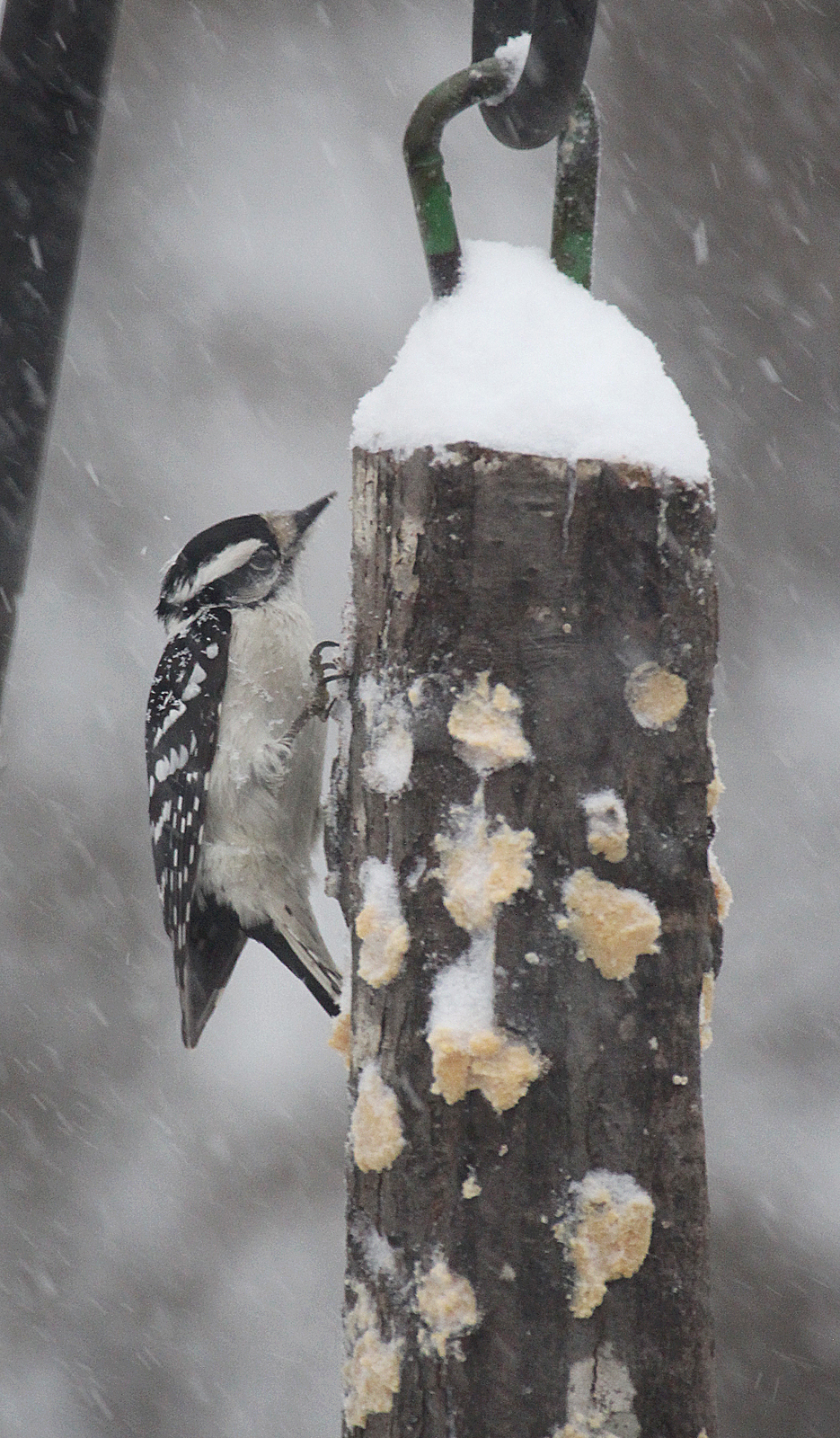
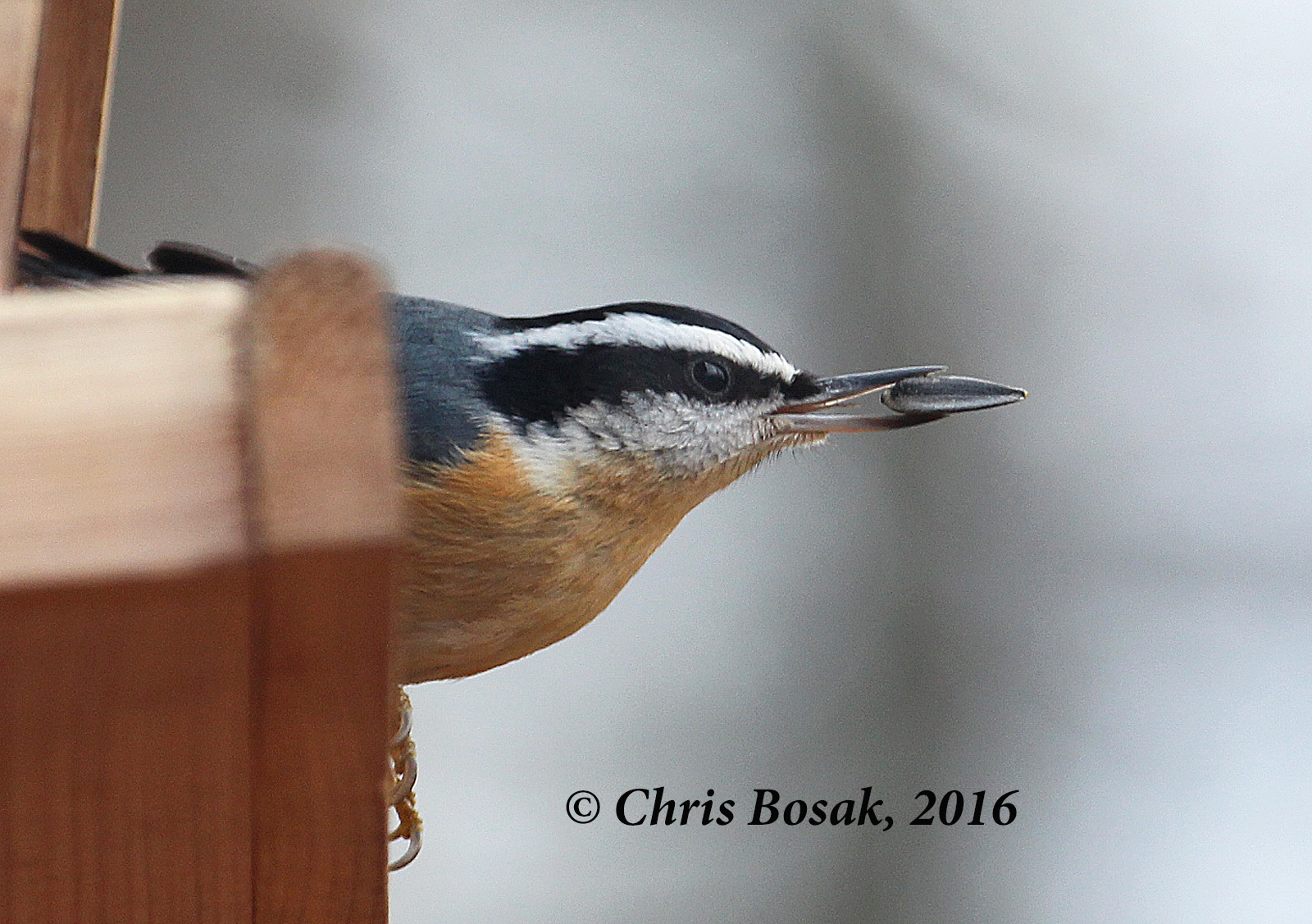
Photo by Chris Bosak White-breasted Nuthatches are a common feeder bird in New England.

Photo by Chris Bosak
White-breasted Nuthatches are a common feeder bird in New England.

Project FeederWatch gets under way

What will $18 get you these days?

About four cups of coffee from Starbucks. (Served in plain red cups void of evil, offensive snowflake images.)

About eight gallons of gasoline. Way better than the five gallons it used to get you.

Three bundles of the firewood stacked at the entrance of every grocery store, convenience store and hardware store these days. The bundles are each good for about 10 minutes in a firepit.

Two and a half craft beers at just about any bar or restaurant. Oops, forgot about the tip. Make that two beers.

Or, $18 covers your entrance fee to participate in Project FeederWatch, a citizen science project of The Cornell Lab of Ornithology and Bird Studies Canada. It entails keeping track of the birds you see at your backyard feeding stations and submitting your results online. The data collected helps scientists track bird populations in the winter — similar to the Christmas Bird Count and Great Backyard Bird Count.

The fee also gets you a bird ID poster, birdwatching calendar, instruction sheet and newsletter. No guarantee here that the materials will not have images of snowflakes. Try not to be offended if they do.

Project FeederWatch officially started this past Saturday and runs through early April. Don’t worry if you missed the opening day, you can join in whenever. Participants can count the birds as much or as little as they’d like — 24/7 monitoring is not necessary. Being an expert birdwatcher is not required either.

All skill levels welcome. Why not get the entire family involved? Old and young.

I’ve never participated in the Project before, mostly because I’ve never lived in a place where my feeders have been terribly active. Now that I live at a place with very active feeders I’m looking forward to participating this year. (Active feeders, however, are not a prerequisite for participation. Anybody can do it as long as they have a feeder up.)

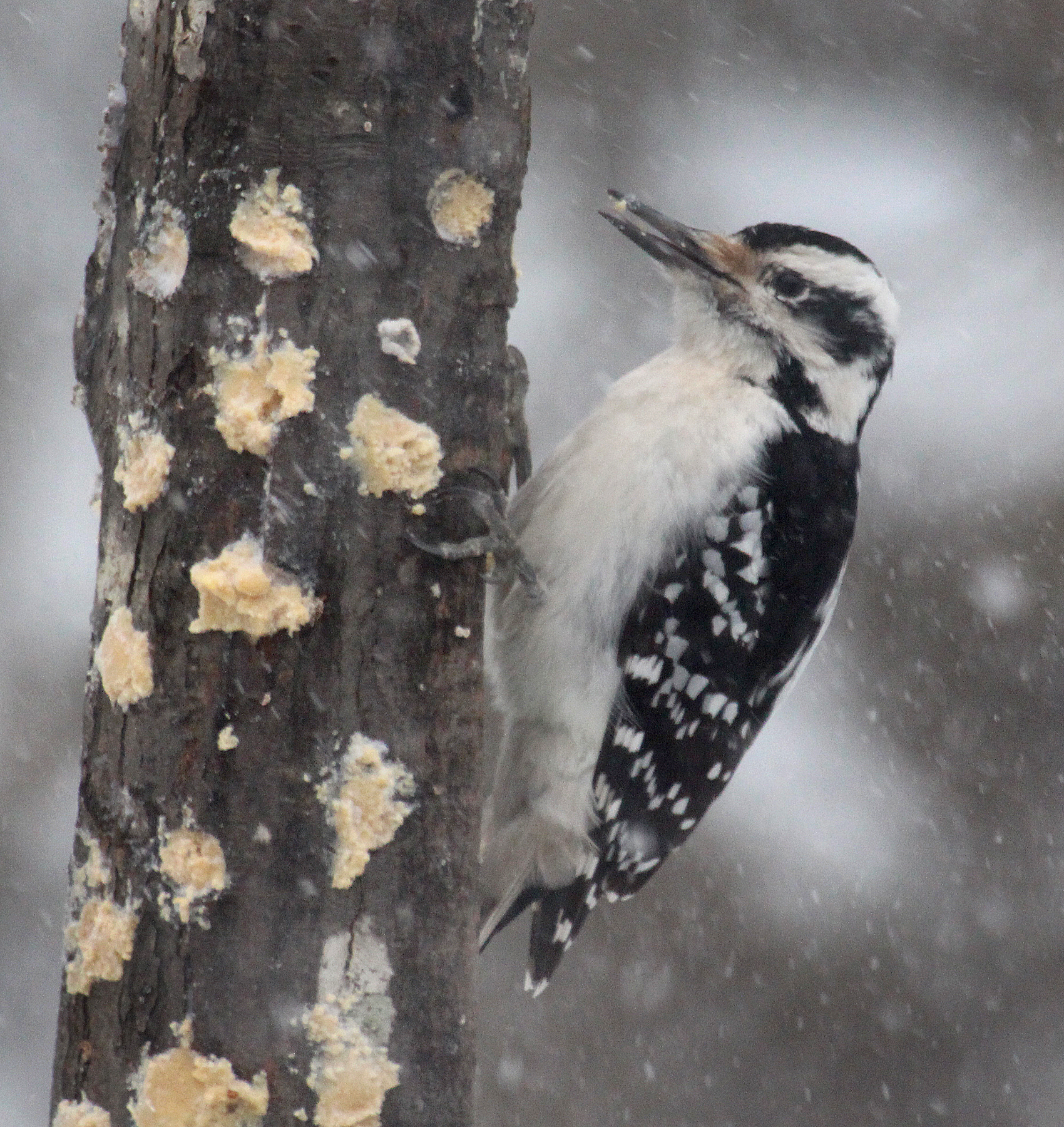
The feeders at my new place are always bustling with the common visitors White-breasted Nuthatches, Black-capped Chickadees, Tufted Titmice and Downy Woodpeckers. I also see Carolina Wrens, Blue Jays, Hairy Woodpeckers, Red-bellied Woodpeckers and American Goldfinches. Lately I’ve noticed a few Dark-eyed Juncos under the feeders. The White-throated Sparrows are not far behind, I’m sure. Will my Pine Warblers I had earlier this fall return to the suet cake? Probably not, but I’ll be watching. Who knows what else will show up?

To join the Project or to get more information, visit http://www.feederwatch.org. The website is full of information and tips on identifying birds (including tricky IDs), feeding birds tips, trend maps, and historical data.

So why participate other than it “helps scientists?” Many bird species are in decline, some seriously so. Tracking the winter abundance and distribution of birds with long-term data offers valuable insight into their lives. It helps scientists track gradual population shifts of bird species. WE know the Carolina Wren and Red-bellied Woodpecker are trending northward. This data quantifies the movement.

That’s more of a positive population shift. What about the negative one? What about the species that are declining year after year?

The data helps scientists recognize the decline and figure out solutions more quickly.

Let me know if join and what birds you see at your feeders.


For the Birds runs Thursdays in The Hour. Chris Bosak may be reached at bozclark@earthlink.net. Visit his website at birdsofnewengland.com
Some new hummingbird photos

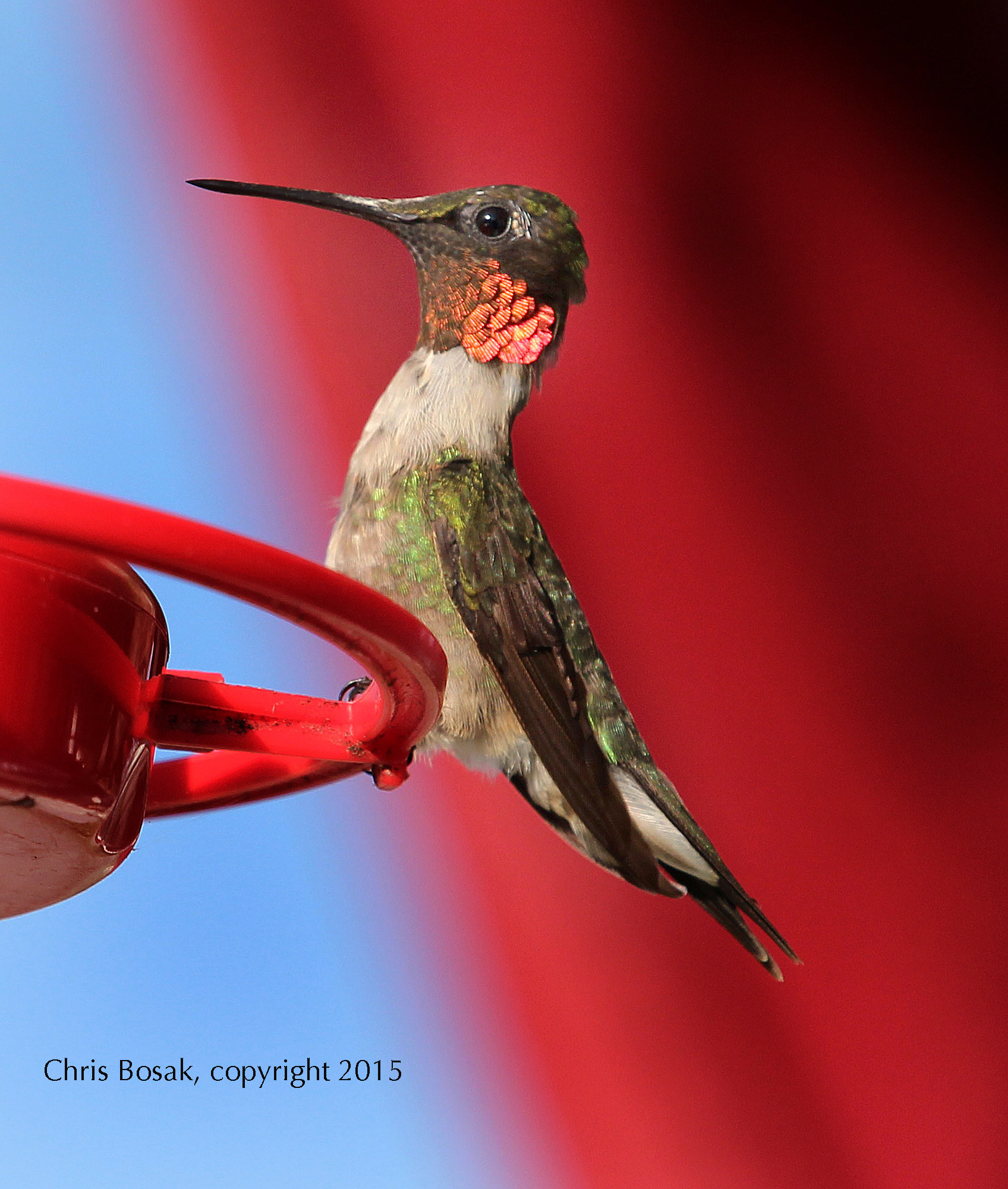
Photo by Chris Bosak A Ruby-throated Hummingbird perches on a feeder at the Errol (N.H.) Motel in the summer of 2015.

Photo by Chris Bosak
A Ruby-throated Hummingbird perches on a feeder at the Errol (N.H.) Motel in the summer of 2015.

A highlight of a recent camping trip with the boys to New Hampshire was watching the hummingbirds at at the Errol Motel. The feeder was active with three females and two males (plus an aggressive yellow jacket.)

Here are a few more shots of the birds: Continue reading

For the Birds column: Get the lead out for loons

Photo by Chris Bosak A Common Loon swims on a lake in northern New Hampshire with two young loons.

Photo by Chris Bosak
A Common Loon swims on a lake in northern New Hampshire with two young loons.

Here’s my latest For the Birds column from The Hour (Norwalk, CT) and Keene (NH) Sentinel.

***

Bad news trickled down from up north this week as the Loon Preservation Committee announced that necropsy results confirmed the first-of-the-year Common Loon death due to lead poisoning.

The loon was found on the shores and Lake Winnipesaukee in central New Hampshire. Loons face a slew of challenges in their northern breeding grounds. The biggest challenge, of course, is habitat loss. What else is new? But other factors such as collisions with boats (especially young loon), heavy rain washing away nests, and lead sinkers take a toll as well.

Then there are the predators, such as raccoons and foxes, that prey upon the eggs. Now I hear of another potential predator of loons. Of course, the comeback of the Bald Eagle is to be celebrated, but

Click here for the rest of the column.

A few late warbler photos: redstart and yellowthroat

Photo by Chris Bosak An American Redstart sings from a perch in Selleck's and Dunlap Woods in Darien, Conn., May 2015.

Photo by Chris Bosak
An American Redstart sings from a perch in Selleck’s and Dunlap Woods in Darien, Conn., May 2015.

Here are a few photos of some late migrating warblers I took Monday at Selleck’s and Dunlap Woods in Darien, Conn. The warbler migration still has some strong days ahead, but don’t wait too long if you haven’t been out there looking for them yet. The warbler migration in New England winds down as the month of May winds down. Let me know what you’re seeing out there.

Photo by Chris Bosak A Common Yellowthroat perches on a broken stalk at Selleck's and Dunlap Woods in May 2015.

Photo by Chris Bosak
A Common Yellowthroat perches on a broken stalk at Selleck’s and Dunlap Woods in May 2015.

Cooper’s Hawk eating squirrel

Photo by Chris Bosak A young Cooper's Hawk eats a squirrel in southern New England in Feb. 2015.

Photo by Chris Bosak
A young Cooper’s Hawk eats a squirrel in southern New England in Feb. 2015.

The other day I pulled into my driveway and noticed a clump of brown in my neighbor’s yard. Birders are trained to notice anything out of the ordinary in a scene because it just might be a bird. Often these days it ends up being a plastic bag stuck in a tree, but sure enough, sometimes it is a bird.

Such was the case the other day. That brown clump was a bird, a young Cooper’s Hawk to be exact. Not only that, but the bird was eating (a Gray Squirrel as it turns out.) Cooper’s Hawks eat mainly birds, but small mammals can also fall prey to these quick and agile birds.

I’ll let the pictures tell the rest of the story. (Warning: If you don’t like the bloody side of nature, don’t click “continue reading.” Fair warning.)

Continue reading

The underrated Mourning Dove

Photo by Chris Bosak A Mouning Dove perches in a tree after a New England snowfall in February 2015.

Photo by Chris Bosak
A Mouning Dove perches in a tree after a New England snowfall in February 2015.

It’s true that many people love Mourning Doves, but in my opinion, the large backyard bird is still way underrated.

I’m just as guilty as anybody by not giving the Mourning Dove its due. Rarely do I write about Mourning Doves (although I have on occasion.) It’s not often I hear about people seeing Mourning Doves, although they are probably being seen by just about everybody on a daily basis.

It’s often overlooked _ again I’m guilty of this too_ when relaying what birds were seen at the feeder that day. Chickadees, juncos, nuthatches, titmice, white-throated sparrows, cardinals. What about Mourning Doves? Surely they were there, too. Mourning Doves are spectacularly beautiful birds when looked at closely. The subtle tones of the plumage change with the light and that blue eye ring never gets old. Also, their song (cooing) _ although it’s a sad song and indeed is the reason for the bird’s name _ always seems to cheer us up when we hear it.

So here’s to the Mourning Dove … with appreciation.

Tiny footprints in the snow: White-throated Sparrow

Photo by Chris Bosak Footprints of a White-throated Sparrow are impressed into the snow of a sidewalk in New England.

Photo by Chris Bosak
Footprints of a White-throated Sparrow are impressed into the snow of a sidewalk in New England.

Not all interesting bird sightings involve birds. Sometimes they involve merely the signs of birds, which are everywhere if you look hard enough. When I opened the door this morning to check the temperature about a dozen White-throated Sparrows took off for shelter. But their signs were everywhere on the ground in the form of tiny footprints in the dusting of snow that fell overnight in parts of New England.

Here’s the grebe

Photo by Chris Bosak A Horned Grebe swims in Long Island Sound off the coast of Darien, Conn., Jan. 2015.

Photo by Chris Bosak
A Horned Grebe swims in Long Island Sound off the coast of Darien, Conn., Jan. 2015.

I mentioned in my last post about seeing a Horned Grebe on my quick trip to the beach the other day. Here’s a photo of the grebe I saw the other day in Long Island Sound from Weed Beach in Darien, Conn. Zoom in and check out its really cool red eye.

There are seven types of grebes in the U.S. and four are regularly seen in New England, although mostly only in the winter in their nonbreeding plumage _ so don’t expect to see a red neck on the Red-necked Grebe. The Pied-billed Grebe is the one most commonly seen in New England, while the Red-necked, Horned and Eared Grebes make occasional visits. The others _ Least, Western and Clark’s _ are not likely to be found in New England, but that doesn’t mean they never show up here.

The grebes we see here in the winter are in their much duller nonbreeding plumage, which can make identification tricky. Loons are another water bird that look much more dull in the winter. Loons are larger and stockier than grebes _ at least the grebes we see in New England.

I like talking about grebes because I get to say the word “grebe” over and over. It’s just one of those words that’s fun say out loud. Anyway, happy birding out there.