Photo by Chris Bosak
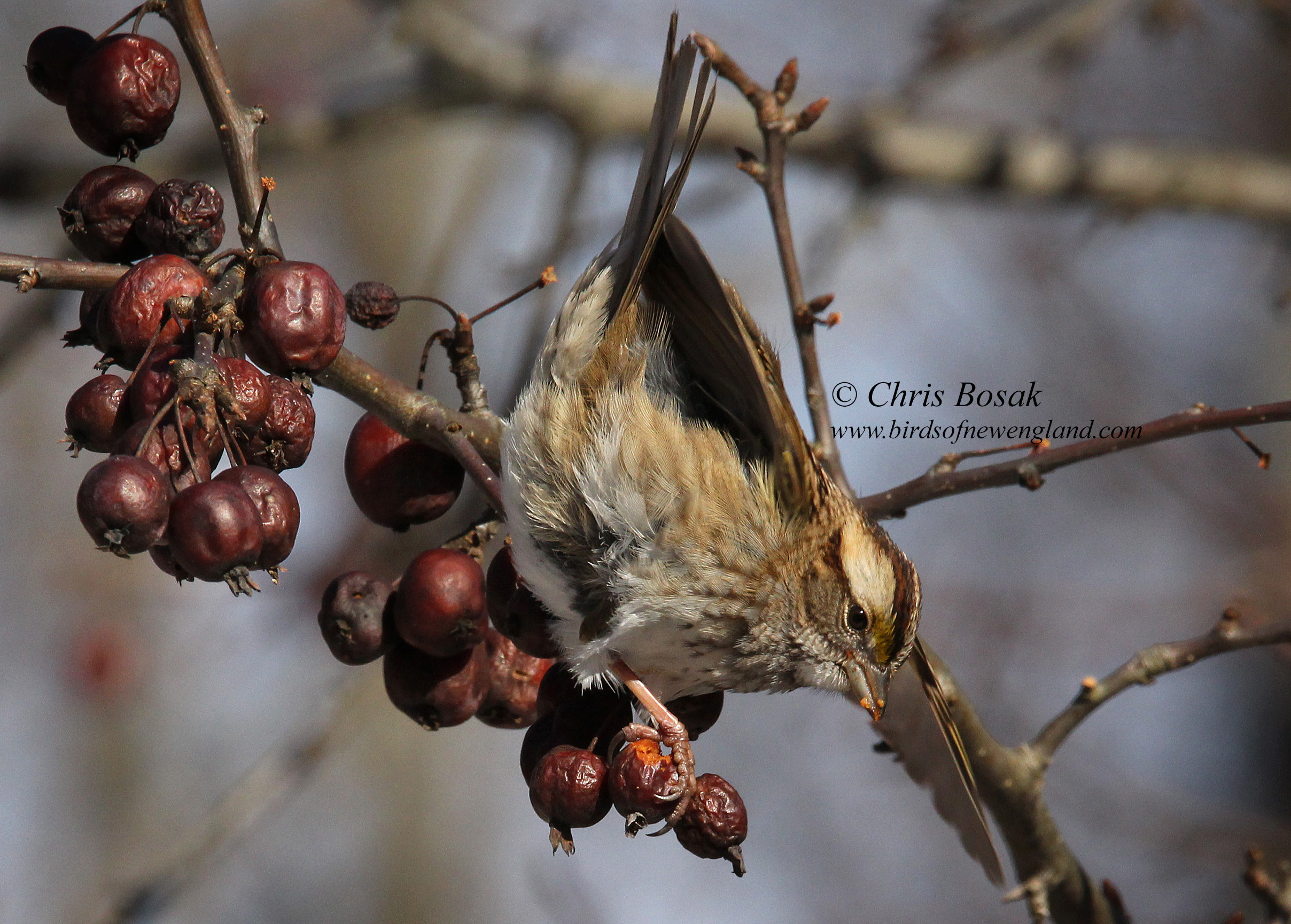
A white-throated sparrow eats a crabapple in New England, January 2024.
When I was just starting out in the hobby of birdwatching and bird photography, I saw a photo of a bird (I don’t recall the species) eating a berry. It became my mission to get a photo of a bird eating berries. But how would I ever get such a shot, I thought to myself at the time.
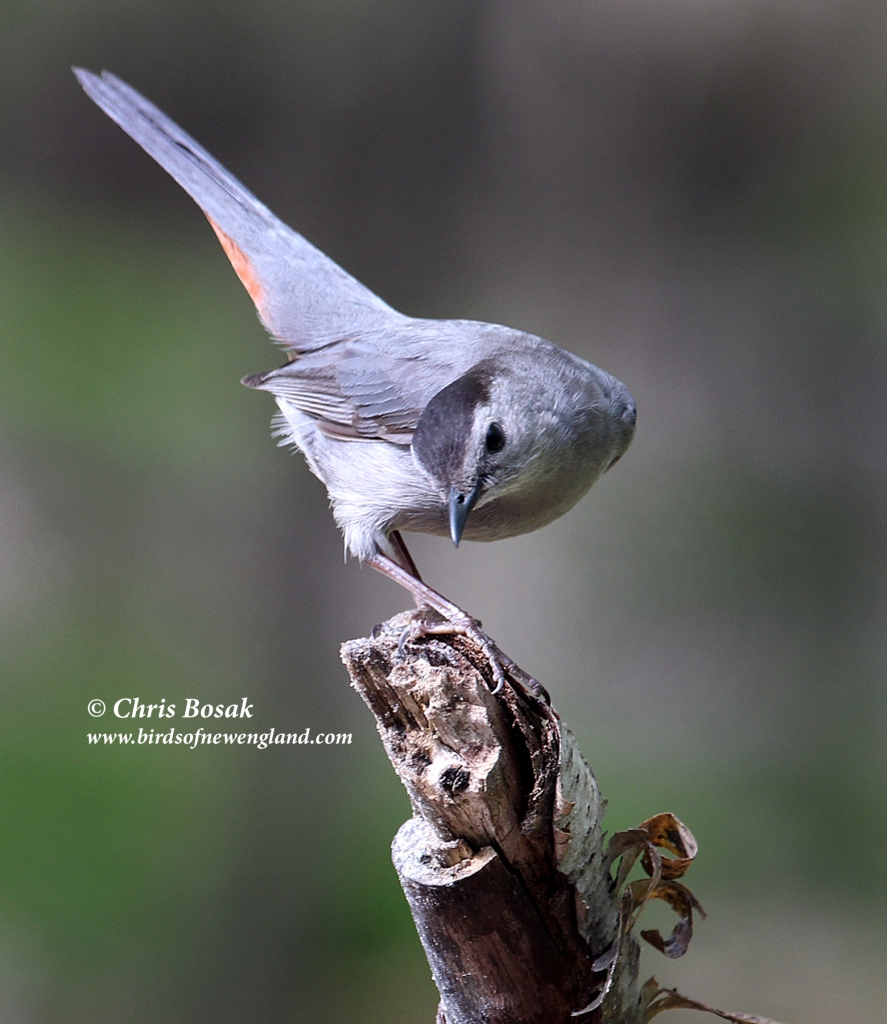
In the years that followed, I have had plenty of opportunities to get that coveted shot that once seemed so elusive. I’ve been lucky enough to photograph birds such as yellow-rumped warblers, blackburnian warblers, cedar waxwings, robins, catbirds, hermit thrushes, purple finches, house finches and song sparrows eating berries.
Photo by Chris Bosak – A hermit thrush in New England, January 2024.
For the past two weeks, I’ve written about surprise winter bird sightings such as the catbirds, hermit thrushes, yellow-bellied sapsuckers and purple finches I’ve seen on my recent walks.
It could be shaping up to be an interesting Great Backyard Bird Count this year with all these birds that typically migrate out of New England still hanging around. Who knows what other surprises will show up on the checklists of birders throughout the region, and the world for that matter?
The 27th annual Great Backyard Bird Count takes place from Friday, Feb. 16 through Monday, Feb. 19. Birders of all skill levels may participate in the Count. Simply count birds – alone or with a group – for at least 15 minutes and enter the birds able to be identified and the location at the GBBC website www.birdcount.org. While the results must be submitted online, the birding itself can take place anywhere: a park, backyard, conservation area.
Photo by Chris Bosak – black vultures in a tree on the side of a road in New England.
Birders are trained to find things that look out of place. It is a self-training that happens naturally over the course of many years of looking for birds.
A slight movement in the bushes likely means a bird or small mammal. That bump on a fence railing or post is probably a small perching bird taking a rest. If you are canoeing and the expanse of calm water ahead of you is broken by barely distinguishable ripples, a diving duck may soon reappear on the surface.
This gift that birders have, I think, is most often on display while driving. Most people will drive by a hawk perched on a branch along the road and not even notice it. Birders, on the other hand, see the blob in the tree from a mile away. A positive identification of the blob is made as you zoom past at 65 miles an hour. Just the other day, I noticed a bald eagle perched along a river. From the road, however, it was largely hidden by branches, but something just didn’t look quite right.
This gift is most evident when driving or walking along a familiar route. If you’ve walked a trail through the woods a thousand times, you get to know where every rock, root and upturned tree is. Anything that looks out of the ordinary is immediately noted and inspected to see if it’s a bird or animal.
Photo by Chris Bosak
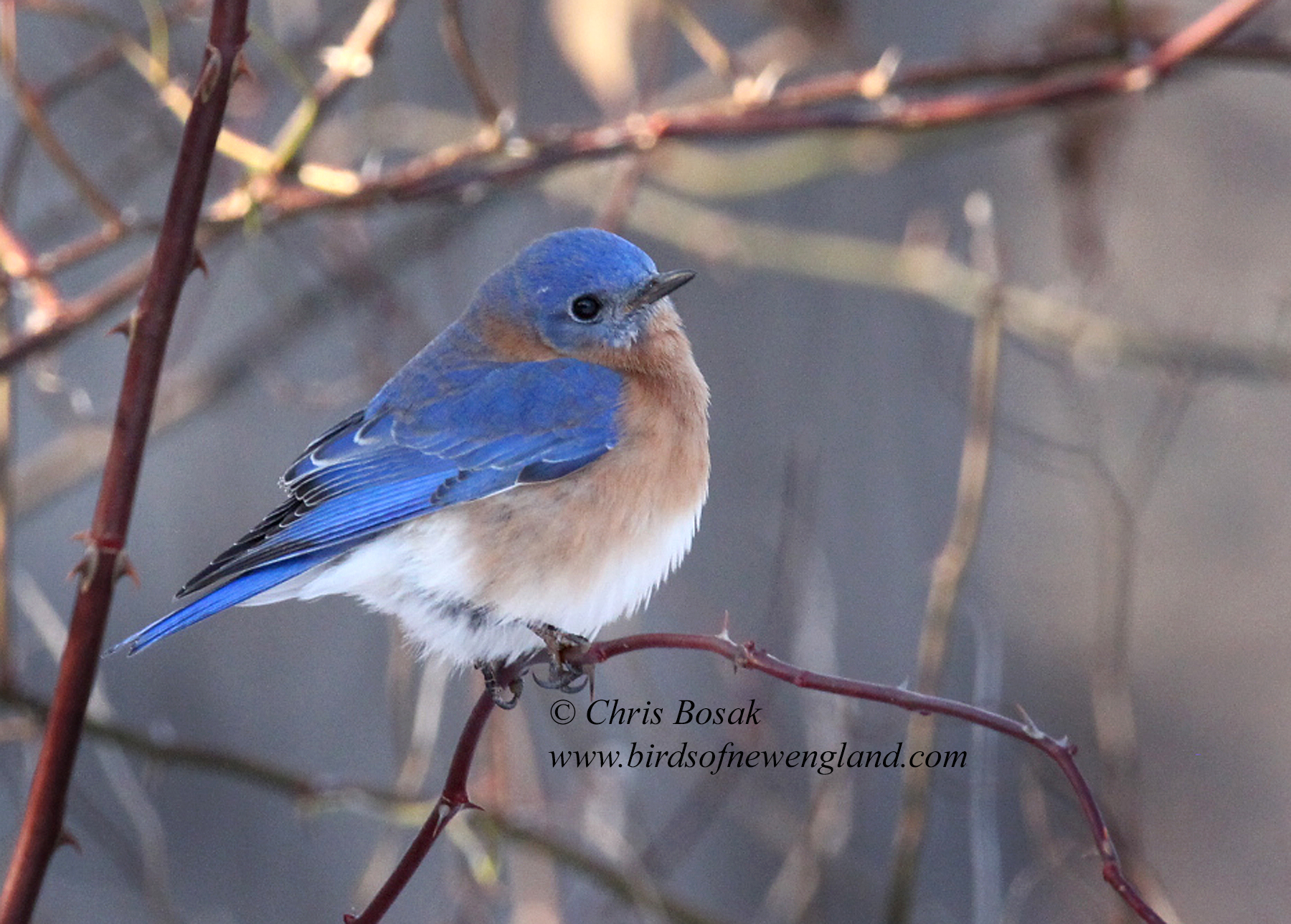
An eastern bluebird perches on a branch in New England, Jan. 2022.
Here are a few more eastern bluebird photos I managed to get in addition to the one I used to support my last column, which may be found here. It appears to be another good year for seeing bluebirds this New England winter as I’ve heard from several readers who have seen these beauties.
Photo by Chris Bosak
An eastern bluebird perches on a branch in New England, Jan. 2022.
I don’t see a lot of press releases now that journalism is no longer my full-time profession, but I did receive a few last week that caught my eye.
One was from Cole’s Wild Bird Products and the other from the Purple Martin Conservation Association. The topics were very different but did have one important commonality: spring.
Cole’s, which makes a red-hot blend that I’ve used and the birds loved, sent some spring bird-feeding tips. Many people stop feeding birds in the spring for a variety of reasons, including bears and not wanting birds to become dependent upon feeders, but I’m a big fan of spring bird feeding. It’s a great way to get close, long looks at birds such as grosbeaks, orioles, buntings and even a few warbler species if you’re lucky.
Photo by Chris Bosak
A red-bellied woodpecker perches on a log and grabs a peanut in New England, October 2020.
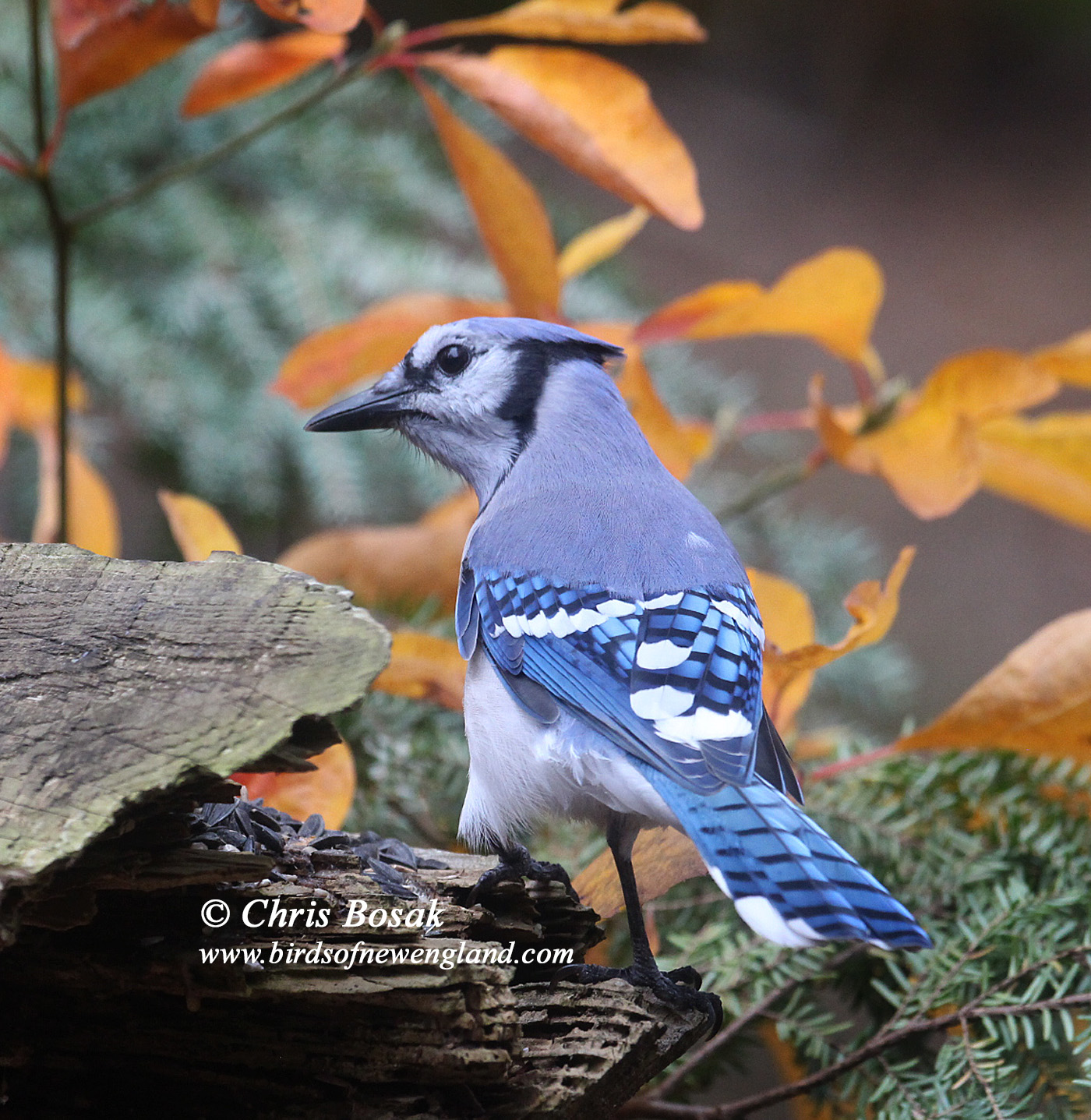
There’s nothing like a New England fall, especially when it provides a colorful backdrop for bird photos. I found a rotted log in my backyard, positioned it on my deck railing in front of a small sassafras tree, sprinkled some sunflower seeds and peanuts on the log and enjoyed the show. It was nonstop action for hours. I hope to make a video soon as well.
Photo by Chris Bosak
A tufted titmouse perches on a log in New England, October 2020.Photo by Chris Bosak
A blue jay perches on a log in New England, October 2020.Photo by Chris Bosak
A blue jay perches on a log and grabs a peanut in New England, October 2020.
Photo by Chris Bosak A common grackle visits a feeder in New England, October 2020.
I know some people get overrun by grackles, but I hardly ever see them at my feeders. When two showed up on a recent sunny day, I was able to capture the brilliant colors of their iridescent plumage. Grackles are blackbirds, but when the sun hits them just right, they are also green, blue and purple.