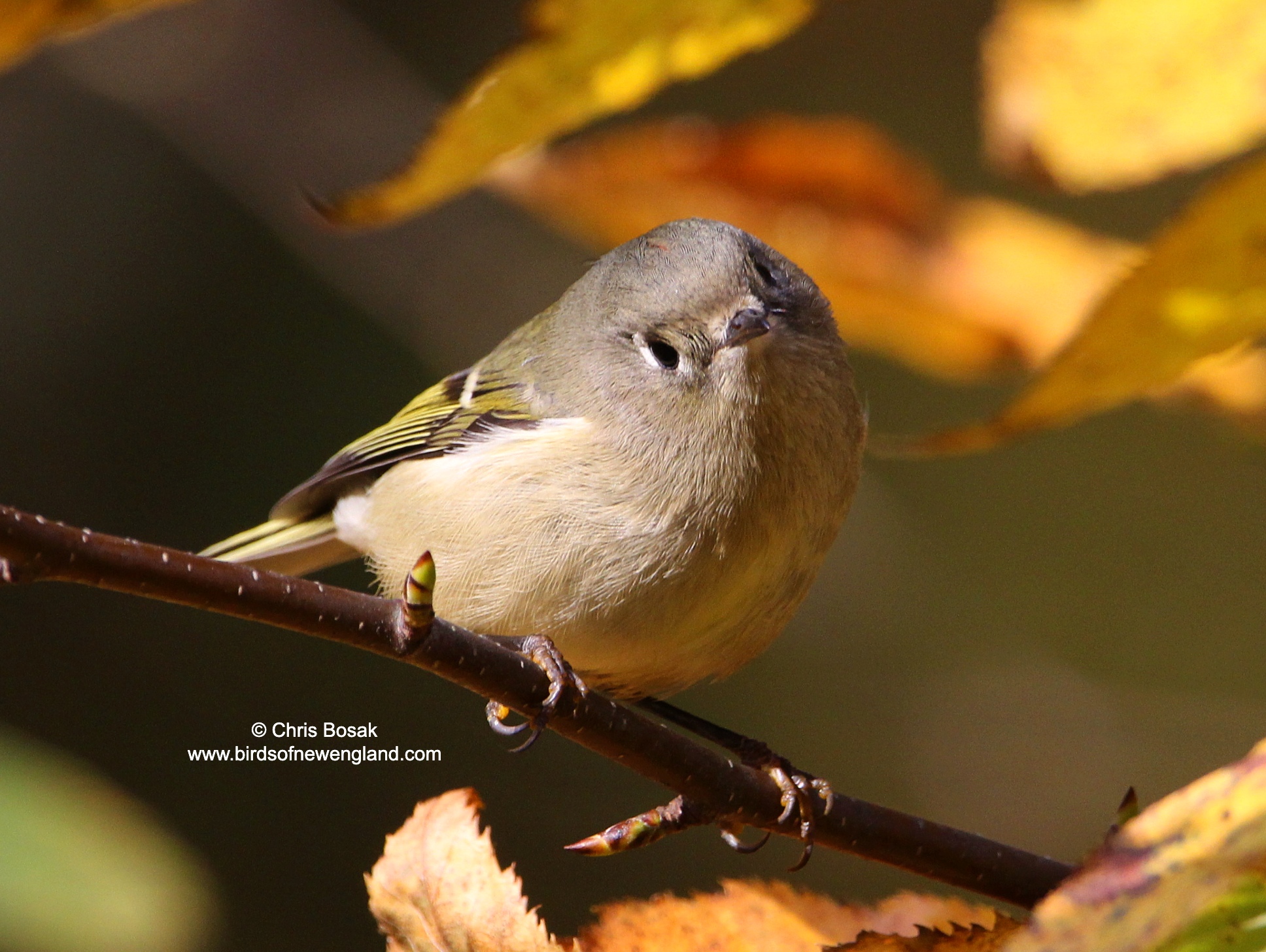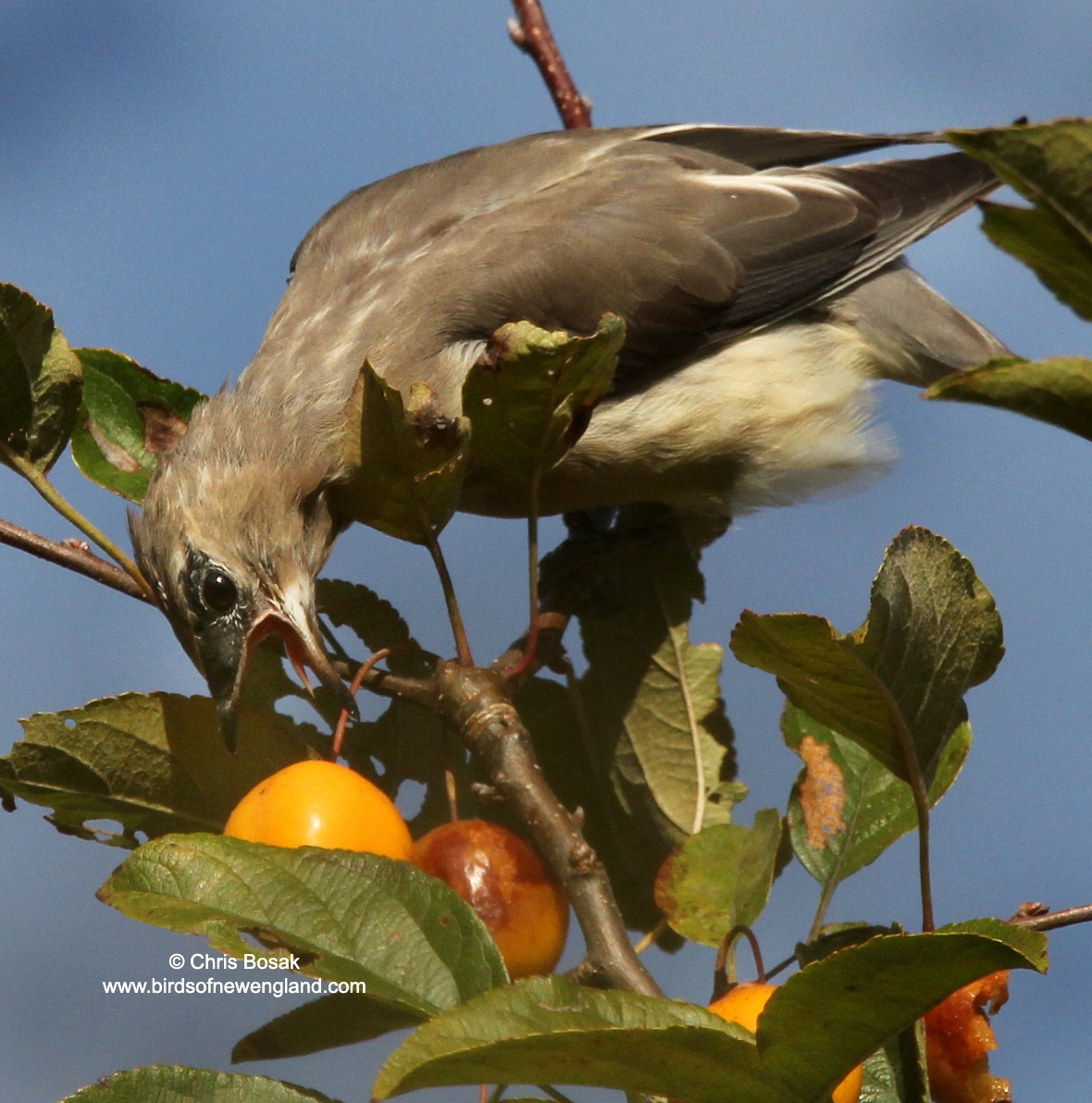
I finally got a ruby-crowned kinglet to sit still for half a second. Today’s walk was filled with white-throated sparrows and ruby-crowned kinglets.


I finally got a ruby-crowned kinglet to sit still for half a second. Today’s walk was filled with white-throated sparrows and ruby-crowned kinglets.


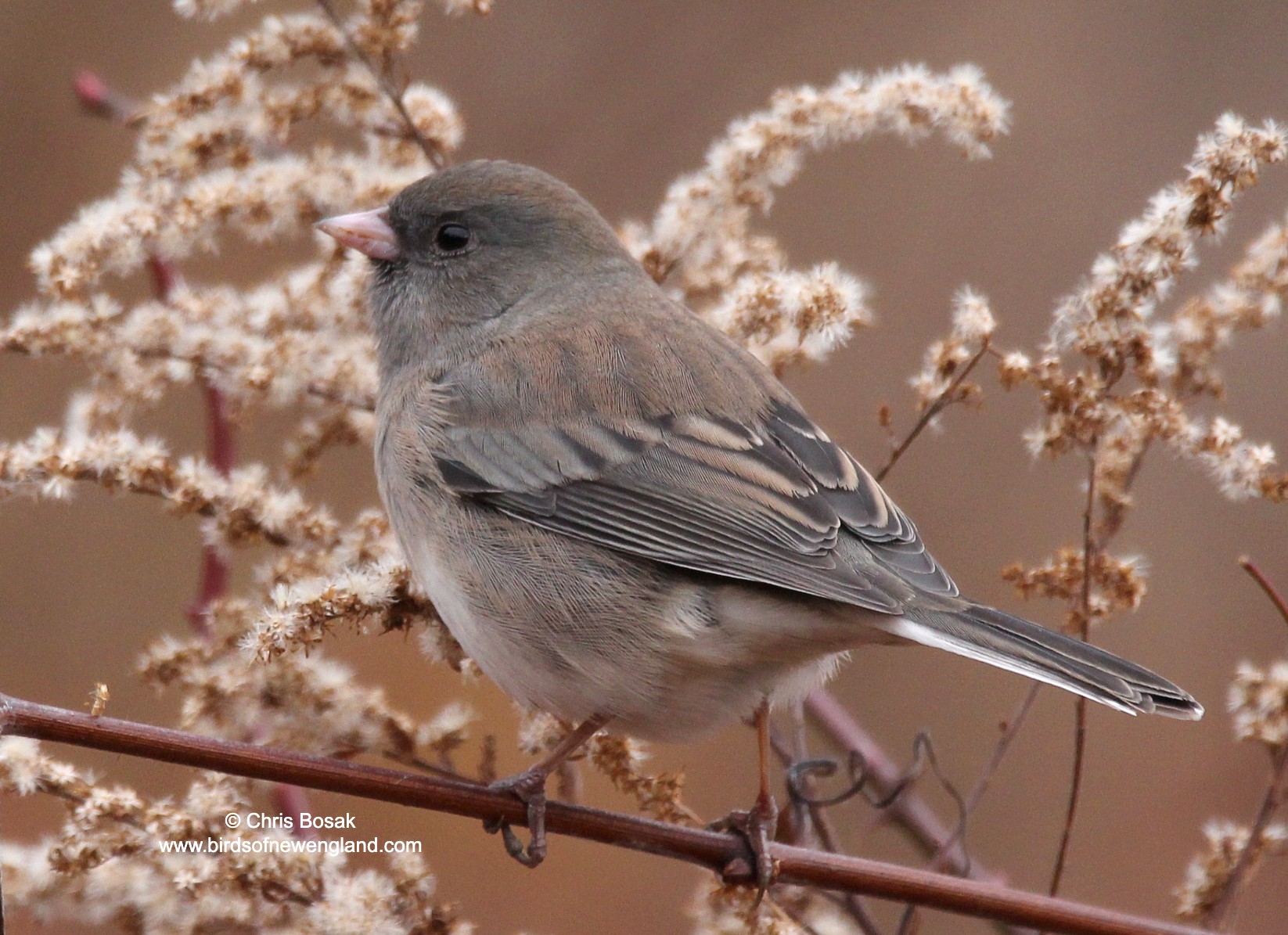
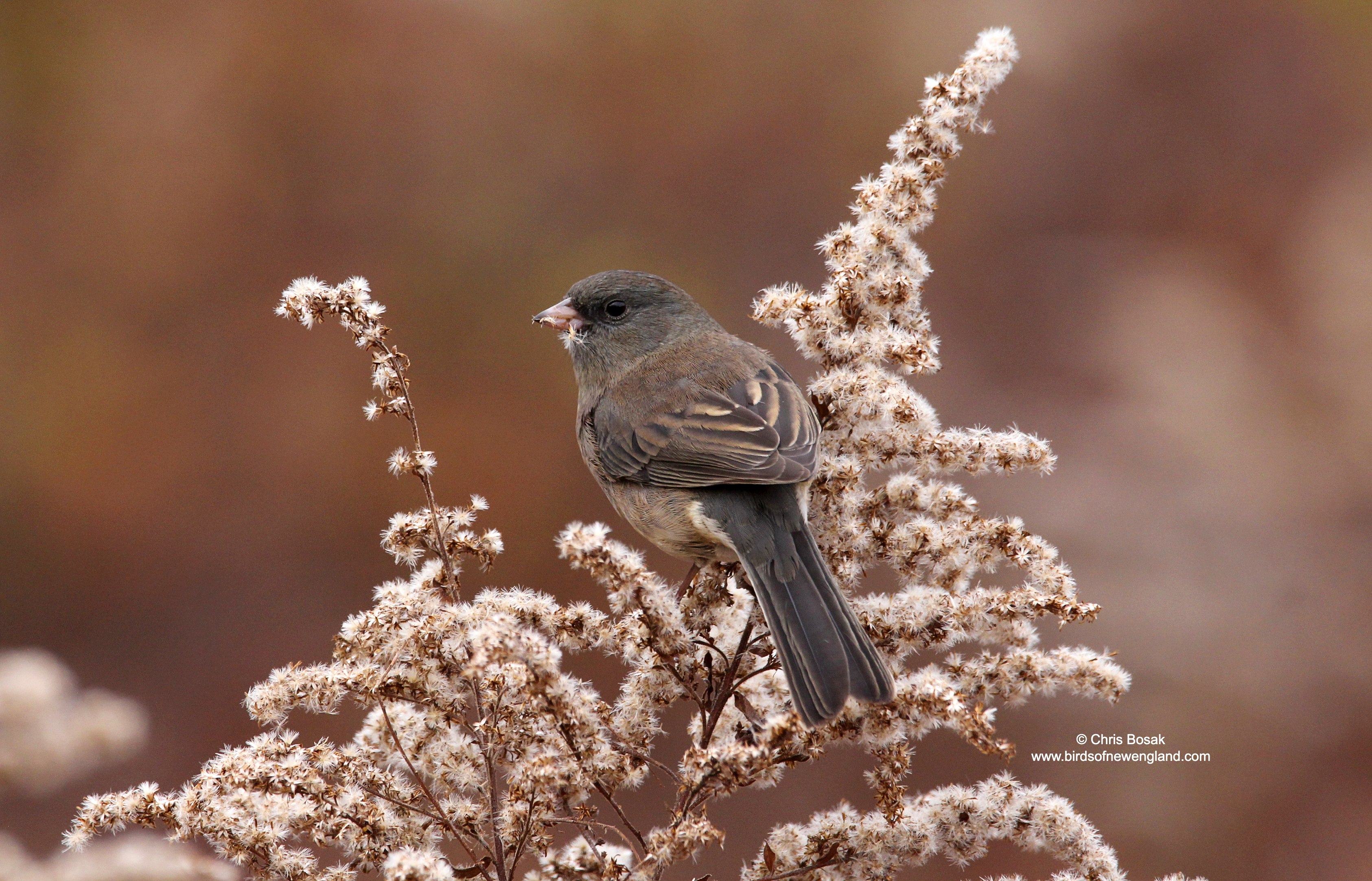
I pulled into the lot at the park, and a small flock of dark-eyed juncos scurried into the tall grass as my wheels came to a stop. The white border on the tail makes for an easy identification of juncos, even from behind.
Ten minutes later, as I walked along a trail with brush on either side of me, I heard the unmistakable call of the eastern towhee: “tow-hee,” with the second part rising in pitch. I spotted the beauty a few moments later.
There is a fairly short window in New England to see both of these birds on the same day. Towhees, the vast majority of them anyway, fly south before the juncos arrive from their northern breeding grounds. Juncos do breed throughout New England, but they are much more visible and numerous when the weather gets colder. Towhees are early arrivals in the spring and late departures in the fall, offering windows to see them and juncos on the same bird walk.
Eastern towhees and dark-eyed juncos look nothing alike. They aren’t even the same size, as the towhee is larger and much bulkier. Yet they are from the same family. Even more interesting is that neither one of them looks like other members of their family.
What comes to mind when you hear the word “sparrow”? Many people likely think of a house sparrow. Even though they are not native to the U.S., they are the dominant member of the sparrow family, in terms of numbers anyway. House sparrows look like sparrows. They are mostly brownish and rather plain-looking, at least from a superficial glance.
Continue reading
It seems like just yesterday we were welcoming back the warblers and other songbirds during spring migration and here we are at fall migration already.
Many of the birds we saw in the spring heading north will look the same on their southward journey. Many others, however, will look different.
Some, like male scarlet tanagers, will bear little resemblance to what they looked like in the spring. When we saw them in May and June, they were the most brightly colored birds in the woods. A sighting always yielded a gasp of excitement as we wondered how a bird in New England could be so brilliant. After the breeding season, however, they molted and are now dull yellow with less shiny black wings. They are still awesome-looking birds but not the striking birds they were in the spring.
In addition to many adult birds molting, the fall migration includes first-year birds that haven’t attained familiar adult plumage yet. They often resemble females or a mix of male and female plumage.
Continue reading
I’ve written about a lot of different types of birds over the last 30 years. There are some birds I’ve likely written about hundreds of times, and some only a handful of times.
If I searched my “For the Birds” folder for chickadee, robin or woodpecker, I’d get hundreds of hits. If I searched for vireo or flycatcher, I’d get far fewer hits, but still a decent amount.
There’s one bird family found in New England I’m not sure I’ve ever written about or even mentioned within a column. It’s the rail family. Rails are small to medium-sized chicken-like birds of the marshes. The reasons I haven’t written about them before are fairly obvious: rails are not very common, live in a habitat that is difficult for humans to traverse and are extremely secretive.
New England has a few members of the rail family. Virginia rail is the most common and the one most likely to be seen in New Hampshire. Sora is the other most likely candidate in New Hampshire. Clapper rails may be found along the coastal regions of New England.
There are also yellow rails, black rails and king rails found in New England, but they are rarely seen. Virginia rail is the best bet, but even that is a chore.
Continue reading
Answering a few questions from readers:
John from Swanzey asked a few weeks ago when it is safe to prune bushes and hedges so as not to disturb any birds that might be nesting there. It’s a great question and one that is not as easily answered as one may think.
Spring and early summer are obviously not good times, as many of our songbirds use this type of habitat for nesting. Robins, doves, blue jays and catbirds immediately come to mind as they are common backyard birds in New England. Many other birds, such as yellow warblers and American redstarts, use shrubby areas for nesting as well, although they tend to use more wild areas rather than backyard bushes.
But what about mid and late summer? It should be safe then, right? Not necessarily.
Continue reading
The Cooper’s hawk I wrote about last week was a bit of an anomaly for me.
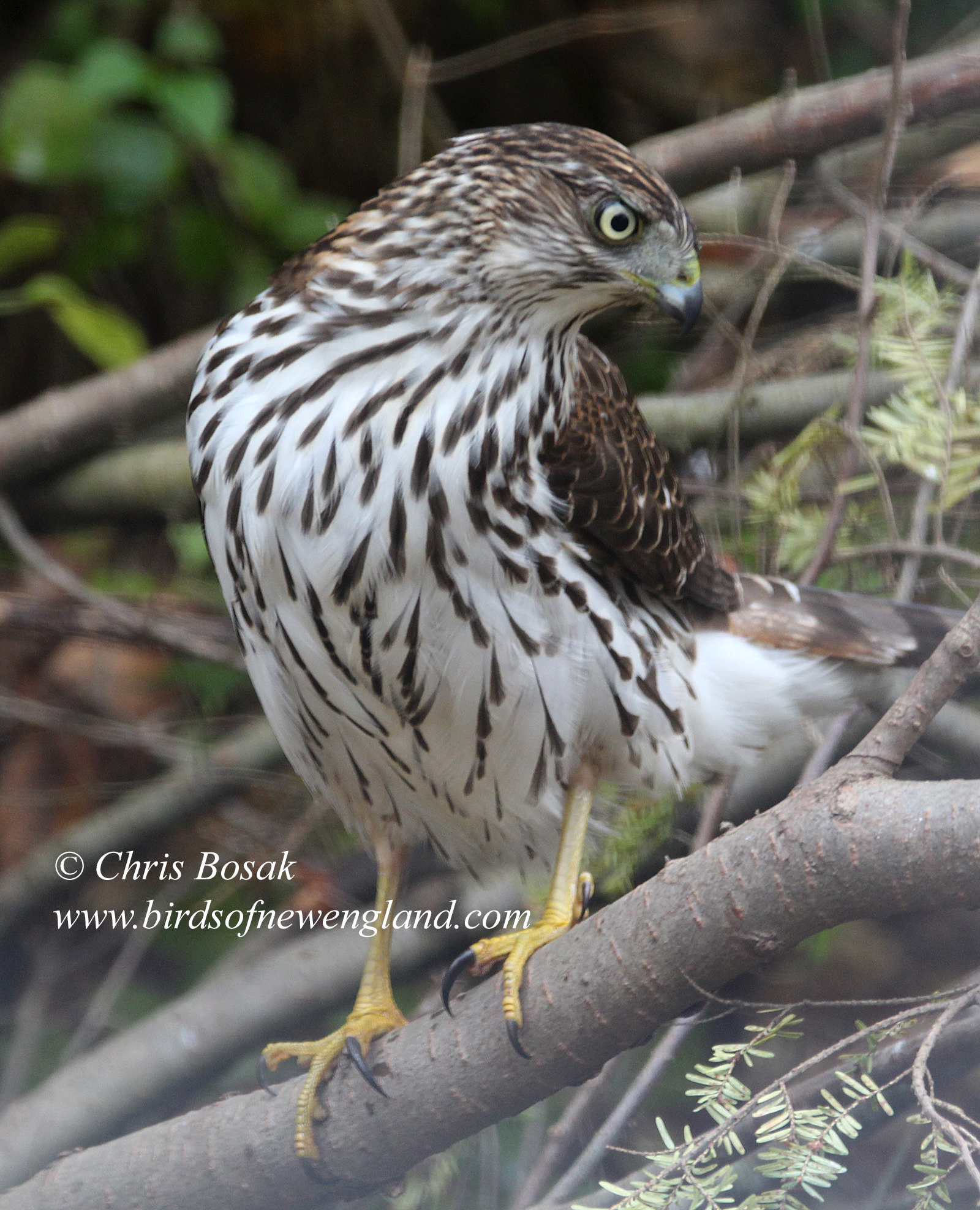
It’s not that I don’t see Cooper’s hawks often, but I typically see immature Cooper’s hawks. The one featured last week was an adult. Looking back through my photo collection, the vast majority of Cooper’s hawks I have photographed were immature birds.
With many birds, differentiating young birds from adults can be tricky as the time period between immature plumage and adult plumage is relatively short. With Cooper’s hawks, it’s easier as they retain their immature plumage into their second year. Bald eagles, similarly, do not obtain their classic white heads and tails until they are four or five years old.
As immature birds, Cooper’s hawks (as well as closely related sharp-shinned hawks) are brown with tan-streaked white chests and bellies. As adults, they are blue-gray with reddish-streaked white chests and bellies. Immature Cooper’s hawks have yellow eyes, and adults have red eyes. Interestingly, ospreys are the opposite with adults having yellow eyes and immatures having orange-red eyes.
Continue reading
“One of the nice things about birdwatching is …”
I’ve started many sentences with that phrase over the years. The backend of that line may be finished in almost innumerable ways:
… everyone, regardless of age or skill level, can enjoy it.
… it can be done during any time of the day or year.
… no two days are alike.
… there is always something new to learn or discover, regardless of how advanced you are.
… each time of year brings its own delights.
For the purposes of this column, the sentence will read: “One of the nice things about birdwatching is that it can be done anywhere.” Not many hobbies can be enjoyed in the woods, in a canoe or kayak, at a local park, or sitting in the kitchen looking out the window with your morning cup of coffee.
Continue reading
Following up on yesterday’s post, here are a few more American oystercatcher photos. I find both of these photos rather humorous. The top photo looks like an unhappy customer storming away from the counter. The bottom photo looks like an oystercatcher giving someone the evil eye.
Here’s the original post with more photos, including an oystercatcher chick.


My first warbler (a pine warbler) showed up on March 31. Here are numbers two and three for the year: yellow-rumped warbler and palm warbler, both seen today (Friday, April 11, 2025). More to come in the weeks ahead!
Continue reading
This is the second column in the last few weeks where I end up writing about and using a photograph of an unintended subject because the primary target fell through.
A few weeks ago, you may recall, I wrote about a missed opportunity to photograph blue jays harassing a barred owl. The blue jays successfully drove off the owl before I could get into position for a photo. On the walk back to the car, I came across a flock of cedar waxwings eating berries and stopped to photograph them.
This time, the intended target was American woodcock, but I ended up coming home with more photos of my coyote friend. Late in 2024, I wrote about getting lucky and spotting a coyote in a field as I passed a small break in the thick, tangled, brushy border between the woods and field. I’m assuming this was the same coyote, as I spotted it in the same field very near where I had seen it before.
But first, my intended target. American woodcocks, or timberdoodles, have been a nemesis species of mine for many, many years. I’ve seen their evening aerial displays a few times, but I haven’t found one during the day when getting a photograph would be possible. The aerial displays come shortly after sunset when the evening light has faded.
Continue reading