Warbler season has arrived in New England

Photo by Chris Bosak Palm Warbler

Photo by Chris Bosak
Palm Warbler

The title of this post is a bit misleading because warbler season actually arrived a few weeks ago. But there early warblers are still around and the next wave hasn’t arrived in force yet, so the topic is still timely.

Anyway, warblers (small and usually colorful Neotropical migrants) move through New England starting in late March/early April. The migration continues through early June. Many warbler species nest in New England, particularly Continue reading

Connecticut Osprey and how you can help

Photo by Chris Bosak An Osprey soars over the Norwalk River on Monday, Sept. 1, 2014.

Photo by Chris Bosak
An Osprey soars over the Norwalk River on Monday, Sept. 1, 2014.

Here’s a recent column I wrote for The Hour newspaper in Norwalk, Conn. Most of the Osprey have returned to New England by now and Connecticut Audubon is once again holding its Osprey Nation program whereby citizens monitor the nests of “fish hawks.” There are now dozens of Osprey nests along Continue reading

Killdeer doing what Killdeer do to keep the species going

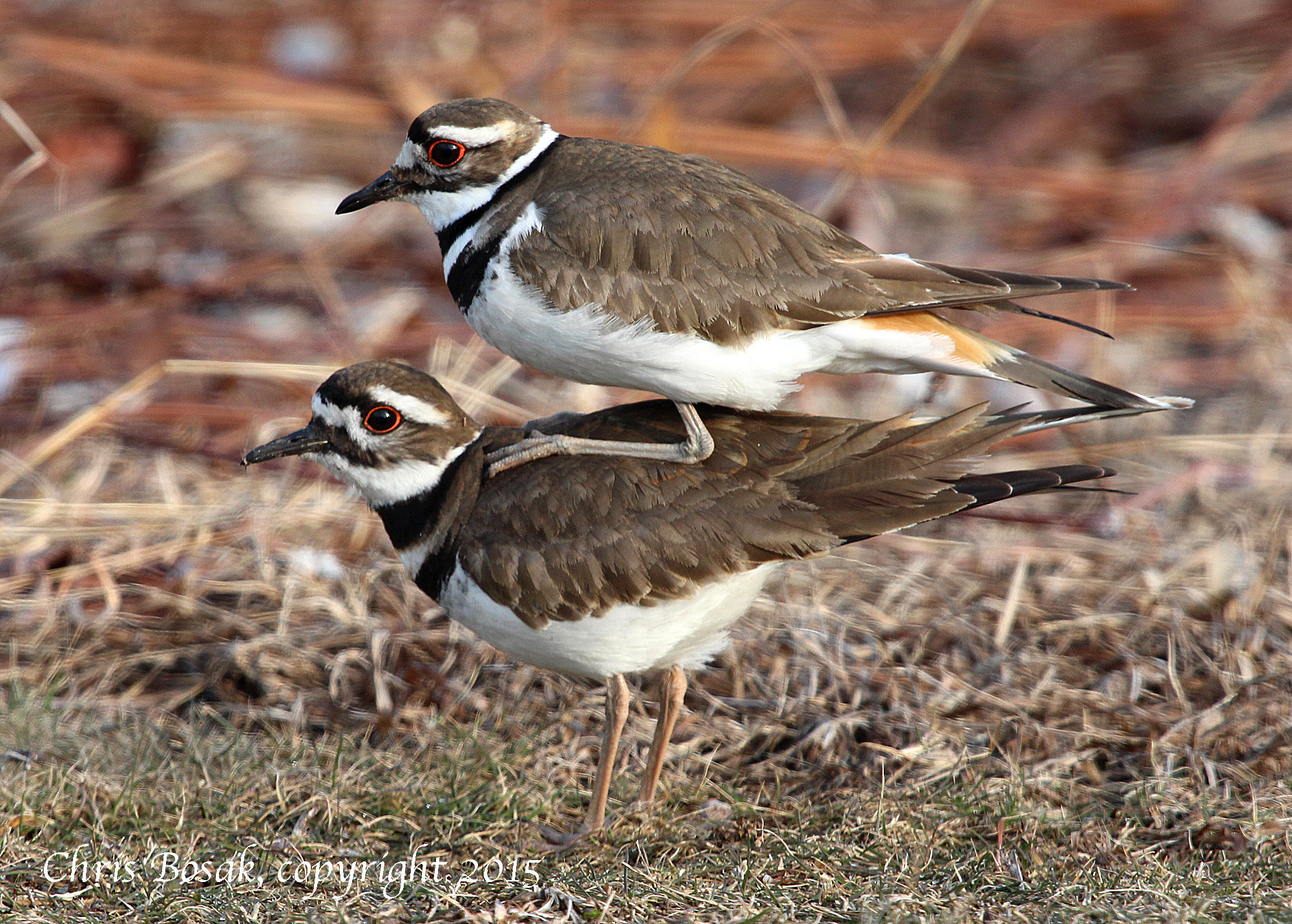
Photo by Chris Bosak A Killdeer pair copulates in Darien in early April 2015.

Photo by Chris Bosak
A Killdeer pair copulates in Darien in early April 2015.

The day after photographing a Killdeer walking along the snow-covered ground of Spring Grove Cemetery in Darien, Conn., I returned to the same spot to see what other birds might be around.

I watched a few Wood Ducks and Ring-necked Ducks in the small pond, but they stayed out of photographic range. It was good to see them anyway, of course.

Then I spotted a Killdeer somewhat near the pond’s edge. What the heck, I thought, may as well take some photographs. I grabbed a few shots and almost started to drive away until I noticed another Killdeer not far away. I almost drove away again as the new Killdeer was not adding any new photographic opportunities. I was happy to see it, don’t get me wrong, but I was ready to move on with me day.

I put the camera back on front seat and reached for the gear shift when I heard a long and consistent “piping.” What are they up to, I thought. Instinctually I got the camera ready again and, sure enough, the male climbed on top of the female and did what comes naturally in the natural world. The continuation of the species … it’s a beautiful thing.

The splendid White-throated Sparrow

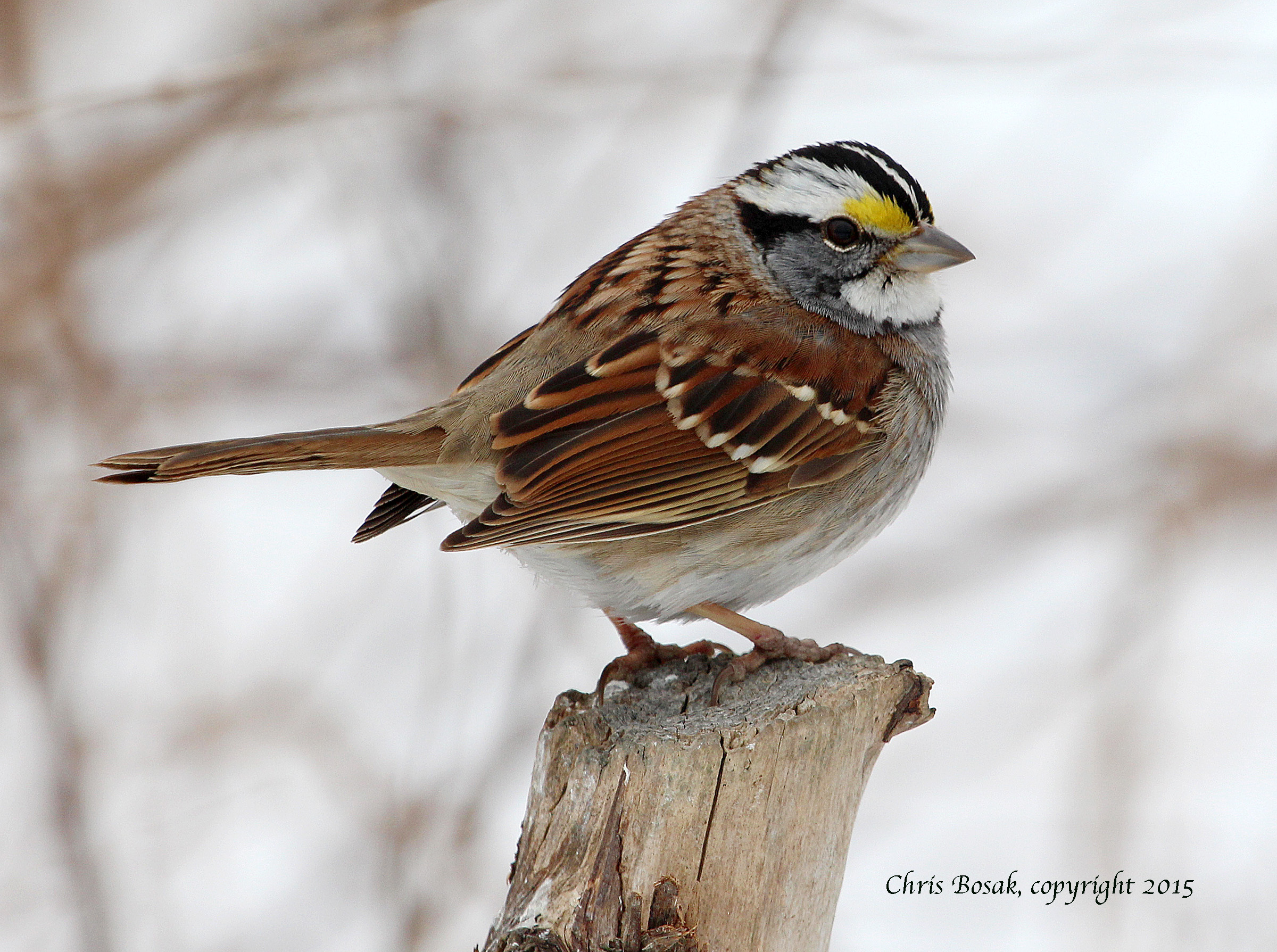
Photo by Chris Bosak A White-throated Sparrow perches on a branch in Stamford, Conn., March 2015.

Photo by Chris Bosak
A White-throated Sparrow perches on a branch in Stamford, Conn., March 2015.

There are few annual birding moments as striking as seeing your spring’s first male White-throated Sparrow in all his breeding-plumage glory. The white shines, the yellow pops, the browns mix together in perfect harmony. You even notice a few colors you never knew this sparrow had before.

Well, I had that moment last week while watching some feeders in Stamford, Conn.. The House Sparrows, American Tree Sparrows (another looker) and even some White-throated Sparrows (mostly female) jockeyed around the feeders. Then this handsome fellow flew into the scene. He was a show-stopper as far as I was concerned. “If only he’d jump off the ground and take a perch more conducive to getting a good photo,” I thought to myself.

Then, of course, he did. He jumped up to a large stick jutting straight up into the air. Many times birds take those perfect perches and take off two seconds later before you can get the camera ready for the shot(s). Boy that’s frustrating when that happens. But his guy kept that perch in front of me for a good 12-15 seconds — an eternity in bird photography terms. Soon, most of the males will look this resplendent. I love his head and face with the white, black, gray and yellow. Who would have thought all that beauty in a sparrow?

Peregrine Falcon visits in the cold

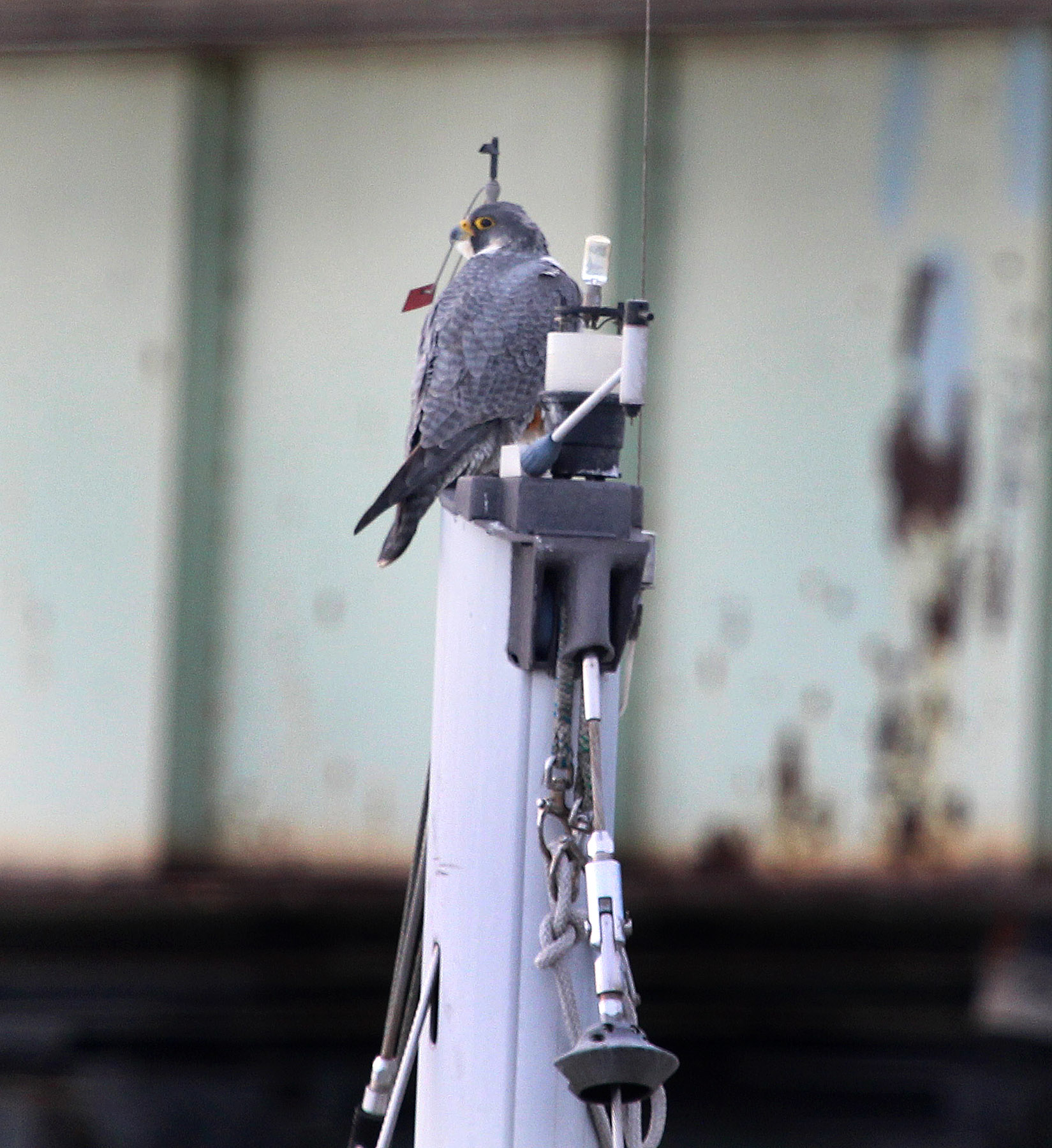
Photo by Chris Bosak A Peregrine Falcon rests on the top of a sailboat mast during a frigid day in Feb. 2015.

Photo by Chris Bosak
A Peregrine Falcon rests on the top of a sailboat mast during a frigid day in Feb. 2015.

Wicked cold temperatures returned to New England on Monday. (“Wicked” is for all my Boston friends.)

The Peregrine Falcons that I see from my desk at work returned on Monday, too. They frequently visit the Yankee Doodle Bridge (I-95) and the sailboat masts near the building at which I work. I hadn’t seen them in a while, though. But on Monday, with everything frozen solid except for a few tiny pools of water kept open by bubblers near the boats, they returned.

My vantage point from the fourth floor affords me the opportunity to see when one of the falcons comes in for a landing on the sailboat mast. I noticed it swoop in gracefully Continue reading

The Red-tailed Hawk under calmer conditions


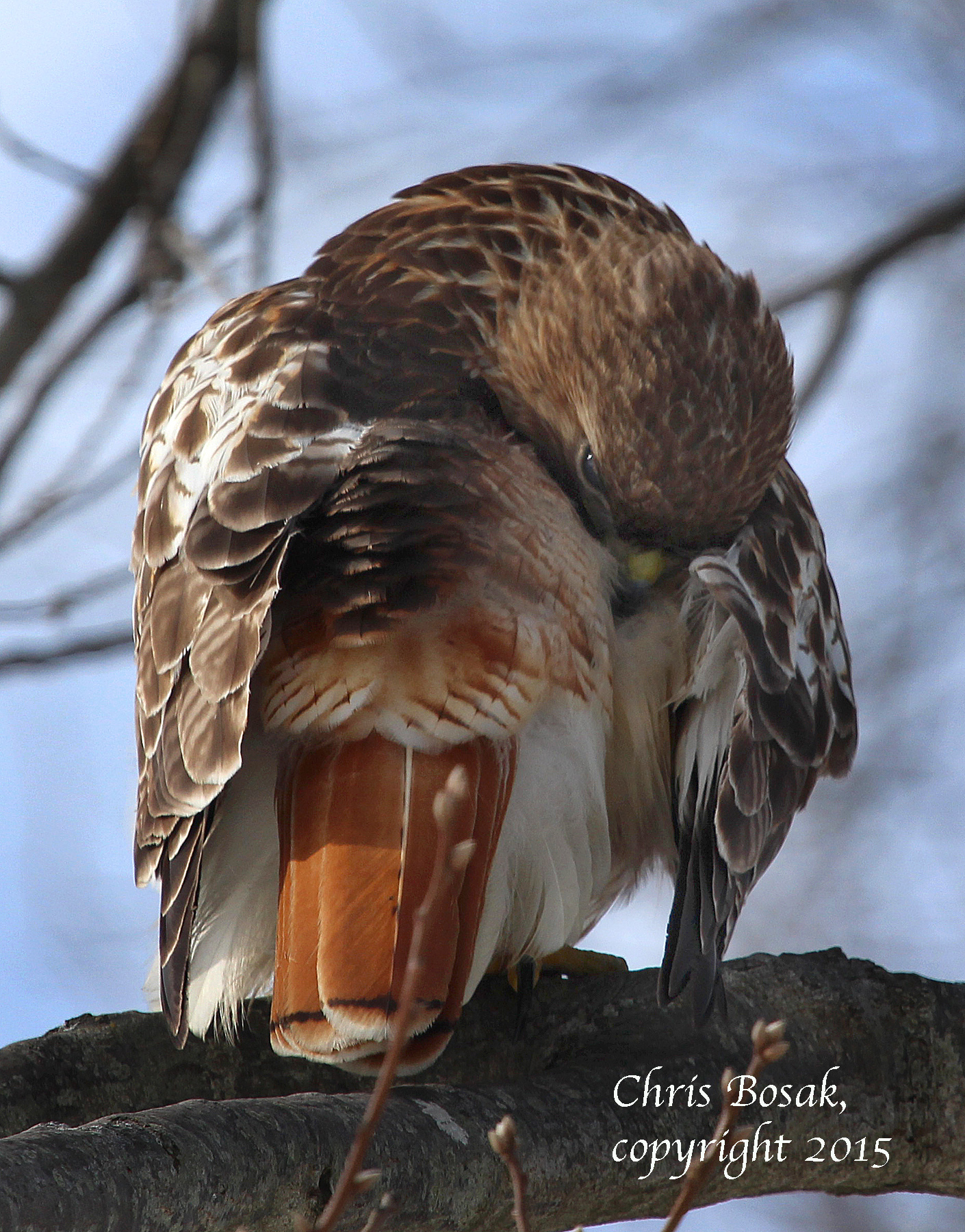
Photo by Chris Bosak A Red-tailed hawk preens at Weed Beach in Darien, Conn., January 2015.

Photo by Chris Bosak
A Red-tailed hawk preens at Weed Beach in Darien, Conn., January 2015.

Here’s the second post about the Red-tailed Hawk I found at Weed Beach in Darien, Conn. the other day. The previous post explains the story, so here’s the photos of the impressive bird without the wind blowing its plumage.It is, however, preening and then looking back at me menacingly.

Photo by Chris Bosak A Red-tailed hawk at Weed Beach in Darien, Conn., January 2015.

Photo by Chris Bosak
A Red-tailed hawk at Weed Beach in Darien, Conn., January 2015.

Photo by Chris Bosak A Red-tailed hawk at Weed Beach in Darien, Conn., January 2015.

Photo by Chris Bosak
A Red-tailed hawk at Weed Beach in Darien, Conn., January 2015.

Something to do on a snowy day: Learn the difference between hairy and downy woodpeckers

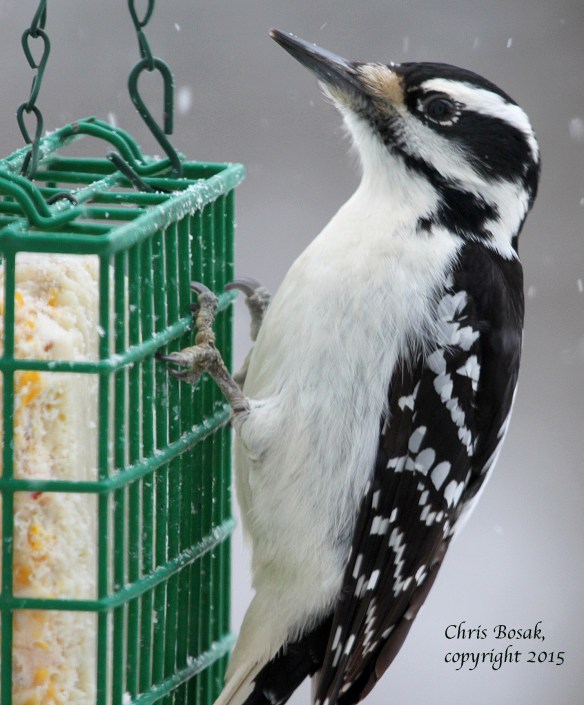
Photo by Chris Bosak A female Hairy Woodpecker clings to a suet feeder as snow falls in Jan. 2015.

Photo by Chris Bosak
A female Hairy Woodpecker clings to a suet feeder as snow falls in Jan. 2015.

If you live in New England you’re about to buried in snow so why not studies these photos and learn the differences between the hairy and downy woodpeckers. Beginning birders often confuse the two species. I know it took me a long time to be able to tell the two woodpecker species apart with confidence. Hopefully this posting will help some of you distinguish between the two.

The two species are hard to tell apart because they basically look exactly the same, hence the confusion. The major difference is the size. The downy is a dainty six inches, while the hairy is a beefy nine inches. That’s enough of a difference that you’d think it would be easy to tell one from the other. But if you’re new to this birding thing and don’t have a point of reference to judge size, it’s tough. I know, I’ve been there. Plus, like any birds, there can be size variations within a particular species. There can be smallish Hairy Woodpeckers and largish Downy Woodpeckers. So size can or can’t be a good way to tell them apart.

For me, the biggest difference is the size of the bill. In the most simple terms, downys have small bills and hairys have big bills. Beyond that, the bill of the downy just looks small and rather fragile. It isn’t fragile, of course, it’s quite strong. It just looks small and fragile. The bill of the Hairy Woodpecker, on the other hand, looks more sturdy and substantial. If one or the other lands on your feeder, check out the bill — dainty downy or hardy hairy.

Below is a side-by-side comparison. (Males of both species have a red patch on their heads. Females do not have have the red patch. Both birds below are females.)

Photos by Chris Bosak Side-by-side comparison of Hairy and Downy Woodpeckers' bills. Female Hairy on the left, female downy on the right.

Photos by Chris Bosak
Side-by-side comparison of Hairy and Downy Woodpeckers’ bills. Female Hairy on the left, female downy on the right.
Clearing out my 2014 photos: Meadowhawk dragonflies mating

Photo by Chris Bosak Meadowhawk dragonflies mate in Selleck's/Dunlap Wood in summer 2014.

Photo by Chris Bosak
Meadowhawk dragonflies mate in Selleck’s/Dunlap Wood in summer 2014.

Here’s my next photo in the series of 2014 photos that I never got around to looking at and posting. This will be the final one. It’s time to move forward and let go.

I got this shot in the summer 2014 when trying to add to my meadow close-up collection. I liked the shots based on the quick look I took on the camera’s tiny screen at day’s end, but never took them further than that. In fact, I had forgotten about them until I found the photo folder buried inside another folder the other day.

This shot shows a pair of meadowhawk dragonflies mating in a “wheel” position. The male is the red one.

For a fascinating article on how dragonflies mate, click here.

I like photographing dragonflies in the summer. The birding gets slow in July/August and bird photography even slower. So my attention often turns to the smaller creatures of the meadows, which are around and active on even the hottest days. For many more of my meadow close up photos, click here.


Clearing out my 2014 photos, take 8: Least Tern

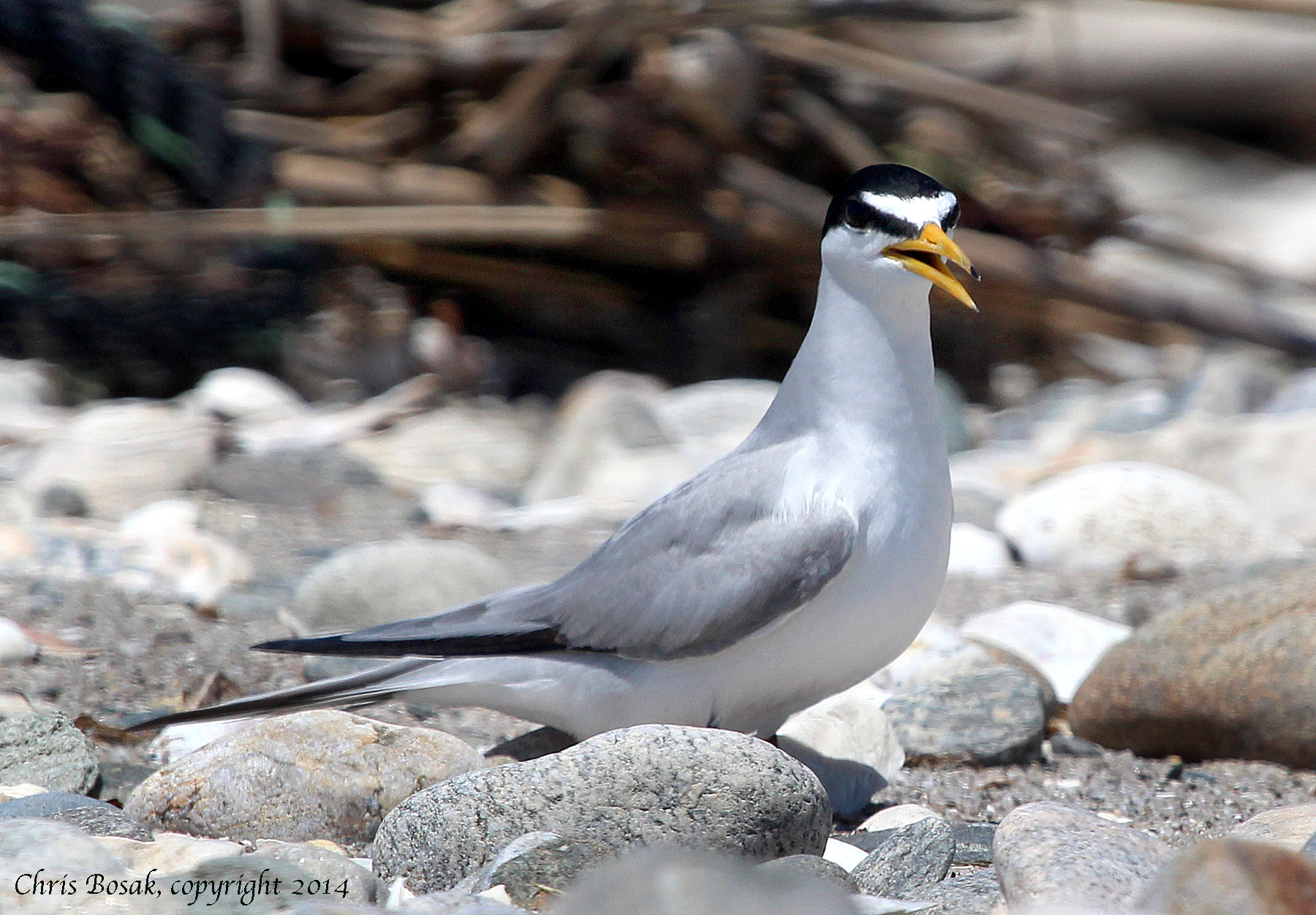
Photo by Chris Bosak A Least Tern sits among the rocks at the beach at Connecticut Audubon's Coastal Center at Milford Point in spring 2014.

Photo by Chris Bosak
A Least Tern sits among the rocks at the beach at Connecticut Audubon’s Coastal Center at Milford Point in spring 2014.

Here’s my next photo in the series of 2014 photos that I never got around to looking at and posting.

As we are now stuck in this deep freeze here in New England, here’s a warm-weather shot for you. It’s a Least Tern on the beach at Connecticut Audubon Coastal Center at Milford Point. Last week I posted a Piping Plover that I saw during my volunteering to monitor plovers and terns on the Connecticut shoreline. Well, here’s the other half: the terns. The plovers come in much earlier in the spring than the terns. Least Terns are handsome birds with yellow bills, compared the red or orange bills of most terns. Least Terns, as their name suggests, are also smaller than most terns. They can also be quite aggressive on their nesting areas (who can blame them?) and they will continually dive-bomb intruders. Yes, that includes innocent shorebird monitors just trying to help them out.

Piping Plovers and Least Terns are threatened species in Connecticut.

Clearing out my 2014 photos, Take 4: Icy Branches

Photo by Chris Bosak Ice covers branches in New England during a storm in Jan. 2014.

Photo by Chris Bosak
Ice covers branches in New England during a storm in Jan. 2014.

Here’s my next photo in the series of 2014 photos that I never got around to looking at and posting.

Sometimes the most interesting things you see on a bird walk are not the birds at all. Here’s an example. A cold rain turned to ice while I was in the woods one day last January. It was fairly unpleasant out there, but the way the ice sheathed everything in the woods made it worth it. The drive home wasn’t fun either, but I made it.