Photo by Chris Bosak
A black duck hides in the grasses near a pond in northern New Hampshire, July 2020.
I dreaded looking it up, but as it turns out, there was nothing to dread.
Let me explain.
There are a handful of regular birding columns that I write every year about this time. One is on Christmas gifts for the birdwatcher, one is about the Christmas Bird Count, one is on my birding highlights of the year, and one is on my New Year’s resolutions for the coming year.
It is the resolution column that I dread looking back on. There are sure to be many failures, and I just hope there are a few successes to go along with it.
I was surprised when I looked up last year’s resolution column. As it turns out, I didn’t write one last year after all. Maybe there was too much going on, maybe I figured I wouldn’t stick to the resolutions anyway, or maybe COVID’s first Christmas had me so down I just couldn’t bring myself to write a forward-thinking, optimistic column.
Well, COVID is still with us and wreaking havoc on another holiday season, but I am not going to let it win this year. So here’s my latest birding New Year’s resolution column.
Photo by Chris Bosak
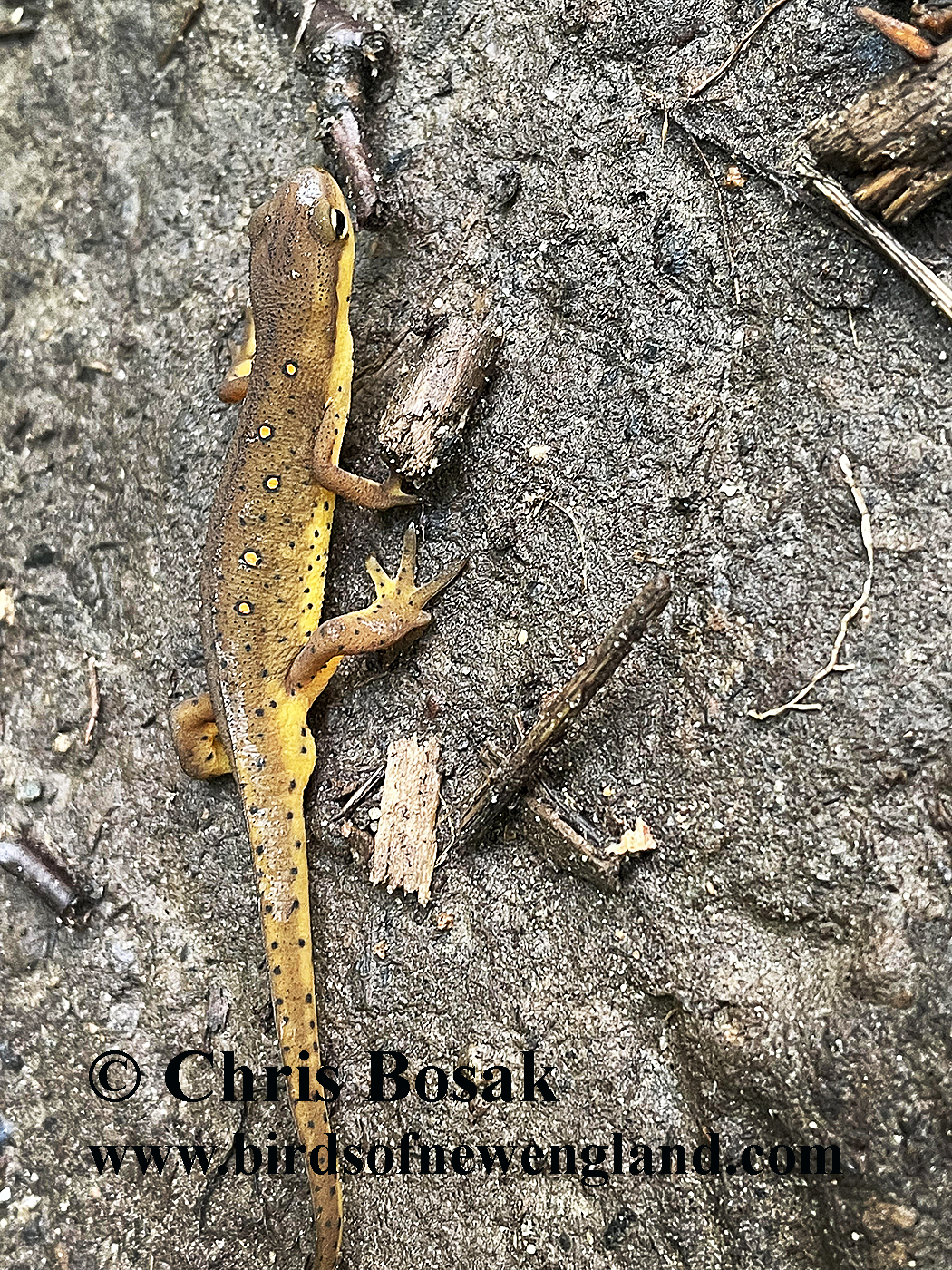
An eft works its way across a path in New England, fall 2021.
If you’ve spent any time in the New England woods in the spring, summer or fall after a rain, you’ve certainly come across an eft or two (probably way more than that.) They wander onto hiking trails and can be quite numerous the day after a rain. I came across several during a recent walk at Huntington State Park in SW Connecticut. Notice the different colors of the two efts pictured. The eft is the terrestrial stage of the eastern newt. The four stages of the newt are described succinctly in the following post by author David George Haskell.
Photo by Chris Bosak
An eft works its way across a path in New England, fall 2021.
Photo by Chris Bosak
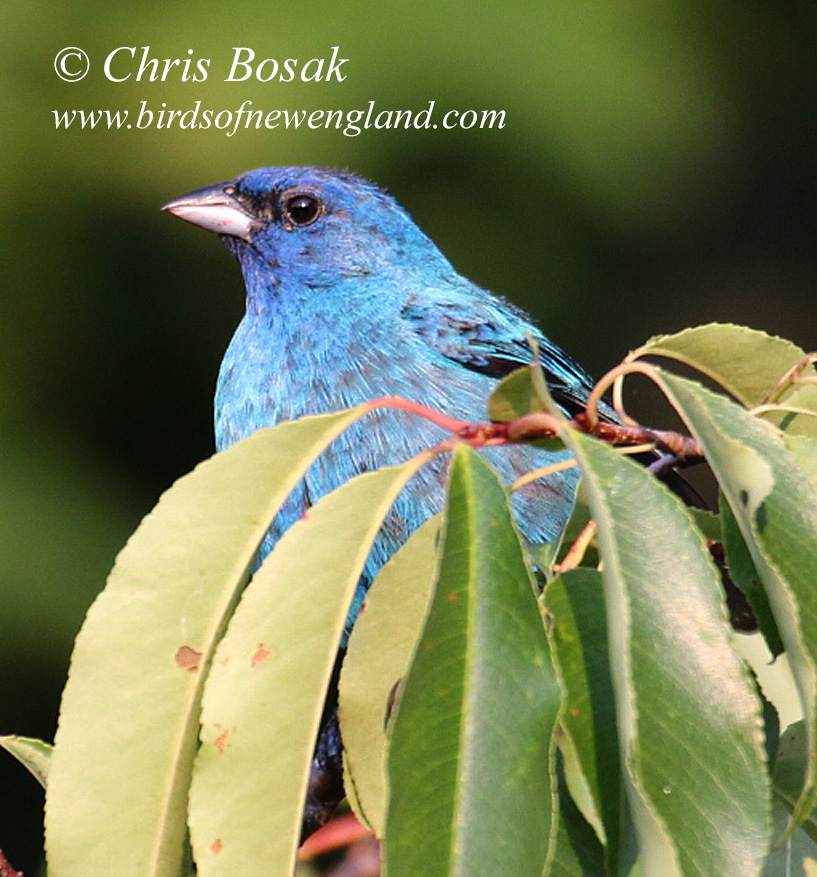
An indigo bunting perches in a tree in New England, July 2021.
The upcoming For the Birds column will provide more detail, but until then here are a few more shots of this beauty.
Photo by Chris Bosak
An indigo bunting perches in a tree in New England, July 2021.Photo by Chris Bosak
An indigo bunting perches in a tree in New England, July 2021.
Photo by Chris Bosak
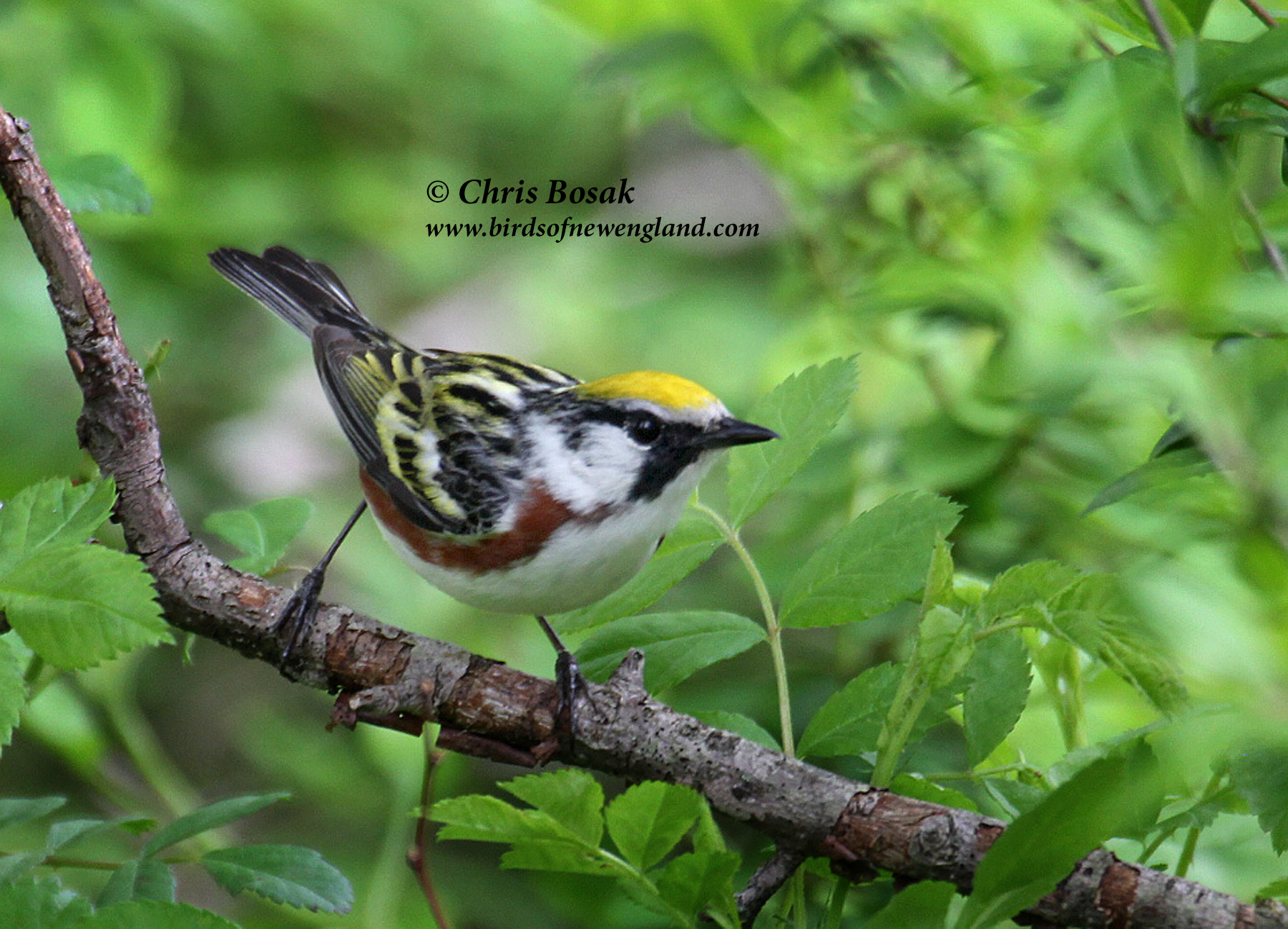
A chestnut-sided warbler lurks in the brush in New England, May 2020. Merganser Lake.
Due to various reasons (excuses?), I haven’t been out this year looking for warblers yet. But here are a few “old” shots to celebrate warbler season, a highlight of the birding year. I will take my own advice soon and “get out there.”
Photo by Chris Bosak
A rose-breasted grosbeak perches on a branch in New England, June 2020. Merganser Lake.
So much for taking a break from feeding the birds.
I mentioned in last week’s column that I had taken down my feeders for the summer as my visits had dwindled to a few species. I also mentioned that I continued to maintain a large platform feeder on my deck to keep those few birds happy. Well, that platform feeder is busier than ever.
One day last week, while working from home and using the outdoor table on my deck as my office for the day, I watched as chickadees, nuthatches, titmice, catbirds, cardinals, blue jays, house finches, downy woodpeckers and red-bellied woodpeckers helped themselves to the offerings.
The feeder, which is nothing more than a large, flat board I found in the basement, is big enough to hold a variety of foods: sunflower seeds, mealworms, suet nuggets and thistle seeds. I nailed a few small branches around the edge of the board to keep the seeds in place during windy days.
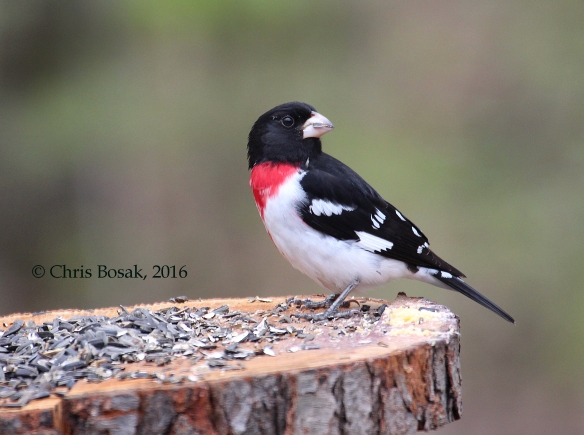
I was already pleasantly surprised by the variety of birds that were coming when a male rose-breasted grosbeak landed on the board. Thankfully, I had the foresight to bring the camera out to the table with me. I was quite sure the strikingly beautiful bird would take off as soon as I lifted my arms to grab the camera off the table as I was sitting only 9 or 10 feet away from the feeder.
Slowly I moved my arms and watched as the black-and-white bird with a bright red triangular bib looked back at me. I was relieved when the bird looked away and started grabbing sunflower seeds. Still, I couldn’t risk double-checking my camera settings or autofocus point and I started photographing away. The settings were fine, luckily, and I got some nice, full-frame shots of the handsome songbird.
What also made the day special was that many of the birds that visited, especially the chickadees, titmice and downy woodpeckers, were first-year birds still gaining their adult plumage. The young woodpeckers usually arrived with a parent and watched and learned. It was amazing to think that some of these birds were born only a few weeks prior. I hope they visit for years to come and can avoid the many dangers birds face as they grow.
So I guess my summer feeding break isn’t going to pan out, which is fine with me. I’ll continue to enjoy the show as long as it lasts.
Photo by Chris Bosak A Rose-breasted Grosbeak visits a homemade platform feeder in Danbury, Conn., on May 6, 2016.
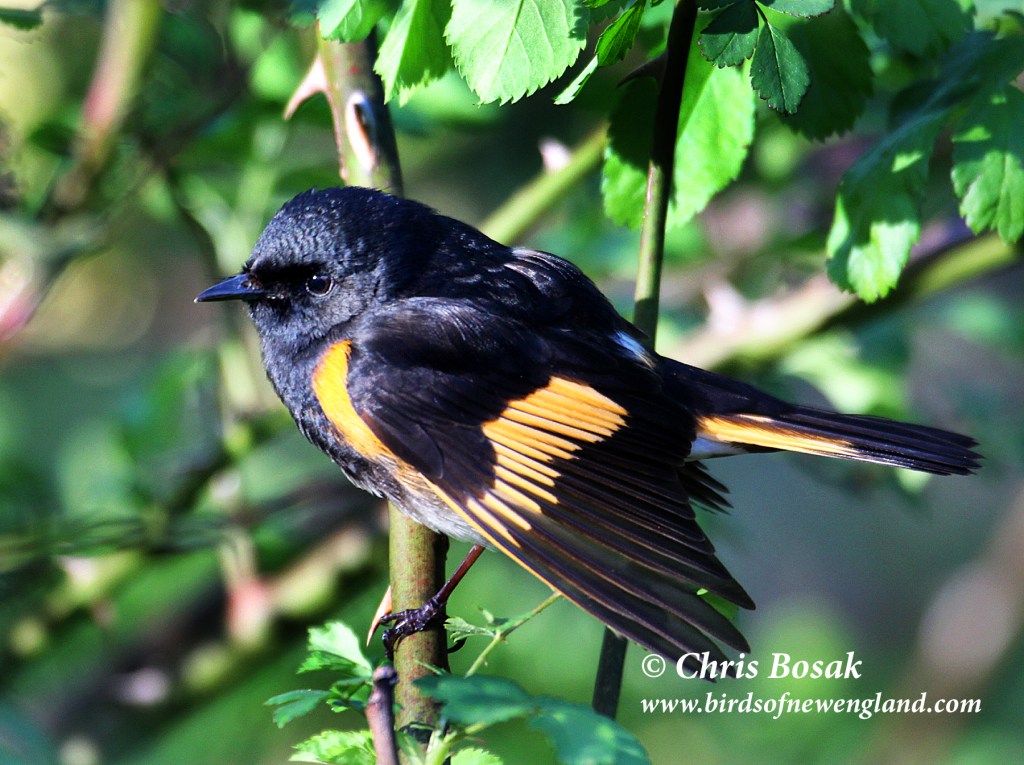
Photo by Chris Bosak An American redstart perches in a bush at Bennett’s Farm State Park in Connecticut, May 2020.
Something woke me up around 3:30 a.m. and I couldn’t fall back asleep. I gave up trying when the darkness outside my window started to brighten. What the heck, I told myself. It’s the height of warbler season so let’s go find some warblers. I made a cup of coffee and raced the rising sun to a nearby park. I headed down a path that has led to warblers in the past. It did again this time. There wasn’t a tremendous variety of warblers (maybe seven species) but the ones I did see kept me entertained.
My favorite was this American redstart that followed me along the path for an inordinate amount of time. It gave me great looks at it, but it would not sit still very well for photos. I managed a few decent shots despite his hyperactivity. A few more photos are below.
(Repeat text for context: I’m running out of COVID-19 lockdown themes so from now until things get back to some semblance of normalcy, I will simply post my best photo from the previous day. You could say it fits because of its uncertainty and challenge. I’ll call the series “A Day on Merganser Lake,” even though that’s not the real name of the lake I live near in southwestern Connecticut, it’s just a nod to my favorite duck family.)
Photo by Chris Bosak An American redstart perches in a bush at Bennett’s Farm State Park in Connecticut, May 2020.Photo by Chris Bosak
An American redstart perches on a branch at Bennett’s Farm State Park in Connecticut, May 2020.
Photo by Chris Bosak
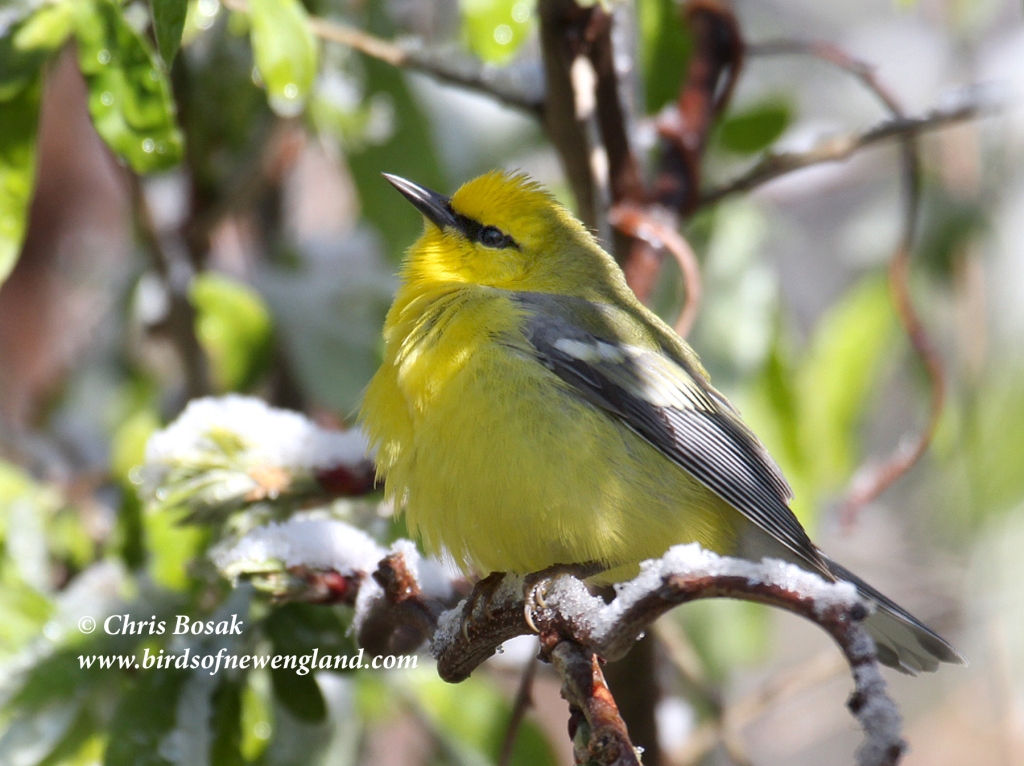
A blue-winged warbler perches on snowy branches at Bennett’s Farm State Park in Connecticut during a rare May snowfall in 2020.
Usually I post my latest bird column on Sunday and leave it at that. But yesterday (yes May 9) many in New England woke up to a snow-covered ground and then got another dose of the white stuff later in the day. I couldn’t pass up the opportunity to get up early and head into the woods to try to get photos of warblers and other spring migrants that we typically don’t associate with snow. There was just a covering of snow and the morning sun was melting it quickly so I had to hurry. I ended up with a few shots of an ovenbird and a blue-winged warbler on snowy branches. Strange times, indeed. (I’ll post the ovenbird a bit later today.)
Happy Mothers Day to all the moms out there!
(Repeat text for context: I’m running out of COVID-19 lockdown themes so from now until things get back to some semblance of normalcy, I will simply post my best photo from the previous day. You could say it fits because of its uncertainty and challenge. I’ll call the series “A Day on Merganser Lake,” even though that’s not the real name of the lake I live near in southwestern Connecticut, it’s just a nod to my favorite duck family.)
Photo by Chris Bosak
A blue-winged warbler perches on snowy branches at Bennett’s Farm State Park in Connecticut during a rare May snowfall in 2020.Photo by Chris Bosak A blue-winged warbler perches on snowy branches at Bennett’s Farm State Park in Connecticut during a rare May snowfall in 2020.
Photo by Chris Bosak A male eastern bluebird feeds his mate mealworms in a backyard in Danbury, Connecticut, April 2020. Merganser Lake.
A Day on Merganser Lake XIII
I caught these love birds (eastern bluebirds really) in an intimate moment yesterday as the male fed his mate some dried mealworms. How romantic, I know. I have been seeing them do this over the last few days but have never been quick enough with the camera. This time I was ready and got their special moment.
(Repeat text for context: I’m running out of COVID-19 lockdown themes so from now until things get back to some semblance of normalcy, I will simply post my best photo from the previous day. You could say it fits because of its uncertainty and challenge. I’ll call the series “A Day on Merganser Lake,” even though that’s not the real name of the lake I live near in southwestern Connecticut, it’s just a nod to my favorite duck family.)
Photo by Chris Bosak An eastern bluebird perches on a branch in New England, February 2020.
You had to have known it was coming. I’ve been praising bluebirds all winter, even before “mine” started to visit about a month ago, so why not make them the next subject of my bird photo series? Did I mention I’ve had bluebirds in my backyard for the last month? I did? Oh, so you can imagine how many photos I have of them by now. Over the next several days, I’ll post one to help you get through this not-so-happy time in our history.