For the Birds: How to find the rarities

Here is the latest For the Birds column, which runs in several New England newspapers.

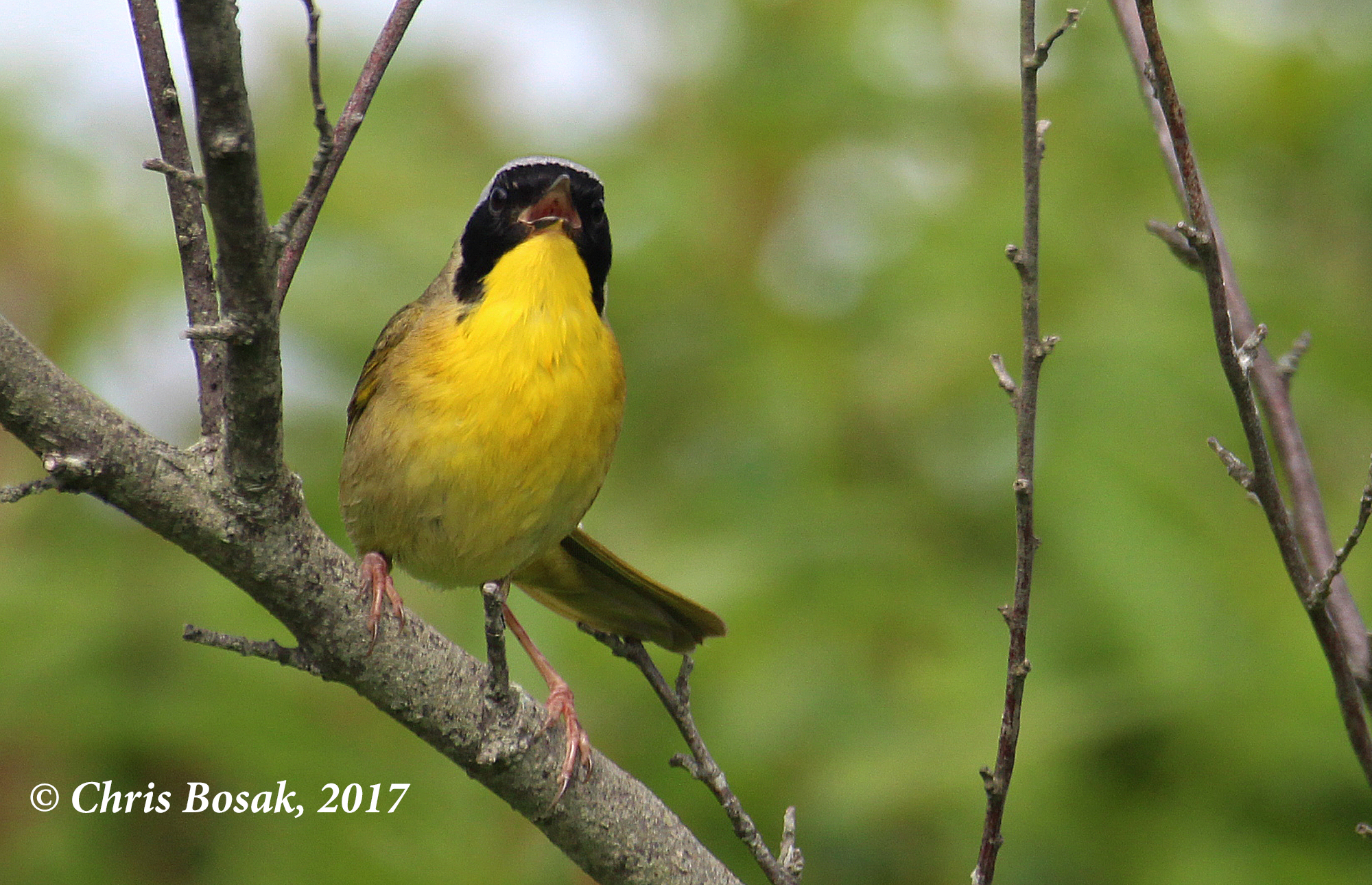
Photo by Chris Bosak A common yellowthroat sings from a perch in Brookfield, Conn., during spring 2017.

Photo by Chris Bosak
Rare bird alerts are a good way to find out when spring migrants, like this yellowthroat, are arriving.

What do we do now with spring migration winding down and birds busy with the task of continuing their species?

We still look for birds, of course, but where to find them? Resident birds make themselves scarce as they hide away in holes and on nests. We don’t want to disturb the birds at this time of year anyway.

It’s a good time to check out the rare-bird alerts to see what others are finding throughout the region. I’ve never been a big “chaser,” but it’s always fun to see what birds are around. You never know, maybe one of the rarities is in your town or in a neighboring town.

The best place to look is birding.aba.org, which is run by the American Birding Association. It is a combination of birding news and rare-bird alerts. Not all of the sightings listed are rare, but may be unusual for location or time of year. Sometimes, contributors just have a bird question for the community.

The “landing page” of the website gives users the option to click on any state. It’s fun to click on random states to see what’s showing where. If you’re traveling, you can always check to see if any unusual birds are hanging around your destination.

Some of the recent sightings in New Hampshire include nighthawks, chukar, king eider, mourning warbler and snowy owl. Yes, you read that last one correct. A snowy owl is still around the New Hampshire coast.

New Hampshire Audubon also maintains a great rare-bird alert system. Visit www.nhaudubon.organd click on “Get Outside,” then “birding.” It is updated frequently and lists rare and unusual sightings from around the state. There is also eBird, which is revolutionizing birding and bird tracking, but I’ll save that one for another day as it warrants its own story.

The lists will not let you know how the common species are doing, or where they are being seen. Cardinal and chickadee sightings are not appropriate for the rare-bird alert lists, but you can always send them to me if you feel the impulse to share. I’m always interested in knowing what people are seeing — rare and common species welcomed.

The ABA site is also good fodder for bird discussions. Many birders use the site to have questions about birds answered. A birder posted last week about a bird song she had heard and wondered if anyone could figure out what it was.

While I’ve never been a lister or chaser, it’s always good to check in occasionally with the rare-bird alerts. You’d hate to find out too late that a once-in-a-lifetime bird was right under your nose.

Continue reading

For the Birds: Readers take over again

Photo by Chris Bosak A scarlet tanager perches in an oak tree in Danbury, Conn., spring 2018.

Photo by Chris Bosak
A scarlet tanager perches in an oak tree in Danbury, Conn., spring 2018.

Here is the latest For the Birds column, which runs in several New England newspapers.

The colors just keep on coming this spring.

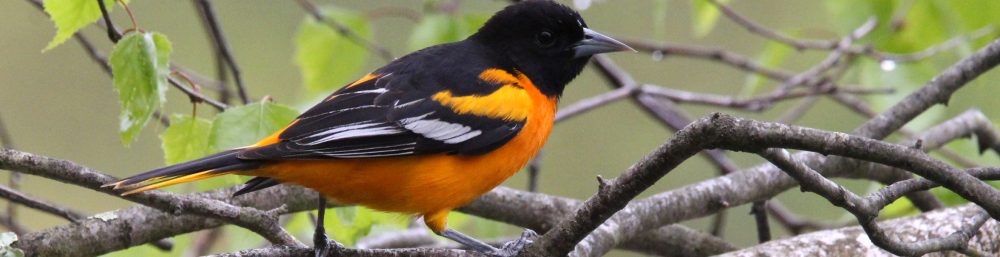
I’ve been lucky enough to see two indigo buntings, three rose-breasted grosbeaks (although two were males fighting each other), a scarlet tanager, at least three Baltimore orioles, a pair of ruby-throated hummingbirds and a handful of warblers in my yard so far this spring. It’s been a welcomed color bonanza after a long winter.

Now that Memorial Day has passed and we are unofficially in summer, let’s look at what some readers have seen.

Carol from the Monadnock Region sent a photo of an oddly colored hairy woodpecker. Instead of the traditional white and black, this one was black and yellowish brown. A reader from Connecticut sent me a similar photo a few years ago.

My guess is that it is a normal hairy woodpecker with a pigment abnormality. Pigment abnormalities show up in birds every so often, such as orange house finches or white robins. Leucism and albinoism are extreme forms of pigment abnormalities, but more subtle color variations occur.

Don watched as an eagle eyed a pair of common mergansers on Granite Lake. He wondered if the eagle would try to take one of the ducks, but a loud noise distracted the eagle and it flew off. Eagles, which often scavenge for food, can take birds as big as common mergansers.

Norma from Spofford had an indigo bunting visit her feeders this spring. She has been in Spofford for nearly 40 years and has seen buntings only a handful of times.

It’s also been a colorful spring for Lenny of Greenfield, who has seen orioles, rose-breasted grosbeaks and cardinals. A special treat was seeing the oriole and grosbeak at the feeder at the same time.

Dean in Marlborough reported visits from pileated woodpeckers, indigo buntings, cardinals and eastern bluebirds. Another colorful yard in the Monadnock Region.

Lida from Harrisville had a male and female oriole come to her table to feast on oranges. Another reader suggested using grape jelly to attract orioles.

I tried to attract orioles with both oranges and grape jelly this spring, to no avail.

Eric in Surry noticed the usual changing of the guard for ground-feeders as the juncos left and chipping sparrows arrived, with about a two-week overlap. He has also noticed a few warbler species, including a pine warbler carrying nesting material. The material was hair he leaves out for the birds after brushing his dog. He has also seen chickadees, phoebes and nuthatches grab some of the hair.

He had another interesting bird sighting this spring; shortly after filling in small holes in his yard, a Cooper’s hawk swooped in to grab a chipmunk. Eric has also seen a blue-gray gnatcatcher and heard an eastern whip-poor-will. It’s been years since I’ve heard a whip-poor-will so I’m glad someone is still hearing them.

Spring migration is winding down, but not over. Soon, it will give way to nesting season. Let me know what you are seeing out there in this exciting time of the year for birdwatching.

For the Birds: Waiting for warblers

Here is the latest For the Birds column, which runs weekly in several New England newspapers.

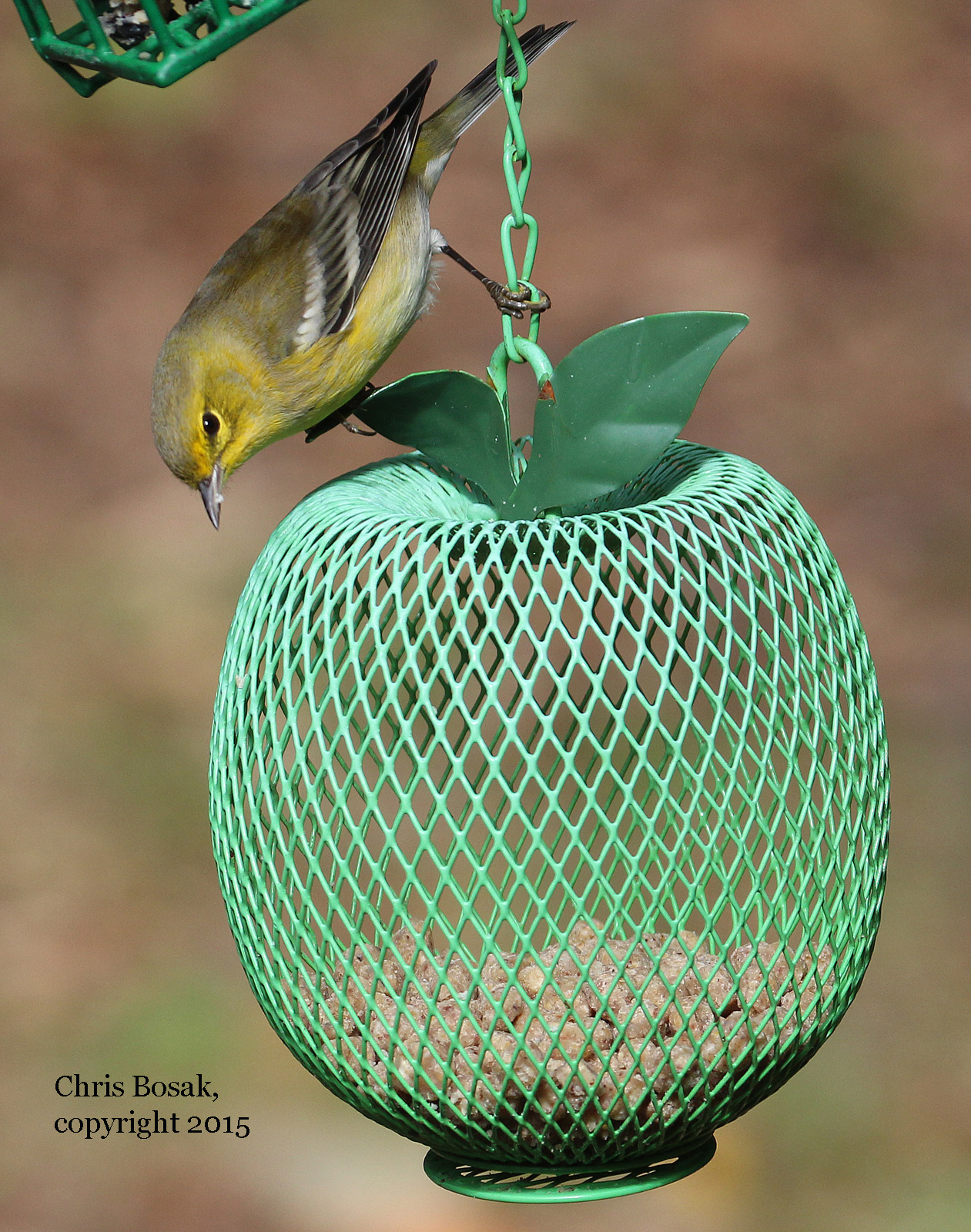
Photo by Chris Bosak A Pine Warbler sits on a deck railing in New England this fall.

Photo by Chris Bosak
Pine Warbler at feeder in Danbury, Conn., fall 2015.

Finally, I thought, a warbler singing in the backyard.

It’s been a long winter and the pine warbler I usually hear by the end of the first week of April never materialized. The first week of April turned into the second week and still no warblers to be seen or heard — at least on my end.

One cool, but bright morning last week, I stepped out onto the deck to fill the feeders and heard a high-pitched, soft and somewhat melodic tune coming from a giant oak. Surely a warbler, I thought, but I wasn’t sure which one.

I grabbed the binoculars, which always hang at the ready just inside the door. Now to find the little bugger. The leaves haven’t popped yet, so this shouldn’t be too tough, I told myself. It was more difficult than I thought, of course, but I finally zeroed in on a little bird high up on the trunk.

As you can probably tell from the build-up, it wasn’t a warbler at all. It was a brown creeper — a small, brown bird seen on tree trunks throughout New England, mostly in the fall, winter and spring. Usually the birds are silent as they look for insects by starting at the bottom of a tree trunk and working their way up.

In fact, I think this may have been the first time I consciously heard the song of a brown creeper. The website AllAboutBirds.org describes the song, sung only by males, as such: “His song is a jumble of high, thin notes that lasts up to 1.5 seconds. It’s sometimes likened to singing the phrase, ‘beautiful trees.’”

You’d think after all these years of birdwatching, I would know all the songs of warblers and be able to distinguish between warblers and non-warblers. There are many types of warblers, however, and I know a lot of the songs, but not all of them. Plus, this song was very warbler-like, as I mentioned. Also — my final excuse, I promise — it’s been 11 months since we’ve heard warblers singing and my birding-by-ear is rusty. It’s only average to begin with, so this guy definitely fooled me.

Not that I’m complaining that it was a brown creeper. I find them extraordinarily interesting birds, despite their small size and rather non-descript appearance. I like how they work up the trunk of a tree and then fly down to the base of a nearby tree to start again.

I’m still waiting on that first warbler, but I’m confident they will arrive soon. As usual, the sightings will start as a trickle — pine warbler here, palm warbler there — and then become a fantastically overwhelming phenomenon of tiny, colorful birds in the trees.

Get your ears ready.

Note: Since this column was originally written, I’ve seen palm and pine warblers. Rejoice!

For the Birds: Fortnite and birds (or lack thereof)

Here is the latest For the Birds column, which runs in several New England newspapers.

Photo by Chris Bosak Black vultures sit on a hill in Danbury, Conn., fall 2017.

Photo by Chris Bosak
Vultures would be a good addition to Fortnite.

Fortnite is the hottest game going.

The survival video game has swept the nation — and world — and eaten up countless hours of kids’ and adults’ time.

But, since it is such a huge phenomenon (with well over 3 million players), I have to somehow relate it to birds, of course. I did something similar in the summer of 2016, when the Pokémon Go craze was at its peak. That was a fun column to write and may be found here.

Here’s a quick description of Fortnite for those who may be unfamiliar. It is a video game that can be played on a computer, PlayStation, Xbox, and now even a mobile device. The most popular way to play is the person-to-person mode — you can play solo or as a duo or squad (four-person team) — and the point is always to be the last one standing.

Other players may be eliminated by a variety of weapons that are picked up in towns and cities on an island where the game takes place. Players can Continue reading

For the Birds column: Preening away

Here is the latest For the Birds column, which runs in several New England newspapers.

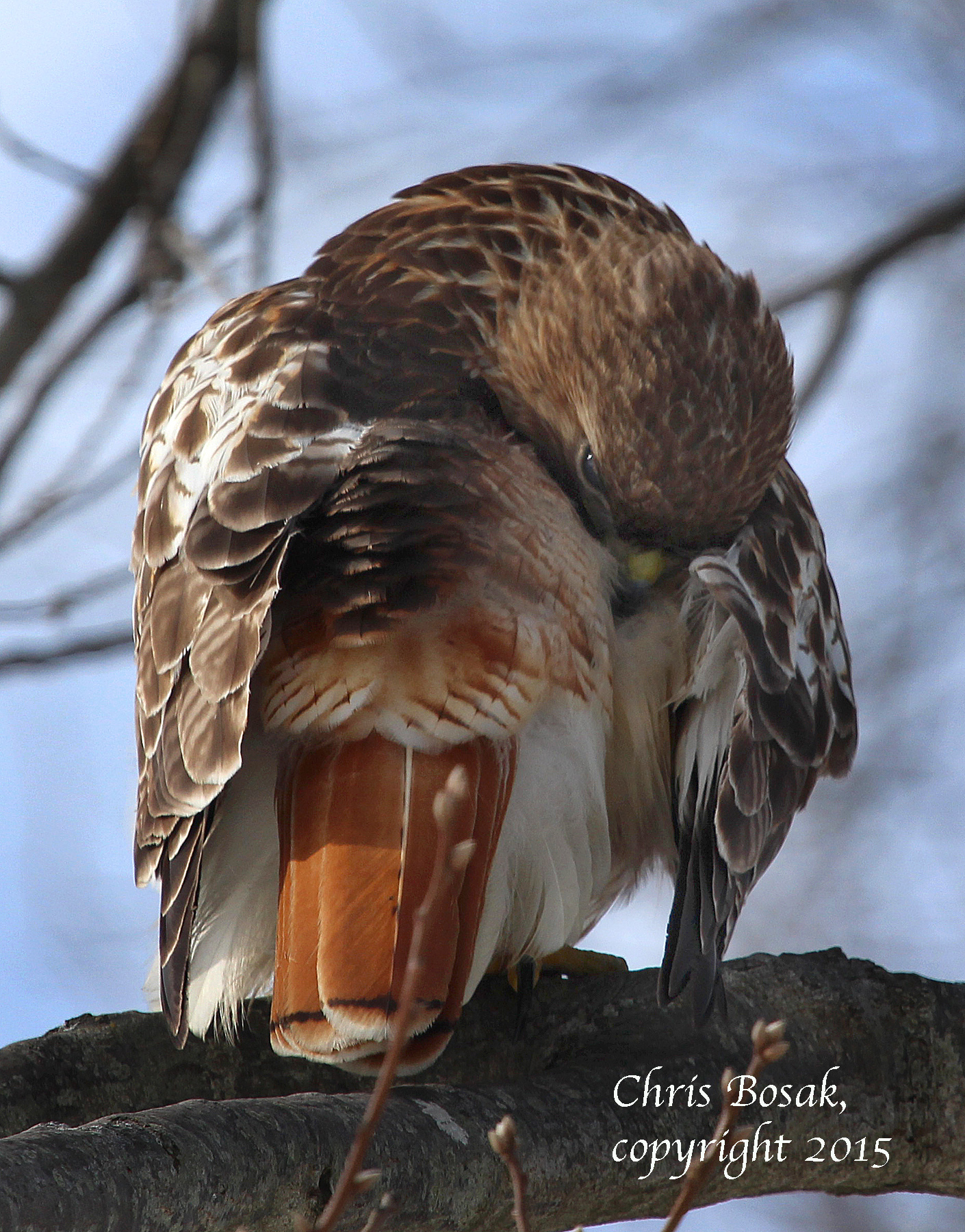
Photo by Chris Bosak A Red-tailed hawk preens at Weed Beach in Darien, Conn., January 2015.

Photo by Chris Bosak
A Red-tailed hawk preens at Weed Beach in Darien, Conn., January 2015.

I thought my cat was bad. The incessant licking to keep himself clean. He’s got to be the cleanest cat ever.

Then I watched a northern mockingbird preening itself. It went on for as long as I could watch and who knows how much longer after I walked away.

Feather maintenance is an important part of life for birds and it takes up a great amount of their time. Feathers play a role in a bird’s ability to fly, attract a mate, hide from predators and protect itself from the weather. Birds are the only living creatures with Continue reading

Latest For the Birds column: Tale of two birdwatching days

Here is the latest For the Birds column, which runs in several New England newspapers.

Photo by Chris Bosak
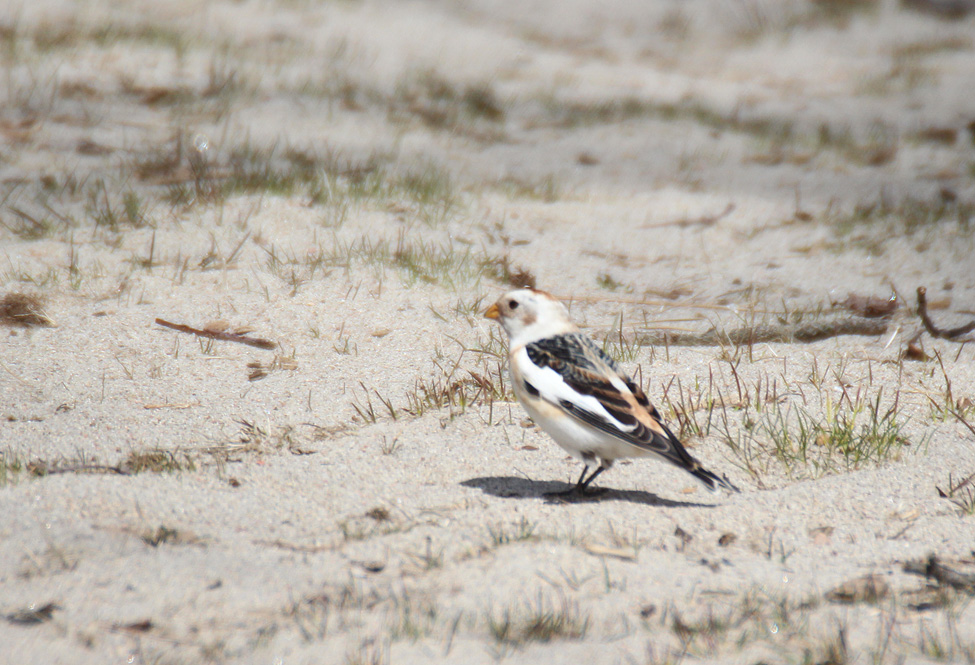
Snow Bunting at Norwalk’s Calf Pasture Beach, March 26, 2013.

I had two very different birdwatching experiences on consecutive days recently. Both of them were great, of course, but very, very different.

Let’s start with a Wednesday outing. I had some rare time to myself, so I was going somewhere. I didn’t care how cold it was outside, I was getting out of the house.

I had read the previous day on the Connecticut Rare Bird Alert Web site that short-eared owls were being seen at Silver Sands State Park in Milford. I’ve never had much luck finding owls, but figured I’d give it a shot. Maybe this was the day my luck would change. Snowy owls are being seen in larger-than-normal numbers this year, too, so my chances were doubled.

Armed with a heavy winter coat, hat and oversized dorky mittens, Continue reading

For the Birds: When they all visit at once

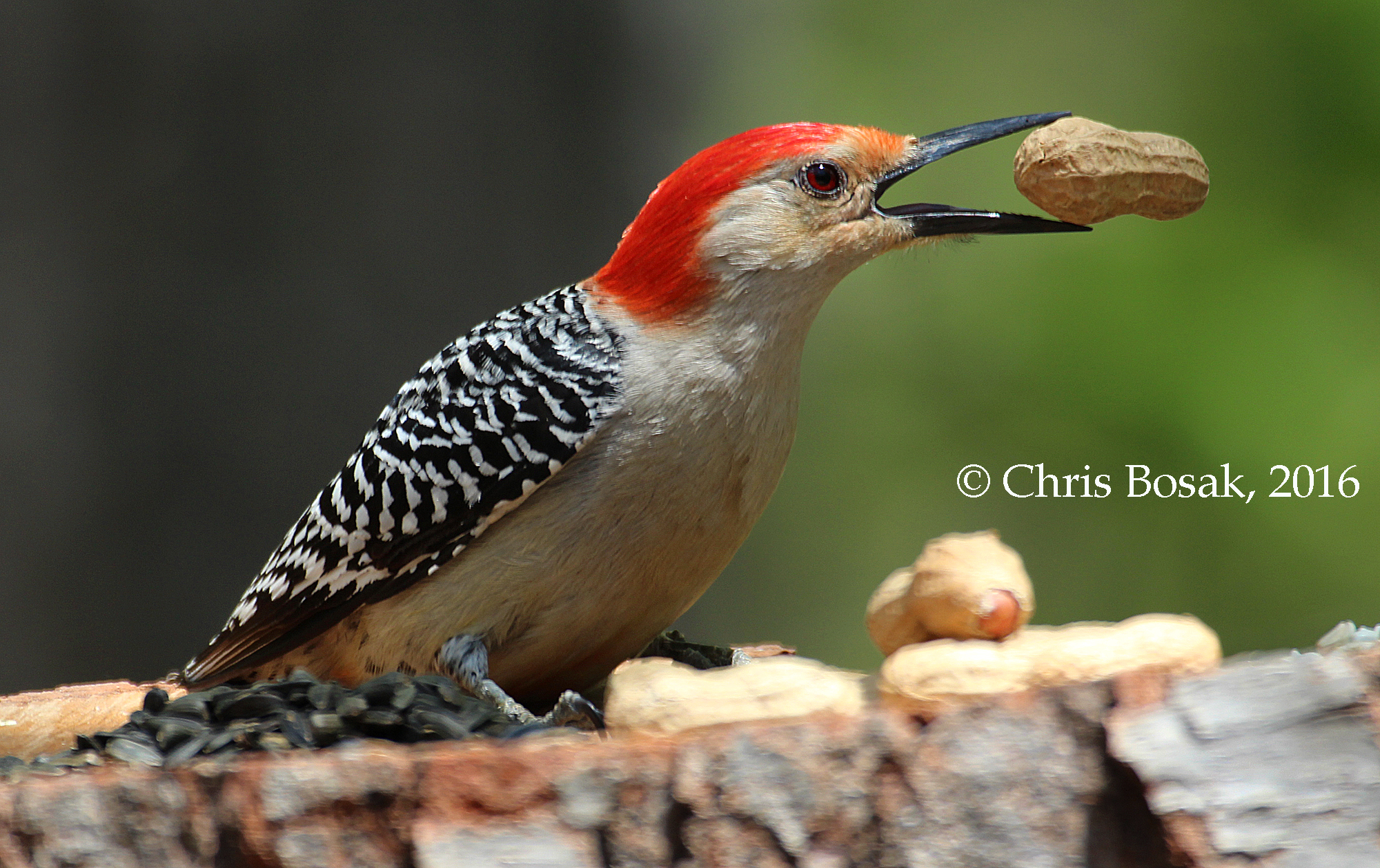
Photo by Chris Bosak A Red-bellied Woodpecker takes a peanut from a homemade birdfeeder in Danbury, Conn., spring 2016.

Photo by Chris Bosak
A Red-bellied Woodpecker takes a peanut from a homemade birdfeeder in Danbury, Conn., spring 2016.

Here’s the latest For the Birds column, which runs in several New England newspapers.

Some days none of them come, some days some of them come, and some days they all come.

I guess we wake up expecting the middle ground and — somewhere in the back of our minds — we hope for the higher ground. Isn’t it great when we hope for the best and it happens?

That can hold true for just about anything in life, but I’m talking about birds. What else? 

One day last weekend was one of those days when all of the birds in the neighborhood were in my backyard. My bedroom window affords views of only the tops of trees and, before heading downstairs to make the morning coffee, I had already seen a downy woodpecker, black-capped chickadee and white-breasted nuthatch.

The birds just kept on coming. There’s a feeder hanging outside of the kitchen window and, before the coffee was done brewing, tufted titmice, house finches and hairy woodpeckers joined the list of bird species I’d seen in my yard that day.

I glanced out the kitchen window onto the backyard and noticed white-throated sparrows and dark-eyed juncos were hopping around the grass and mourning doves were hanging out beneath the feeder. Suddenly, I heard a blue jay and saw it perch on a branch just outside the window.

Not that I was counting, but I had seen 10 species of birds and hadn’t even stepped foot outside yet.

As I was thinking about how nice it was to have seen so many birds already, I looked out a kitchen window that faces a different direction and saw a red-tailed hawk practically right in front of my face. It sensed the movement from inside the house and flew off to a safer perch about three trees away, but still within easy watching distance from the kitchen.

I was surprised that so many of the songbirds were brazenly flitting about when a big, bad hawk was so close by. Had it been a sharp-shinned or Cooper’s hawk, it may have been a different story.

So that made 11 species, including a hawk, and the coffee was just getting poured into the mug. It could have ended there, but I had the whole weekend day ahead of me.

I never set out specifically to look for birds that weekend, but the sightings kept presenting themselves.

I went to get something out of the car and a pair of cardinals hurried into the brush. On my way to the mailbox, a house wren hopped along the stone wall. As I made lunch, minding my own business, I was serenaded to the kitchen window by a Carolina wren singing its heart out, even in winter.

Red-bellied woodpeckers climbed up tree limbs and uttered their strange calls several times throughout the day. It had been days since I’d seen a red-bellied woodpecker in the yard.

It was an odd day, indeed. Odd in a good way, of course. Nothing too out of the ordinary came to the yard, but I was more than happy to welcome the common species that did show.

Sure, it could have been even more spectacular. I didn’t see a brown creeper, goldfinch or kinglet. Come to think of it, a red-breasted nuthatch, fox sparrow or pine siskin wouldn’t have been out of the question during this time of year.

Sure it would have been nice if they would have stopped by, but trust me, I’m not complaining. I had plenty of company that day.

For the Birds: Wrapping up Vulture Week — the story behind the photos

Here is the latest For the Birds column, which runs in several New England newspapers.

Photo by Chris Bosak Black and turkey vulture sit on a hill in Danbury, Conn., fall 2017.

Photo by Chris Bosak
Black and turkey vultures sit on a hill in Danbury, Conn., fall 2017.

Photo by Chris Bosak A black vulture sits on a hill in Danbury, Conn., fall 2017.

Photo by Chris Bosak
A black vulture sits on a hill in Danbury, Conn., fall 2017.

I hope you enjoyed and made the most of Vulture Week.

What? You didn’t know last week was designated as a celebration of vultures? That’s understandable considering I totally made it up so I could post on my birding blog some vulture photos I had sitting around. Days, weeks and months are designated for all sorts of crazy things, so why can’t www.BirdsofNewEngland.com proclaim Vulture Week?

Well, it was last week anyway, so if anyone has a problem with it, it’s too late.

Vulture Week consisted of a series of photos with fun facts about the birds, which are

Photo by Chris Bosak A turkey vulture sits on a hill in Danbury, Conn., fall 2017.

Photo by Chris Bosak
A turkey vulture sits on a hill in Danbury, Conn., fall 2017.

among the largest in New England. (The posts are still available on the site, of course.)

New England now boasts two species of vultures. The familiar turkey vulture — the one with the reddish/pink head — has been in our region all along. Now, the black vulture — with a blackish/gray head — is becoming more and more common in New England.

The northward range expansion started decades ago, but similar to the expansion of the red-bellied woodpecker and Carolina wren, black vultures are garnering more attention as they become increasingly common.

It is not uncommon for both species to be seen together, offering an easy side-by-side comparison. Aside from the color of their heads, there are other differences. The turkey vulture, for instance, is significantly larger. It is hard to judge its size when it is soaring, but when a close look is afforded, the difference is plain to see. Turkey vultures have a wing span of nearly 70 inches (about 6 feet) compared to the black vulture’s 60 inches (about 5 feet). The underside of the wings is another way to tell them apart. Black vultures have whitish wing tips while the white spreads significantly farther on the wings of turkey vultures.

Both birds have a keen sense of smell, but the turkey vulture has the stronger sniffer. That’s one of the reasons the birds are often found together, I’m sure.

Perhaps that’s how the large flock of vultures I photographed earlier in the fall found the prime spot at which I saw it. I can’t reveal exactly where I saw the vultures because I’m 99.9 percent sure I shouldn’t have pulled my car into that dirt lot. It is state-owned land (I’m not saying which state) and operated by the Department of Transportation. It is right off the highway and the rutted, rocky dirt driveway leading to a huge dirt pile is designed for dump trucks and large machinery, not passenger cars.

But, after seeing huge numbers of vultures on that dirt pile day after day, I couldn’t help myself anymore.

No one was behind me on the highway, so I made the turn into the area. There were dozens and dozens of vultures and I quickly realized why they liked that spot so much. It was the “dumping ground,” for lack of a better term, for the roadkill the DOT collected along the highways.

Several dead deer, many with magnificent racks, were spread around the base of the dirt pile. It’s an easy, endless source of food for the birds.

I kept my visit brief. I snapped a few photos, compared the black and turkey vultures, snapped a few more photos and got the heck out of there.

People get excited when they see vultures. Why wouldn’t they? They are huge and, despite their ominous appearance, can be quite endearing. They are less wary than other birds of prey (even though they scavenge instead of hunt) and smart, too.

Now try to tell me they don’t deserve their own week.

For the Birds: Brown creeper highlights the fall

Here is the latest For the Birds column, which runs in several New England newspapers.

Photo by Chris Bosak A Brown Creeper finds food at the base of a tree during a cold snap in February 2016, Danbury, Connecticut.

Photo by Chris Bosak
A Brown Creeper finds food at the base of a tree during a cold snap in February 2016, Danbury, Connecticut.

The fall migration is miraculous when you consider the thousands of miles birds fly from their breeding grounds to their winter havens. It’s also miraculous in its ability to stir excitement into the hearts and bones of otherwise completely normal adult human beings.

Well, “completely normal” may be pushing it with some birders I’ve come across, but you know what I mean.

Take the other day for instance. I was relaxing on the patio toward the end of a long day when a sight literally lifted me off my seat and drew me closer.

Bald eagle? Brown pelican? Some sort of rare bird not seen in generations?

No, it was a brown creeper. Brown creepers are just as their name suggests they are. For one, they are indeed brown. For another, they creep. They creep up trees looking for insects hidden among the bark. When they reach a point where they think they’ve exhausted a tree’s food supply, they fly quickly to the bottom of the nearest tree and start the creeping all over again.

Continue reading

For the Birds: Not so colorless afterall

Here is the latest For the Birds column, which runs in several New England newspapers.

Photo by Chris Bosak A male Northern Cardinal in Stamford, Conn., March 2015.

Photo by Chris Bosak
A male Northern Cardinal in Stamford, Conn., March 2015.

Oak leaves, at least the ones in my yard, turned directly from green to brown and fell in droves during the windy days of the past week.

The trees are largely bare, most of the flowers that survived the fall have now perished in the year’s first frost and big, brown oak leaves cover many of the open spaces in the region.

There’s not a lot of color to be seen these days, except for evergreens and the occasional blue sky.

But, there are always the birds. Late fall and throughout the winter is when we need the birds the most to brighten our fading landscape. Luckily, plenty of colorful birds remain with us while the fair-weathered New England creatures — including migrant birds, butterflies and dragonflies — have taken their cheerful hues south.

Chickadees, titmice, nuthatches and downy woodpeckers may not be the most dynamic birds in terms of color but fall and winter is their time to shine. The subtle oranges on the titmice and chickadees, the gray-blue backs of the nuthatches, and the red on the heads of male downeys seem to be noticed more as the number of bird species we see at our feeders dwindles.

Even the white throat and yellow lore – the region between the eyes and nostrils — of a white-throated sparrow appears to glow brighter during these days.

Continue reading