Here’s a female Common Yellowthroat, one of the many confusing fall warblers to watch out for as you hit your favorite birdwatching spots this fall.
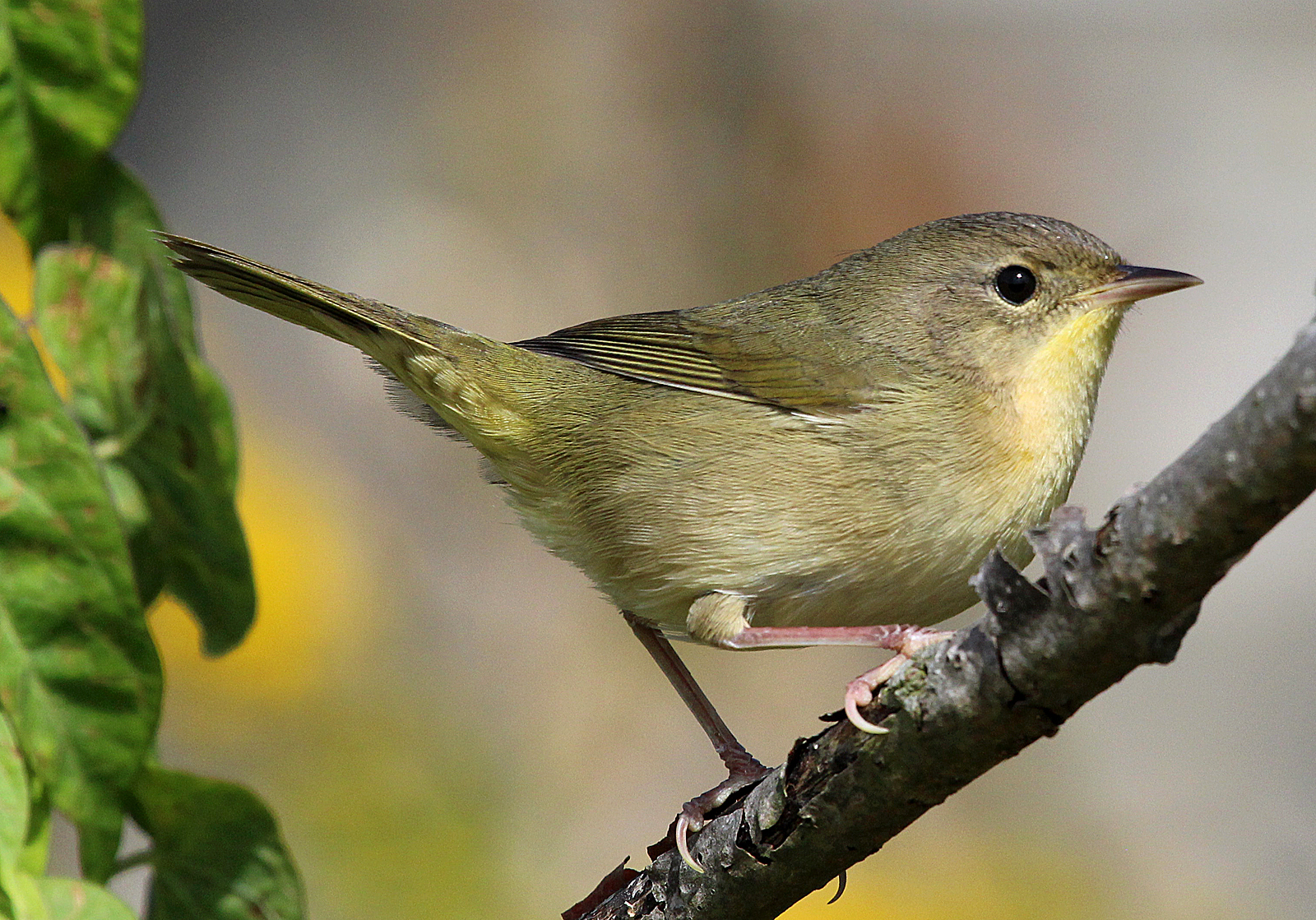
Photo by Chris Bosak
Common Yellowthroat, first year, southern New England, Sept. 2013
Here’s a female Common Yellowthroat, one of the many confusing fall warblers to watch out for as you hit your favorite birdwatching spots this fall.
Photo by Chris Bosak
Common Yellowthroat, first year, southern New England, Sept. 2013
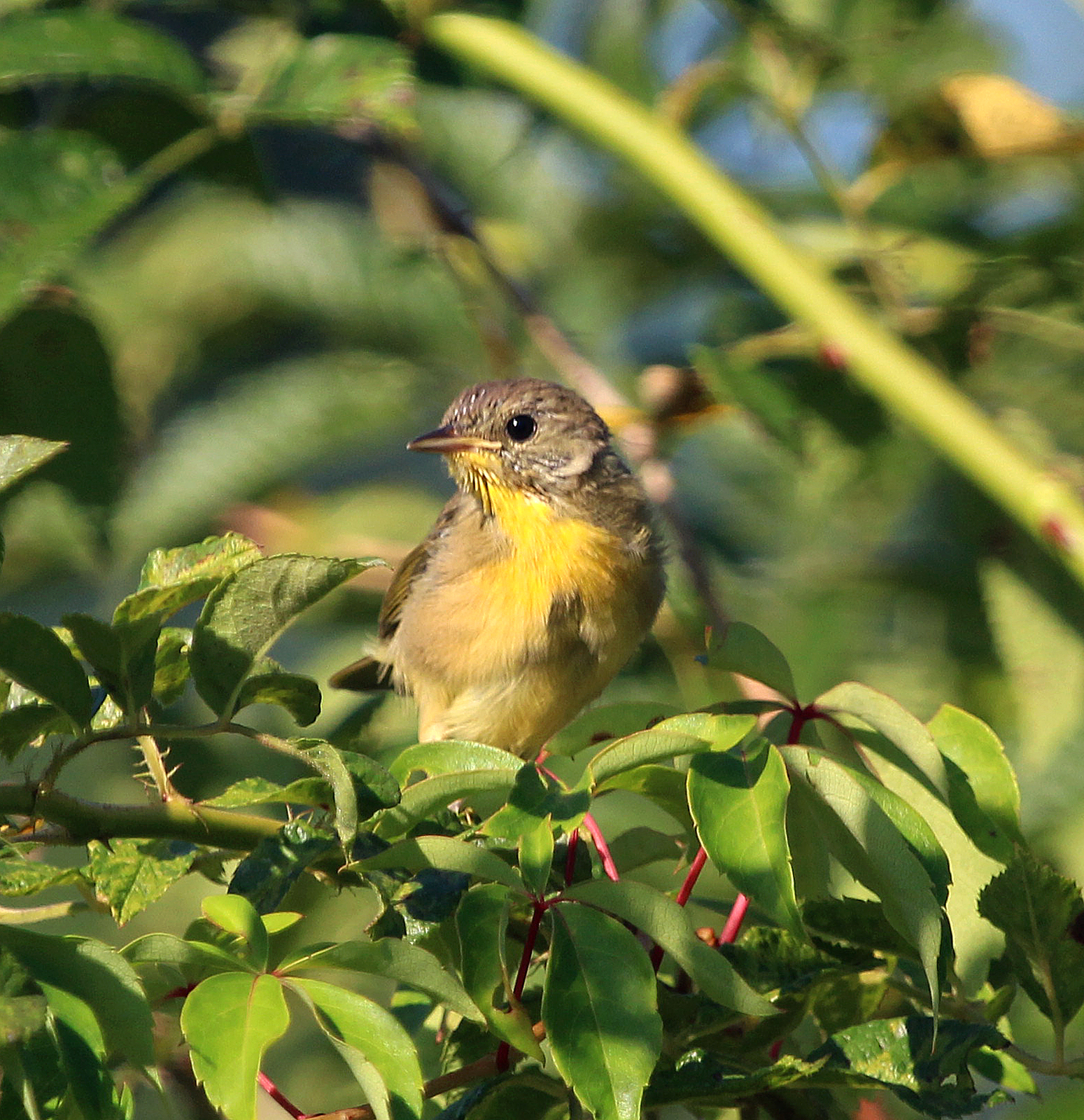
Photo by Chris Bosak
A female Common Yellowthroat perches in a tree in West Norwalk late this summer.
Here’s the latest For the Birds column, which runs weekly in The Hour (Norwalk, CT) and The Keene Sentinel (Keene, N.H.)
…
I’ve mentioned before that the fall migration, for the most part, is less ballyhooed by the birding community.
There are many reasons for this. The spring migration is so eagerly anticipated because it follows winter (usually a harsh one in New England) and birders are itching to see signs of rejuvenation in the natural world. The early flowers do a good job of heightening our spirits, but there’s nothing like the birds’ returning to really get us out of the winter doldrums.
The spring migration is also marked with a wide variety of colorful birds, most notably the warblers and other songbirds that pass through in April and May. The males are in their bright breeding plumage and singing their hearts out. The females are not as brightly colored and not as vocal, but are still a sight for sore eyes in the spring. The birds have a real sense of urgency in the spring migration, too. They need to get to their breeding grounds to get a good nesting spot and get down to th Continue reading
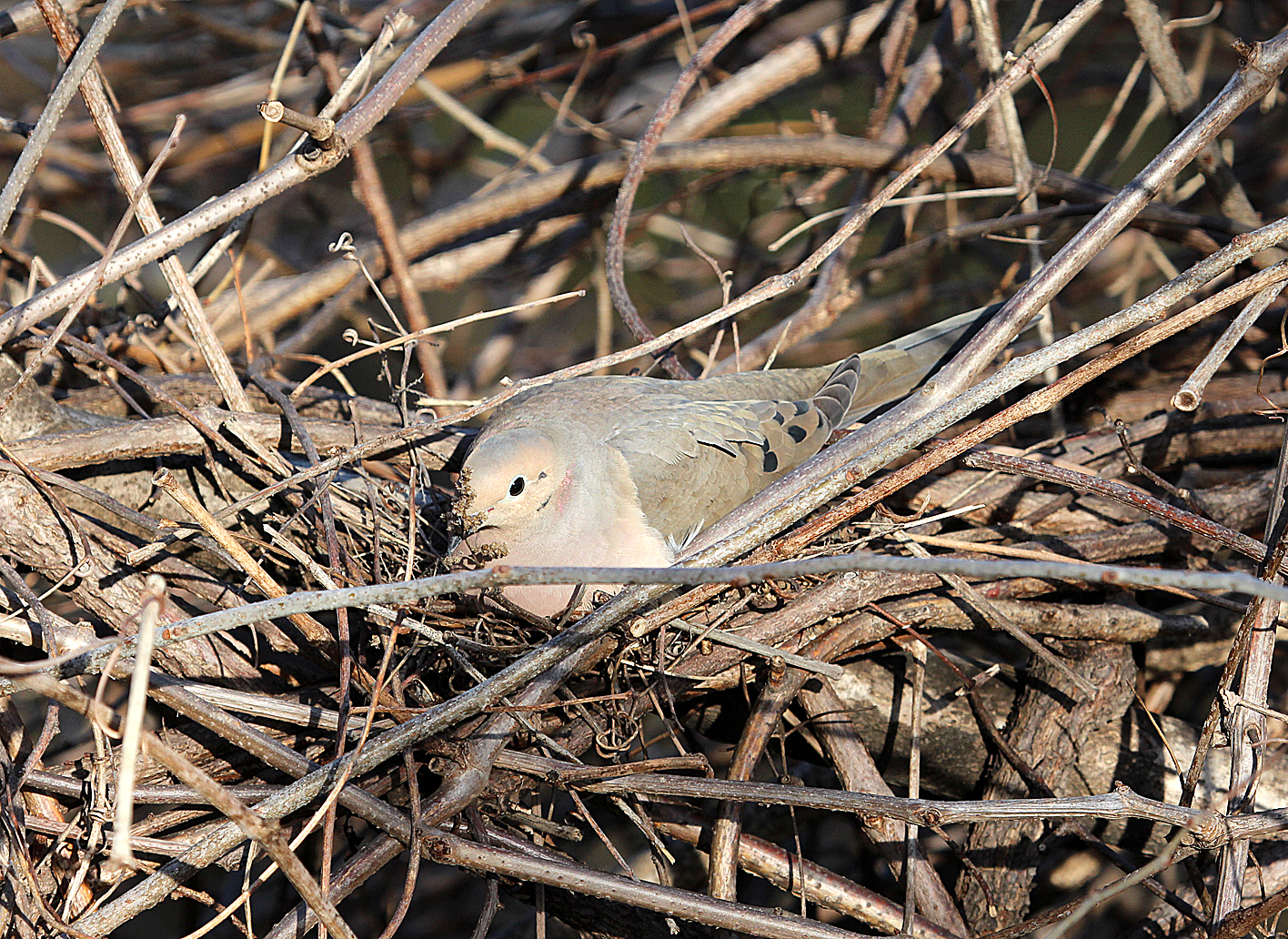
Photo by Chris Bosak
A Mourning Dove sits on a nest at Oyster Shell Park in Norwalk, CT., April 1014.
I came across the Mourning Dove during a quick walk through Oystershell Park in Norwalk, Conn., this morning. Yes, despite the late start to spring weather, the birds are right on time with their nesting.
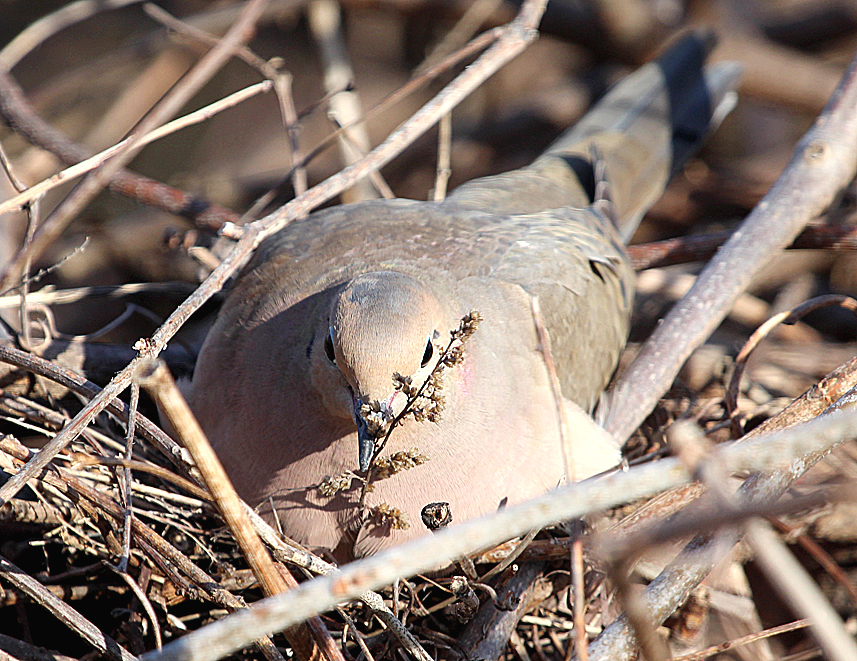
Photo by Chris Bosak
A Mourning Dove sits on a nest at Oyster Shell Park in Norwalk, CT., April 1014.
Check out the camouflage nature of this nest. The tangled, twisted sticks and vines are colored similarly to the dove itself. Amazing that birds can do these things. I did not approach too closely and allowed the bird to remain comfortable on its nest.
Have a bird nesting on your property? Grab a photo and send it along. I’ll use it on my “reader submitted photo” page. Remember to give the birds space and not to be intrusive — they have an important job to do. Send photos to bozclark@earthlink.net
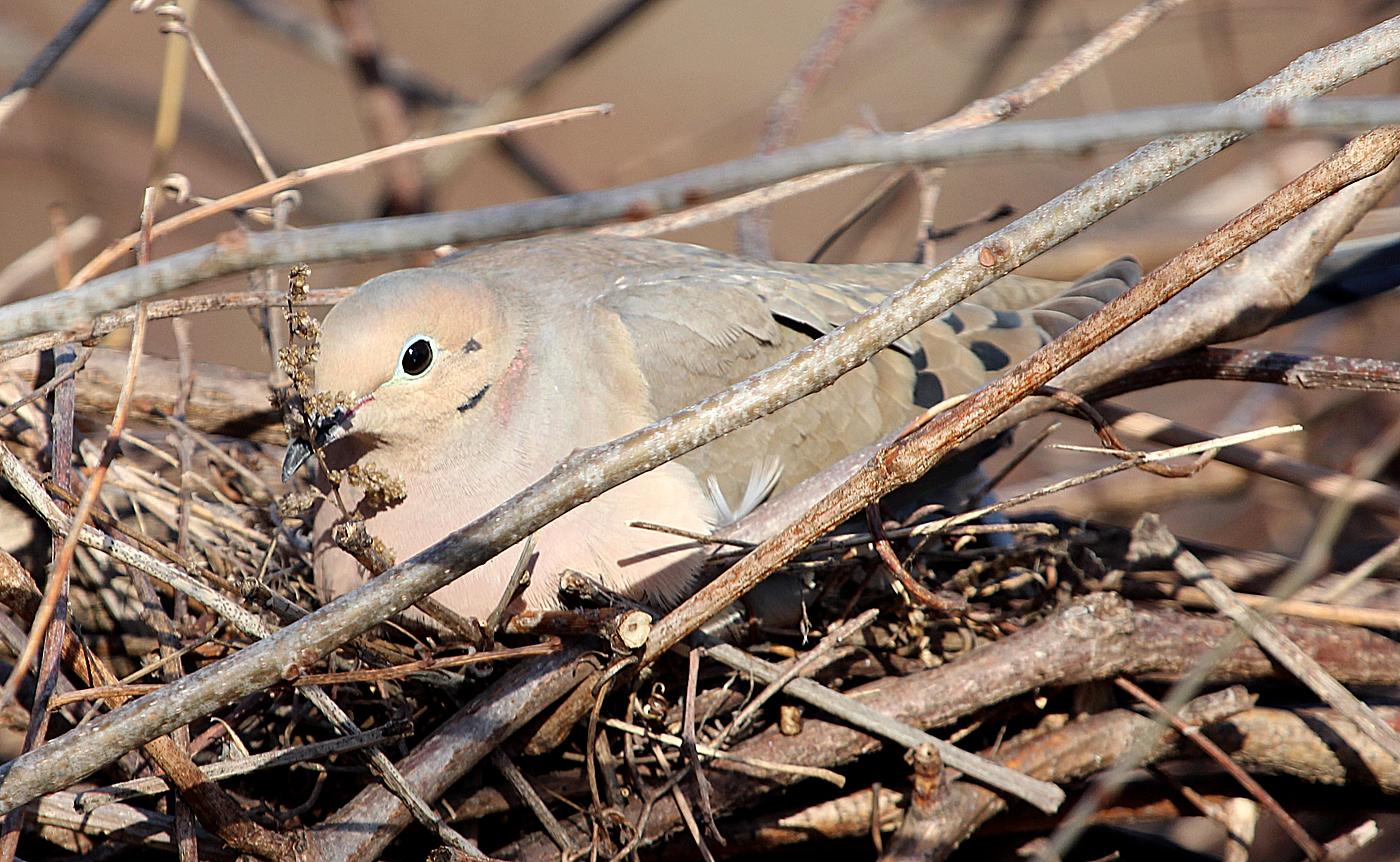
Photo by Chris Bosak
A Mourning Dove sits on a nest at Oyster Shell Park in Norwalk, CT., April 1014.
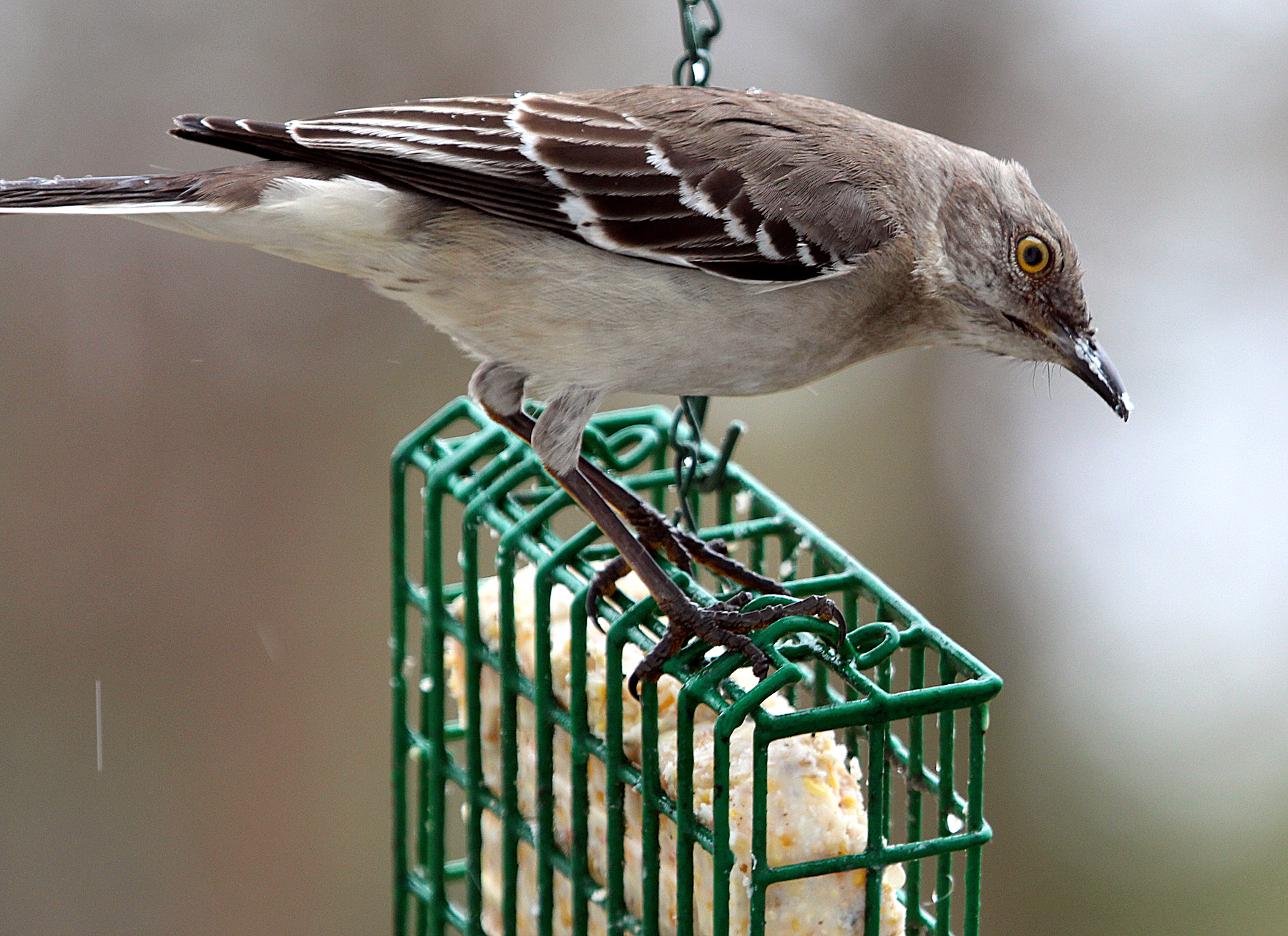
Photo by Chris Bosak
A Northern Mockingbird visits a suet feeder as snow falls in March 2014 in Stamford, CT.
It’s not often that I see Northern Mockingbirds at my feeders. I see them often enough, just not at the feeders. But for the past week or so, a pair of mockers have been regular visitors to the suet cake feeder. They split time with a pair of Downy Woodpeckers that has been visiting all winter.
Mockingbirds will begin their incredible singing performances soon. They will perch somewhere (often a very conspicuous spot) and sing their hearts out, going over their repertoire over and over. As its name suggests, the song is a long string of other birds’ calls. Personally, I always hear mockers include the Carolina Wren’s “tea kettle” song in their mix.
Have a mockingbird story? Feel free to comment. Thanks for visiting http://www.birdsofnewengland.com

Photo by Chris Bosak
Osprey eats a fish at Norwalk’s Calf Pasture Beach, March 26, 2013.
Here’s another random bird thought for you.
Ospreys that are born in New England fly to their wintering grounds in South America and do not return the next summer. They come back the second summer when they are of breeding age.
New England’s Osprey population has increased tremendously — especially in coastal areas — over the last decade. Good news!
Some Osprey have returned to New England already, but most will return in late March or early April.
Have a question for my “random thoughts?” Send it to bozclark@earthlink.net
Over the years I’ve taken tons of Hooded Merganser photos. I just love those little ducks and find them infinitely interesting.
So this weekend, what did I do? I took more Hooded Merganser photos, of course. About five males and four females were utilizing a small pool of unfrozen water on an otherwise frozen lake at Sellecks/Dunlap Woods in Darien, Conn. The males were not displaying, but that time is coming soon. (A video I took last winter of their breeding display behavior is included at the bottom of this post.)
Here are the latest. (Remember, you can always send me your bird photos and I’ll include them on my “Reader Submitted Photos” page. Send me your photos at bozclark@earthlink.net.
Now for those hoodies:

Photo by Chris Bosak
Hooded Mergansers swim in a small unfrozen section of water at Selleck’s/Dunlap in Darien, Conn., in Feb. 2014.
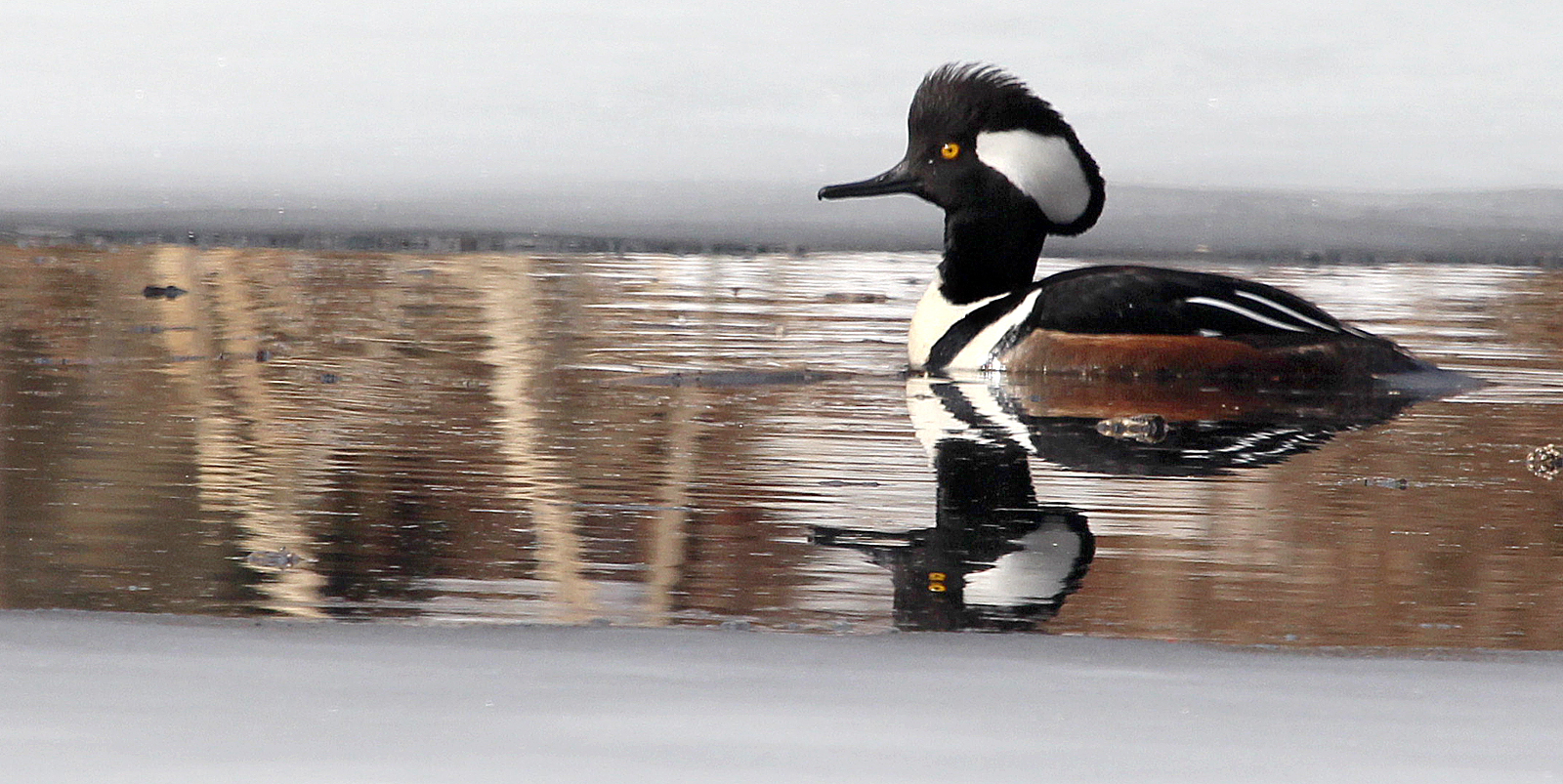
Photo by Chris Bosak
A Hooded Merganser swim in a small unfrozen section of water at Selleck’s/Dunlap in Darien, Conn., in Feb. 2014.
More photos below …
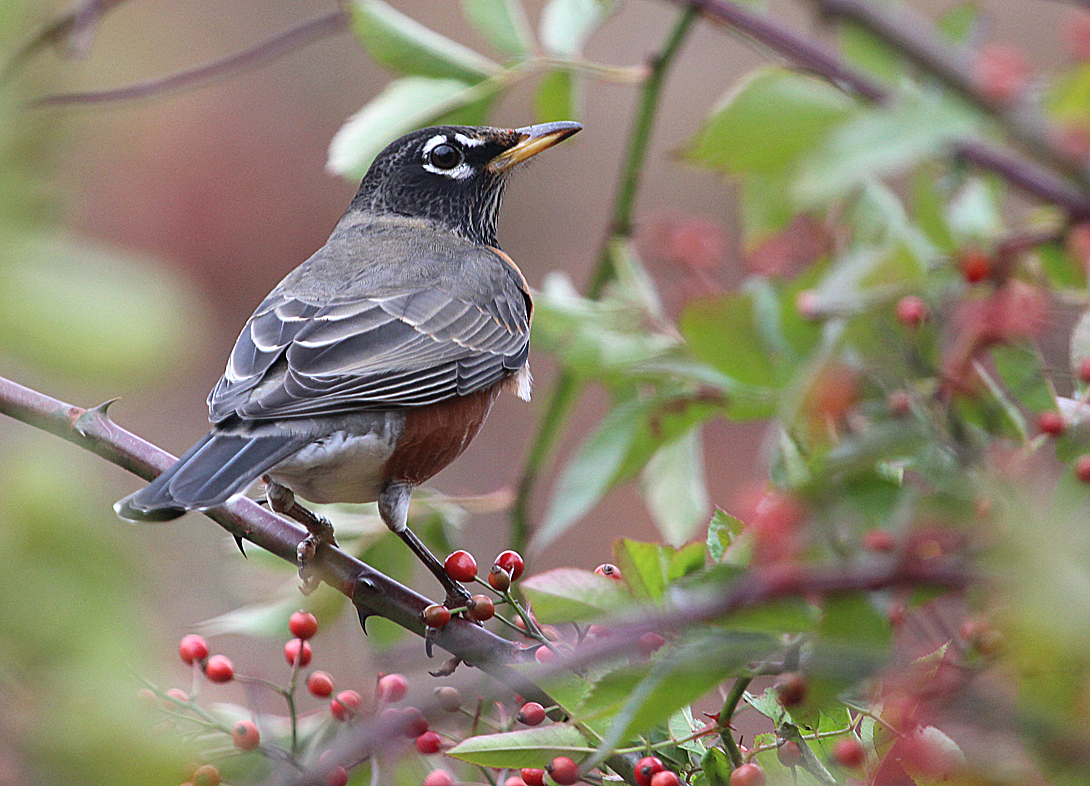
Photo by Chris Bosak
American Robin in Selleck’s Woods in fall 2013.
I’ve written a lot about American Robins this winter — and do so again in this week’s For the Birds column — but the demand for such information is great as everyone seems to be seeing tons of robins this winter.
Here’s an excerpt from the column: “True, they are known as a harbinger of spring, but American Robins are with us all year here in New England. Some robins migrate south to warmer places, but many robins stick with us throughout winter, too, surviving on berries, crab apples and other natural foods they can find in the woods and our backyards. Robins are usually found in flocks, some rather impressive, during the winter.”
Click here for the rest of the column.
It was really comments and questions from readers that prompted the column. Here are some comments I have received from readers.
Jack from Norwalk, Conn., wrote: “Saw around 10:30 this AM small flock of Robins just 30 yds West from junction of S Continue reading
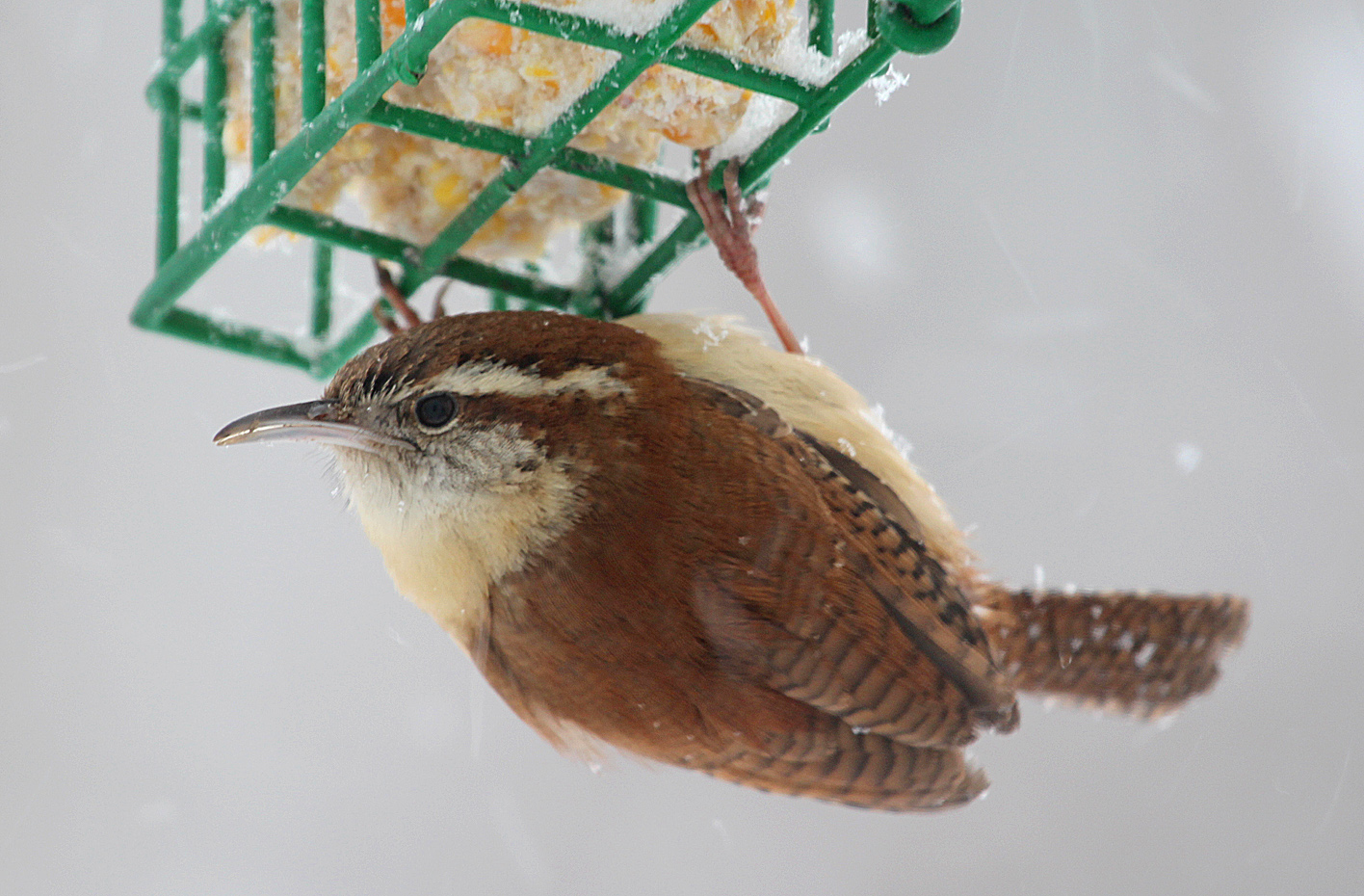
Photo by Chris Bosak
A Carolina Wren holds onto the bottom of a suet cage during the February 13, 2014, snowstorm.

Photo by Chris Bosak
An American Tree Sparrow perches near a feeding station during the snowstorm of Feb. 13, 2014.
It was a busy day at the feeder on Thursday as snow fell hard and steady in the morning and afternoon in New England. It was a beautiful scene and I’m sure it played out at many feeding stations throughout the region.
I had the juncos, White-throated Sparrows, cardinals, and Mourning Doves I expected, but I didn’t see a single chickadee, titmouse or nuthatch. Very odd for winter snow day. Starlings and House Sparrows also paid a visit.
The biggest surprises were a Carolina Wren (actually, not too big of a surprise, but a welcomed sight for sure) and an American Tree Sparrow. Tree Sparrows come down to southern New England in the winter, but they are not often seen at feeders. This guy made a few brief visits, but never got real comfortable and was easily chased away by other feeder birds.
Many people are sick of the snow, I’m sure, but I love it when it comes to birding.
All in all, a good day at the feeders. How did you do with your feeders? Post a comment, or better yet, send me a photo to bozclark@earthlink.net and I’ll use it in the “Reader Submitted Photos” page on this site.
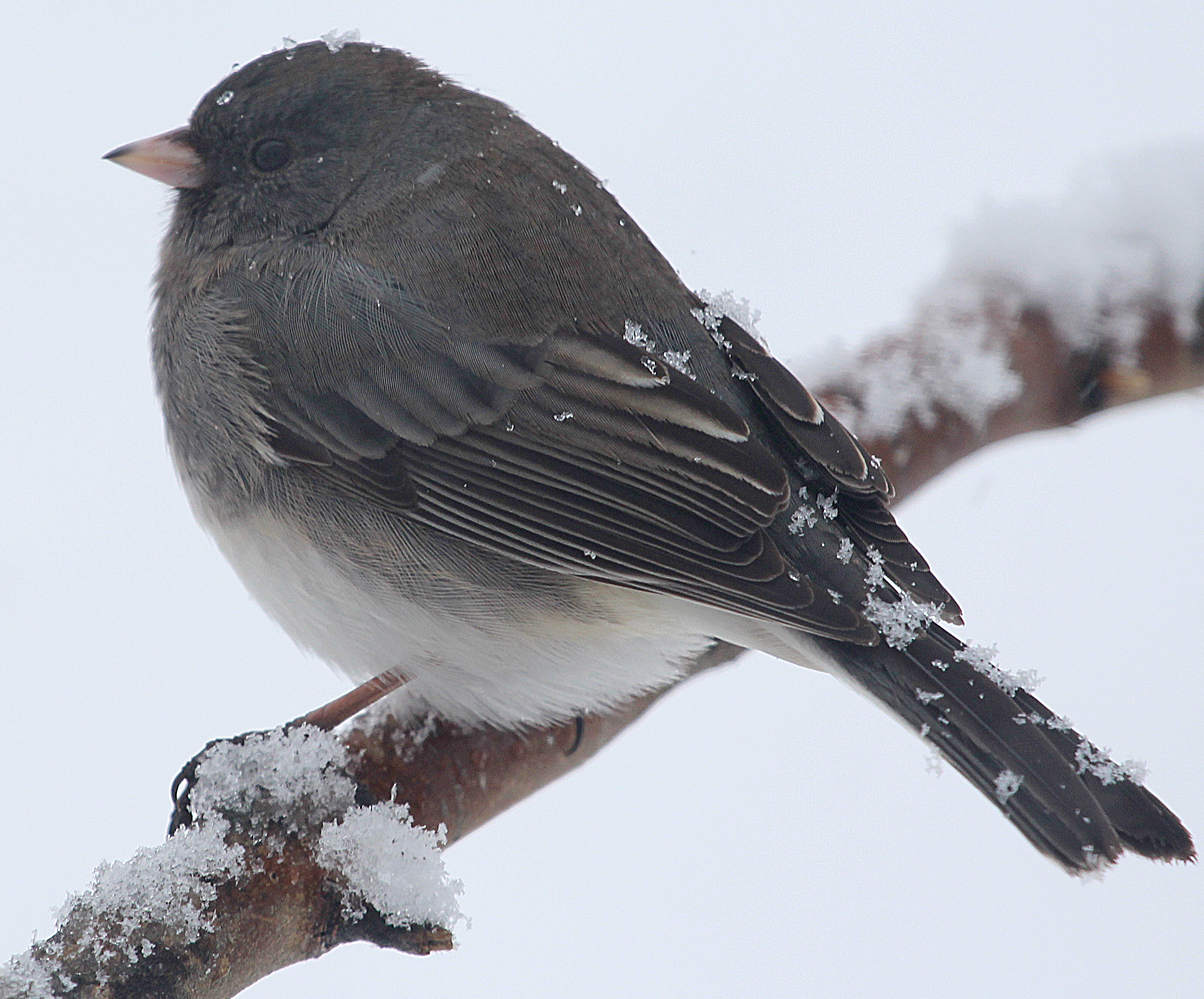
When the snow flies — as it has done often this winter here in New England — you can be sure the Dark-eyed Juncos will come visit. Normally accompanied by at least a few White-throated Sparrows, juncos are typically found under bird feeders looking for fallen seeds. This snowstorm, however, I had juncos on the suet feeder, on the platform feeder and on the ground. So, of course, I had to break out the camera. What’s a snow day without a new junco photo?

Photo by Chris Bosak
A young Peregrine Falcon flies overhead in Norwalk, CT, Dec. 2013.
I spotted this young Peregrine Falcon flying around Veterans Park in East Norwalk a few weeks ago. It had a half-eaten prey (a crow, I think) in an open part of the park about 100 yards away, but kept circling around the parking lot where I was. It even has blood on its hooked bill. As many of you know, I’ve been photographing a few Peregrine Falcons along the Norwalk River where I work. (With limited success, admittedly.) This rare and close opportunity was certainly welcomed considering the distance from which I normally have to try to photograph them. Notice the brown plumage of this youngster, as opposed to the blue-gray of the adult.
I have some more photos of this beauty in flight that I will post later.
 Birds of New England.com