Photo by Chris Bosak
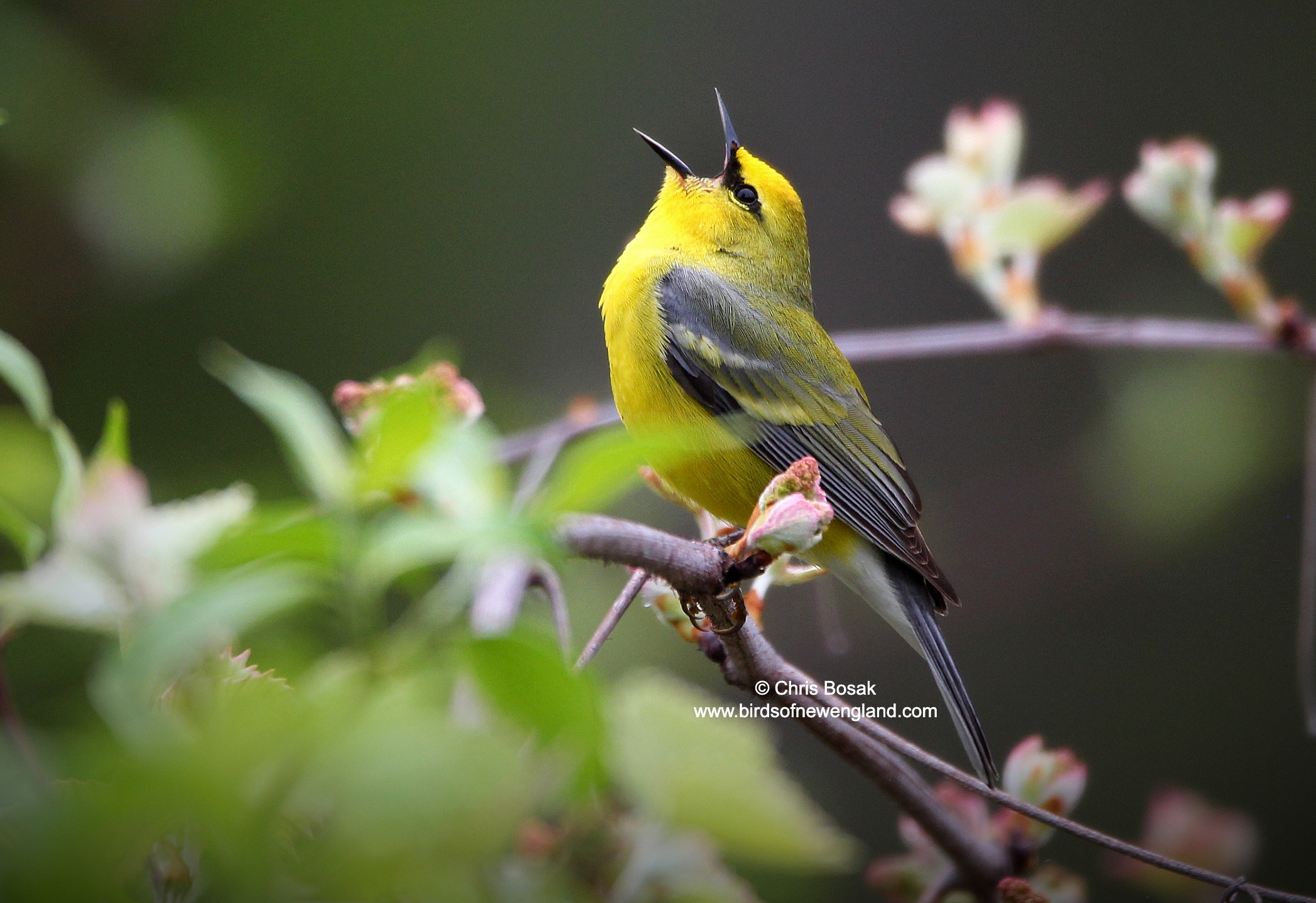
A blue-winged warbler sings in New England, spring 2025.
Here is the latest photo in the Singing in the Spring series: the blue-winged warbler. One of my favorite warblers, blue-winged warblers arrived back in New England over the last two weeks. They nest in New England and have a song that sounds more insect-like than bird-like.
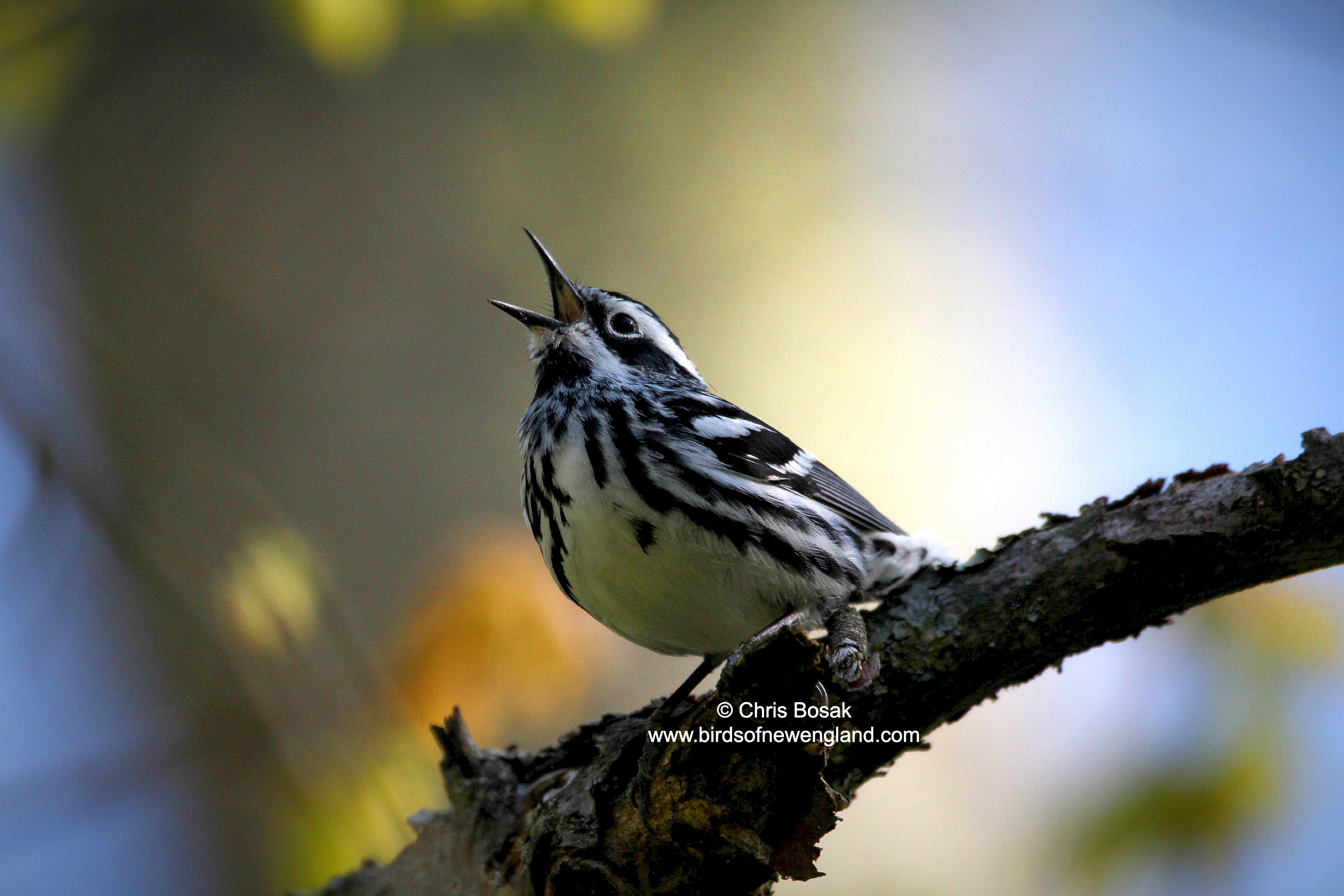
Photo by Chris Bosak – A black-and-white warbler sings in New England, spring 2025.
Black-and-white warblers sound like squeaky wheels when they sing. Their song can be ubiquitous in the New England woods depending on the time of year.
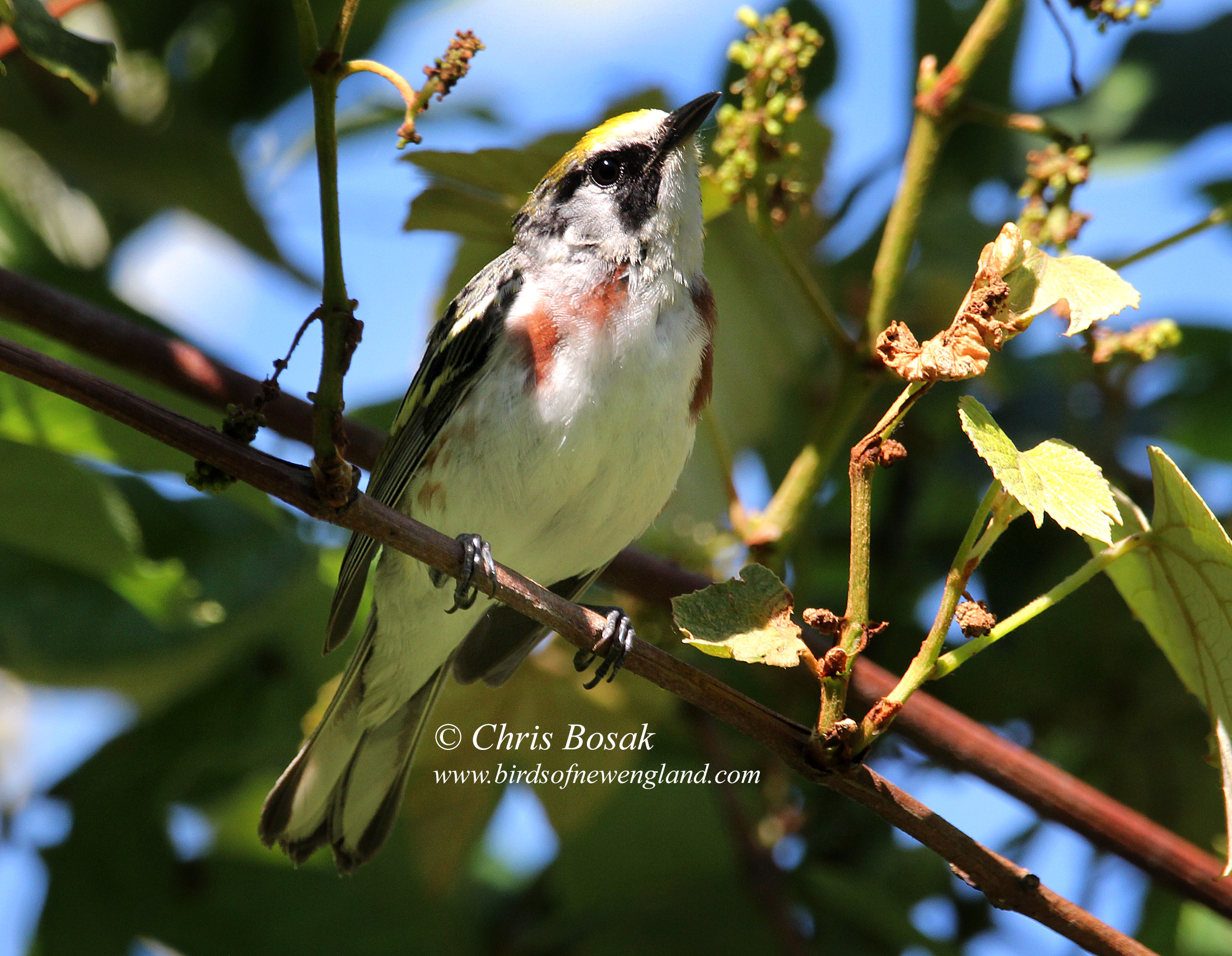
Photo by Chris Bosak – A chestnut-sided warbler perches in the brush in New England, spring 2024.
It was one of the better spring migrations I’ve had in a long time. I got out there more than in previous years and visited a greater variety of places.
The big week, of course, was the visit to Erie, Pennsylvania, during the peak of the migration season. I was there for my niece’s wedding but arrived several days in advance of the event to stay with my brother and visit Presque Isle State Park, a birding hot spot. We saw over 70 species of birds over the three separate visits.
I also hit my local New England spots several times a week during migration, starting in late March and going into June. It’s always interesting to see how the spring migration starts with a trickle of very few species and peaks with several dozen species all moving through at once.
Sometimes you just have to be patient. I tell myself that every year but rarely, if ever, do I heed my own advice.
I am so eager for the spring migration to hit full swing that I start tromping through the woods starting in mid-April expecting to see all the explosive colors of the northward songbird migration through New England.
Walk after walk in late April and early May yields some great birds but not the full-on spring spectacle. Finally, one day in mid-May, I get that walk I have been waiting for with colorful birds all around. Patience is key, sure, but that’s easier said than done.
That walk happened for me the other day when I got up early and hit the nearest park. The action started right away with an eastern towhee. It was one of the few towhees I saw on the walk compared to the dozens of towhees I had seen during my late April walks. Most of the towhees have either moved north or settled into their nesting season and are remaining quiet and out of sight.
Then I heard a familiar song from the tree above me. The distinctive “chick-bree” call could only be a scarlet tanager. Despite their awesome coloration, male scarlet tanagers can still be difficult to find among the leafed-out canopy. I had little trouble finding this guy, however, as he flew from one tree to the next revealing its impossibly red plumage in the golden morning light of the rising sun.
As I continued down the trail, the colors continued: the beautiful red upside-down triangle of the rose-breasted grosbeak, the electric orange of the Baltimore oriole, the dazzling blue of the indigo bunting, the bright yellow of the blue-winged warbler and the slightly darker yellow of the yellow warbler. Bobolinks and red-winged blackbirds brought life to the meadow.
The great sightings didn’t stop with the colorful birds as there were plenty of “dull” birds to see as well. Among the highlights were yellow-billed cuckoo, field sparrow and ovenbird. And lots of catbirds. Lots and lots of catbirds.
The sounds of the birds add to the magic. The insect-like buzzy song of the blue-winged warbler and tropical-like odd song of the cuckoo stood out among the rest.
It was the walk I had been anticipating for nearly a year. I enjoy New England year-round and each month has its special gifts for birdwatchers, but that mid-May walk when everything comes together never gets old.
If only the magic lasted longer. It’s called the peak of migration for a reason. Just as it has to build to its high point, so too will it now taper off as birds continue to push north or settle into nesting and go quiet.
Enjoy these days while they last. The color and variety are spectacular and unmatched by any other time of year.
The warblers are back and delighting, confusing, and frustrating birdwatchers throughout New England.
Warblers are small, usually colorful, passerine (perching) birds that migrate into New England every spring. Many nest here while others continue north to nest in Canada. In the fall, they head to points south such as southern U.S., the Caribbean, Central America or South America. The odd warbler shows up on New England Christmas Bird Counts from time to time, but for the most part, they are gone before the snow starts to fly.
To me, the quintessential warbler is the yellow warbler. It is small, brightly colored, numerous throughout the region and sings its ubiquitous song (“sweet sweet I’m so sweet”) over and over from the brush. It is all yellow with some rusty streaking on its chest and belly.
Warblers come in all colors, however. Many are mostly yellow and many others have flashes of yellow in their plumage. Some are black and white, and some are mostly brownish. A few are mostly blue. It’s no wonder that the spring migration, highlighted by warblers, is the favorite time of year for most birdwatchers.
Photo by Chris Bosak
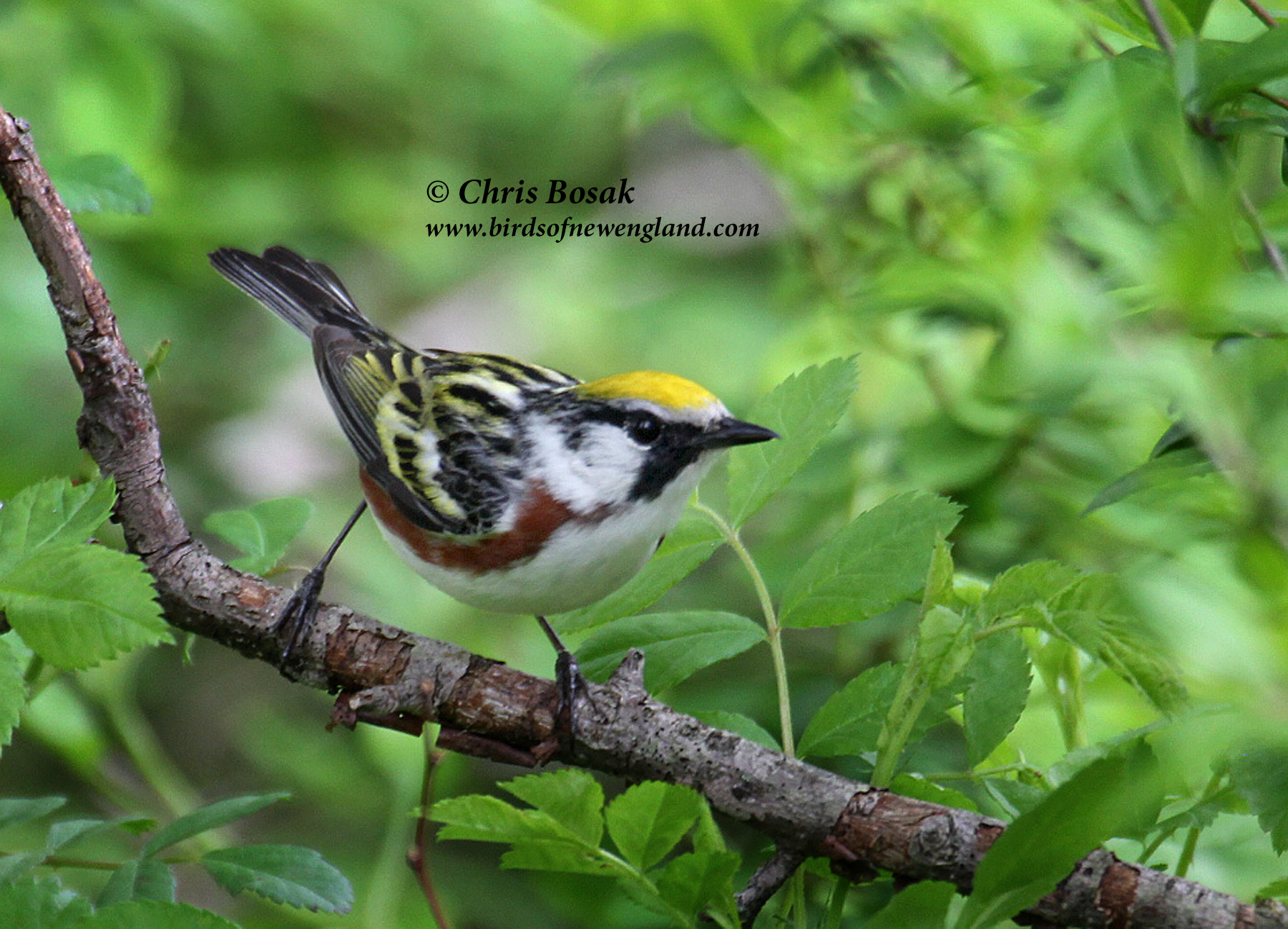
A chestnut-sided warbler lurks in the brush in New England, May 2020. Merganser Lake.
Welcome to May, arguably the best month of the year for birdwatching.
So many exciting things happen in the bird world in May that it’s hard to know where to begin. The breeding season is in full swing and our year-round birds as well as newly arrived migrant birds are either looking for nesting sites or already raising young. Suddenly our feeders are visited by colorful newcomers such as rose-breasted grosbeaks, Baltimore orioles or indigo buntings. Waders are back in full force stalking our ponds and rivers.
When it comes to May, however, talk of the birding world has to begin with warblers, those small and often colorful Neotropical migrants that add life to our neck of the woods every spring. Some of these warblers will simply stop by for a few days before heading farther north to their breeding grounds. Many, however, will find a suitable place to raise young and will be with us until the fall.
Photo by Chris Bosak
A chestnut-sided warbler lurks in the brush in New England, May 2020. Merganser Lake.
Due to various reasons (excuses?), I haven’t been out this year looking for warblers yet. But here are a few “old” shots to celebrate warbler season, a highlight of the birding year. I will take my own advice soon and “get out there.”
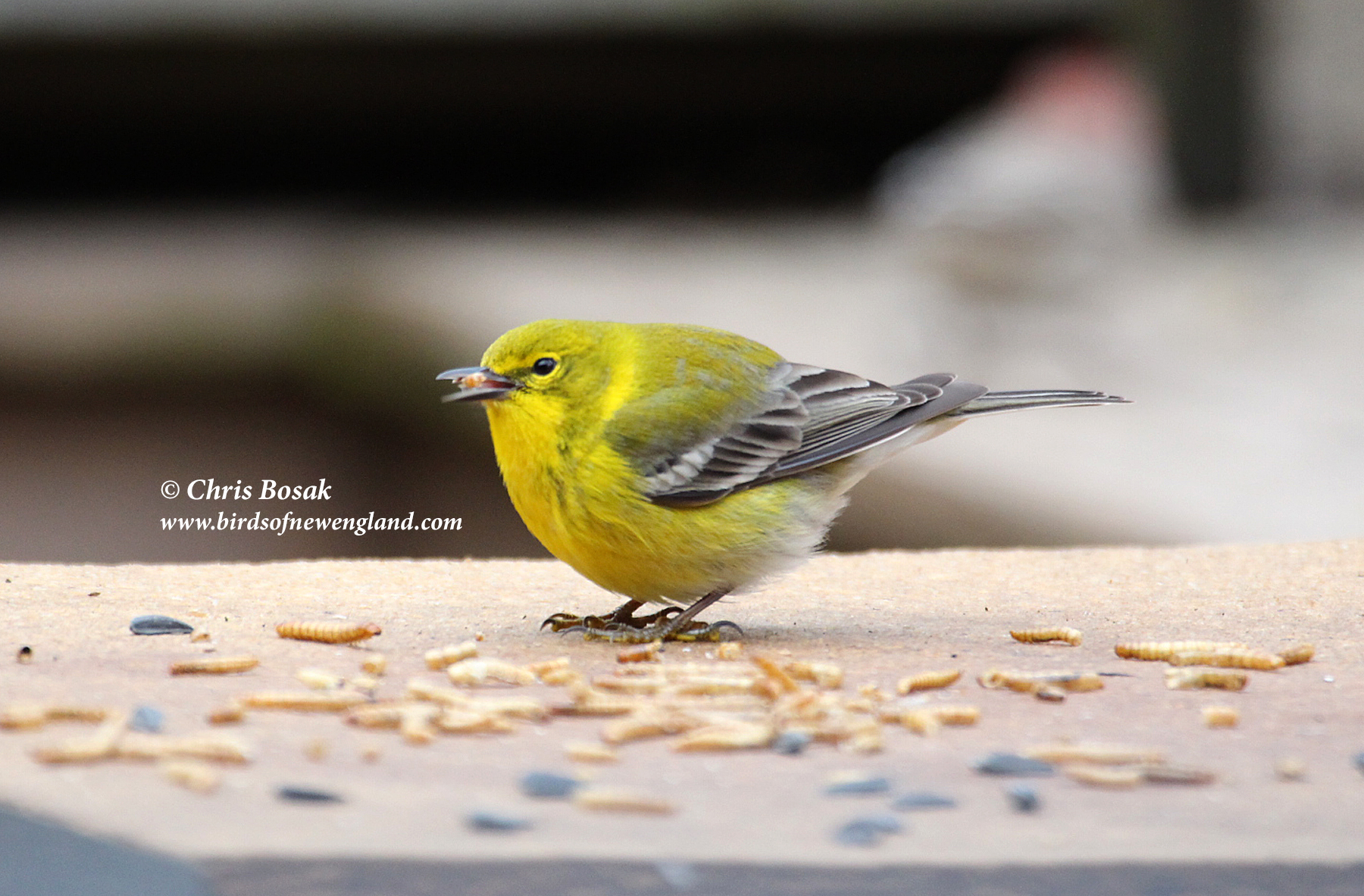
Photo by Chris Bosak
A pine warbler visits a backyard in New England, April 2020, Merganser Lake.
Other than the very few warblers of various types that remained in New England all winter, the pine warbler and palm warbler will be the first arrive in the region. I have seen them show up on rare bird alerts already but they will return in larger numbers over the next two weeks. Keep you eyes on your feeders as pine warblers are one of the few warbler species that will visit feeders. I’ve seen them eat suet, suet nuggets and meal worms. Above is the pine warbler; below is the palm.
Photo by Chris Bosak
A palm warbler rests on a wire fence in a backyard in New England, April 2020. Merganser Lake.
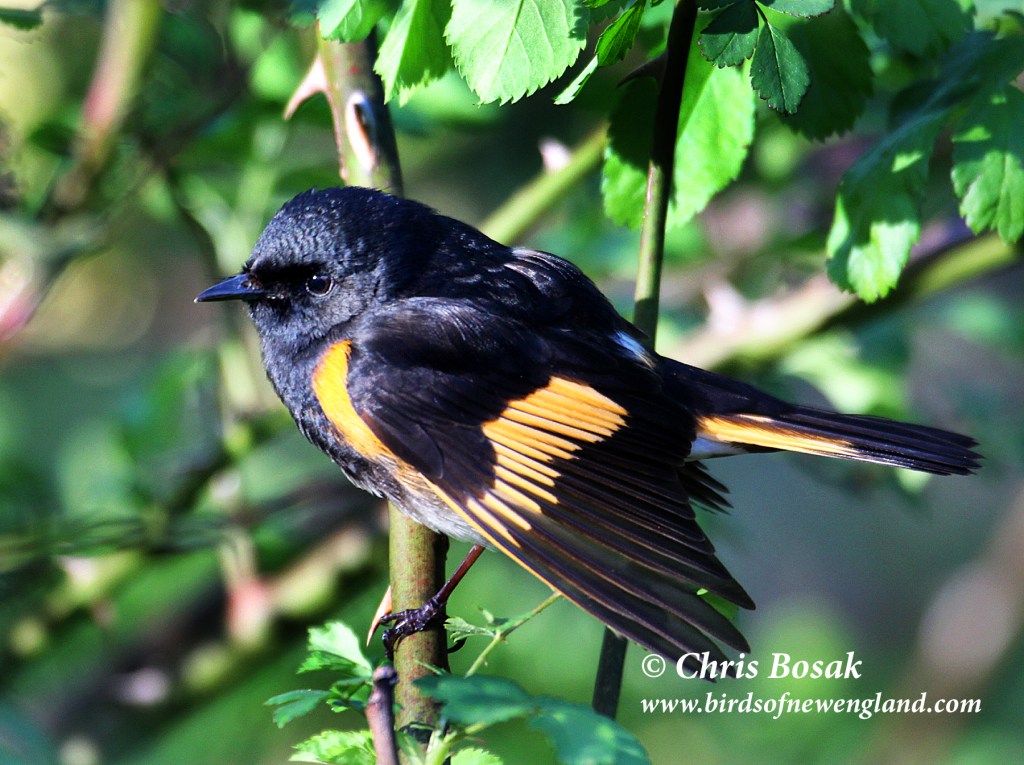
Photo by Chris Bosak An American redstart perches in a bush at Bennett’s Farm State Park in Connecticut, May 2020.
Something woke me up around 3:30 a.m. and I couldn’t fall back asleep. I gave up trying when the darkness outside my window started to brighten. What the heck, I told myself. It’s the height of warbler season so let’s go find some warblers. I made a cup of coffee and raced the rising sun to a nearby park. I headed down a path that has led to warblers in the past. It did again this time. There wasn’t a tremendous variety of warblers (maybe seven species) but the ones I did see kept me entertained.
My favorite was this American redstart that followed me along the path for an inordinate amount of time. It gave me great looks at it, but it would not sit still very well for photos. I managed a few decent shots despite his hyperactivity. A few more photos are below.
(Repeat text for context: I’m running out of COVID-19 lockdown themes so from now until things get back to some semblance of normalcy, I will simply post my best photo from the previous day. You could say it fits because of its uncertainty and challenge. I’ll call the series “A Day on Merganser Lake,” even though that’s not the real name of the lake I live near in southwestern Connecticut, it’s just a nod to my favorite duck family.)
Photo by Chris Bosak An American redstart perches in a bush at Bennett’s Farm State Park in Connecticut, May 2020.Photo by Chris Bosak
An American redstart perches on a branch at Bennett’s Farm State Park in Connecticut, May 2020.







 Birds of New England.com