For the Birds: Sapsucker make surprise winter visit

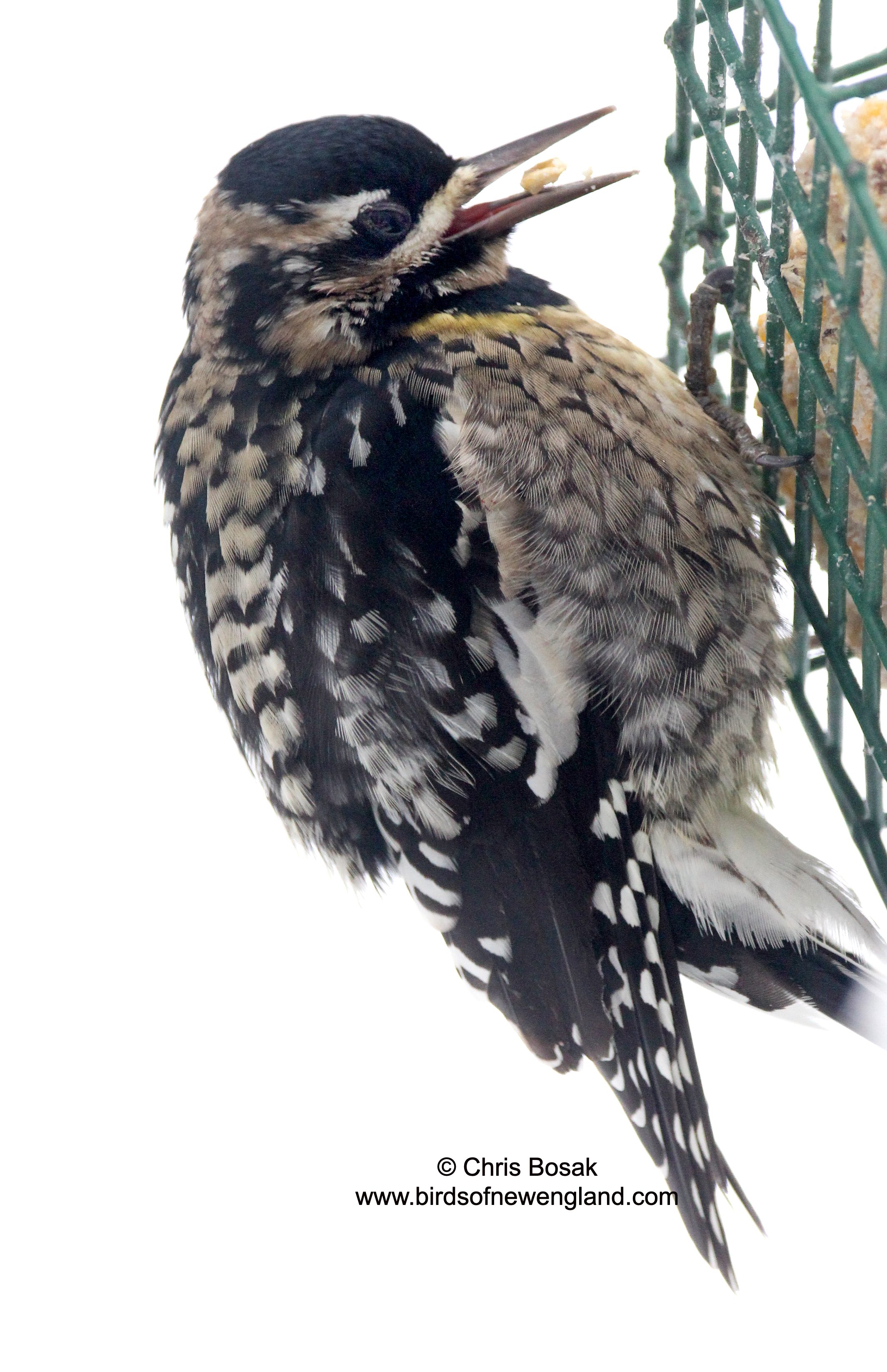
Photo by Chris Bosak – A young yellow-bellied sapsucker visits a suet feeder in New England, January 2026.

At first it looked like a growth on the tall bush near my bird feeding station. I quickly realized it wasn’t a growth at all but rather a yellow-bellied sapsucker hugging a small branch. 

It was a first-year bird, and its dark coloration, lack of red head or throat, and barred plumage made it look like part of the bush. It also caught me by surprise because yellow-bellied sapsuckers are migratory and are not frequent visitors to feeders. It was also perfectly still for several minutes as, from the comfort of my living room, I watched it brave the single-digit temperatures.

It eventually swung a quarter turn around the branch, offering me a view of its profile. Then it darted over to the nearby suet feeder, where it pecked at the frozen cake for several minutes. It returned to the same branch on the bush where I had initially spotted it and remained there for as long as I could watch it. 

The bird was there the next day as well, alternating between its favorite branch and the suet feeder. 

It was the latest uncommon visitor to my feeders this winter, following the likes of a fox sparrow, red-breasted nuthatch and northern flicker. Yes, I’m still waiting for the evening grosbeaks to arrive. 

Yellow-bellied sapsuckers breed throughout New England and up into Canada, but they are perhaps the most migratory of our woodpeckers. They leave in September or October for southern U.S., Central America or the West Indies. I have read that an increasing number are staying in New England for the winter, particularly the southern part of the region. 

Northern flickers are also migratory, but again, some remain here all winter. That is in contrast to our other woodpeckers—downy, hairy, pileated and red-bellied—which are year-round birds here. Black-backed woodpeckers of the north are also non-migratory.

While I was surprised to see the sapsucker the other day, I probably shouldn’t have been. I mentioned nemesis birds in a column a few weeks ago and noted that evening grosbeaks and owls are among mine. I should have mentioned American woodcock as well. Nemesis birds are those that elude you regardless of how hard you try to find them. 

For me, yellow-bellied sapsuckers are the opposite. I hope I don’t jinx myself by writing this, but I see a lot of them. I see them on my walks, in my backyard, and now, at my feeders. This wasn’t the first one I saw this winter either. I spotted one on the Christmas Bird Count and another on a recent walk in the woods.

The only problem with seeing a lot of yellow-bellied sapsuckers is that I have to explain that they are indeed real birds. It’s not just a funny-sounding name that was made up for a scene in The Honeymooners so many years ago. (Check it out on YouTube if you’ve never seen it.)

Birdwatching is full of surprises, whether on a walk in the woods or watching the feeders. The usual suspects are enough to keep me interested, but the surprises add a little oomph to the hobby.

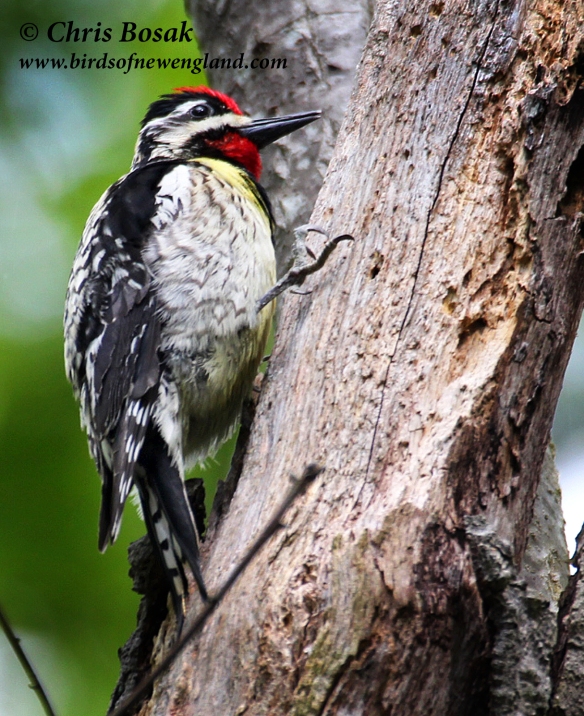
For the Birds: More surprises on winter walks

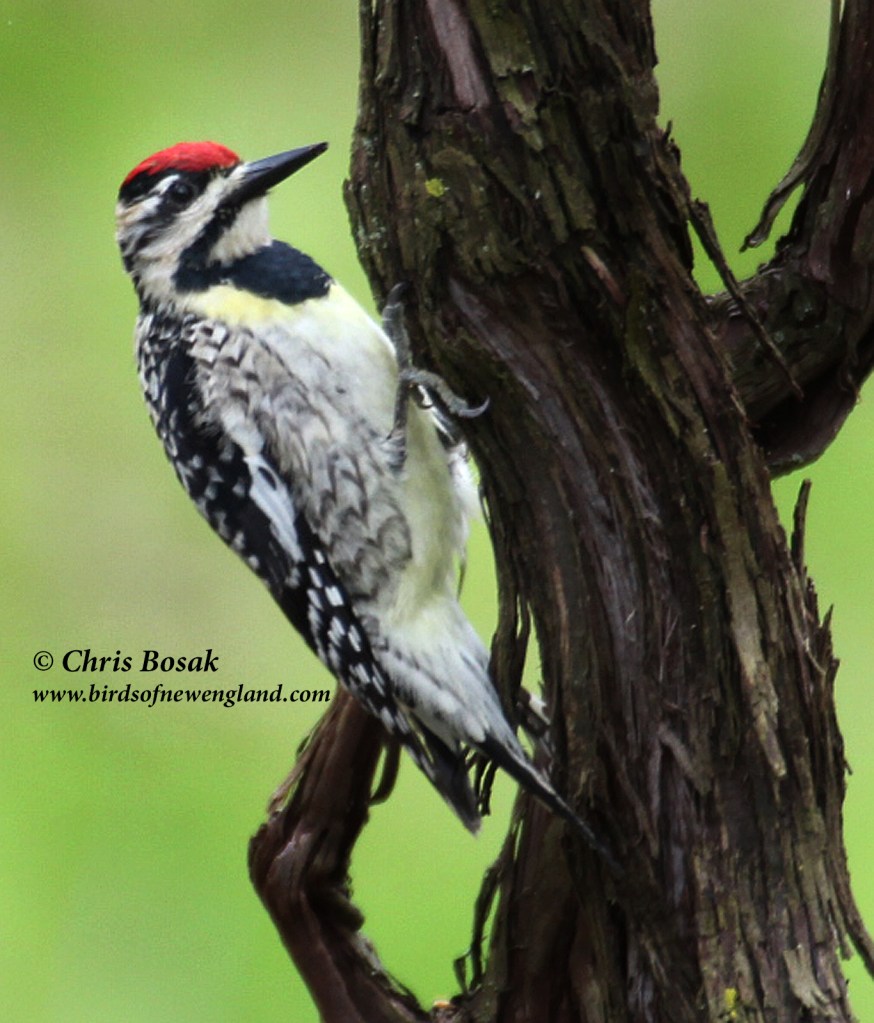
Photo by Chris Bosak — A yellow-bellied sapsucker taps on a tree in New England, January 2024.

The woods seem to be full of surprises this winter.

Last week I wrote about the gray catbird I have been seeing on my walks this winter. On a walk last week, which was done when it was about 15 degrees outside, I had four species that were marked as “unusual” by eBird, a maassive database of bird sightings. That doesn’t necessarily mean that the birds are rare, but rather they are not commonly seen in New England during the winter. The species were: catbird, hermit thrush, purple finch and yellow-bellied sapsucker. 

The catbird, thrush and finch were all species I had seen on previous walks this winter. In fact, it seems as though I typically find a hermit thrush or two each winter in New England. Like the catbird, hermit thrushes typically migrate south of New England before winter, but some remain in our region, opting to tolerate the cold weather rather than take on the risks of migration.

Continue reading

For the Birds: Woodpeckers and rhythm

Photo by Chris Bosak A male yellow-bellied sapsucker perches on a dead tree branch in New England, June 2020. Merganser Lake.

I am quite sure I am not his intended target, but when the yellow-bellied sapsucker drums on the hollow branch in my side yard, I come running. I mentioned in last week’s column that I have a yellow-bellied sapsucker that drums on a branch in my side yard and a pileated woodpecker that drums on a branch in the backyard. Woodpeckers often drum on objects such as hollow branches, the sides of houses, gutters, and chimney flashings. They pick objects such as these because the noise resonates far and wide. This drumming is done to attract mates or announce territory. Obviously, they do not tap on gutters or chimney flashings to find food or make homes.

They may pick hollow branches to make homes, naturally, but the territorial and mate-attracting drumming is more rhythmic and the cadence is specific to individual woodpecker species.

I also mentioned in last week’s column that I was impressed the first time I saw a birdwatcher identify the type of woodpecker from its drumming in the distance. I still do not have that skill down very well, but I am getting a lot of practice distinguishing the yellow-bellied sapsucker and the pileated woodpecker. Just as it is exciting when a bird chooses your property to eat, drink, or make a home, it is also exciting when a woodpecker chooses a branch on your property for its drumming.

It may not be so exciting when they return to your siding, gutter or chimney flashing for this purpose, however. If this is happening, there are measures you can take to try to stop it. Of course, nothing is a guarantee when we are talking about wildlife.

There are literally dozens of products on the market to deter woodpeckers from tapping on your house. Do a simple Internet search for “stop woodpecker damage” and they will all pop up.

New England has several woodpecker types. Most of New England has the aforementioned yellow-bellied sapsucker and pileated woodpecker, as well as downy and hairy woodpecker, and northern flicker. Southern New England and increasingly the middle part of the region also has red-bellied woodpecker. The northern part of New England features the black-backed woodpecker and, to a lesser degree, the American three-toed woodpecker.

The red-headed woodpecker is also an occasional sighting in New England. Many people mistakenly call the red-bellied woodpecker the red-headed woodpecker because it does indeed have a red head, or at least mostly red. The red-bellied woodpecker has a faint pinkish wash on the belly, which gives it its name. The red-headed woodpecker, indeed, has a fully red head. They are more common south and west of New England but, as I mentioned, are occasionally seen in our region.

This is just my own theory, and it hasn’t been scientifically proven to my knowledge, but the dreaded diseases that have ravaged so many of our tree species have greatly benefited woodpeckers. They build their nests in dead trees and branches, and sadly, between hemlock woolly adelgid, chestnut blight, Dutch elm disease and locust borers, they have plenty of dead trees to choose from. And, of course, lots of drumming branches.

Sapsucker drumming

Photo by Chris Bosak A male yellow-bellied sapsucker perches on a dead tree branch in New England, June 2020. Merganser Lake.

A Day on Merganser Lake

Woodpeckers bang their bills on objects for a variety of reasons, such as looking for food, hollowing out a hole for nesting, and proclaiming their territory. To proclaim their territory, they find an object that is particularly loud, such as a hollow branch, side of a house or chimney flashing. This guy (you can tell it’s a guy from the red throat) found a hollow branch in my side yard for that purpose. I posted a photo of a female sapsucker (sans red throat) not too long ago and included a classic bit from The Honeymooners. Click here for that post.

Birds to brighten your day: May 19

Photo by Chris Bosak
A yellow-bellied sapsucker perches on a vine in New England, May 2020. Merganser Lake.

A Day on Merganser Lake

The yellow-bellied sapsucker is one of the more underrated woodpeckers in New England, in my opinion. Perhaps it’s because they aren’t seen as often as downy, hairy or red-bellied woodpeckers or have the wow factor of flickers or pileated woodpeckers. It’s always a treat to see these handsome birds with an interesting eating habit. This is from allaboutbirds.org: “They feed at sapwells—neat rows of shallow holes they drill in tree bark. They lap up the sugary sap along with any insects that may get caught there.”

And, of course, there’s always this:

(Repeat text for context:  I’m running out of COVID-19 lockdown themes so from now until things get back to some semblance of normalcy, I will simply post my best photo from the previous day. You could say it fits because of its uncertainty and challenge. I’ll call the series “A Day on Merganser Lake,” even though that’s not the real name of the lake I live near in southwestern Connecticut, it’s just a nod to my favorite duck family.)

The sapsucker shown is a female. Males have red throats.

Photo by Chris Bosak
A yellow-bellied sapsucker perches on a vine in New England, May 2020. Merganser Lake.

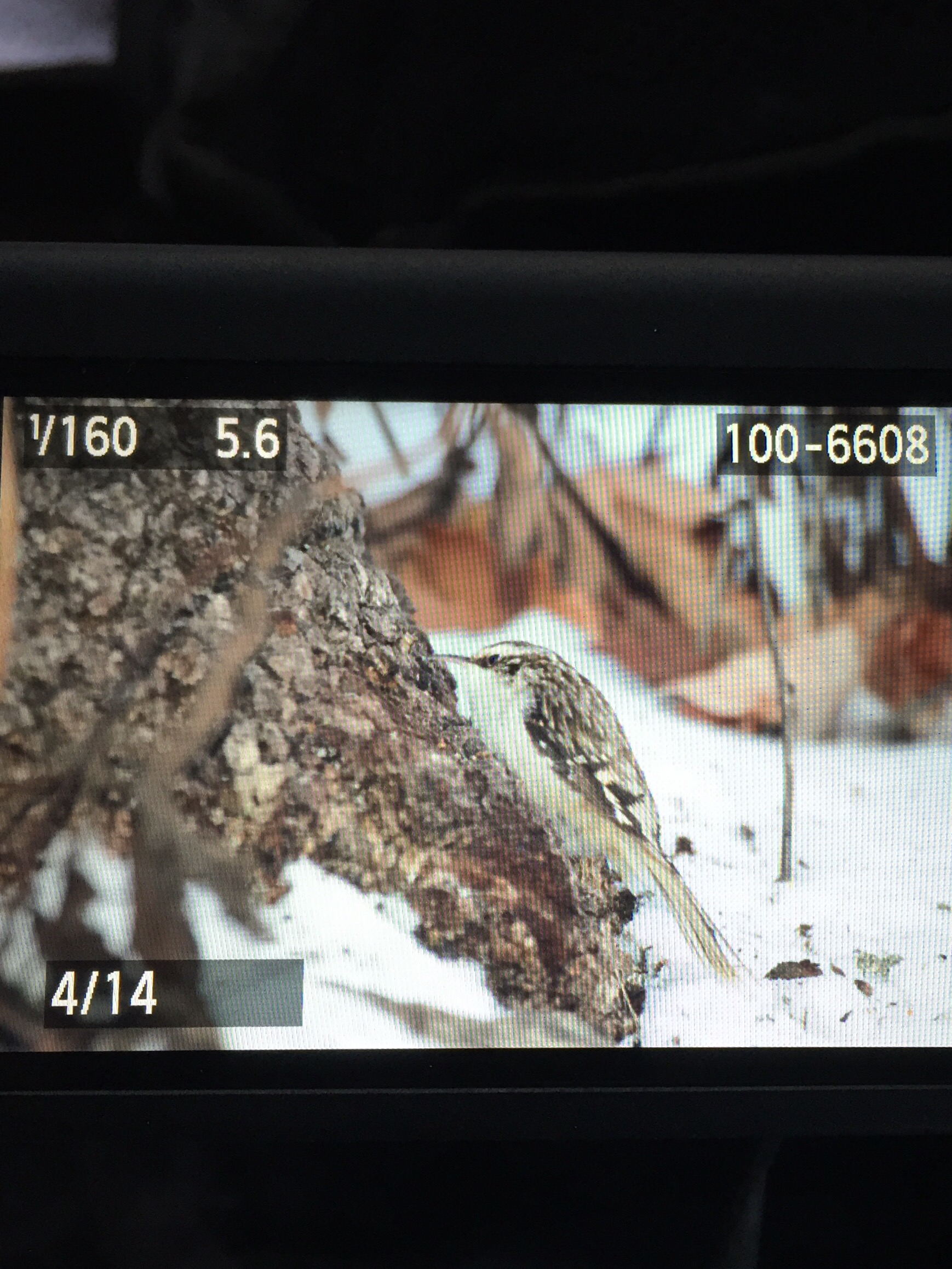
Brown Creeper and Yellow-bellied Sapsucker pay a visit

Photo by Chris Bosak Brown Creeper at base of tree.

Photo by Chris Bosak
Brown Creeper at base of tree.

At one point today a Yellow-bellied Sapsucker was on the suet feeder and a Brown Creeper crept along the base of an adjacent tree. Neither are earth-shattering sightings, but both are rather unusual in my part of New England at Merganser Lake. In fact, it was the first time I had ever seen a sapsucker at one of my feeders. I even managed to get a decent photograph of the Brown Creeper, a species that can be tricky to shoot.

The photos accompanying this post, admittedly, don’t look that great. They are merely photos I took with my iPhone of the display screen of my camera. When I have more time I’ll get to a computer and download the photos, but for now the mediocre iPhone will have to do. Thanks for your patience. I wanted to post this as soon as possible as this is Great Backyard Bird Count weekend. It runs through Monday, so maybe this posting will inspire others to participate. For more information, click here.

Photo by Chris Bosak Yellow-bellied Sapsucker on suet feeder.

Photo by Chris Bosak
Yellow-bellied Sapsucker on suet feeder.