Unknown's avatar

About Chris Bosak

Bird columnist and nature photographer based in New England.

For the Birds: Patience pays off again

Photo by Chris Bosak A yellow-rumped warbler eats poison ivy berries in New England, fall 2021.

Any birdwatcher knows that patience and faith are perhaps the two most important components to a successful bird walk.

I started a recent walk with high hopes, as I always do, but as the morning went on and no birds were to be found, I started to lose hope of seeing anything. To compound matters, the field at the park had recently been mowed for the first time of the year, making bird encounters even less likely.

It still would have been a pleasant walk because the autumn morning chill had given way to a beautiful and warm sunny day. But with fall migration in full swing, I was disappointed in the birding results.

Continue reading

For the Birds: Efts and mushrooms make for a very orange walk

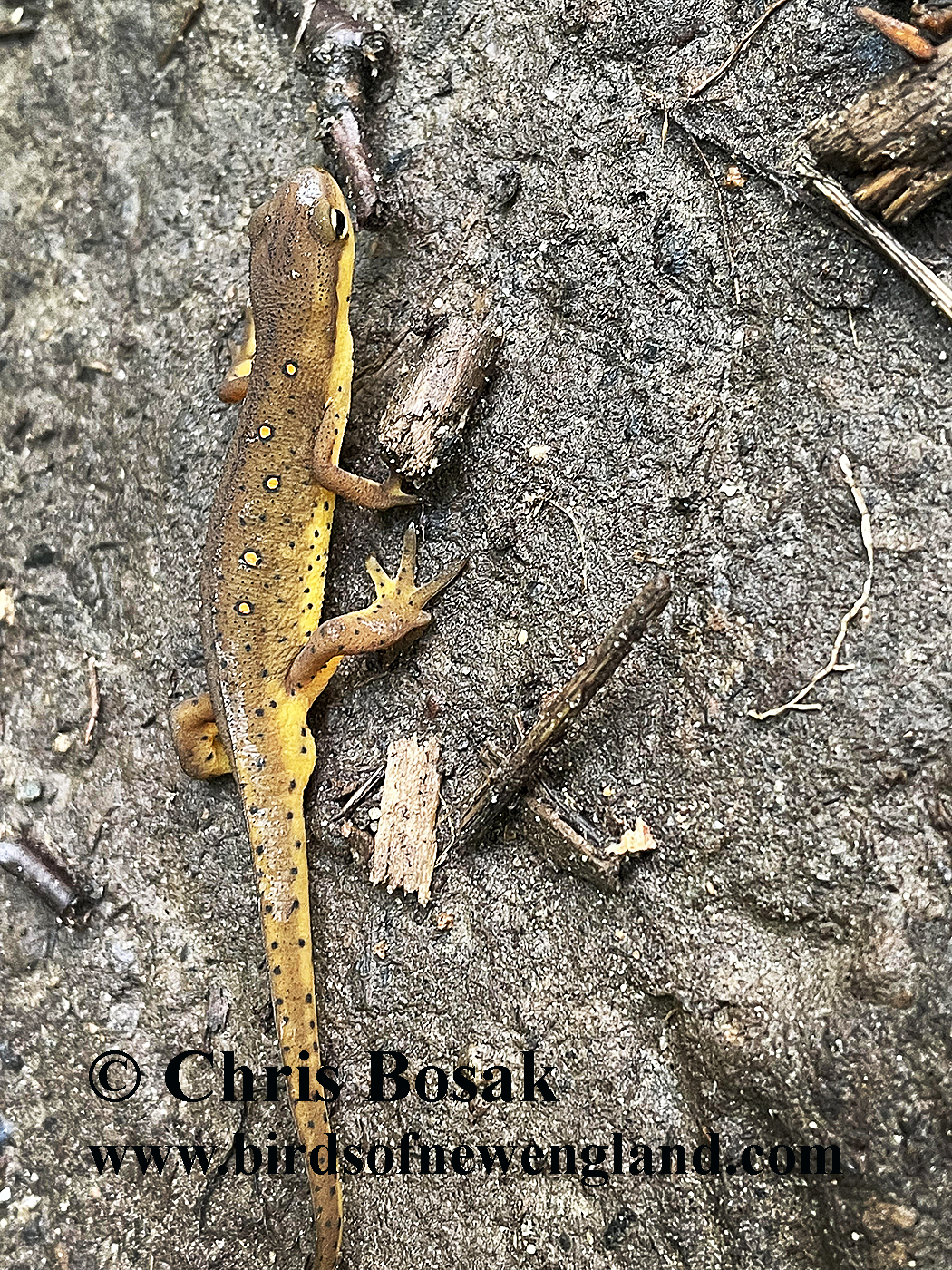
Photo by Chris Bosak An eft works its way across a path in New England, fall 2021.

Orange was the color of the day during a recent morning walk in the woods.

It had rained overnight and the trails were damp in most places and puddled in others. I got a flash of excitement when I saw my first eft. Then I saw another. Then another. Efts were underfoot on every fifth or sixth step.

Efts are eastern newts in the terrestrial stage. Some are brownish but most are bright orange and, despite their small size, very visible on paths in the woods. They can be found any day from late spring into fall, but damp weather is when you are most likely to find them, even if you aren’t looking for them.

Newts have four distinct stages, or life cycles. Females lay eggs on aquatic vegetation in the spring. A month to five weeks later, the eggs hatch and the newts live in water for a few months. At this larval stage, they are less than 1 inch long and have feathery gills. In the fall, they shed their gills, crawl onto land and live as efts for about three or four years. They spend New England’s harsh winters hibernating under logs or rocks.

Continue reading

For the Birds: Big news week for the birds

Photo by Chris Bosak Yellow-rumped Warbler in Selleck’s Woods, Darien, Conn., April 2014.

Note: This column was originally published in newspapers on Oct. 4.

There was a lot of environmental and bird-related news to come out of Washington this past week.

In case you missed it, the big news was that U.S. Fish and Wildlife Service officials declared the ivory-billed woodpecker extinct. The “Lord God Bird’s” removal from the endangered species list is surprising only because officials are reluctant to declare species extinct. It’s such a powerful word that carries with it such finality it’s a tough tag to put on something.

The dreaded label was also placed on 22 other species of wildlife, including eight freshwater mussels. Sadly, but not surprisingly, 11 species from Hawaii and the Pacific Islands have been declared extinct. That includes many birds.

Continue reading

Palm warblers out in force

Photo by Chris Bosak A palm warbler stands on a stone wall in New England, October 2021.

Three species dominated the count total on my morning bird walk today. White-throated sparrows were plentiful and it was great to hear their song again. Yellow-rumped warblers were plentiful, as they often are this time of year. Palm warblers were numerous as well and a flock of five kept me company near a stone wall at Huntington State Park. The fall warbler migration is bittersweet. It’s great to see them, of course, but the crisp air reminds me they will be gone soon and a long winter looms. At least winter is good for birdwatching too.

Photo by Chris Bosak A palm warbler stands on a stone wall in New England, October 2021.

For the Birds: Fall’s magic

Fall is an exciting time for birdwatching with hawkwatches, the southern warbler migration, and, later in the fall, the waterfowl migration.

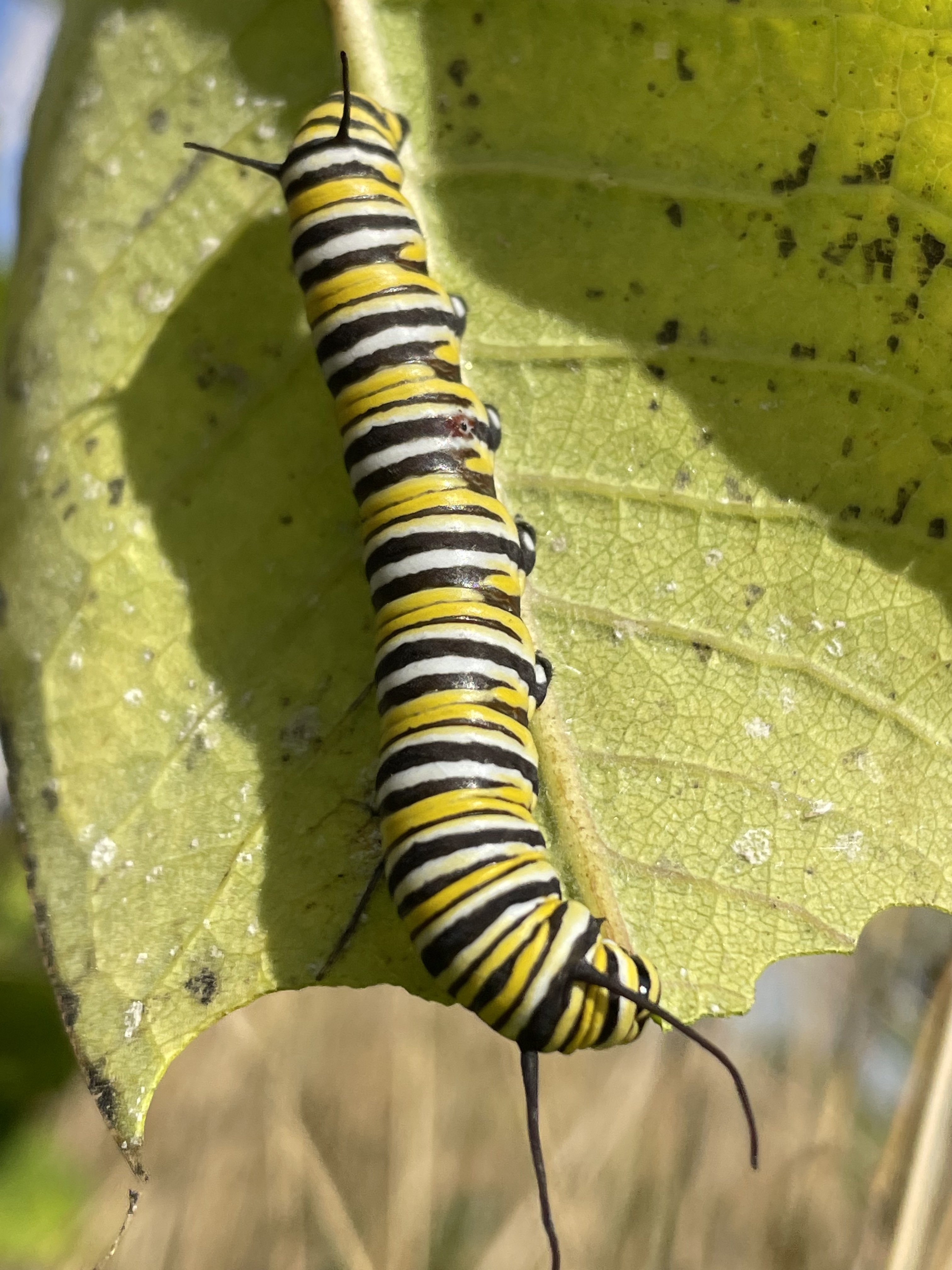
Early fall holds many non-bird surprises in nature as well. On recent walks, I have seen dozens of monarchs and other butterflies. When I walk through fields, I am constantly on the lookout for monarch caterpillars on milkweed plants. Rarely am I lucky enough to spot one, but it does happen on occasion. The other day happened to be one of those occasions.

Monarchs are struggling as a species as habitat loss, pesticides and, potentially, climate change have played a heavy toll on their numbers, particularly out West. I did read an article recently that said the numbers may be rebounding, however. That would be great news.

Continue reading

Watch where you step

Photo by Chris Bosak An eft works its way across a path in New England, fall 2021.

If you’ve spent any time in the New England woods in the spring, summer or fall after a rain, you’ve certainly come across an eft or two (probably way more than that.) They wander onto hiking trails and can be quite numerous the day after a rain. I came across several during a recent walk at Huntington State Park in SW Connecticut. Notice the different colors of the two efts pictured. The eft is the terrestrial stage of the eastern newt. The four stages of the newt are described succinctly in the following post by author David George Haskell.

Photo by Chris Bosak An eft works its way across a path in New England, fall 2021.

For the Birds: Hummingbird feeder timing

Here is the latest For the Birds article. It was published a few weeks ago in newspapers, but is still relevant as September comes to an end.

Photo by Chris Bosak Hummingbirds are migrating now and will be throughout the rest of the month.

When should I bring in my hummingbird feeders? It’s a common question and may be answered the same way as so many other questions may be answered: It depends.

The answer depends on your tolerance for changing the sugar water in the feeders and your patience for watching a feeder that may not receive any visitors. Hummingbirds started to migrate a few weeks ago and some have gone south already.

With migration under way, now is definitely not the time to bring the feeders in. Hummingbirds need to pretty much double their weight to make their arduous migration, particularly when they reach the Gulf of Mexico and fly the 500 miles without rest.

Sure, there are plenty of natural food sources for hummingbirds this time of year, but an easy meal at a feeder now and then gives the tiny birds a bit of a break. Patches of jewelweed are another favorite of hummingbirds and they are still blooming. Other than feeders, I think I’ve seen more hummingbirds at jewelweed (touch-me-not) patches than any other venue.

Continue reading

Future monarch (and a current one)

I always look at milkweed plants for monarch caterpillars. My success rate is about .001 percent, but today I got lucky and found one on a plant right next to the trail. Monarchs lay their eggs on the underside of milkweed leaves and the caterpillar eats the leaf when it hatches. Milkweed is toxic and the caterpillar becomes toxic to would-be predators.

There were a ton of monarchs flying around too, as seen below.

For the Birds: A dragonfly bonanza

Photo by Chris Bosak A green darner flies around a backyard in New England following a mosquito hatch in September 2021.

The sun was starting to set behind the marsh, casting a golden glow on the backyard.

In this magical light, we could see dragonflies by the dozens, perhaps hundreds, zipping around the yard. Looking closer, aided by the light, we could see hundreds, if not thousands, of mosquitoes, presenting themselves as tiny specks in the air. Looking even closer, we could see the dragonflies chase down and eat the mosquitoes. The mosquitoes didn’t stand a chance against these perfectly engineered predators.

I went out to try my luck at photographing a dragonfly in midair. It’s been an elusive shot in my catalog of nature photos. Even with the sheer numbers of dragonflies and the perfect evening sun at my back, the shot proved to be a challenge. I somewhat met the challenge, however. I wouldn’t say I nailed the shot as it’s not ideally composed, focused, exposed or any other type of technical photography term you can think of. But, for my purposes, it’s not bad. I’m not shooting for National Geographic or anything.

Continue reading