Just some other birds I saw that day

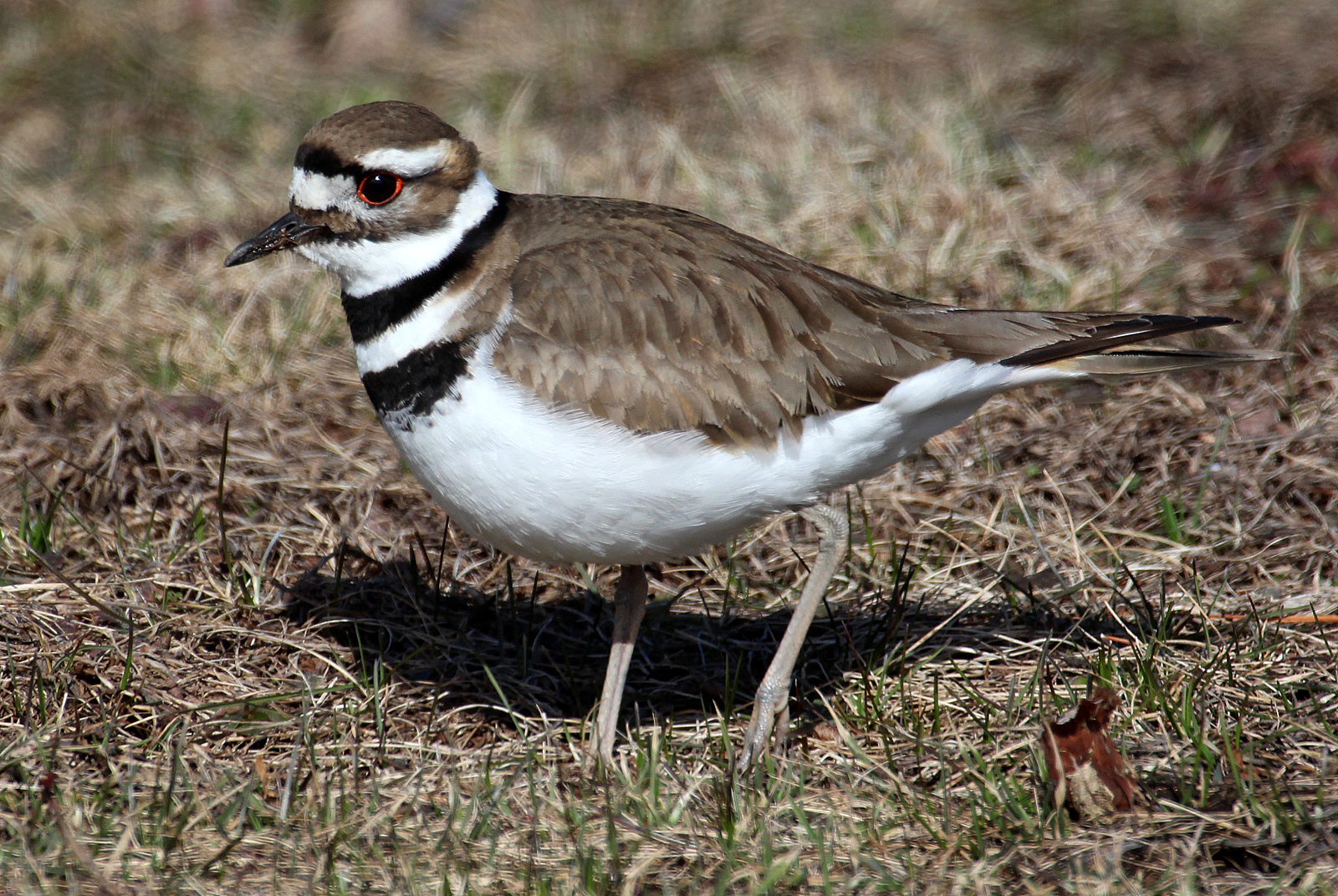
https://birdsofnewengland.com/wp-content/uploads/2016/03/killdeer.jpg

Photo by Chris Bosak
A Killdeer walks along the ground at Spring Grove Cemetery in Darien, Conn., March 2016.

Last week I posted about the Green-winged Teal I saw at a small pond at a cemetery Darien. I’m a big duck person so I get a little excited when I see a duck I don’t often see.

But the teal wasn’t the only good bird I saw that day. Here are a few more. (Above) Killdeer nest in the cemetery every year, so it’s good to know they are back. (Spring is close.) Last year I was lucky enough to capture the copulation of the pair. Click here for that link. Below, I can’t resist photographing a Great Blue Heron when the opportunity presents itself, regardless of how many Great Blue Heron photos I have already.

https://birdsofnewengland.com/wp-content/uploads/2016/03/great-blue-heron.jpg

Photo by Chris Bosak
A Great Blue Heron looks for food at Spring Grove Cemetery in Darien, Conn., March 2016.

A few late warbler photos: redstart and yellowthroat

Photo by Chris Bosak An American Redstart sings from a perch in Selleck's and Dunlap Woods in Darien, Conn., May 2015.

Photo by Chris Bosak
An American Redstart sings from a perch in Selleck’s and Dunlap Woods in Darien, Conn., May 2015.

Here are a few photos of some late migrating warblers I took Monday at Selleck’s and Dunlap Woods in Darien, Conn. The warbler migration still has some strong days ahead, but don’t wait too long if you haven’t been out there looking for them yet. The warbler migration in New England winds down as the month of May winds down. Let me know what you’re seeing out there.

Photo by Chris Bosak A Common Yellowthroat perches on a broken stalk at Selleck's and Dunlap Woods in May 2015.

Photo by Chris Bosak
A Common Yellowthroat perches on a broken stalk at Selleck’s and Dunlap Woods in May 2015.

It’s that time of year again. Warblers abound.

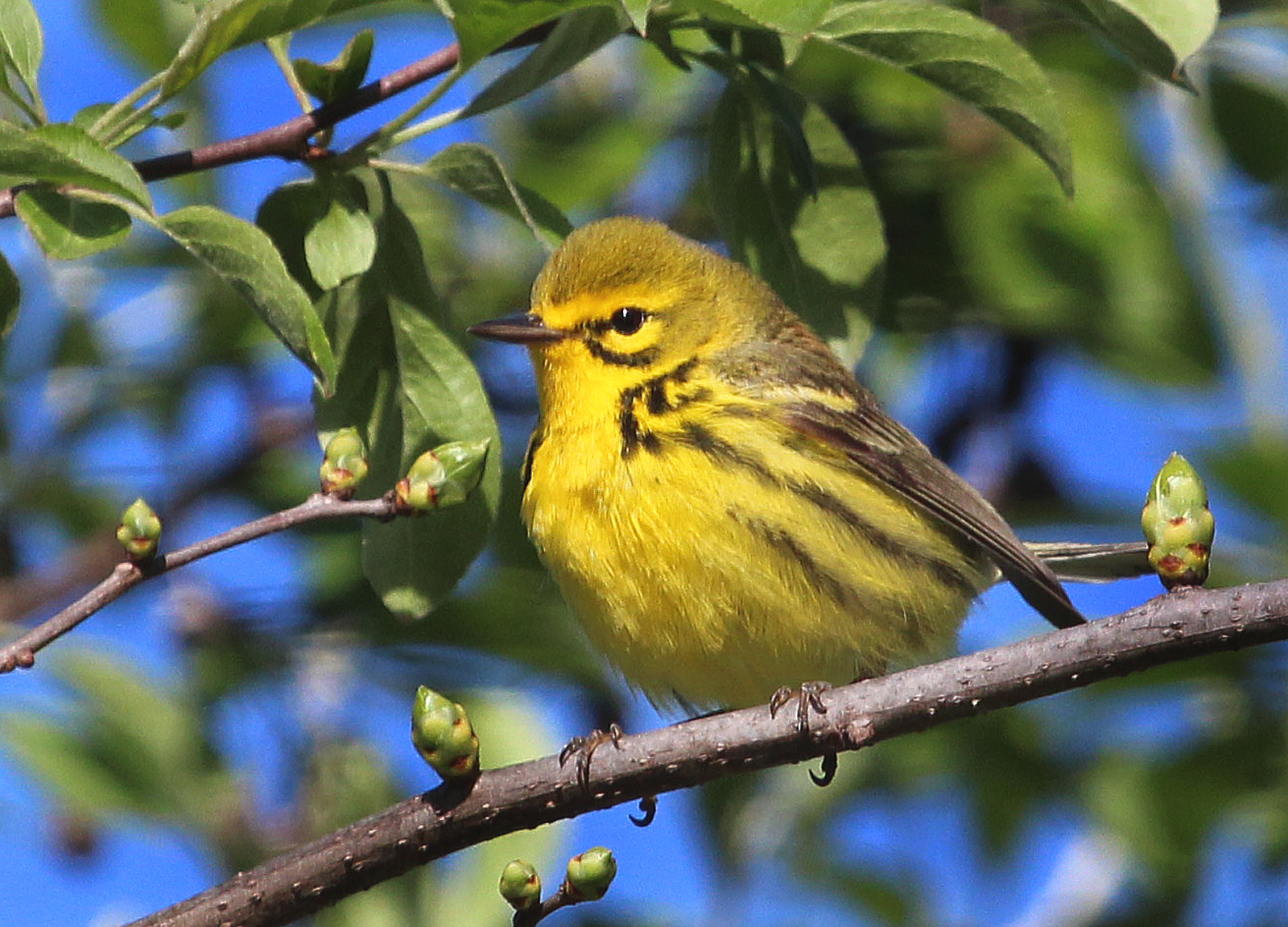
Photo by Chris Bosak A Prairie Warbler perches in a tree at Selleck's/Dunlap Woods on May 5, 2014.

Photo by Chris Bosak
A Prairie Warbler perches in a tree at Selleck’s/Dunlap Woods on May 5, 2014.

I took a quick walk before work this morning. As usual, I was running behind getting my third-grader to school, so I had only about 15 minutes for this walk. But it was enough to know that we are in what many birders consider the most exciting two weeks of the year. The warbler migration started with a trickle a few weeks ago in New England. Based on what I saw on my quick walk this morning, the warbler season is picking up fast. A Prairie Warbler was the first bird I saw — not a bad start to a walk. A few Yellow Warblers darted here and there, too. Yellow Warblers nest at Selleck’s Woods, so hopefully they are looking to set up shop for the summer.

The walk included a few other warbler species as well as the sounds of other colorful songbirds, such as Baltimore Orioles and Blue-gray Gnatcatchers. It’s a great time to be out there. Let me know what you are seeing.

Here’s a post from last year featuring some of the warblers you may see out there this time of year. Click here.

Must be spring, the phoebes are back

Photo by Chris Bosak An Eastern Phoebe perches on a branch in Selleck's Woods in Darien, Conn., in late March 2015.

Photo by Chris Bosak
An Eastern Phoebe perches on a branch in Selleck’s Woods in Darien, Conn., in late March 2015.

A very quiet walk in a patch of woods the other day suddenly turned interesting when a lone Eastern Phoebe made an appearance. Overall, the phoebe is somewhat drab, but its habit of bobbing its tail constantly gives its identity away immediately.

I’ve always liked phoebes despite their nondescript appearance and quiet voice. Perhaps it’s because they migrate so early and offer some hope that winter is finally in the rearview mirror.

I’ve been seeing them almost daily now, so it’s nice to know spring is here. Phoebes, just like chickadees and several birds, are named after the song they sing.


Hermit thrushes abound on latest bird walk

Photo by Chris Bosak A Hermit Thrush perches on a branch at Selleck's/Dunlap Woods .

Photo by Chris Bosak
A Hermit Thrush perches on a branch at Selleck’s/Dunlap Woods .

I can’t speak for how well the Hermit Thrush population is doing in general, but the last bird walk I took yielded a lot of these handsome birds. I was walking through Selleck’s/Dunlap Woods in Darien (Conn.) with my buddy Larry Flynn and the thrushes were by far the most commonly seen bird. At one point we had five or six Hermit Thrushes in one bush. I’ve seen plenty of Hermit Thrushes in my day, but never that many in the same bush.

As we walked along the trails, Hermit Thrushes popped up here and there, and pretty much everywhere. The birds, however, were silent — other than their little feet rustling among the fallen leaves. They didn’t sing their famous flute-like song because it’s the fall migration. During the breeding season (spring and summer) it’s a treat to hear their song echo throughout the woods.

I mentioned before than I can’t speak for how the population is doing overall. Well, that was a white lie because I can, at least by crediting another source. Hermit Thrushes, thankfully, are doing well as a species. In fact their numbers have been rising since 1966, according to the North American Breeding Bird Survey.

Hermit Thrushes are probably the most commonly seen thrush in New England, but there are several types of thrushes — and they can be very difficult to tell apart. The Wood Thrush and Veery look somewhat different than the Hermit Thrush and are fairly easy to differentiate. However, species such as Bicknell’s Thrush, Swainson’s Thrush and Gray-checked Thrush pose a tougher ID challenge and it takes a trained eye to pick out those species.

Larry and I are pretty certain that what we were seeing were all Hermit Thrushes. The next walk, however, may yield nary a Hermit Thrush. That’s the joy of migration — and birding in general.

Feel free to leave a comment …
Latest For the Birds column: Loons in the fall

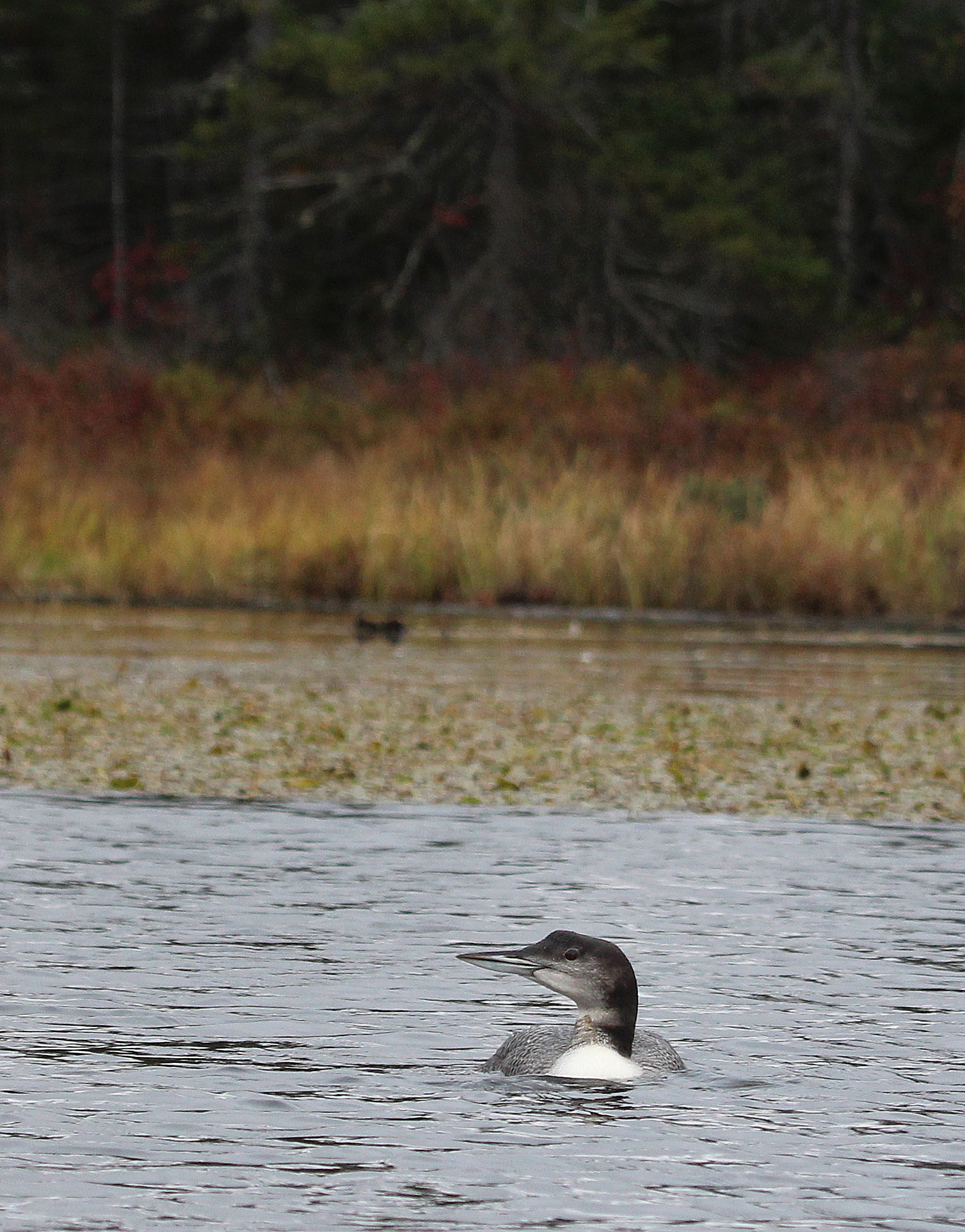
Photo by Chris Bosak A Common Loon in transitional plumage swims on a pond in northern New Hampshire in early October 2014.

Photo by Chris Bosak
A Common Loon in transitional plumage swims on a pond in northern New Hampshire in early October 2014.

I recently took my annual trip to northern New England in the hopes of seeing moose and few boreal bird species. The moose were scarce _ I saw a grand total of zero _ and Gray Jays were the only real boreal species of birds I saw. Nonetheless I did see plenty of Common Loons, which makes for a successful trip in my book. My latest For the Birds column addresses loons and their summer and winter plumage (and in-between plumage).
The full column may be seen here. 

Over the next several days I’ll post photos from the trip, which included stops in central Maine and northern New Hampshire.

What will this late-fall/early-winter bring?

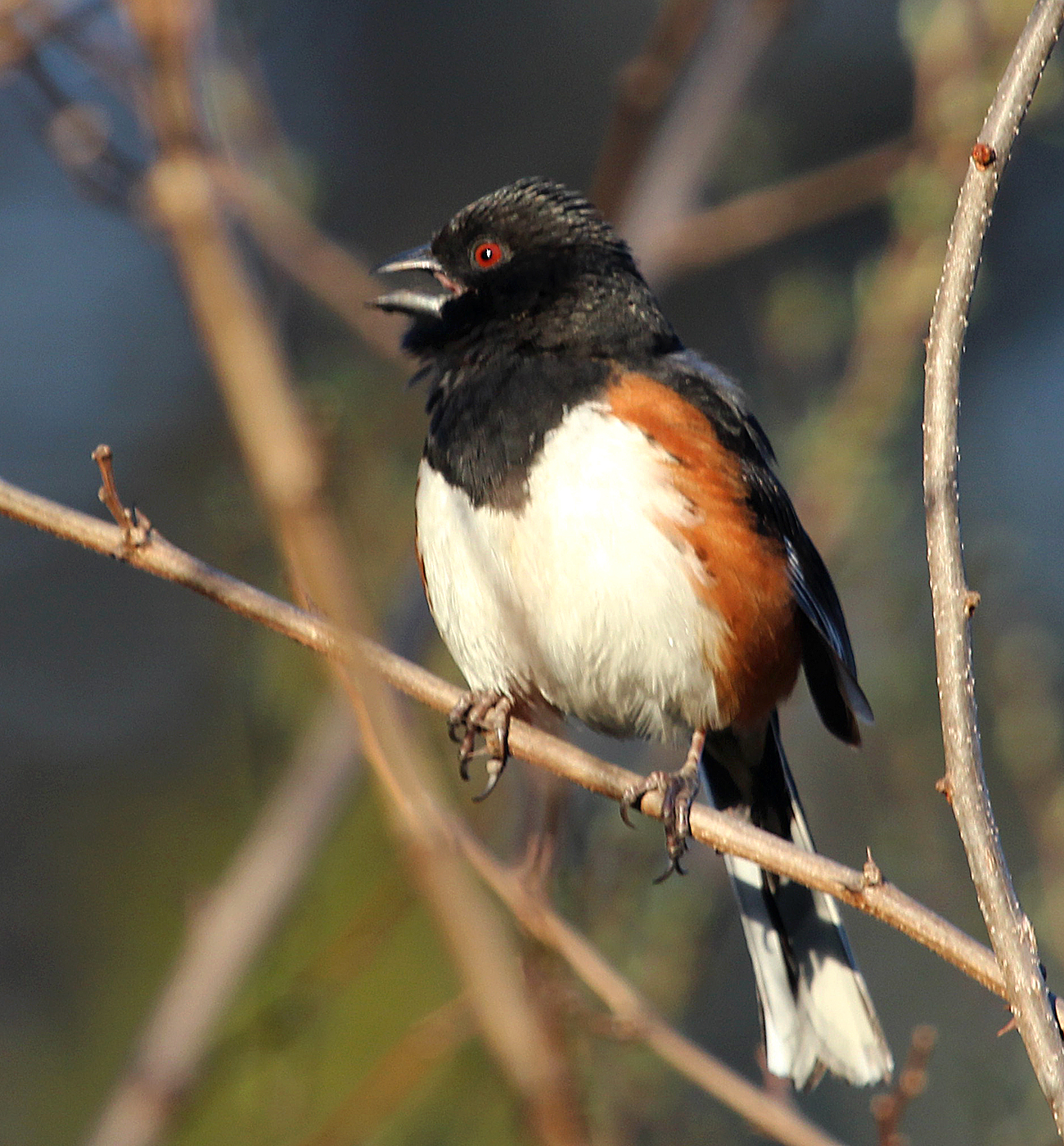
Photo by Chris Bosak An Eastern Towhee calls from his perch at Selleck's Woods in Darien, Conn., April 2014.

Photo by Chris Bosak
An Eastern Towhee calls from his perch at Selleck’s Woods in Darien, Conn., April 2014.

For years I’ve struggled to get decent shots of Eastern Towhees. Either I couldn’t find them or they remained in thick brush, rendering them unphotographable (but safe from predators, which I guess is way more important than me getting a photograph of one.)

But last fall and early winter, I saw plenty of towhees. The best part is they occasionally came out into the open to be photographed. It was one of the highlights of last fall/early winter. Then, remember, the Snowy Owls came in force into New England.

What will this year bring? I guess we have to wait and see. If you see something interesting out there or you’ve taken a neat photo of a bird (or other wildlife), drop me a line at bozclark@earthlink.net. I’d love to put more photos on my “Reader Submitted Photos” page.

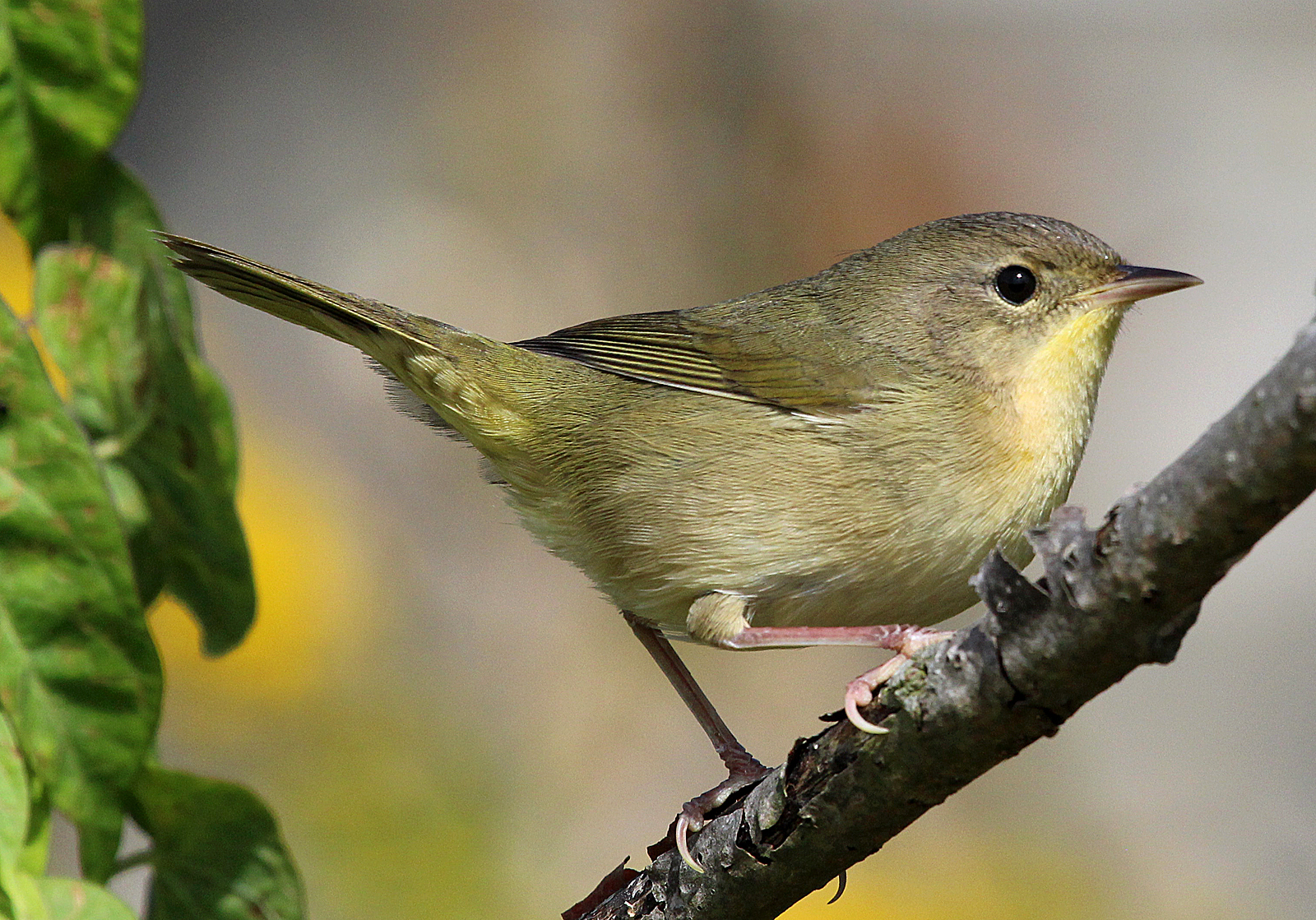
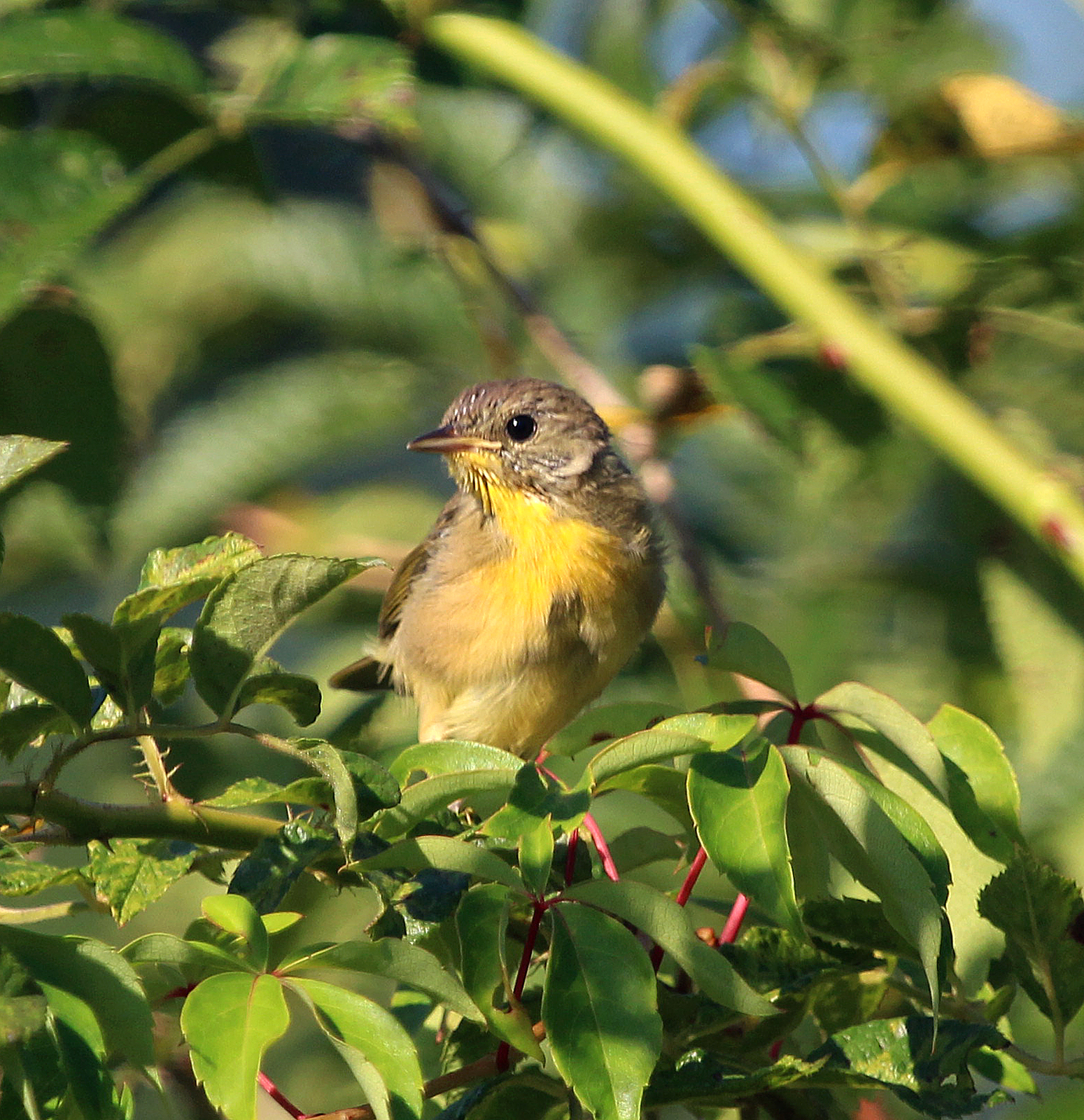
Female Common Yellowthroat

Here’s a female Common Yellowthroat, one of the many confusing fall warblers to watch out for as you hit your favorite birdwatching spots this fall.

Photo by Chris Bosak Common Yellowthroat, first year, southern New England, Sept. 2013

Photo by Chris Bosak
Common Yellowthroat, first year, southern New England, Sept. 2013

Are birds in our future? State of the Birds 2014 Report

Photo by Chris Bosak A Piping Plover preens at Milford Point in spring of 2014.

Photo by Chris Bosak
A Piping Plover preens at Milford Point in spring of 2014.

The State of the Birds 2014 report was released this week. It is a comprehensive look at how our bird populations are faring and how they might fare in the future. It’s fascinating stuff and a must read for anyone interested in birds and conservation.

Here’s my column on it, with input from Connecticut Audubon officials. 

Visit www.stateofthebirds.org for the full report.

Tricky fall migration

Photo by Chris Bosak A female Common Yellowthroat perches in a tree in West Norwalk late this summer.

Photo by Chris Bosak
A female Common Yellowthroat perches in a tree in West Norwalk late this summer.

Here’s the latest For the Birds column, which runs weekly in The Hour (Norwalk, CT) and The Keene Sentinel (Keene, N.H.)

I’ve mentioned before that the fall migration, for the most part, is less ballyhooed by the birding community.

There are many reasons for this. The spring migration is so eagerly anticipated because it follows winter (usually a harsh one in New England) and birders are itching to see signs of rejuvenation in the natural world. The early flowers do a good job of heightening our spirits, but there’s nothing like the birds’ returning to really get us out of the winter doldrums.

The spring migration is also marked with a wide variety of colorful birds, most notably the warblers and other songbirds that pass through in April and May. The males are in their bright breeding plumage and singing their hearts out. The females are not as brightly colored and not as vocal, but are still a sight for sore eyes in the spring. The birds have a real sense of urgency in the spring migration, too. They need to get to their breeding grounds to get a good nesting spot and get down to th Continue reading