A few bonus rose-breasted grosbeak photos

Photo by Chris Bosak A rose-breasted grosbeak perches in a dogwood tree, New England, spring 2025.

Yesterday, I used a photo of a rose-breasted grosbeak for my Singing in the Spring series. Today, I’m including a few bonus shots of a male rose-breasted grosbeak. You gotta love spring migration.

Photo by Chris Bosak Rose-breasted grosbeak, New England, spring 2025.
Photo by Chris Bosak A rose-breasted grosbeak perches in a dogwood tree, New England, spring 2025.

Canada goose profile pic

Photo by Chris Bosak Canada goose in New England.

Here’s an interesting shot I took of a Canada goose the other day. I used the vignette feature to make the goose stand out more.

For the Birds: Good and bad news in latest State of the Birds Report

The Cornell Lab of Ornithology and other bird conservation organizations released the 2025 U.S. State of the Birds Report last week. Not surprisingly, the news was rather somber and highlighted alarming decreases in bird populations over the last 50 years. 

It largely echoes the 2019 study that showed the loss of three billion birds in North America since 1970. Unfortunately, the news has gotten worse for many birds in the five years since that landmark study.

Rather than recapping the press release here, I wanted to point out some of the figures that jumped out at me personally. The full news release may be found online by searching for “2025 U.S. State of the Birds Report” or by visiting birdsofnewengland.com. 

Like many studies, there is good news and bad news to be found. This study, sadly, is mostly bad news, but we’ll take a look at both sides.

It’s good news that 489 (68 percent) of the assessed bird species are listed as low concern. That doesn’t necessarily mean that these species are increasing or thriving; in fact, many are declining in number, but they haven’t reached the threshold for priority conservation planning.

Continue reading

Cedar waxwings eating berries

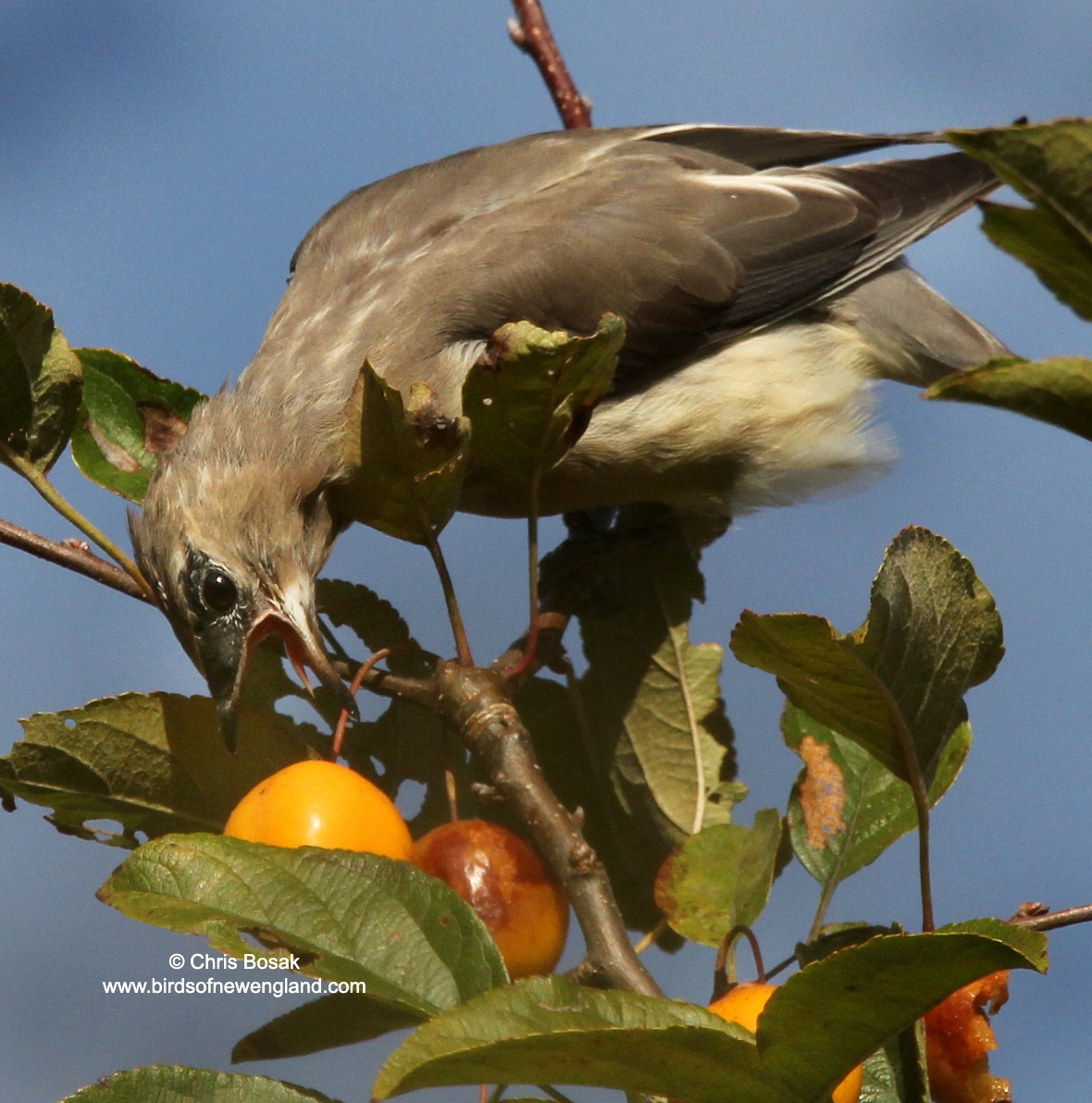
Photo by Chris Bosak A cedar waxwing eats border privet berries in New England, February 2025.

A walk earlier this week yielded these beauties eating border privet berries. Cedar waxwings are one of my favorites.

Continue reading

A few icy non-bird photos

Photo by Chris Bosak Icy birdbath in New England, February 2025.

I posted the last two days photos of birds following a weekend ice storm. Here are a few shots without birds in them.

Photo by Chris Bosak Ice covers the branches in New England, February 2025.
Photo by Chris Bosak Icy birdbath in New England, February 2025.

Backyard birds battle the ice

Photo by Chris Bosak Black-capped chickadee perches on an icy branch, February 2025.

A snowy mix covered much of New England this weekend. It started as snow, then changed to freezing rain, and finally just plain, old rain. The freezing rain formed a hard covering over the snow and sheathed every branch in ice. While walking or driving in these conditions is not advised, it’s always fun to look out the window and see how the birds are handling it. As the photos suggest, they are doing just fine. (Sorry for the grainy photos. Not a whole lot of light to work with.)

Photo by Chris Bosak Tufted titmouse takes cover among icy branches, February 2025.
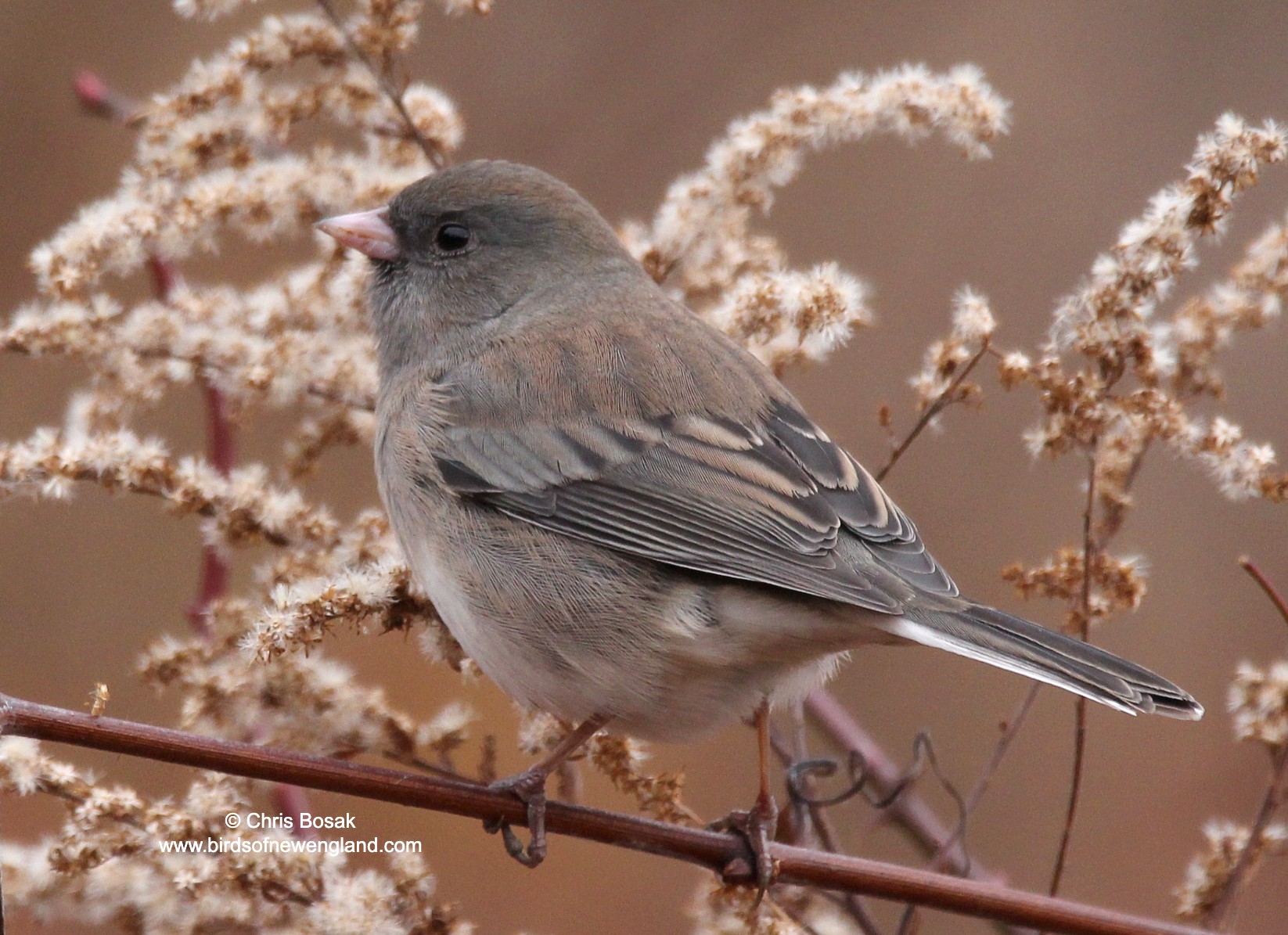
Photo by Chris Bosak A junco perches on icy branches in New England, February 2025.
Photo by Chris Bosak A starling perches on icy wires in New England, February 2025.
Photo by Chris Bosak Black-capped chickadee perches on an icy branch, February 2025.

A lively Christmas tree

Christmas morning 2024

It wasn’t an official Christmas tree, but these robins made it one on this Christmas morning. Happy holidays everyone!

Merry Christmas from Birds of New England

Photo by Chris Bosak A junco seeks shelter in an old Christmas tree during the winter storm of Feb. 9, 2017.

Happy holidays, and merry and blessed Christmas to all. Thank you for your support of Birds of New England.

For the Birds: About that coyote

Photo by Chris Bosak A coyote trots across a field at Huntington State Park in Redding, CT, fall 2024.

My experience with the coyote the other day got me curious about the species. As I mentioned last week, coyotes are fairly common throughout all of New England these days, but I’ve seen them on only a few occasions.


The recent sighting was my closest encounter with a coyote to date and the only one so far that afforded a photo opp. As is often the case, once I get a decent photo of a species, I do a deep dive into its life history.


Here are some interesting facts (at least I found them interesting) about the eastern coyote, gleaned from several sources on the internet.

Continue reading

For the Birds: Coyotes crosses the scene

Photo by Chris Bosak A coyote trots across a field in New England, fall 2024.

My usual walk at a park near my home starts with a slight downhill trail abutting a huge field. The trail soon branches off in two directions: right leads into the woods, and left takes you along a wide trail with brushy habitat on either side.

Nine times out of ten, I take the trail to the left. The brushy habitat is home to a greater number and variety of birds than the narrow trail through the woods. While the left trail is rather wide, approximately 15 feet, the brush on either side is tall and thick and blocks the view of what lies immediately on either side.

There is one spot along the trail, however, where the brush is matted down, exposing a crumbled rock wall and an expansive view of the field. For the adventurous, this spot also offers a chance to gingerly walk on the matted-down brush, step on some of the fallen rocks from the wall and jump down into the field on the other side.

Continue reading