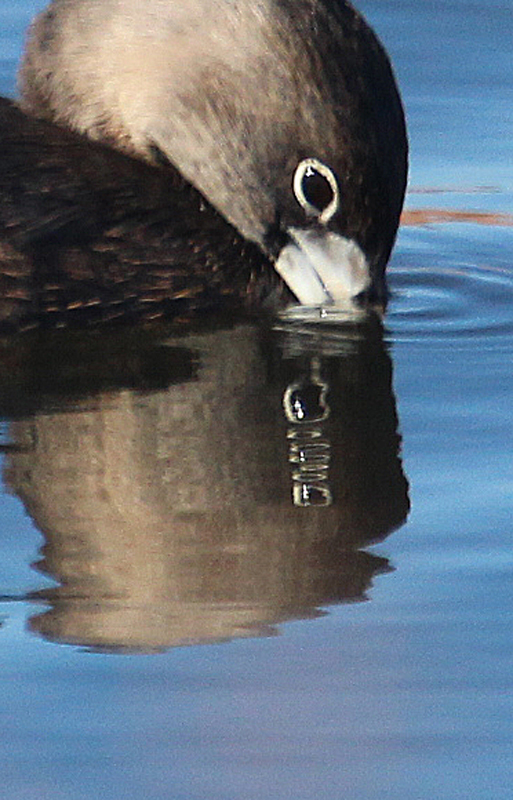
Birding quiz
What exactly are we looking at here? (I know, it’s a little more difficult than my usual quizzes. What the heck, take a stab at it. No penalty for getting it wrong; no prize for getting it right.)
Answer coming up in a day or two.


Photo by Chris Bosak
A chipmunk stands atop a pile of wood at Merganser Lake in Danbury, Conn.
As much as I like to talk and write about my birding experiences, some photos I take simply get posted to this blog without much fanfare and verbiage. Such is the case with these photos. Not that they aren’t worthy of detailed descriptions, but I figured I’d just get these posted before too much time lapsed and they never saw the light of day. All photos taken at my home on Merganser Lake in Connecticut in April 2016. (Yes, I know chipmunks aren’t birds, but I had to get that photo in.)

Photo by Chris Bosak
A Carolina Wren perches on a bird feeder at Merganser Lake in Danbury, Conn., April 2016.

Photo by Chris Bosak
A Hairy Woodpecker looks for insects on a tree in Danbury, Conn., April 2016.
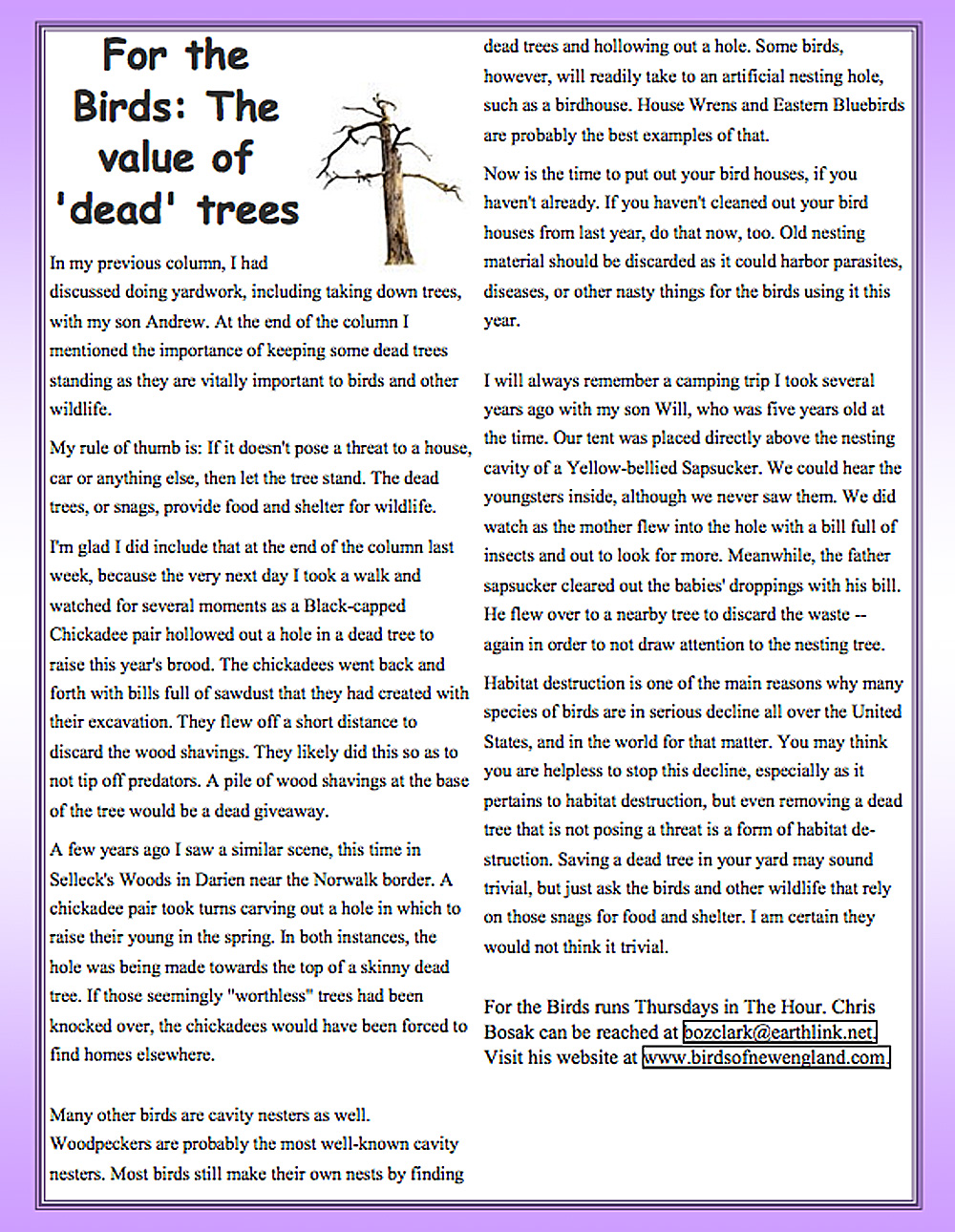
I received an email the other day requesting permission to use my latest For the Birds column in the newsletter for the New Jersey-based group: The Real Macaw Parrot Club. I obliged as the topic of the column, I felt, is important and the word needs to be spread. So, above, there it is. Thanks to The Real Macaw for helping out with this.
Here’s the cover of the newsletter.
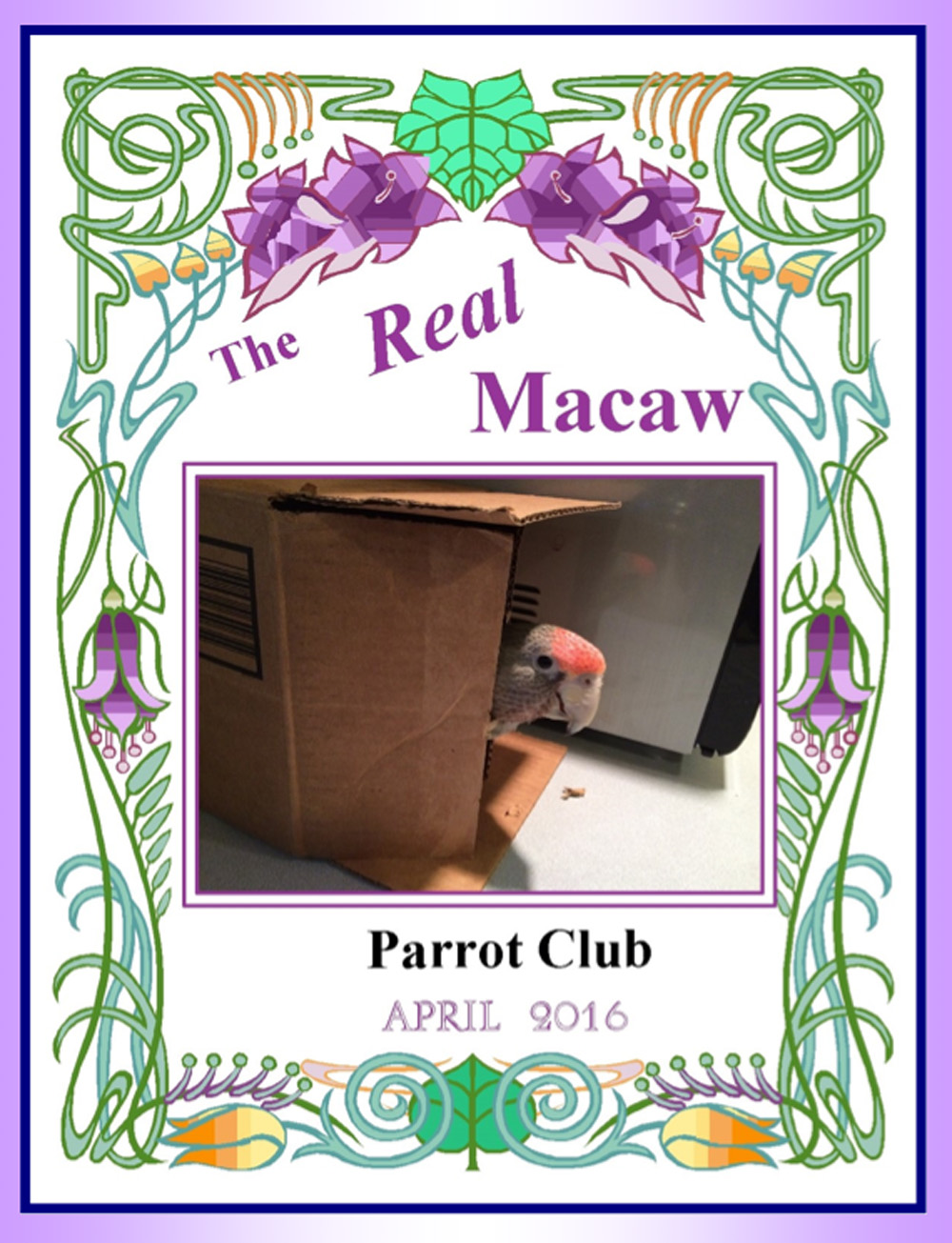
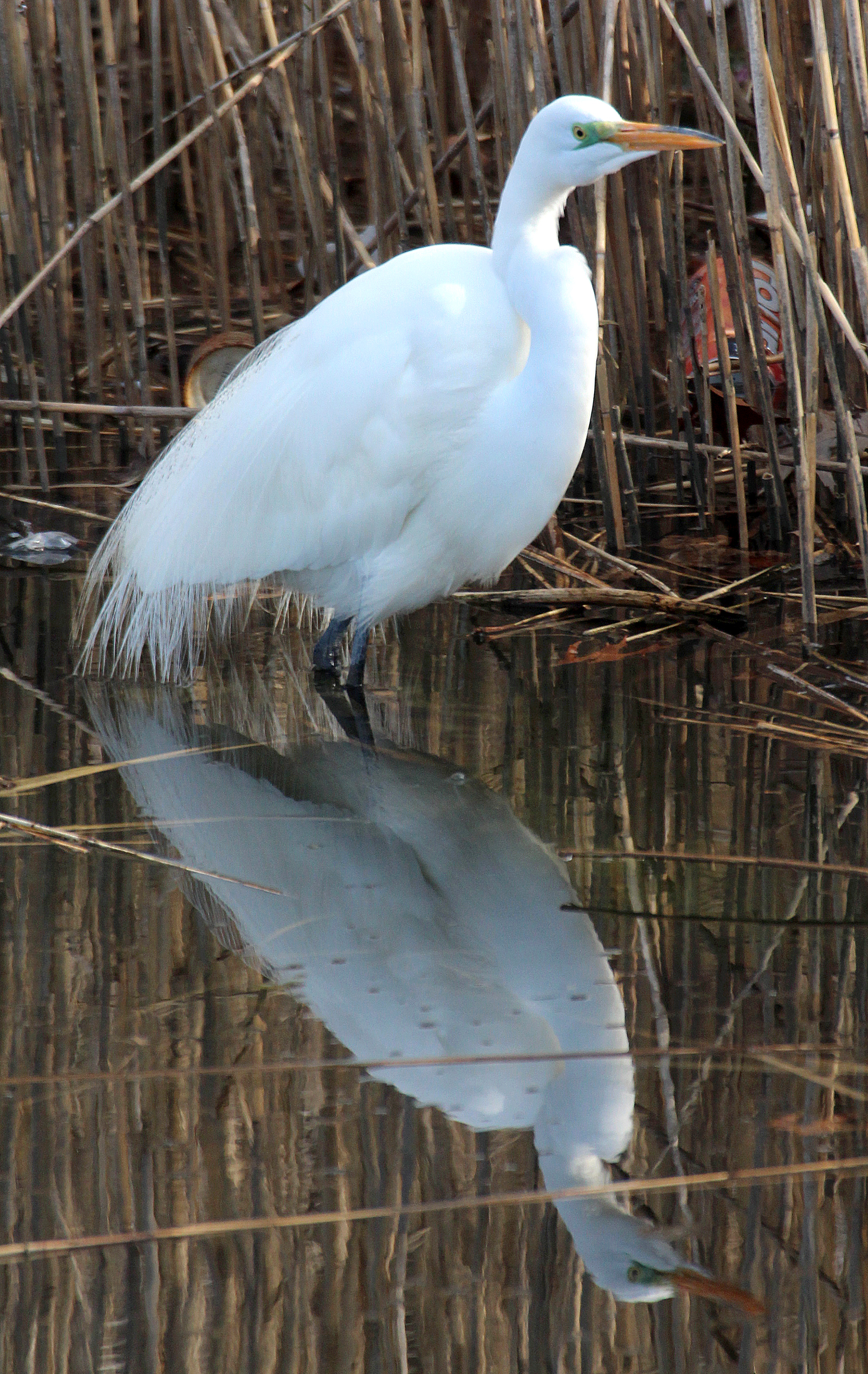
Photo by Chris Bosak
A Great Egret stands in the Norwalk River in this April 2016 photo.
I saw my FOY egret today. In birding speak, FOY is ‘first of the year.’ So, in other words, today I saw my first egret of 2016 in New England. It was a Great Egret and it lurked among the tall grasses on the edge of the Norwalk River near where I work.
Soon, Great Egrets will become pretty much a daily sighting and Snowy Egrets will become increasingly common as well. If you’re from Florida, egrets are a daily occurrence year-round. If you’re from New England, the arrival of egrets in March or April is another welcomed sign of spring.
Sorry about all the garbage in the grasses. The snowy and cold April weather we’ve had lately has delayed the spring clean-ups.
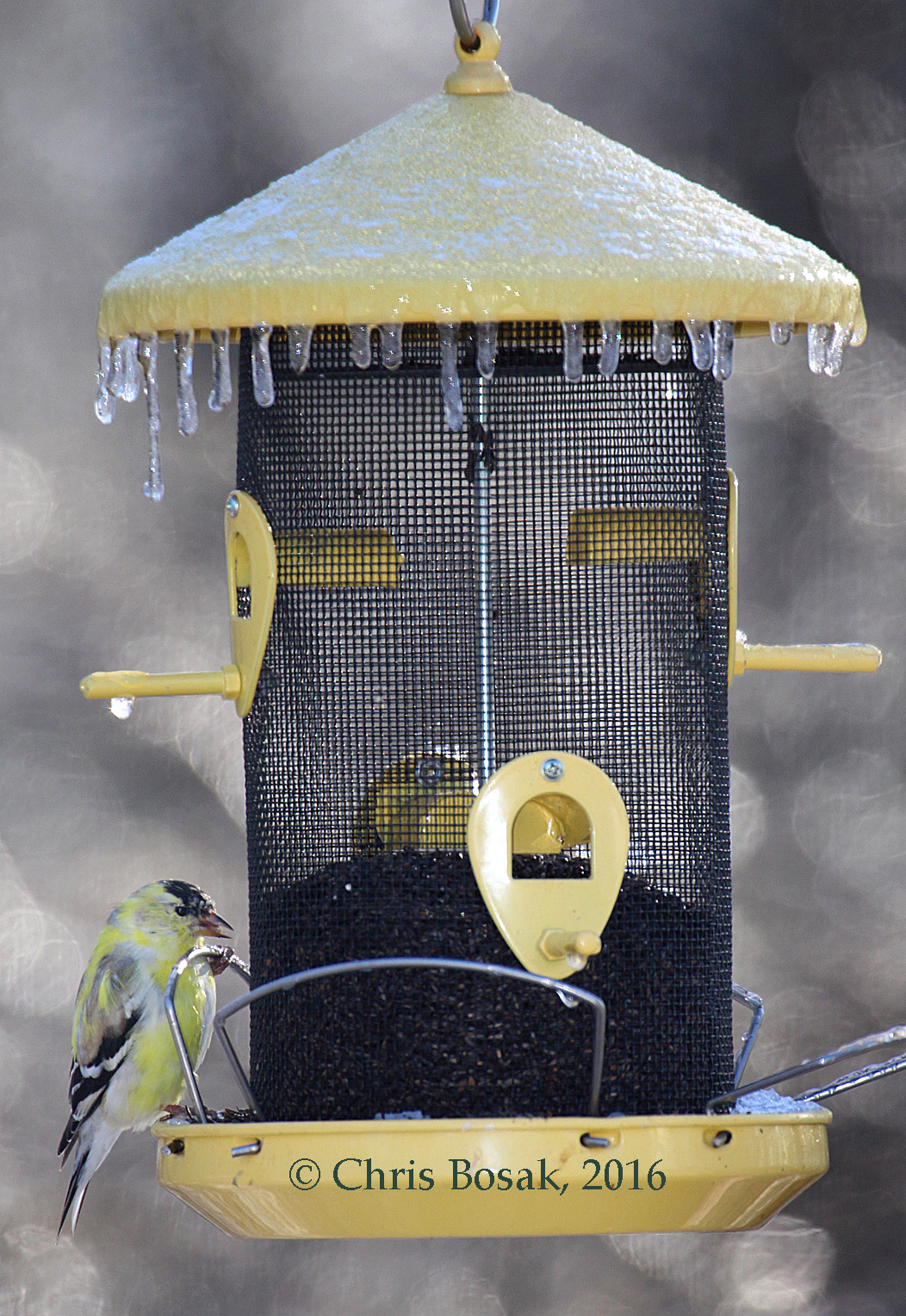
Photo by Chris Bosak
An American Goldfinch eats Nyjer seeds from a frozen feeder during a frosty April 2016 morning in Danbury, Conn.
For the second day in a row the unpredictable New England weather provided an opportunity to get an interesting photo at the bird feeding station. Monday it was snow. Tuesday it was ice. Here, an American Goldfinch visits the Nyjer feeder, undaunted by the ice and freezing temperatures. Notice that this male is transitioning into its breeding plumage. Below are a few more icy photos from Merganser Lake.
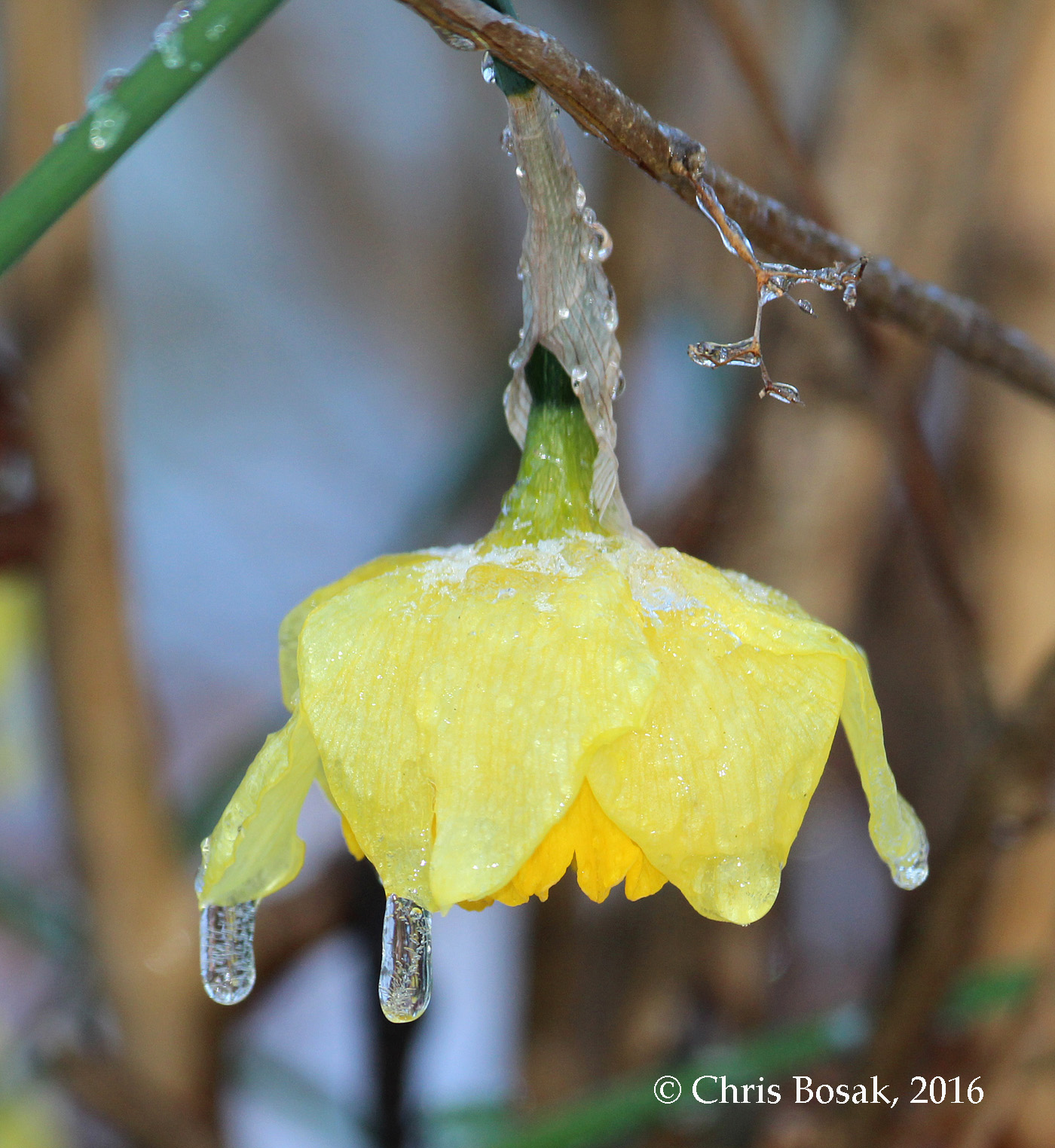
Photo by Chris Bosak
Ice covers a daffodil bloom in Fairfield County on a chilly Tuesday morning.
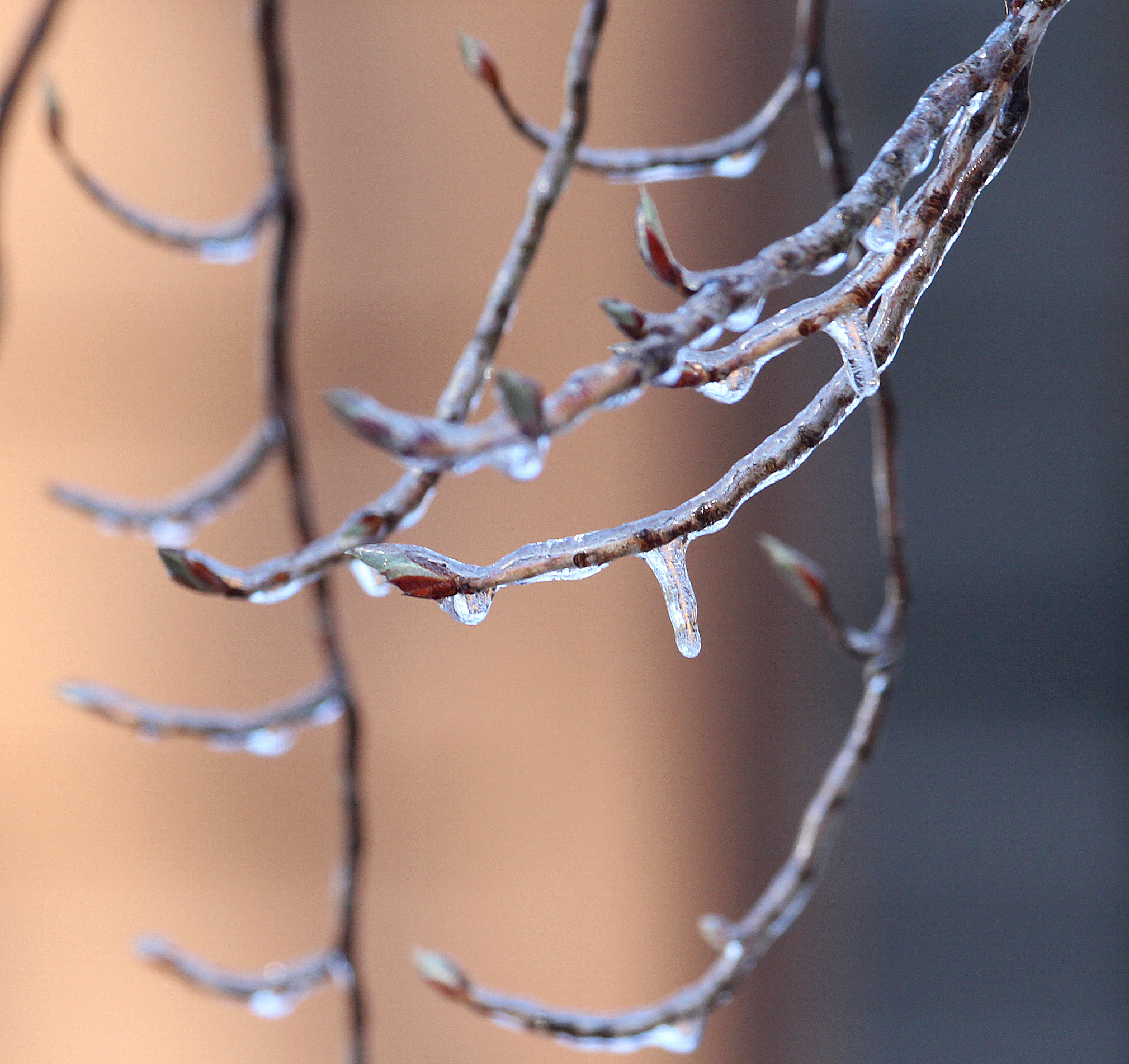
Photo by Chris Bosak
Ice covers the branches of a tree in Danbury, Conn., April 2016.

Photo by Chris Bosak
Wood Duck drakes swims at Woods Pond in Norwalk, Conn., during an early April snow fall, 2016.
Another early-morning snow fall swept through parts of New England on Monday morning. Many people, I’m sure, cringed at the sight of more snow. As usual, my thoughts turned to photographing birds in the snow. It was an especially dark morning, but I managed to find and shoot some Wood Ducks at Woods Pond in Norwalk, Conn. Wood Ducks are Continue reading

Photo by Chris Bosak
An Eastern Phoebe visits a bird bath in Danbury, Conn., March 2016.
My neighborhood is alive with the sounds of Eastern Phoebes. These somewhat nondescript birds are one of the first migrants to return to New England in the spring. By mid-March many New Englanders are ready for some real signs of spring. The arrival of phoebes is one of those heart-lifting signs. Usually we hear phoebes first as their lispy “phoebe, phoebeee” can be heard in the yard as the birds seek out nesting sights. These tail-pumping birds build “classic” nests of mud, sticks and grass, often in areas near humans.
I was lucky enough to see one at my bird bath the other day. I love seeing different bird sightings and a phoebe at the bath is not something you see every day.
Thanks for checking out http://www.BirdsofNewEngland.com

Photo by Chris Bosak
A Black-capped Chickadee cleans out a hole for a home to raise a family in Danbury, Conn., 2016.
I tacked onto the bottom of my last For the Birds column the need to keep some dead trees standing as these “snags” are vital for birds. They provide homes and food for birds and other wildlife.
The day after writing the column I took a walk to Little Merganser Lake. I didn’t notice it while walking to the lake, but on my way back I noticed two chickadees going back and forth to a skinny dead tree. I stopped and watched for quite a while.
The birds, of course, were clearing out a hole for the Continue reading
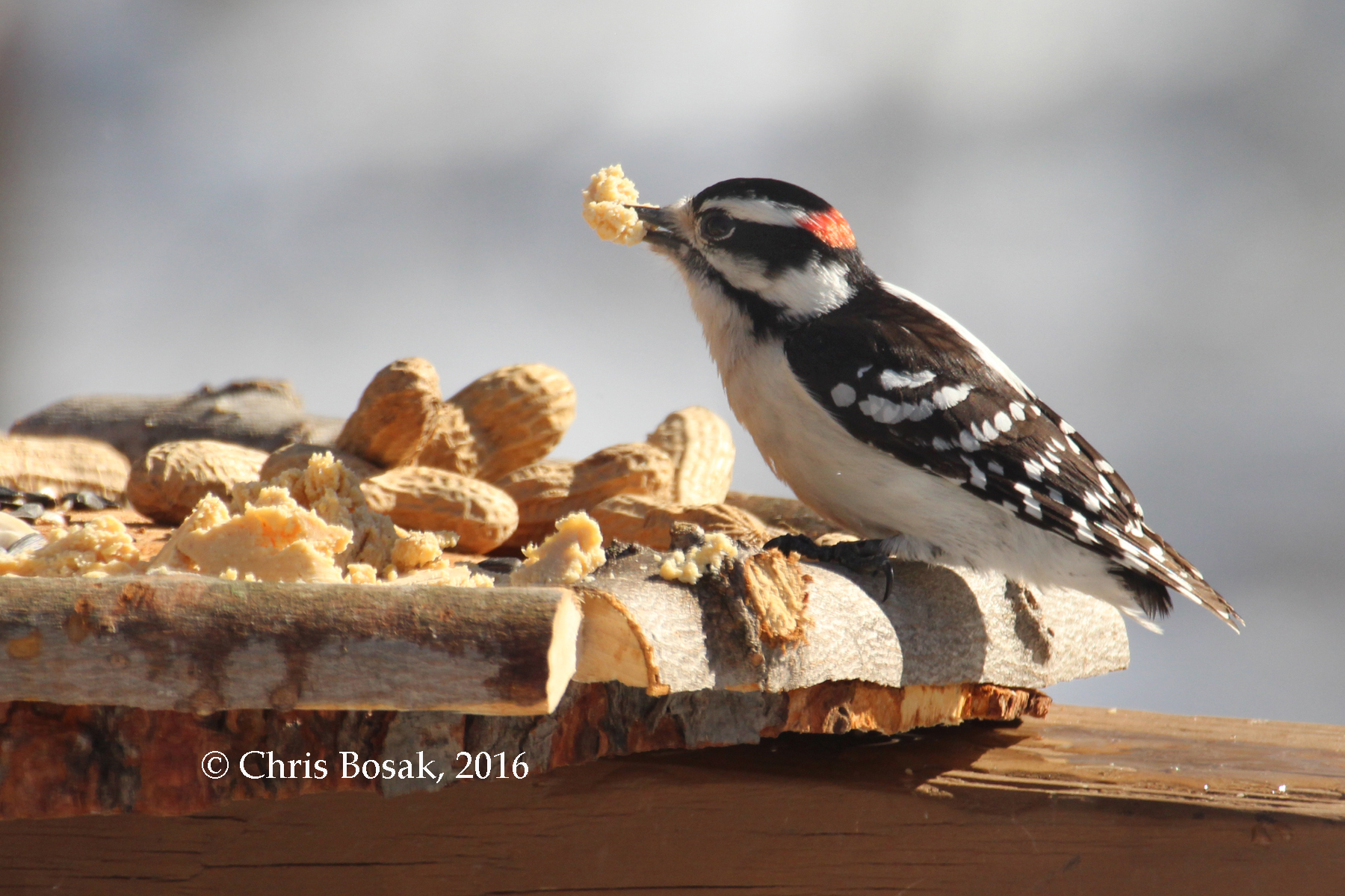
Photo by Chris Bosak
A Downy Woodpecker eats some Bark Butter from a new bird feeder in Danbury, Conn., March 2016.
Here’s one more shot of a bird on that homemade bird feeder. This time it’s a Downy Woodpecker eating Bark Butter. You can tell the Downy likes it from the large portion he is taking with him.
What is Bark Butter? It came recommended by Pat Warren at the Wild Birds Unlimited store in Darien. Jim’s Birdacious Bark Butter is a new product somewhat similar to suet, only you spread it on trees (or other surfaces.) Or you can get a feeder designed for Bark Butter.
Click here for more information about the product.
I spread it on the sides of the feeder and obviously it works. I’ve also seen Carolina Wrens eating it from the feeder. So far I’m impressed with the product.
To try it out, visit Joe or Pat at the Wild Birds Unlimited store at 365 Heights Road in Darien (across from the Noroton Heights train station.)

Photo by Chris Bosak
A White-breasted Nuthatch checks out a new bird feeder in Danbury, Conn., March 2016.
As promised, here are a few more photos of birds using the feeder that my 12-year-old Andrew and I made last week. Here’s the original story in case you missed it.
More photos by clicking below.
 Birds of New England.com