Photo by Chris Bosak
Piping plover chick and adult, Milford, Connecticut, summer 2025.
Here are a few shots of piping plover chicks with an attentive parent nearby. I got these shots on the same day as my recent visit to a beach in southern Connecticut. Cute hardly begins to describe these little birds. Here are some shots of oystercatchers (including a chick) I got on the same day.
Photo by Chris Bosak
Piping plover chick and adult, Milford, Connecticut, summer 2025.Photo by Chris Bosak
Piping plover chick, Milford, Connecticut, summer 2025.Photo by Chris Bosak
Piping plover chick and adult, Milford, Connecticut, summer 2025.
Photo by Chris Bosak
Piping plover, Milford, Connecticut, summer 2025.
I’ve looked for birds in New England from top to bottom this month. At the beginning of July, I drove to Pittsburg, NH, near the Canadian border, and last week, I visited a beach/nature preserve on Long Island Sound in southern Connecticut.
Yes, technically, northern Maine would be top of New England, but let’s not split hairs here.
It was quite a contrast in habitat and birdlife between the two points, from the boreal forest up north to the marsh and shoreline down south.
The boreal forest of northern New England will always be my favorite habitat (mostly because of the possibility of seeing moose), but the shore was pretty special too. This was a mid-summer visit. The birds at each point will be entirely different in the middle of winter, which is interesting to think about.
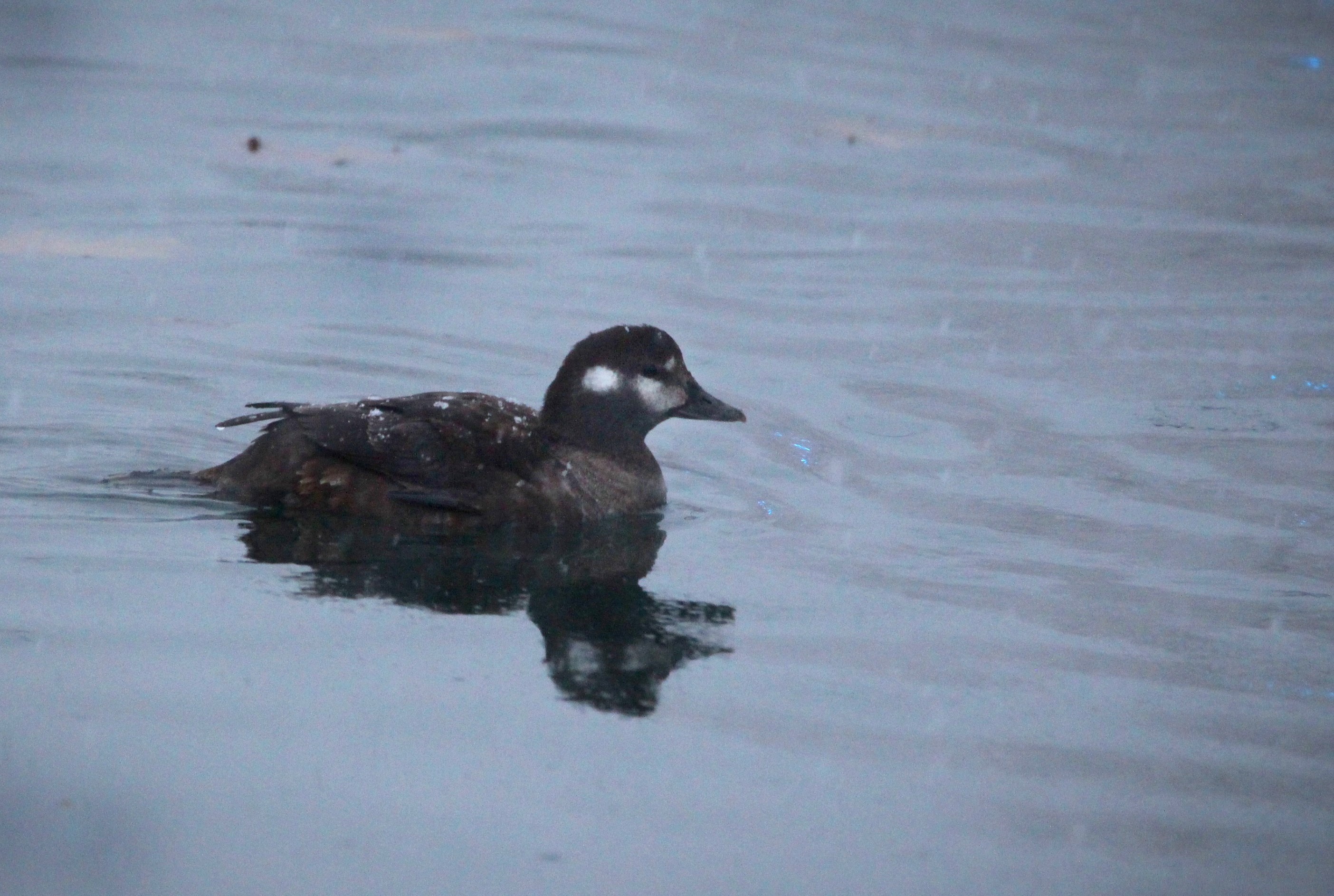
Up north, the highlights were common loon, bald eagle, magnolia warbler, Canada warbler, American bittern and red-breasted nuthatch. Down south, my favorite sightings were American oystercatcher, piping plover, clapper rail, least tern, snowy egret and yellow-crowned night heron. I also had an unexpected sighting of a long-tailed duck, which is a bird common on Long Island Sound in the winter, but not during the summer.
Surprisingly, there were very few bird species that I saw at both locations. Sure, there are lots of birds that may be seen on both extremes of New England, but for me personally, on these trips, only a handful made both lists. Among them were Canada goose, great blue heron, double-crested cormorant and grackle.
It was interesting to see the loons up north. Obviously, they are a highlight species anytime I see one. The interesting thing is that loons may be seen up north in the summer but not in southern New England. In the winter, the loons have disappeared from the north, but may be seen south on Long Island Sound, albeit in drab winter plumage. I wondered if the loons I was looking at on the northern lake are the same ones I’ll see on Long Island Sound this coming winter. Probably not, but it was still fun to ponder.
I discovered what I knew all too well already: that New England has a lot to offer birdwatchers, from top to bottom and everywhere in between. It’s all New England, and it’s all good.
…
I’m dedicating this column to Steve Gilbert, a long-time sportswriter and columnist for The Sentinel. Steve passed away last week following a long illness, and the world lost a genuinely nice guy.
I worked with Steve in the late 1990s. He quickly became a friend, mentor and writing coach. Steve didn’t know about that last part, but after reading so much of his brilliant prose, I quietly “borrowed” some of his style. How could I not, given how gifted he was as a writer?
As a small but mighty sports department, Steve, Paul, Jim and I had to read/edit each other’s stories often. They were all great writers, to be sure. I was the weekend sports editor at the time, and there were many nights that I sat at my desk waiting for Steve to file a story.
Steve sat right behind me, and based on the cadence of his typing, I could tell when he was done writing his story. For many newspaper writers, that would be it. Done and filed. See ya tomorrow. Not Steve.
I wouldn’t see the story for another half hour or more. Steve was meticulous in his editing and revising. I’d glance behind me and see Steve poring over every word to make it just right. I can still see the concentration on his face. When he did turn in the story, it was, indeed, just right. A fine example for any young writer.
Then, of course, he would stick around to see if anyone needed help as deadline loomed.
I saw Steve recently in Keene and, as always, he heaped praise upon my bird column and my writing. An opportunity to brighten someone’s day or offer encouragement was never lost on Steve, which is something else I admired about him. Imagine getting complimented by someone you look up to as a writer.
Goodbye, Steve. Thanks for the encouragement and smiles. And the writing tips.
Photo by Chris Bosak – A young male rose-breasted grosbeak visits a feeder in New England, summer 2025. Note the brown feathers on the wings.
I was heading to my car at work when four or five relatively large birds emerged on the ground from around the corner of a building. I didn’t immediately recognize them, as their sudden appearance surprised me and my mind was elsewhere.
I took a few more steps and quickly realized what they were: baby turkeys. By that time, I had progressed enough that the mother turkey was now visible and only a few yards away. Will she attack like a mute swan or Canada goose might? Never get between a mother and her babies, the saying goes. I wasn’t actually between them, but I was certainly close enough to some of the babies that I could be considered a threat.
Photo by Chris Bosak
American oystercatcher, Milford, Connecticut, summer 2025.
Following up on yesterday’s post, here are a few more American oystercatcher photos. I find both of these photos rather humorous. The top photo looks like an unhappy customer storming away from the counter. The bottom photo looks like an oystercatcher giving someone the evil eye.
Photo by Chris Bosak
American oystercatcher, Milford, Connecticut, summer 2025.
They aren’t particularly rare, especially if you know where to look, but American oystercatchers are always a thrill to see. I saw these beauties during a short birdwalk at Connecticut Audubon Society Coastal Center at Milford Point the other day. One of the coolest looking birds in New England, if you ask me. Check out the youngster below.
Photo by Chris Bosak
American oystercatcher, Milford, Connecticut, summer 2025.Photo by Chris Bosak
American oystercatcher chick, Milford, Connecticut, summer 2025.
Photo by Chris Bosak
Clapper rail in Milford, Connecticut, summer 2025.
Rails are shy birds of the marshlands. Clapper rails are usually heard before they are seen, if they are seen at all. I stood in the muck at low tide for several minutes, and finally, this clapper rail decided to come out of the vegetation and walk along the mud for a few seconds. Several rails were calling back and forth in the marsh.
Photo by Chris Bosak
Clapper rail in Milford, Connecticut, summer 2025.Photo by Chris Bosak
Clapper rail in Milford, Connecticut, summer 2025.
Photo by Chris Bosak A house wren perches on a branch in New England.
My brother and I were on our favorite birding trail in my old hometown of Erie, Pennsylvania, when one of those fantastic bird flurries happened.
It was mid-May and the flurry consisted of four or five types of warblers, two brown thrashers, a blue-gray gnatcatcher, Baltimore orioles, a house wren and a few other species. When the flurry died down and I entered the species into my eBird report, I noticed something that struck me as odd.
When I entered house wren, the only option that came up was northern house wren. What the heck is that? I thought. I assumed that was the species I’ve always known as house wren, but I still wondered where the “northern” came from.
A quick internet search confirmed that the new official name for the house wren species that occurs in the U.S. is northern house wren. The southern house wren, formerly considered the same species as the northern, lives south of the U.S. and there are also five separate Caribbean endemic species. The split and name changes happened in 2024. Somehow, I missed the memo until now.
Photo by Chris Bosak
A red-headed woodpecker in Pennsylvania earlier this year.
It wasn’t long ago, just last week, in fact, that I wrote about uncommon birds showing up unexpectedly now and then.
You never know where or when they will appear, I wrote, but being vigilant is the key to finding them.
Not long after that column went to print, I received an email that really drove home that point. Eric from Surry wrote to say he had seen a red-headed woodpecker in his backyard.
When I opened the email, I could see only the text, not the photos. I have no way of knowing one’s bird identification skills when I get an email, so it’s always nice when a photo is attached, regardless of quality, to confirm the sighting.
Photo by Chris Bosak
A yellow-breasted chat sings from a shrub in New England, June 2025.
I was walking along a productive section of a trail in southern New England when a loud birdsong caught my attention. As is often the case, I didn’t recognize it immediately, but knew it was worth stopping for and investigating.
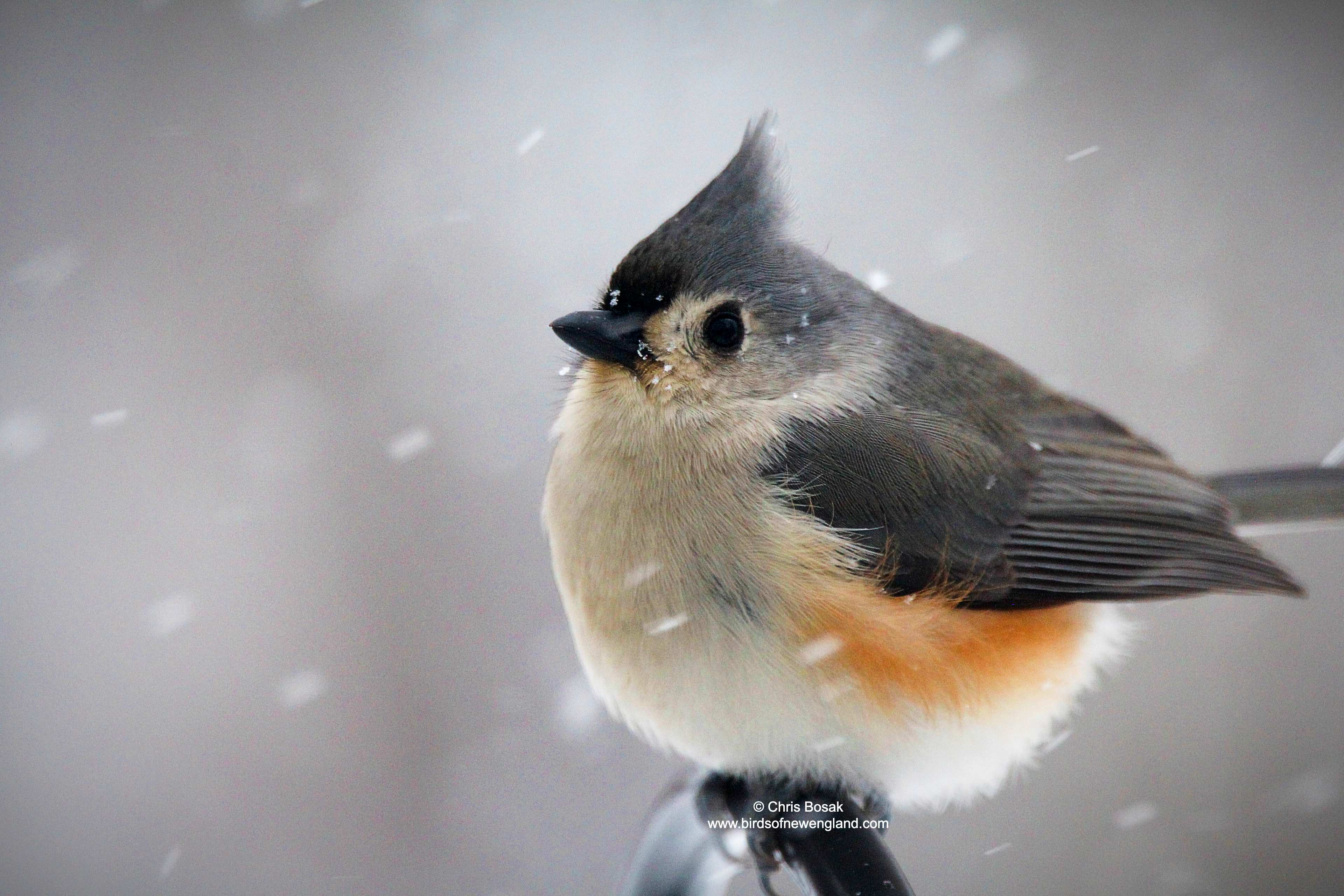
Sometimes when that happens, it turns out to be a seldom-used song or call from a familiar bird. Tufted titmice have a wide variety of sounds and they often throw me off. The same goes for catbirds, robins and orioles. But this time, it was indeed something uncommon.
I used the Merlin app on my phone and it identified it as a yellow-breasted chat. That would be cool, I thought, but let’s get visual confirmation. The Merlin app is a great new tool for birdwatchers, but it’s not 100 percent accurate, and I always like to get visual confirmation.