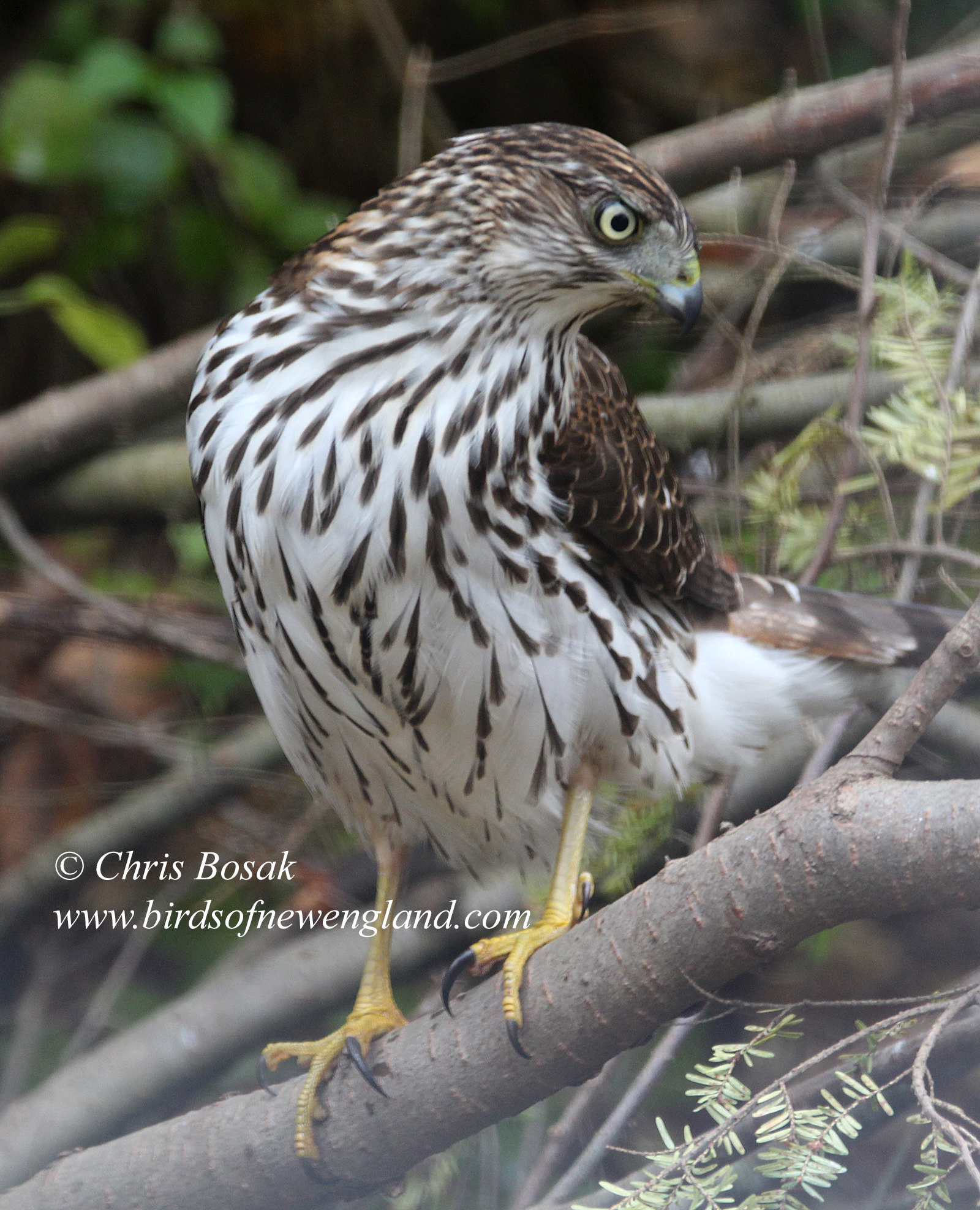
Photo by Chris Bosak Young Cooper’s hawk in New England.
Last week’s For the Birds column highlighted the results of this year’s fall hawkwatches with a particular focus on Pack Monadnock in Peterborough. The column was heavily focused on data and the number of birds counted.
A number of questions came up in my head as I looked at the results and compiled the data. Not one to let questions go unanswered in my head, I turned to the experts for some explanations.
Specifically, I had an enjoyable chat with Phil and Julie Brown of Hancock, N.H. Phil is the Bird Conservation Director and Land Specialist at the Harris Center for Conservation Education. His wife, Julie, is the Raptor Migration and Program Director of the Hawk Migration Association.
Photo by Chris Bosak
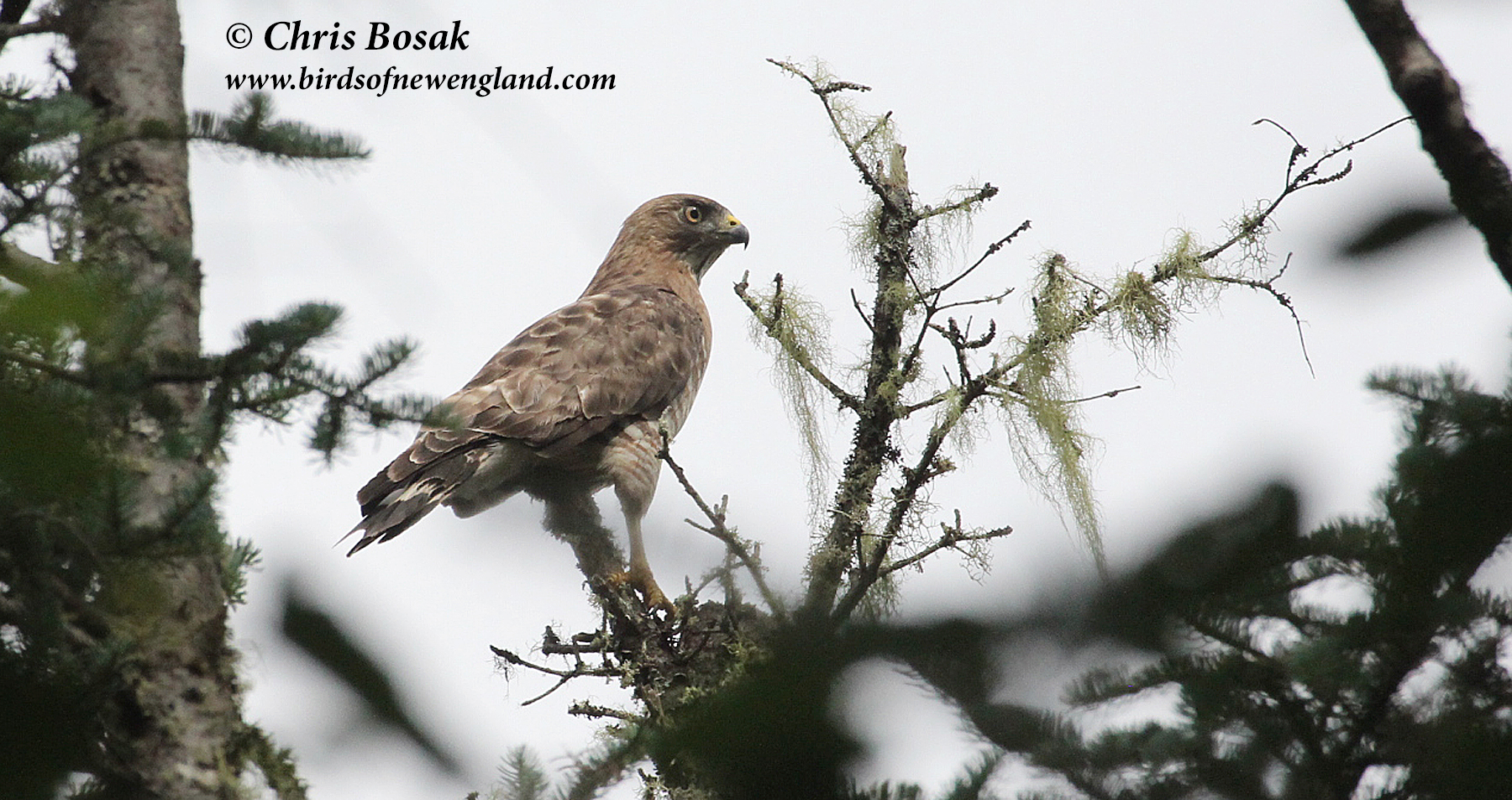
A broad-winged hawk perches in a tree in northern New Hampshire, July 2020.
The fall hawkwatching season is winding down. Raptor sightings at the various dedicated locations are slowing down, with only a handful of birds counted each day as November progresses.
It’s a good time, therefore, to check in to see how the various hawkwatching sites fared this year. New England has several popular sites, but Pack Monadnock at Miller State Park in Peterborough is New Hampshire’s most active and popular site. The hawk count is a project of the Harris Center for Conservation Education in Hancock.
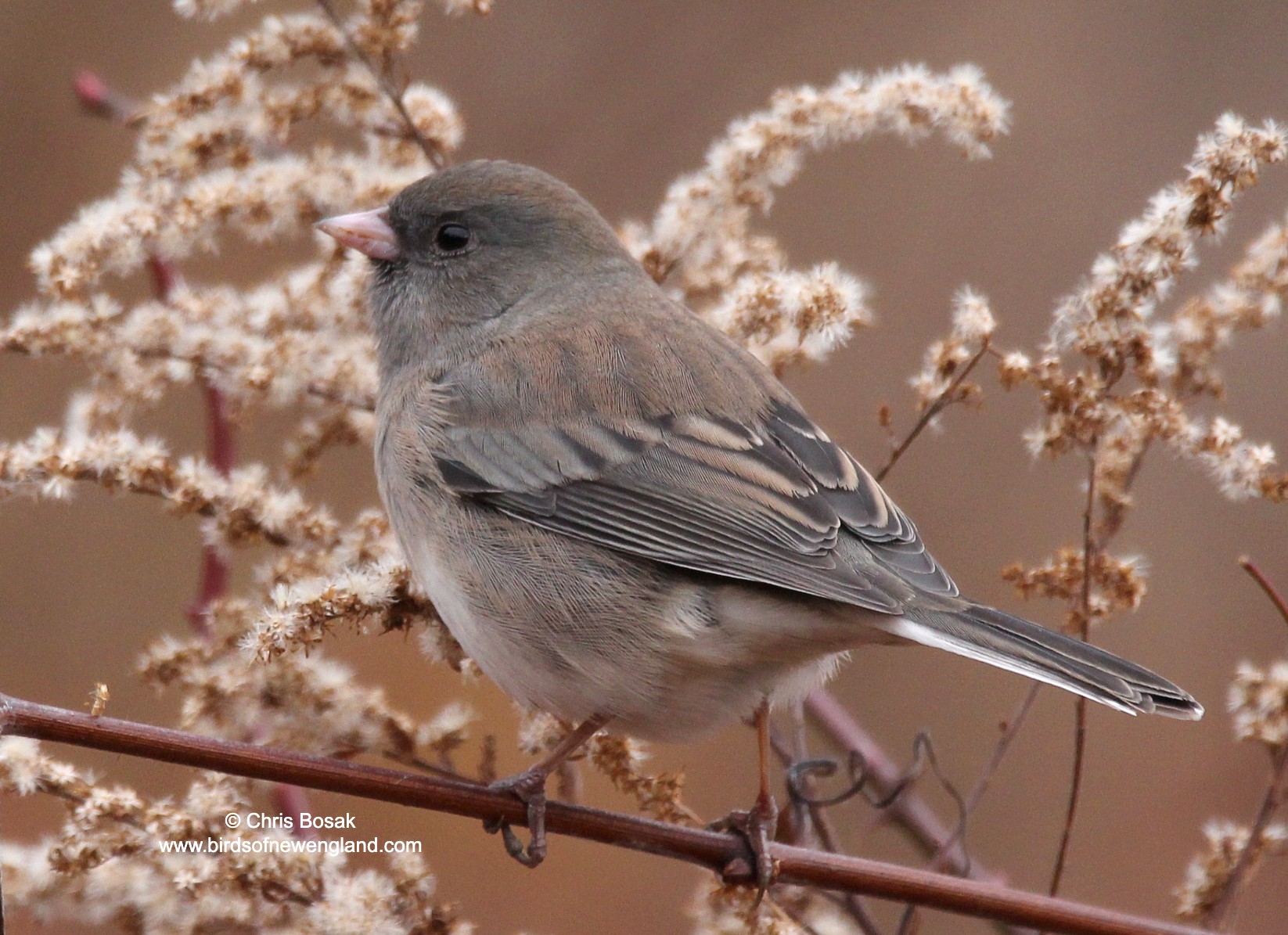
Photo by Chris Bosak – A dark-eyed junco eats goldenrod seeds at Huntington State Park in Redding, Connecticut, November 2025.
Here are a few more photos of my experience with juncos in the goldenrod field recently. See the last “For the Birds” column for the whole story. On a side note, now you know what goldenrod looks like after the yellow flowers die off.
Thanks for your support of Birds of New England.com.
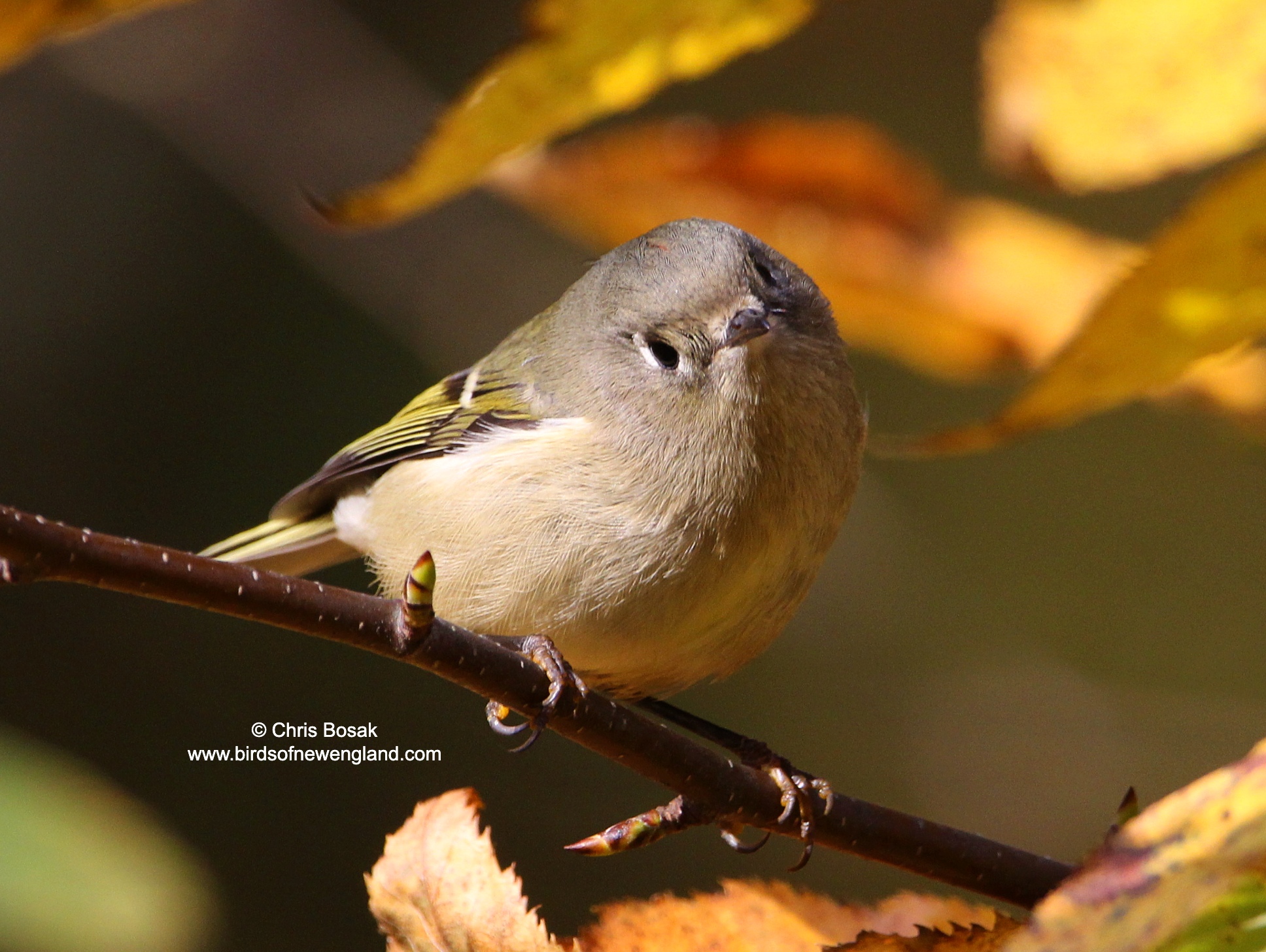
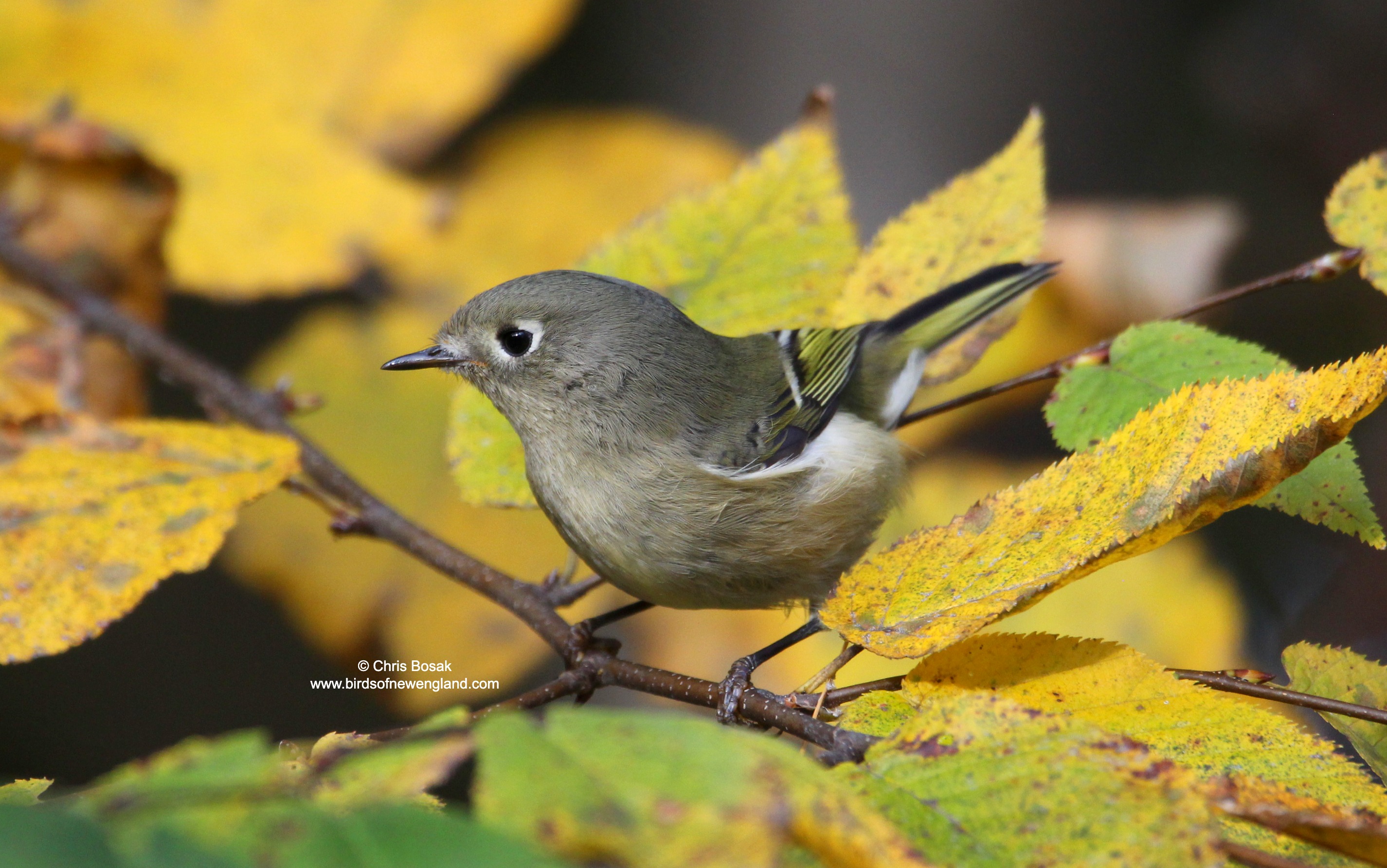
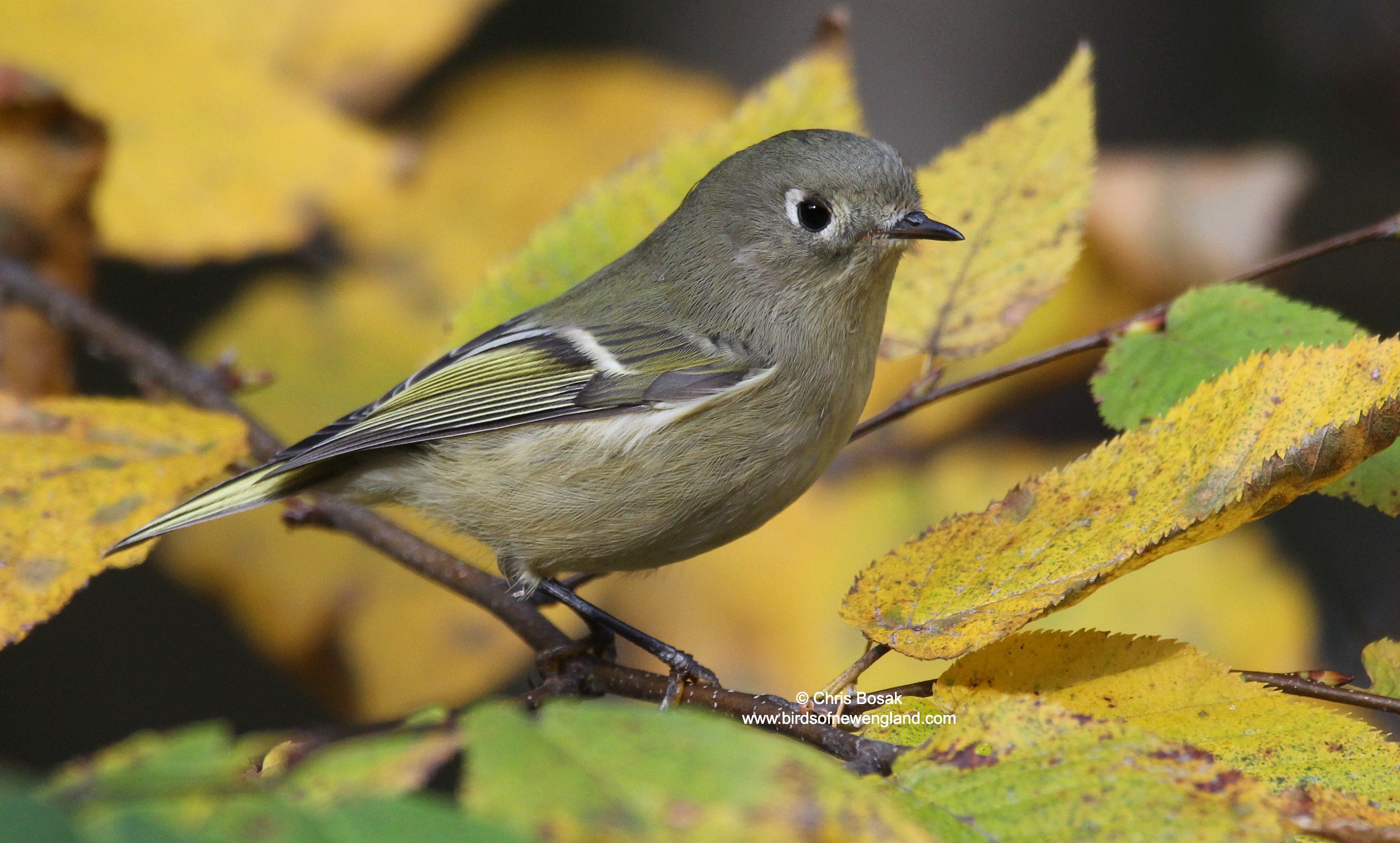
Ruby-crowned kinglet, fall 2025, Huntington State Park, CT.
Two species dominated my latest bird walk.
Perhaps not surprisingly, the white-throated sparrow was the most dominant species. I lost track of how many I had seen early in the walk as dozens of these beautiful native sparrows were around every bend.
The second-most dominant species may be a bit more surprising. While large groups of white-throated sparrows lingered around every corner, singular ruby-crowned kinglets kept me occupied on the straightaways.
They were constant companions during the walk. Little flashes of movement in the bushes or low branches of trees gave away their whereabouts. Not that they were trying to stay concealed, as they can be surprisingly tame for wild birds.
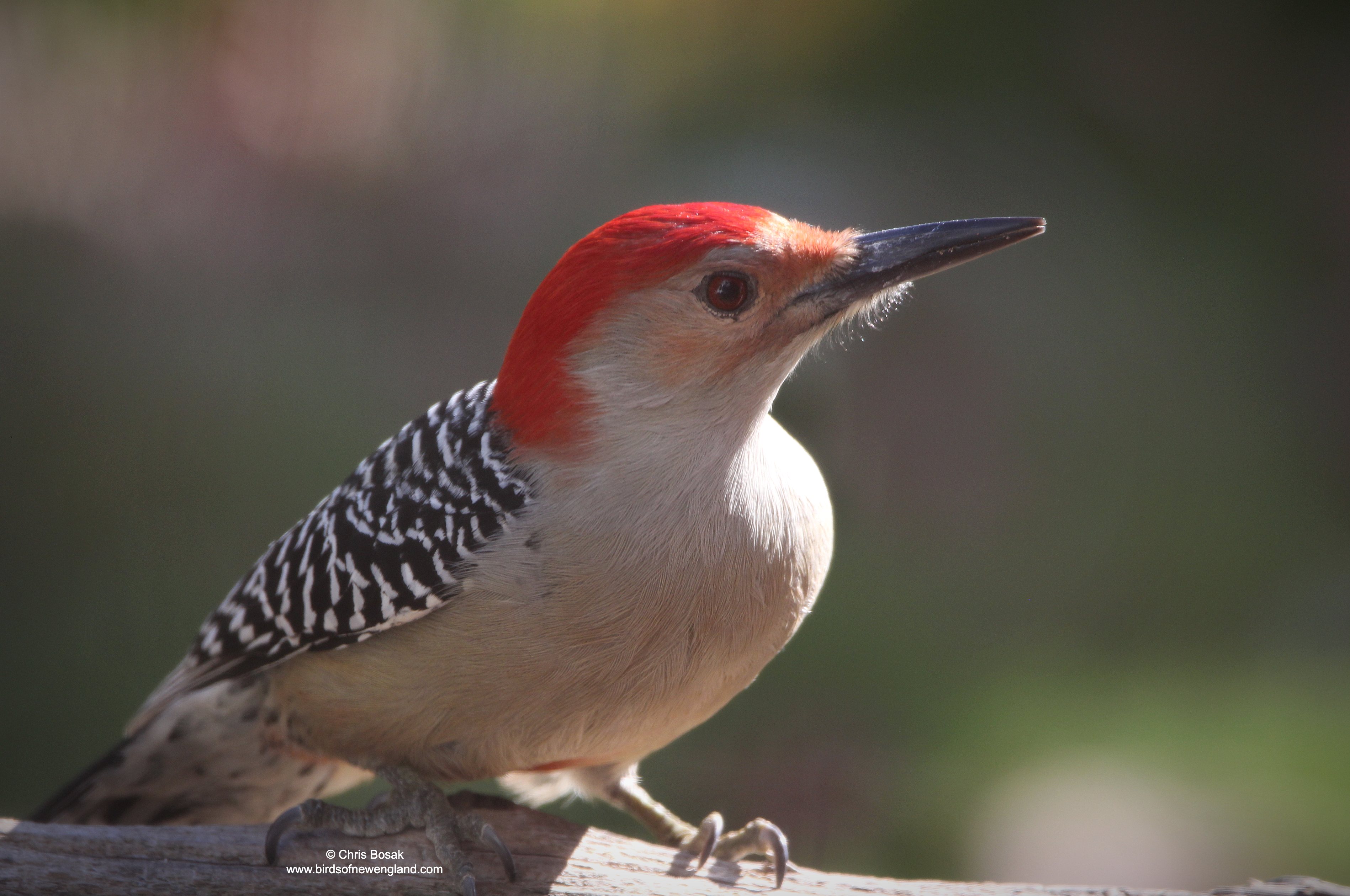
Photo by Chris Bosak – A red-bellied woodpecker visits a feeding station in New England, Nov. 2025.
Here are a few photos of a red-bellied woodpecker, taken simply because it was a cool bird that visited my feeder today. Note the faint red on the belly, hence the name.
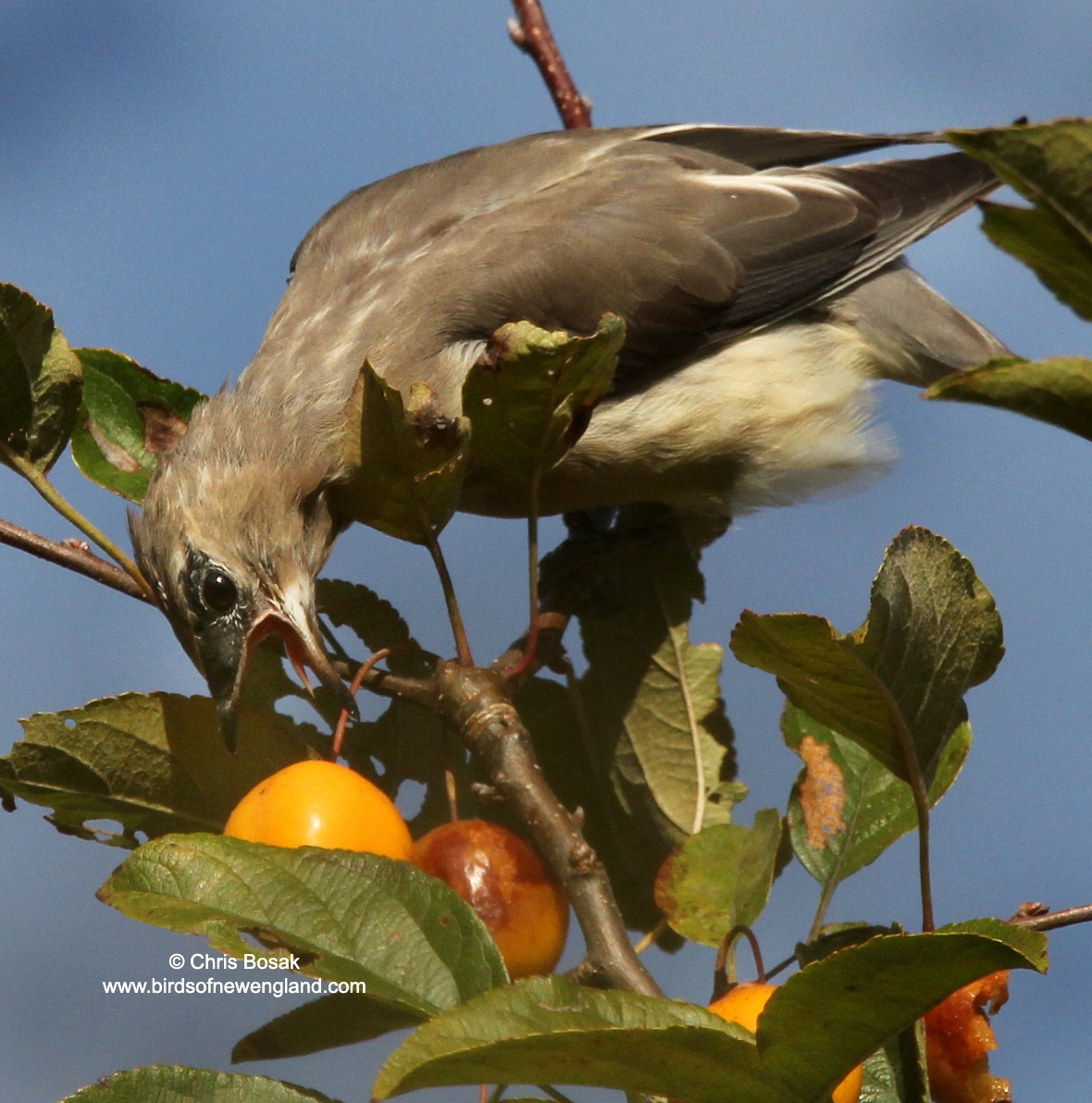
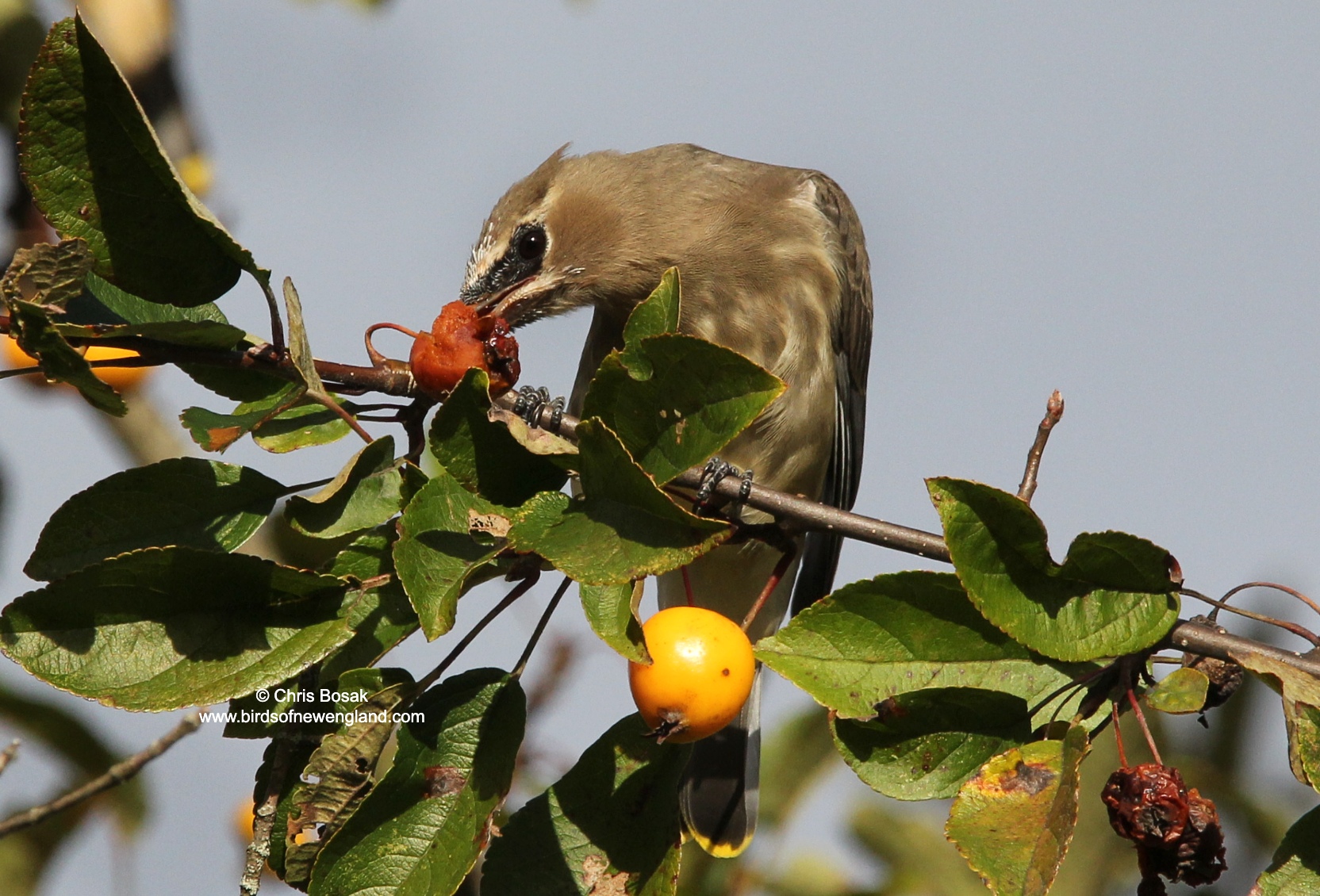
Cedar waxwing on crabapple tree, fall 2025, Huntington State Park, CT.
Sometimes, the path less traveled is the way to go. In fact, it almost always is when it comes to birdwatching.
The park I frequent in southern New England features a variety of habitats: ponds, woods, fields and marshlands. The fields are quite large and have a path running through the middle. In the spring and summer, visitors are restricted to the path to protect nesting birds such as bobolinks, field sparrows and red-winged blackbirds.
In fall and winter, however, after the fields have been cut, the restricted signs come down. Most people, in fact almost all people, still stick to the path as it’s the quickest and easiest way to get to the woods. They don’t see (or care about) the tremendous opportunities that exist along the brushy edges of the fields.
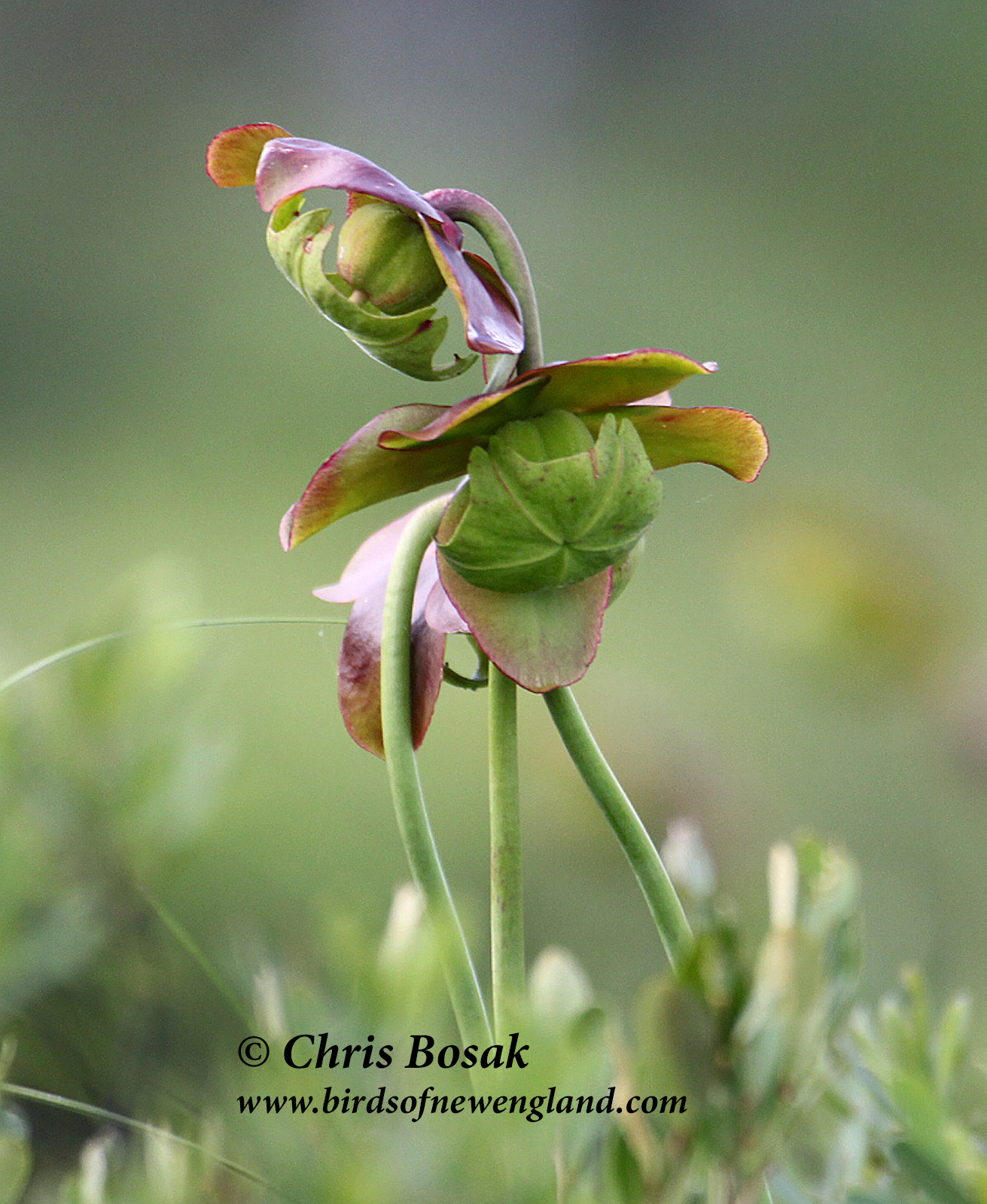
Photo by Chris Bosak Pitcher plant at pond in northern New Hampshire.
Launching the canoe from the campsite proved to be much more difficult than I imagined. The dry summer left the pond extremely shallow, and the shoreline had receded to the point where I had to carry the canoe through several yards of muck to reach the water.
A solitary sandpiper watched the action from the opposite shoreline. Its interest faded quickly, and it went back to looking for food in the shallows.
Once on the water, I dodged a few rocks ─ some exposed and some lurking just beneath the surface ─ and eventually was able to float freely. The feeling of freedom shortly came to an end as the canoe stopped abruptly. Thick vegetation put the brakes on the effortless ride and required heavy paddling to move forward.
Photo by Chris Bosak
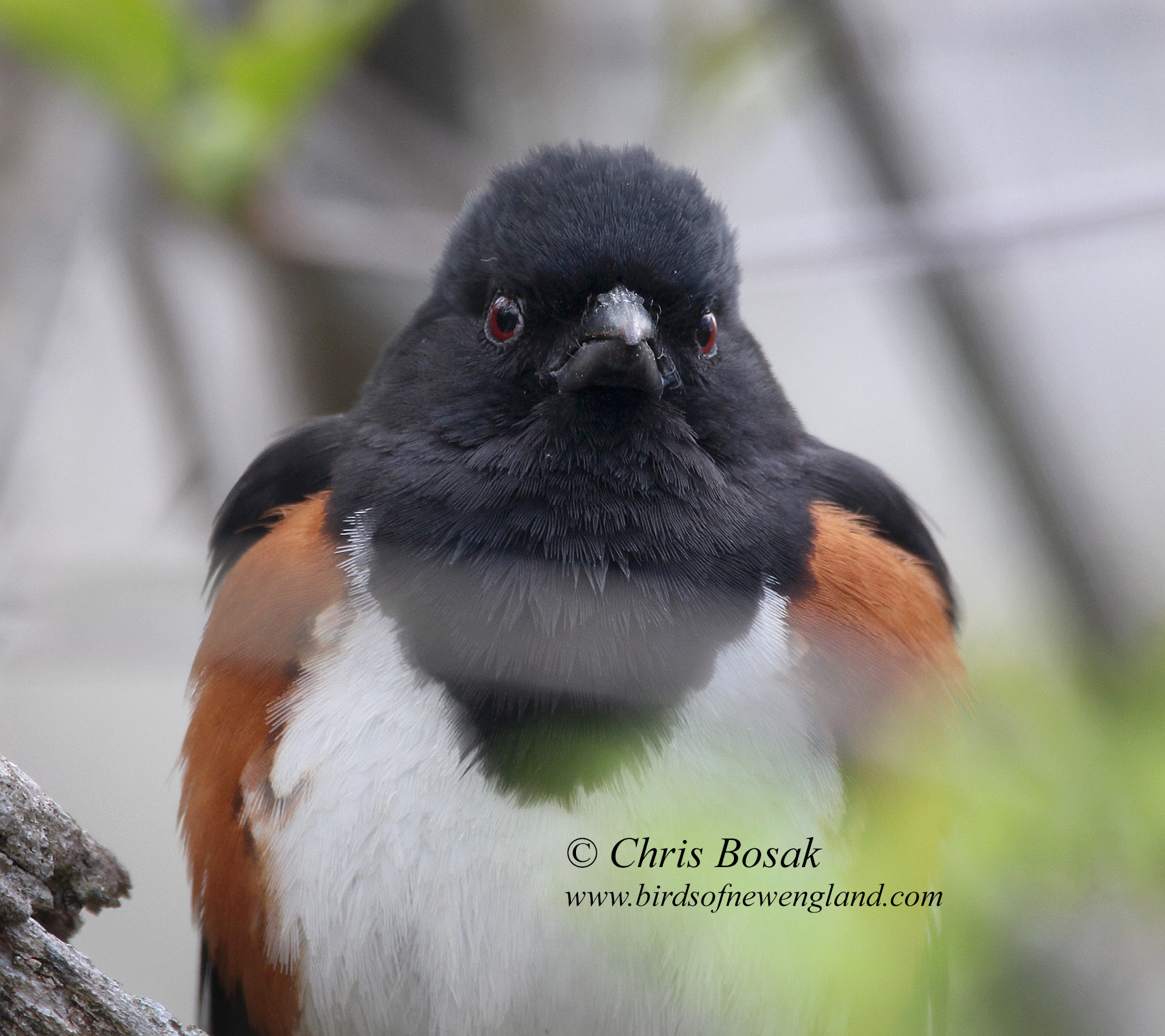
An eastern towhee in New England.
I pulled into the lot at the park, and a small flock of dark-eyed juncos scurried into the tall grass as my wheels came to a stop. The white border on the tail makes for an easy identification of juncos, even from behind.
Ten minutes later, as I walked along a trail with brush on either side of me, I heard the unmistakable call of the eastern towhee: “tow-hee,” with the second part rising in pitch. I spotted the beauty a few moments later.
There is a fairly short window in New England to see both of these birds on the same day. Towhees, the vast majority of them anyway, fly south before the juncos arrive from their northern breeding grounds. Juncos do breed throughout New England, but they are much more visible and numerous when the weather gets colder. Towhees are early arrivals in the spring and late departures in the fall, offering windows to see them and juncos on the same bird walk.
Eastern towhees and dark-eyed juncos look nothing alike. They aren’t even the same size, as the towhee is larger and much bulkier. Yet they are from the same family. Even more interesting is that neither one of them looks like other members of their family.
What comes to mind when you hear the word “sparrow”? Many people likely think of a house sparrow. Even though they are not native to the U.S., they are the dominant member of the sparrow family, in terms of numbers anyway. House sparrows look like sparrows. They are mostly brownish and rather plain-looking, at least from a superficial glance.
 Birds of New England.com