For the Birds: Winter birding surprises

Photo by Chris Bosak
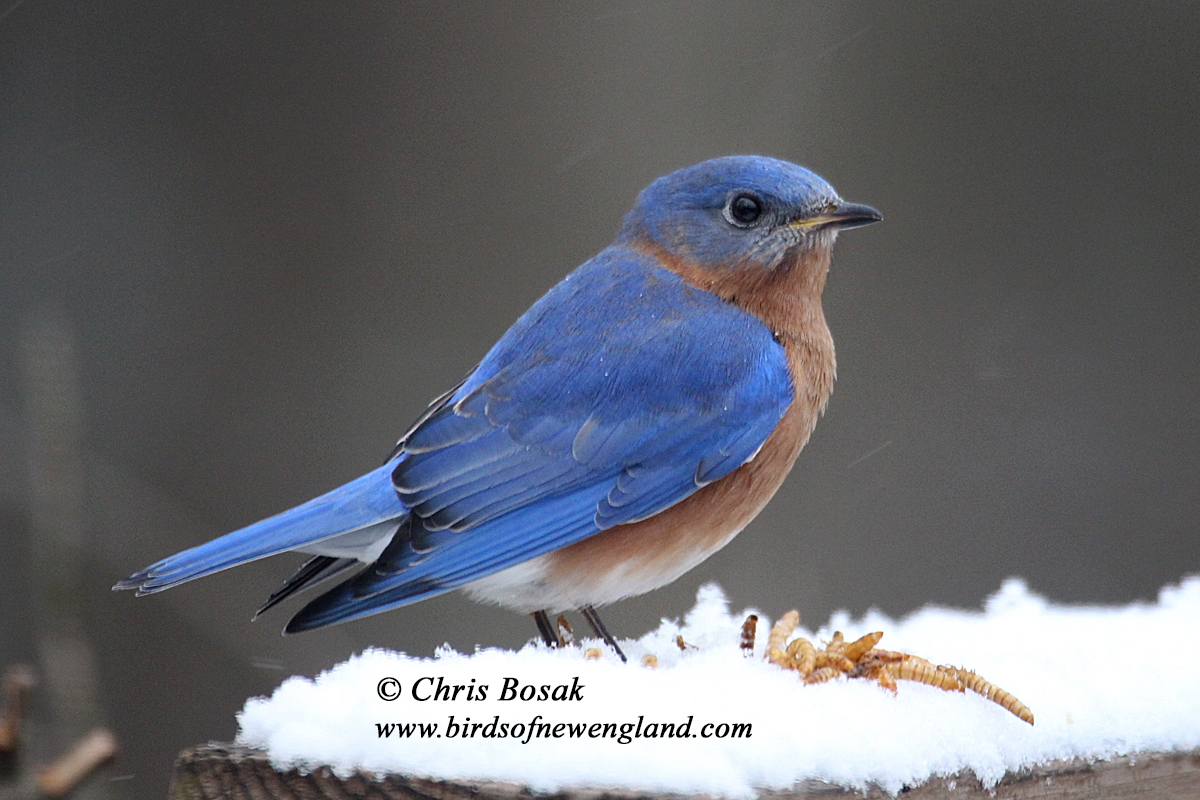
An eastern bluebird braves a New England winter and visit a backyard for mealworms, winter 2020.

The calendar may not show it yet, but in the New England bird world, we’ve officially entered what could be called winter birding season. The vast majority of southbound migrants have left, and the birds we get to enjoy for the next couple of months are either trusty year-round residents or northern visitors who have traveled as far south as they intend to go.

Winter is, of course, the prime time when juncos and white-throated sparrows are found in high numbers. My personal favorite part of winter birdwatching is tracking down different species of ducks. That is, if you can find some open water.

Beyond the usual suspects, like chickadees, cardinals, titmice and nuthatches, there are some other fascinating aspects of winter birdwatching. One is the possibility of a finch irruption. I wrote in a previous column about the winter finch forecast and how it could be a strong year for birds like pine siskins and redpolls to be on the move.

An irruption is when species that aren’t typically seen here, or only a few of them, suddenly appear in certain areas in higher-than-usual numbers. Lately, I’ve been seeing social media posts and hearing other reports about evening grosbeak sightings, so be sure to keep an eye out for those striking yellow birds.

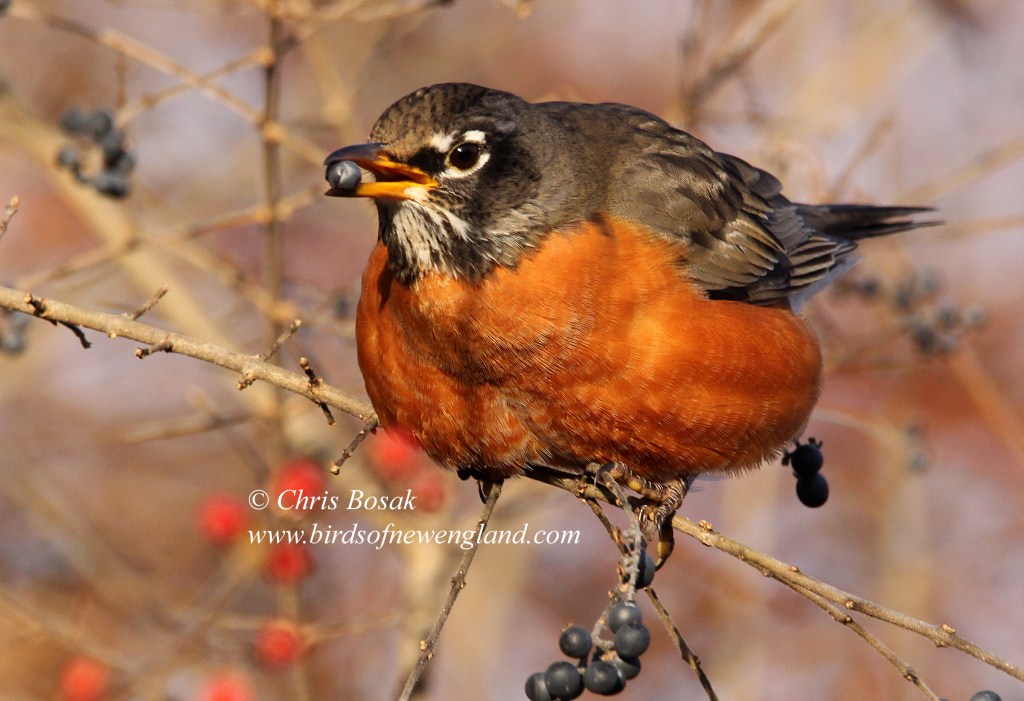
Winter birding also means seeing birds that may be unexpected in the cold months. American robins are known as harbingers of spring, but many stay with us all winter in New England. They may not be the same robins that nested with us in spring and summer, but rather ones that nested farther north and have come here for a “warm” winter. Robins tend to be seen in large flocks during the winter, particularly when there are berries to be had.

Cedar waxwings are another bird species not always thought of when it comes to winter birding in New England, but it’s always a treat when you stumble across a flock. Keep an eye on any berry sources, as they give you your best shot at finding waxwings.

Similarly, eastern bluebirds are often found in winter, though many people don’t think of them as cold-weather birds. While some do migrate, others will remain with us all the way through spring.

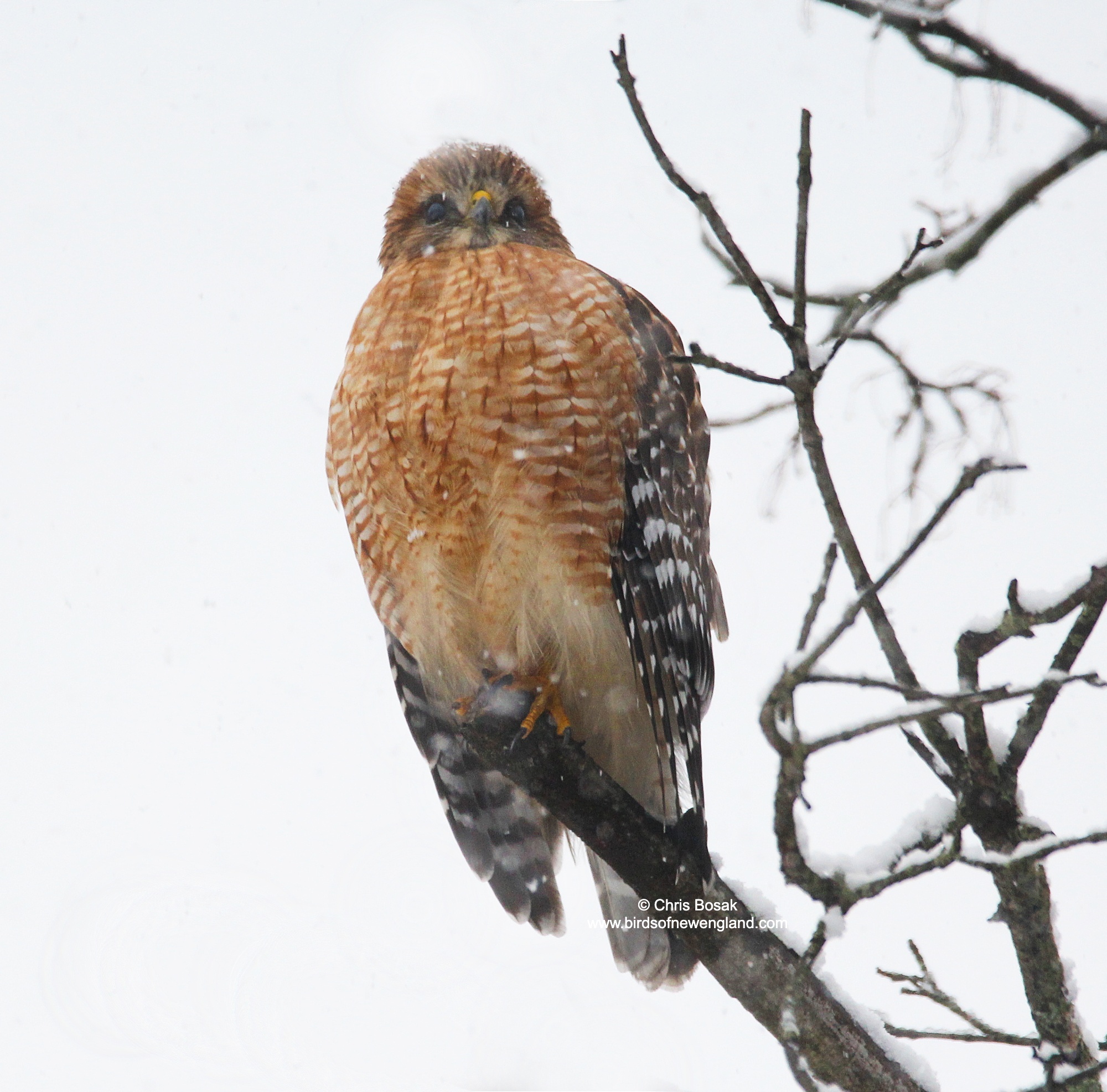
For species like the bluebird, robin, and even some great blue herons and hawks, it comes down to the lesser of two risky choices. Stick out a New England winter, enduring tough conditions with the possibility of freezing or starving, or fly south and risk the innumerable dangers involved with migration.

I’m thankful for the ones that choose to stick around and keep us company throughout the long months here in New England. Maintaining feeders is one way to help birds make it through the winter. Cleaning out and leaving up birdhouses is another way to help out, as some birds, like chickadees, will huddle inside the shelter away from the wind and other elements. Keeping a heated birdbath is also an excellent way to help out and see birds during the winter.

Birding is rarely cut and dry. Do bluebirds migrate? Yes. Do they all migrate? No. There are many exceptions to a lot of long-held beliefs about birds. The hobby is full of surprises, even when the winter landscape looks so bleak and lifeless.

For the Birds: Cedar waxwings like these apples

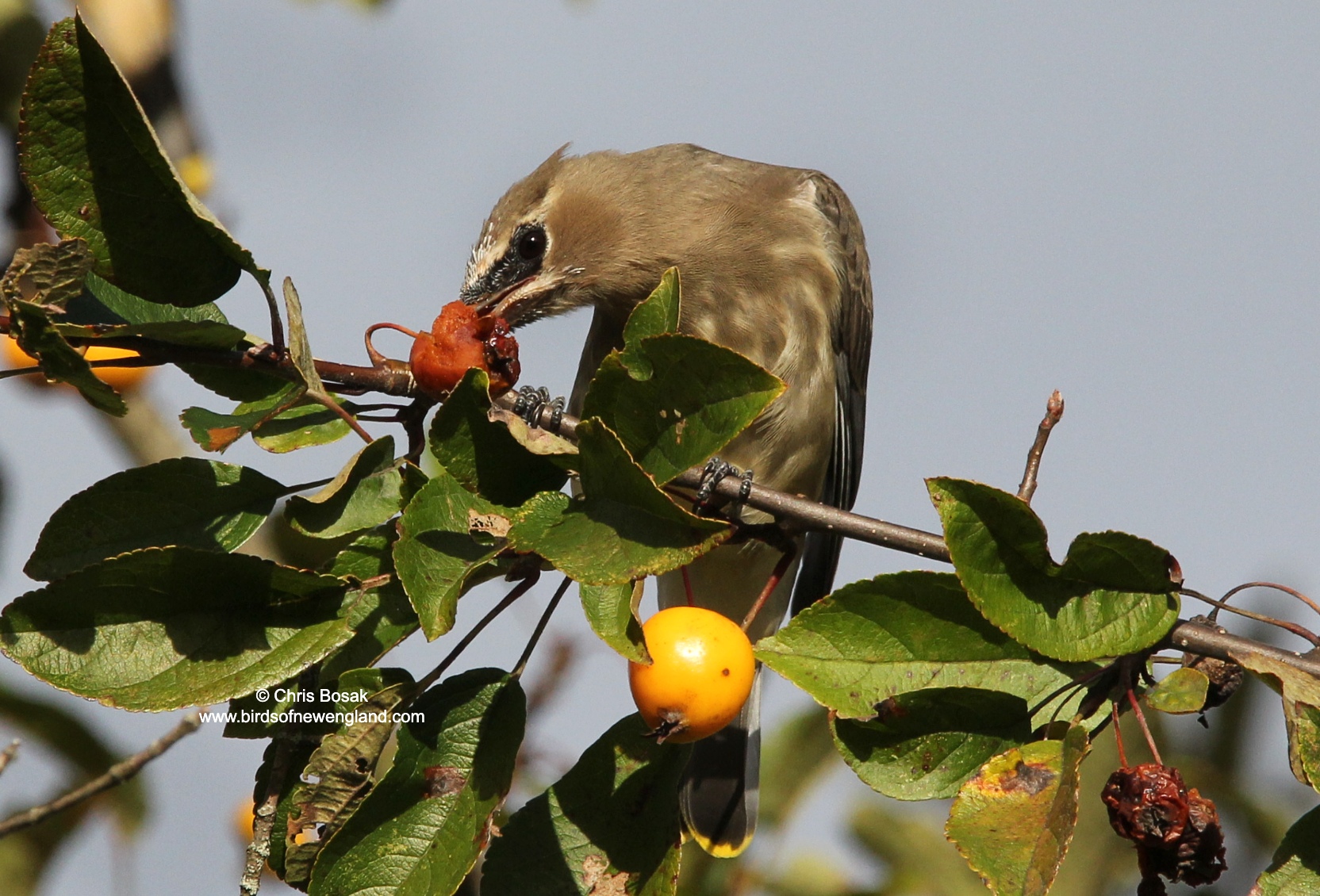
Cedar waxwing on crabapple tree, fall 2025, Huntington State Park, CT.

Sometimes, the path less traveled is the way to go. In fact, it almost always is when it comes to birdwatching.

The park I frequent in southern New England features a variety of habitats: ponds, woods, fields and marshlands. The fields are quite large and have a path running through the middle. In the spring and summer, visitors are restricted to the path to protect nesting birds such as bobolinks, field sparrows and red-winged blackbirds.

In fall and winter, however, after the fields have been cut, the restricted signs come down. Most people, in fact almost all people, still stick to the path as it’s the quickest and easiest way to get to the woods. They don’t see (or care about) the tremendous opportunities that exist along the brushy edges of the fields.

Fall is the best time to explore the edges as berries and shelter attract birds and other wildlife. Palm warblers are automatic sightings for a few weeks in October as they devour seeds from the grasses that remain standing. Yellow-rumped warblers are also reliable sightings as they chow down on poison ivy berries and the fruits of other plants.

Eastern bluebirds and eastern phoebes like to hang out around the edges as well. They use the overhanging branches to scan the field for insects.

The other day, I noticed a flock of birds in a distant bare tree. They were flying back and forth to a nearby tree. Assuming they were starlings, I raised my binoculars to confirm. Turns out, they were cedar waxwings. Lots of them.

As I got closer, I realized the tree they were flying to and from was a crabapple tree loaded with red, orange and yellow fruits. I climbed over a stone wall overgrown with all sorts of weeds and grasses for a closer look. I pulled a single deer tick off of my sweatshirt and closed the distance even more.

The waxwings paid me no mind, so I approached within camera range. Surrounded by goldenrod that had gone to fluffy seed, I took some photos and observed the flock. Many of the birds were youngsters, hatched a few months prior. Waxwings nest a bit later than most songbirds, so the immature birds were several weeks younger than the migrating first-year birds that passed through the area in September or early October.

Immature cedar waxwings lack the polished, silky look of the adults. They appear much duller and have streaked undersides. The black mask is not as obvious as in adults, and they lack the trademark waxy, red wingtips. (Not all adults have obvious wing tips either.) They do sport the yellow-tipped tail.

The waxwings feasted on the apples. The apples were small but still much too large for the birds to eat in one gulp. Rather, they contorted themselves and took meaty bites of the fruits until only the stem remained.

I came across an interesting tidbit while researching cedar waxwings recently. According to the Cornell Lab of Ornithology, waxwings specialize in eating fruit and can live on fruit alone for several months. Brown-headed cowbirds that are raised by waxwings often do not survive because of the all-fruit diet.

The remainder of the walk was filled with sightings of white-throated sparrows and ruby-crowned kinglets. They seemed to be around every corner. The highlight of the walk, however, was the waxwings feasting on the apples. Had I stuck to the trail, I would have missed it.

For the Birds: Sparrows of a different kind

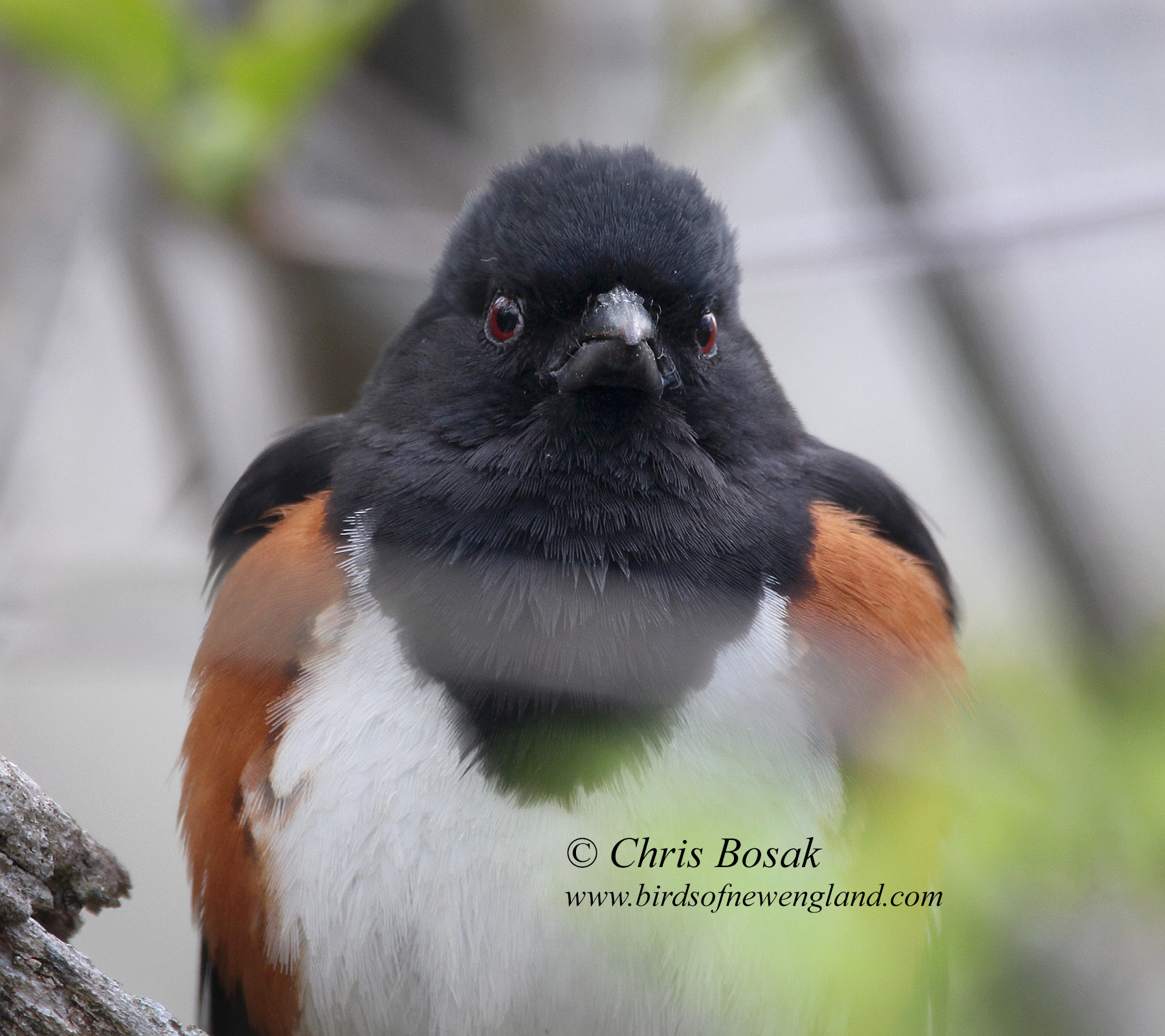
Photo by Chris Bosak An eastern towhee in New England.

I pulled into the lot at the park, and a small flock of dark-eyed juncos scurried into the tall grass as my wheels came to a stop. The white border on the tail makes for an easy identification of juncos, even from behind.

Ten minutes later, as I walked along a trail with brush on either side of me, I heard the unmistakable call of the eastern towhee: “tow-hee,” with the second part rising in pitch. I spotted the beauty a few moments later.

There is a fairly short window in New England to see both of these birds on the same day. Towhees, the vast majority of them anyway, fly south before the juncos arrive from their northern breeding grounds. Juncos do breed throughout New England, but they are much more visible and numerous when the weather gets colder. Towhees are early arrivals in the spring and late departures in the fall, offering windows to see them and juncos on the same bird walk.

Eastern towhees and dark-eyed juncos look nothing alike. They aren’t even the same size, as the towhee is larger and much bulkier. Yet they are from the same family. Even more interesting is that neither one of them looks like other members of their family.

What comes to mind when you hear the word “sparrow”? Many people likely think of a house sparrow. Even though they are not native to the U.S., they are the dominant member of the sparrow family, in terms of numbers anyway. House sparrows look like sparrows. They are mostly brownish and rather plain-looking, at least from a superficial glance.

Continue reading

For the Birds: Birds sightings can happen anywhere

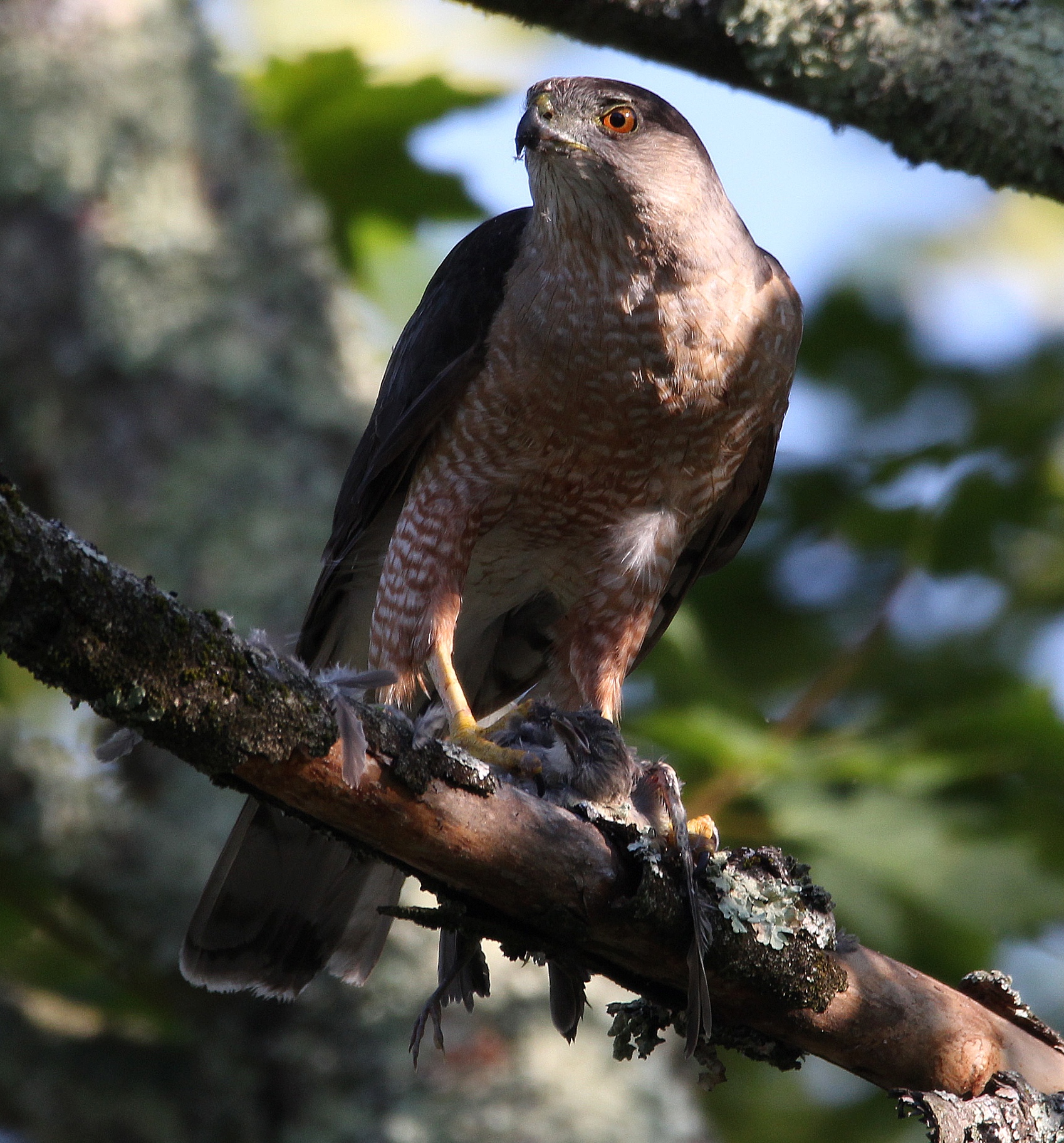
Photo by Chris Bosak – A Cooper’s hawk eats a meal in New England, summer 2025.

“One of the nice things about birdwatching is …”

I’ve started many sentences with that phrase over the years. The backend of that line may be finished in almost innumerable ways:

… everyone, regardless of age or skill level, can enjoy it.

… it can be done during any time of the day or year.

… no two days are alike.

… there is always something new to learn or discover, regardless of how advanced you are.

… each time of year brings its own delights.

For the purposes of this column, the sentence will read: “One of the nice things about birdwatching is that it can be done anywhere.” Not many hobbies can be enjoyed in the woods, in a canoe or kayak, at a local park, or sitting in the kitchen looking out the window with your morning cup of coffee.

Continue reading

For the Birds: New England birding from top to bottom

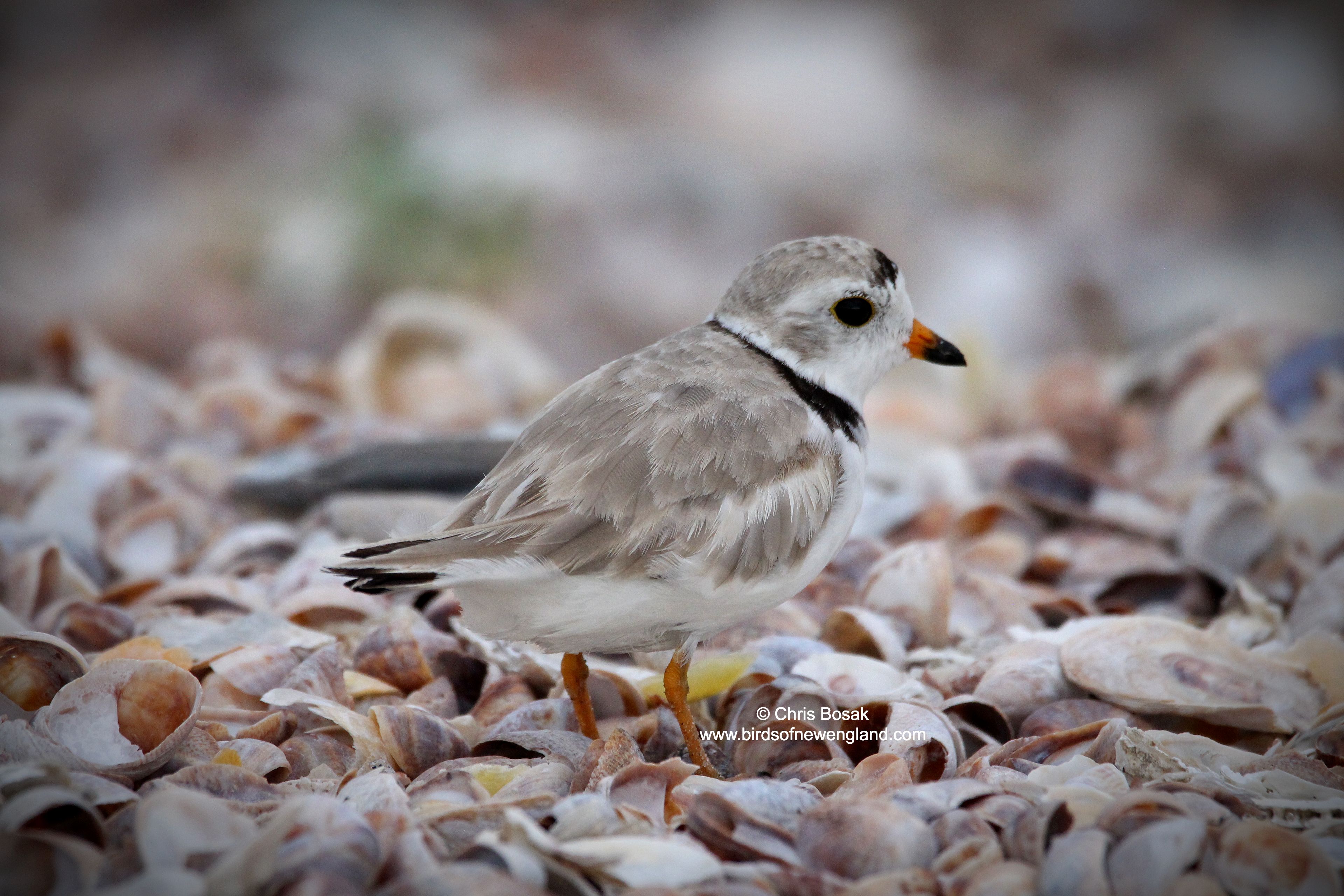
Photo by Chris Bosak Piping plover, Milford, Connecticut, summer 2025.

I’ve looked for birds in New England from top to bottom this month. At the beginning of July, I drove to Pittsburg, NH, near the Canadian border, and last week, I visited a beach/nature preserve on Long Island Sound in southern Connecticut.

Yes, technically, northern Maine would be top of New England, but let’s not split hairs here.

It was quite a contrast in habitat and birdlife between the two points, from the boreal forest up north to the marsh and shoreline down south. 

Continue reading

For the Birds: Return of the coyote

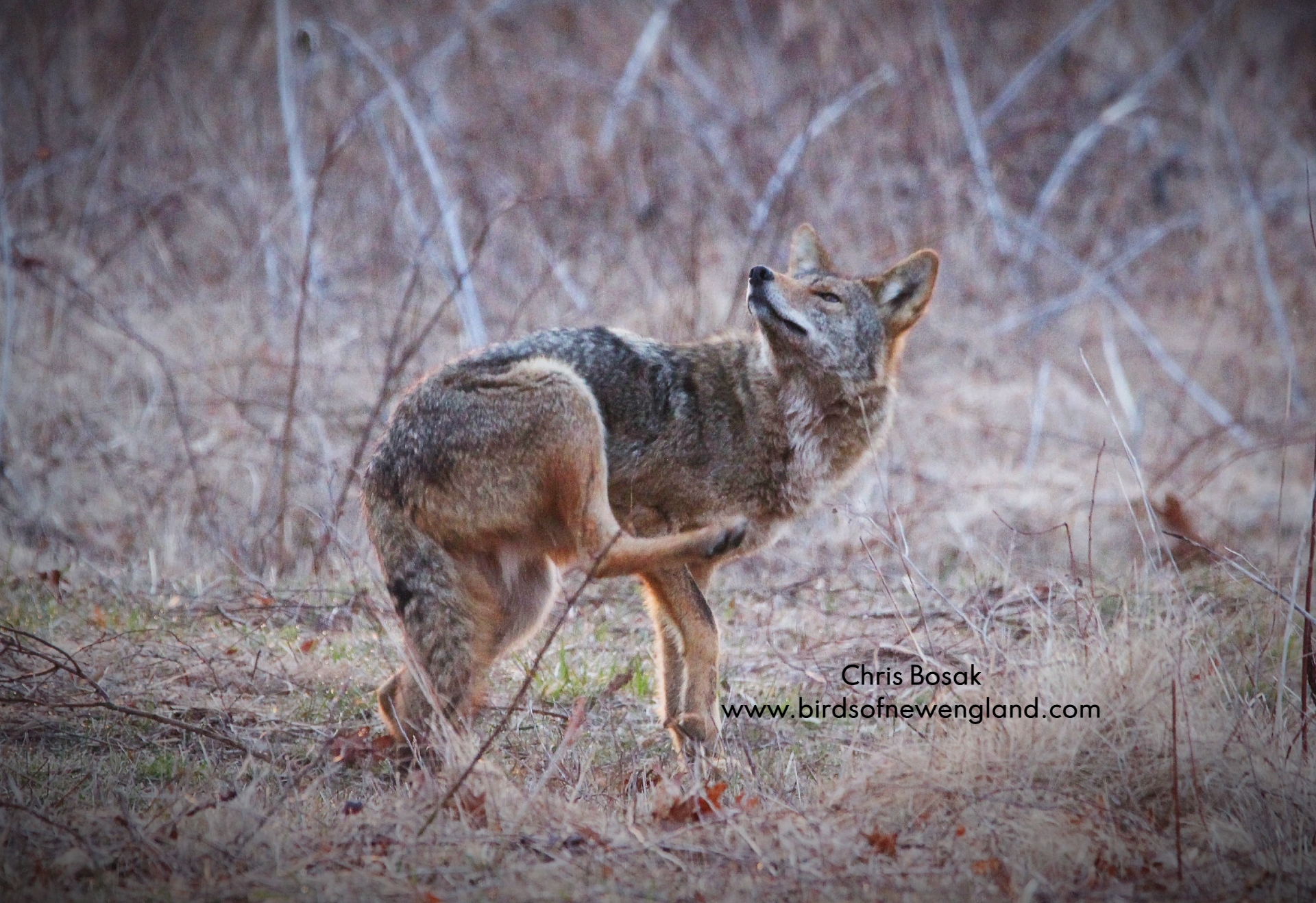
Photo by Chris Bosak A coyote scratches itself in a field at Huntington State Park in Redding, Connecticut, March 2025.

This is the second column in the last few weeks where I end up writing about and using a photograph of an unintended subject because the primary target fell through.

A few weeks ago, you may recall, I wrote about a missed opportunity to photograph blue jays harassing a barred owl. The blue jays successfully drove off the owl before I could get into position for a photo. On the walk back to the car, I came across a flock of cedar waxwings eating berries and stopped to photograph them.

This time, the intended target was American woodcock, but I ended up coming home with more photos of my coyote friend. Late in 2024, I wrote about getting lucky and spotting a coyote in a field as I passed a small break in the thick, tangled, brushy border between the woods and field. I’m assuming this was the same coyote, as I spotted it in the same field very near where I had seen it before.

But first, my intended target. American woodcocks, or timberdoodles, have been a nemesis species of mine for many, many years. I’ve seen their evening aerial displays a few times, but I haven’t found one during the day when getting a photograph would be possible. The aerial displays come shortly after sunset when the evening light has faded.

Continue reading

For the Birds: Early favorite for Bird of the Winter

Photo by Chris Bosak An American robin eats border privet berries in New England, January 2025.

The American robin has secured a spot as the frontrunner for the Bird of the Winter.

I usually announce my Bird of the Winter much later than the second week of January, but I could tell already that the robin is likely to be the winner. The Bird of the Winter recognition, of course, is a very unofficial designation made by yours truly. It goes to the bird, as the name suggests, that is seen in surprisingly high numbers throughout the winter.

Past winters have included snowy owl, barred owl, dark-eyed junco, and eastern bluebird. This year the robin is running away with it.

It started on Christmas Day when I looked out of a window into the side yard and noticed a lot of activity in an eastern cedar tree. The activity, as you probably have guessed, was robins going in and out of the branches, gobbling up the berries in the tree. The robins came and went for hours upon end, and, all told, there had to be over 100 of them. 

Continue reading

For the Birds: Rain, rain go away – or not

The weather icons on my iPhone showed rain starting at 8 a.m. I figured that would give me about an hour of dry weather to look for some early spring migrating birds.

No such luck. The rain started even before sunrise so my hour of dry weather wasn’t going to happen. Instead of rolling over and going back to sleep (a very tempting option) or mindlessly scrolling through social media, I decided to head out into the rain anyway. OK, I did take a few minutes to do Wordle quickly before heading out.

The walk started in a light rain, and a lot of birds were out singing. Immediately, I heard robins, cardinals, blue jays, song sparrows and a field sparrow in the distance. Field sparrows have a very distinctive song that sounds like a ping-pong ball bouncing on a table with the time between bounces getting progressively shorter, just like a real ball would do.

As soon as I committed to a trail leading me farther into the woods, the rain picked up. It never turned into a downpour, but it was a good, steady rain. Thankfully, the temperature was a very manageable 55 degrees, so I just got wet instead of wet and cold. I like birdwatching in all types of weather, but a cold rain is probably the worst. Heavy wind is not much fun either, but I would take it over a cold rain.

Continue reading

For the Birds: Shorebirds aren’t only for the shore

Photo by Chris Bosak – A solitary sandpiper on the edge of a pond in New England, August 2022.

When hearing the word shorebirds, most people likely think of sanderlings and other small sandpiper-like birds running back and forth among the waves at the ocean.

Shorebirds, however, are not limited to small “peeps,” nor are they limited to the ocean. While it is true that the ocean and other coastal regions, such as Long Island Sound, are the best places to find shorebirds, inland lakes and ponds have shorebirds too.

I have seen lesser yellowlegs at many inland lakes in New Hampshire, all the way from the northern tip in Pittsburg to southern lakes such as Edward McDowell Lake in Peterborough. Yellowlegs may be seen on the edges of inland lakes during migration periods, such as now.

Continue reading

For the Birds: The colors you’ll see

Photo by Chris Bosak An indigo bunting perches in a tree in New England, July 2021.

I’m not going to try to emulate Dr. Seuss, but I think he would have drawn plenty of inspiration from a walk in the woods in New England in May.

His classic “Oh, the Thinks You Can Think!” comes to mind, but only altered to “Oh, the Colors You Can See.”

A recent walk made me think of this. The majority of the walk was along a wide dirt path with shrubby habitat on both sides. Beyond the thickets on one side was a large field and beyond the thickets on the other side were deep woods. It is perfect habitat for a bird walk.

The first bird I saw was a male eastern towhee. It was once called rufous-sided towhee because of the unique dark orange color of its sides that complement the otherwise white and black plumage of the bird. The bird’s red eyes are visible when it approaches among the shrubs closely enough. I did not see a female towhee on this particular day, but they are lighter brownish-orange where the male is black.

Continue reading