For the Birds: The shore comes through again

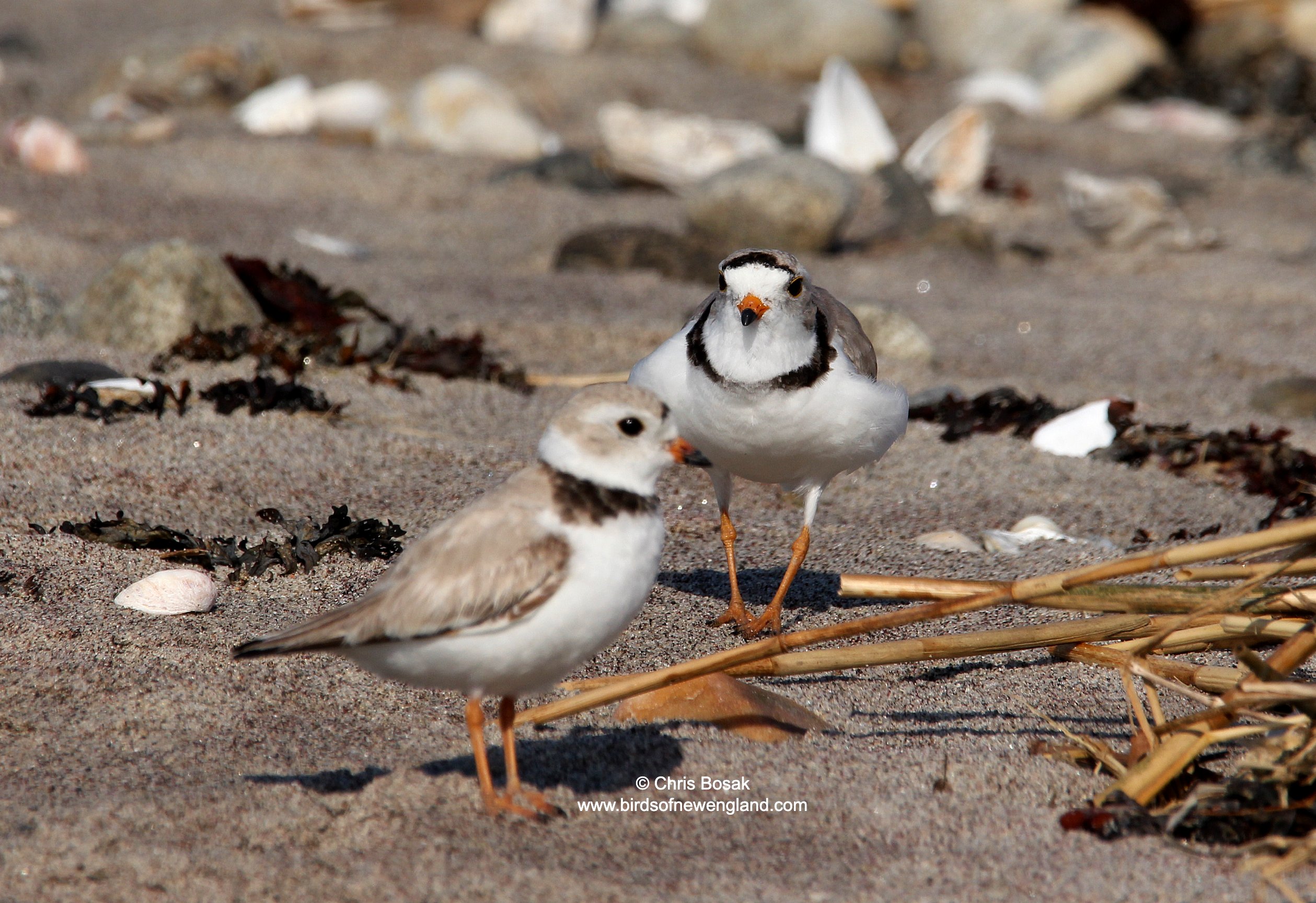
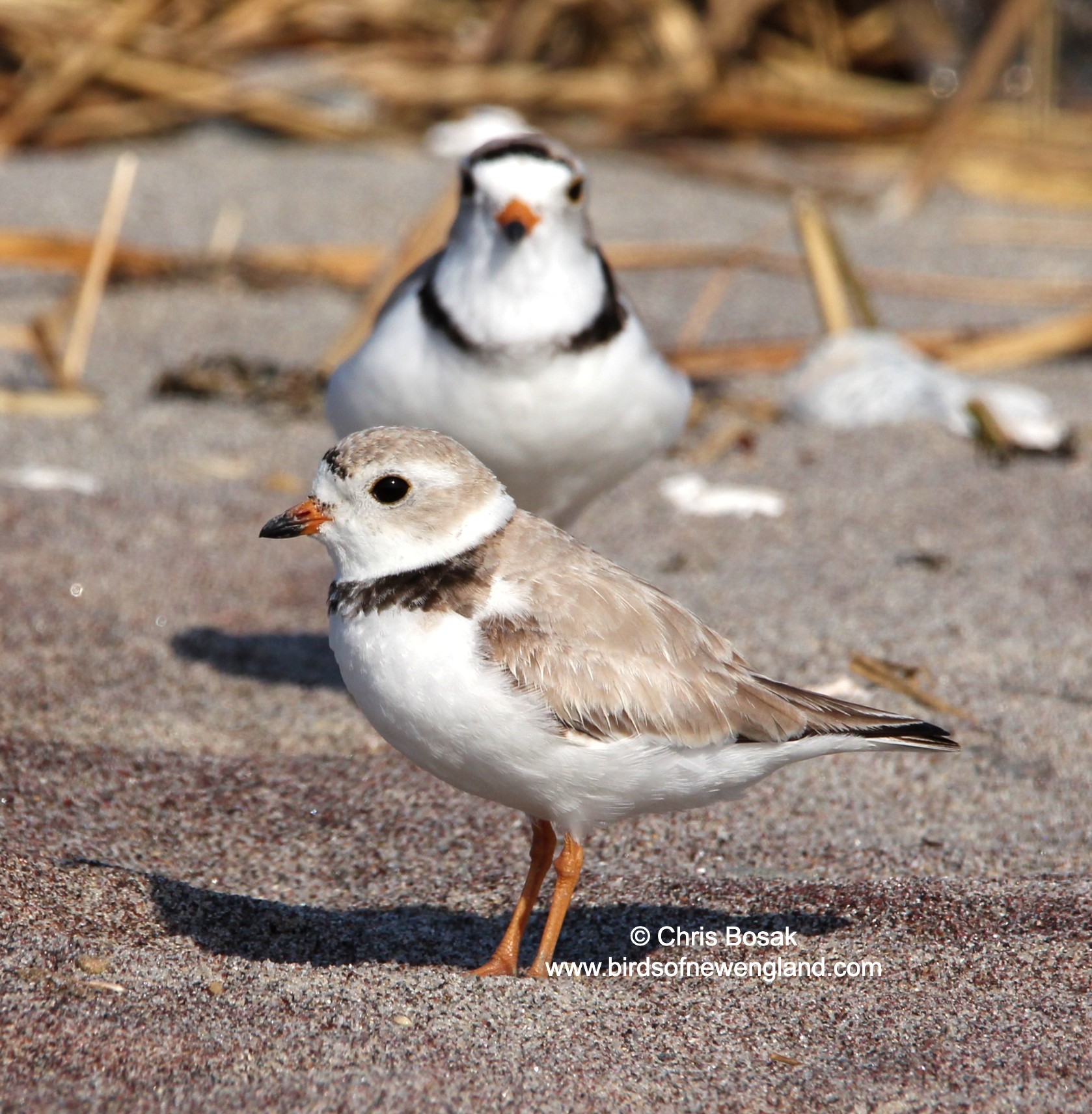
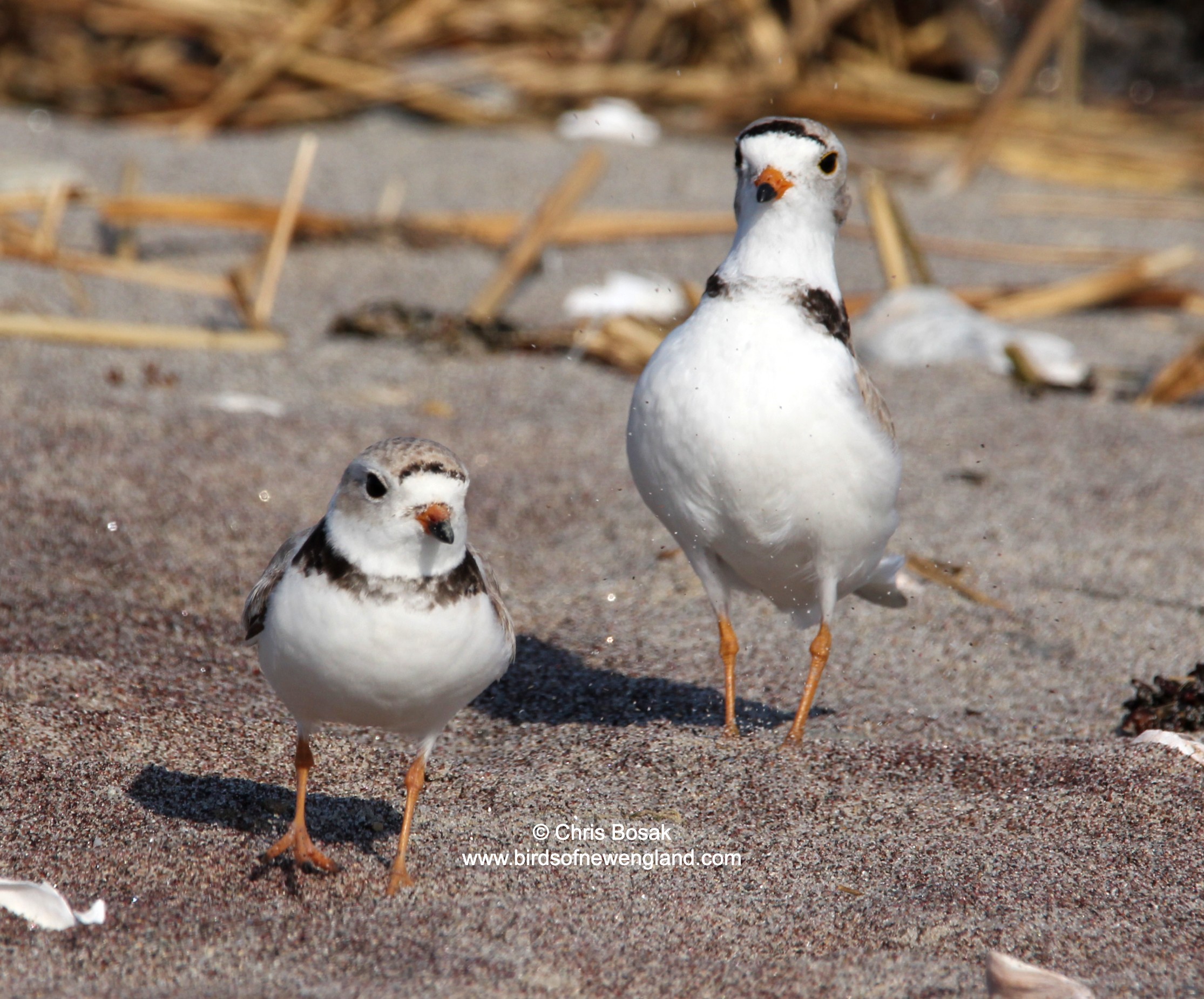
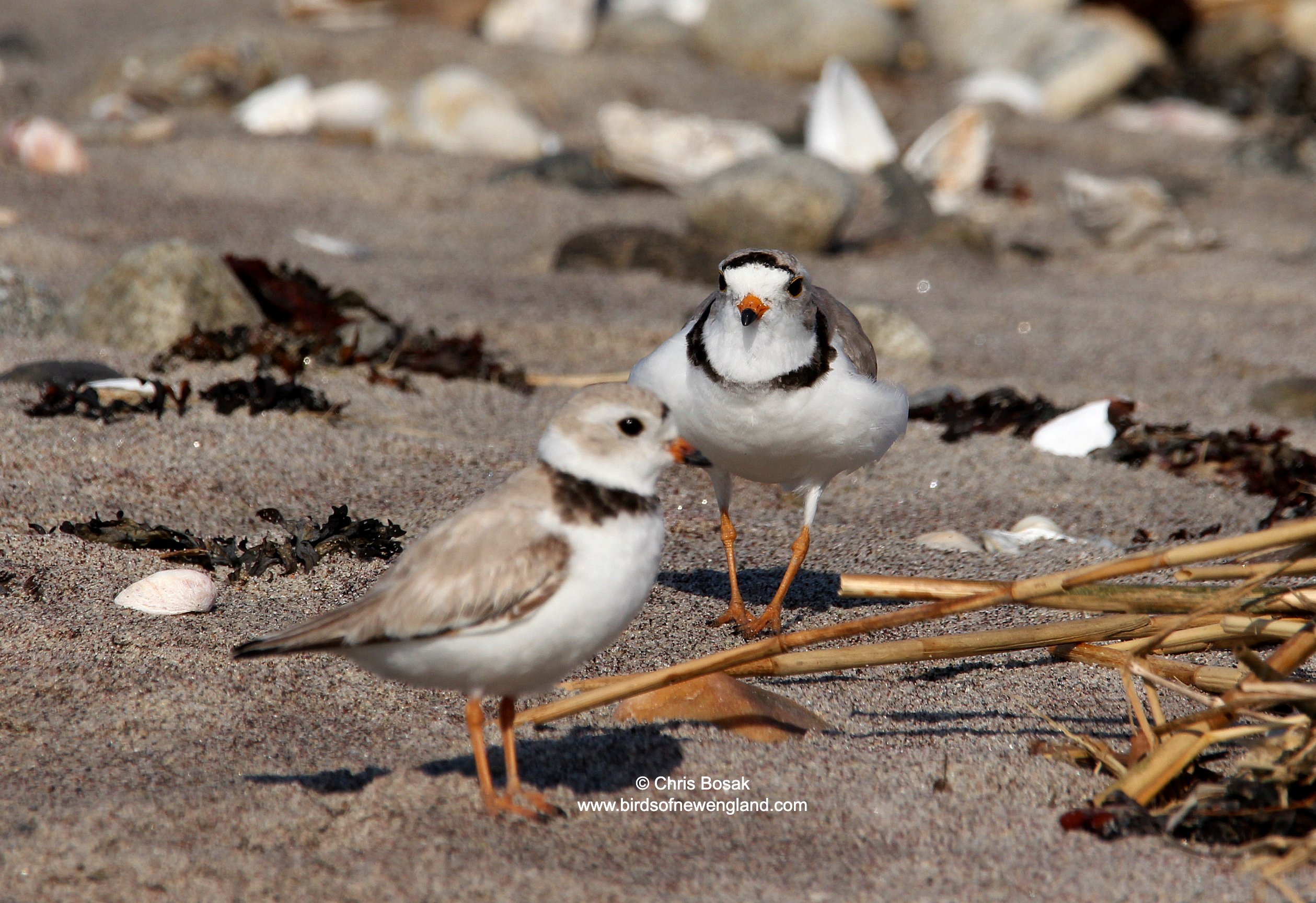
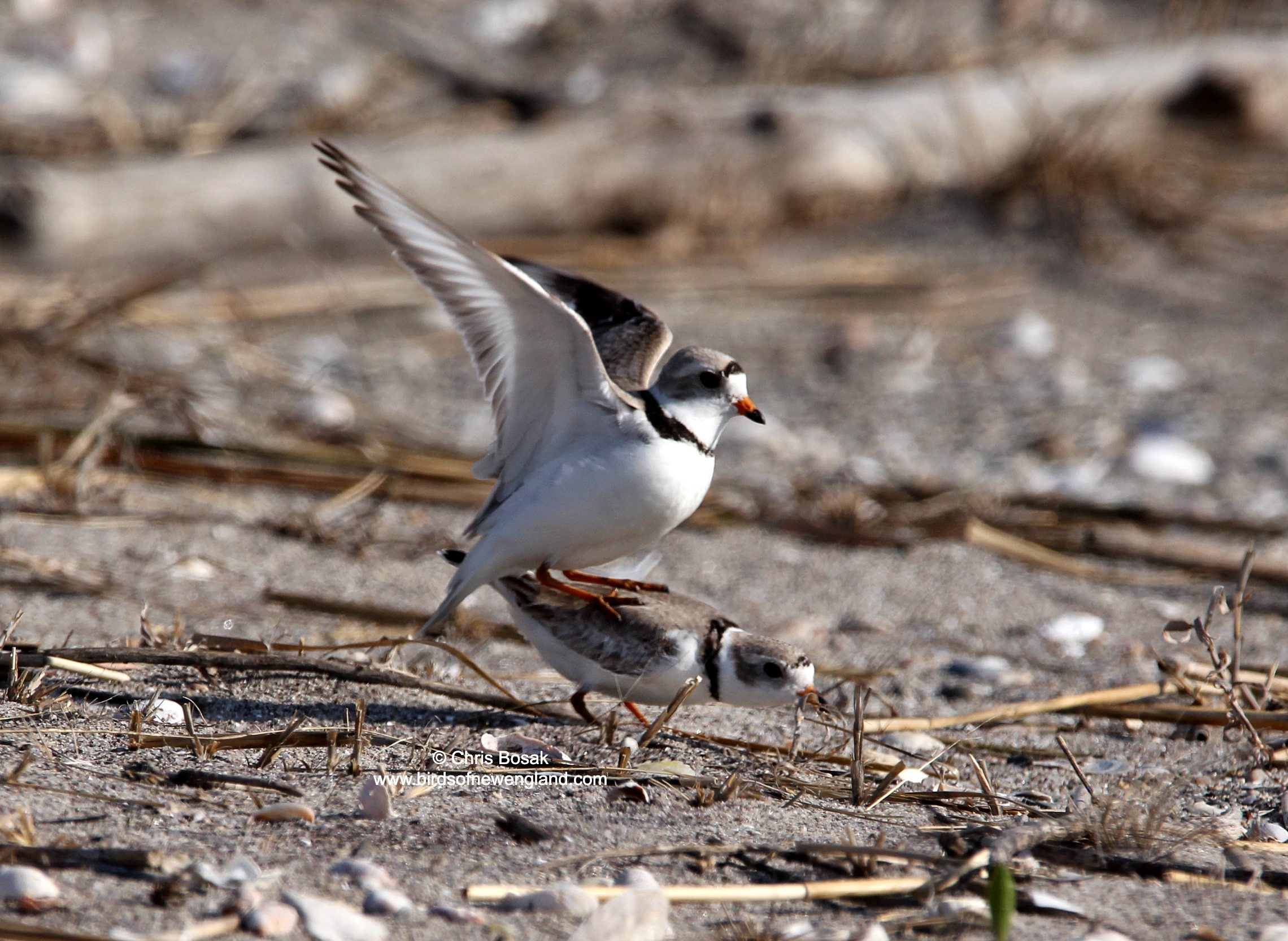
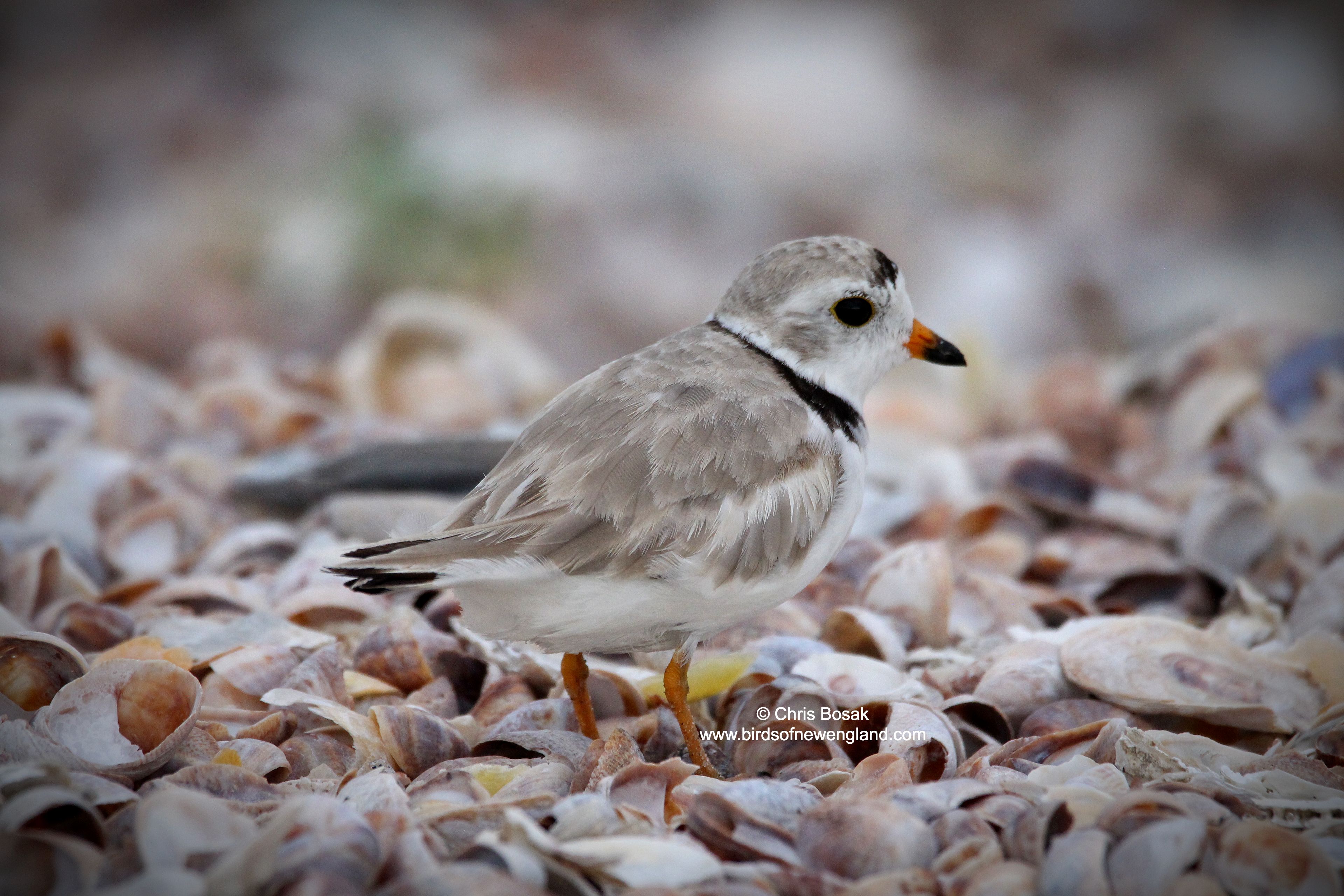
Photo by Chris Bosak – A male piping plover (background) moves toward a female plover at Milford Point, April 2026.

The spring migration has certainly begun, but it is still in the building-up phase.

I took a few walks in the woods over the last few days and saw some very welcomed migrants, such as pine warbler, palm warbler, yellow-rumped warbler and Louisiana waterthrush. 

When migration is just picking up, however, the action can be hit or miss. In a few weeks, the action will be all hits all the time, and I’m sure we are all looking forward to that.

While those first migrants are great to see after a long winter, they also whet the appetite to see more spring migrants. The woods will be hit or miss for the next several days anyway, so the other day I went to a spot where I knew I would see a few old feathered friends that I hadn’t seen since last summer.

The coast, whether it is the Atlantic Ocean, one of its many bays in New England, or Long Island Sound, is a safe place to find some early shorebird migrants in April. I had a little time, so I headed for one of my favorite spots along the Long Island Sound shoreline in southwestern Connecticut. The spot, the Coastal Center at Milford Point, rarely disappoints, and this time, it was certainly on the mark again.

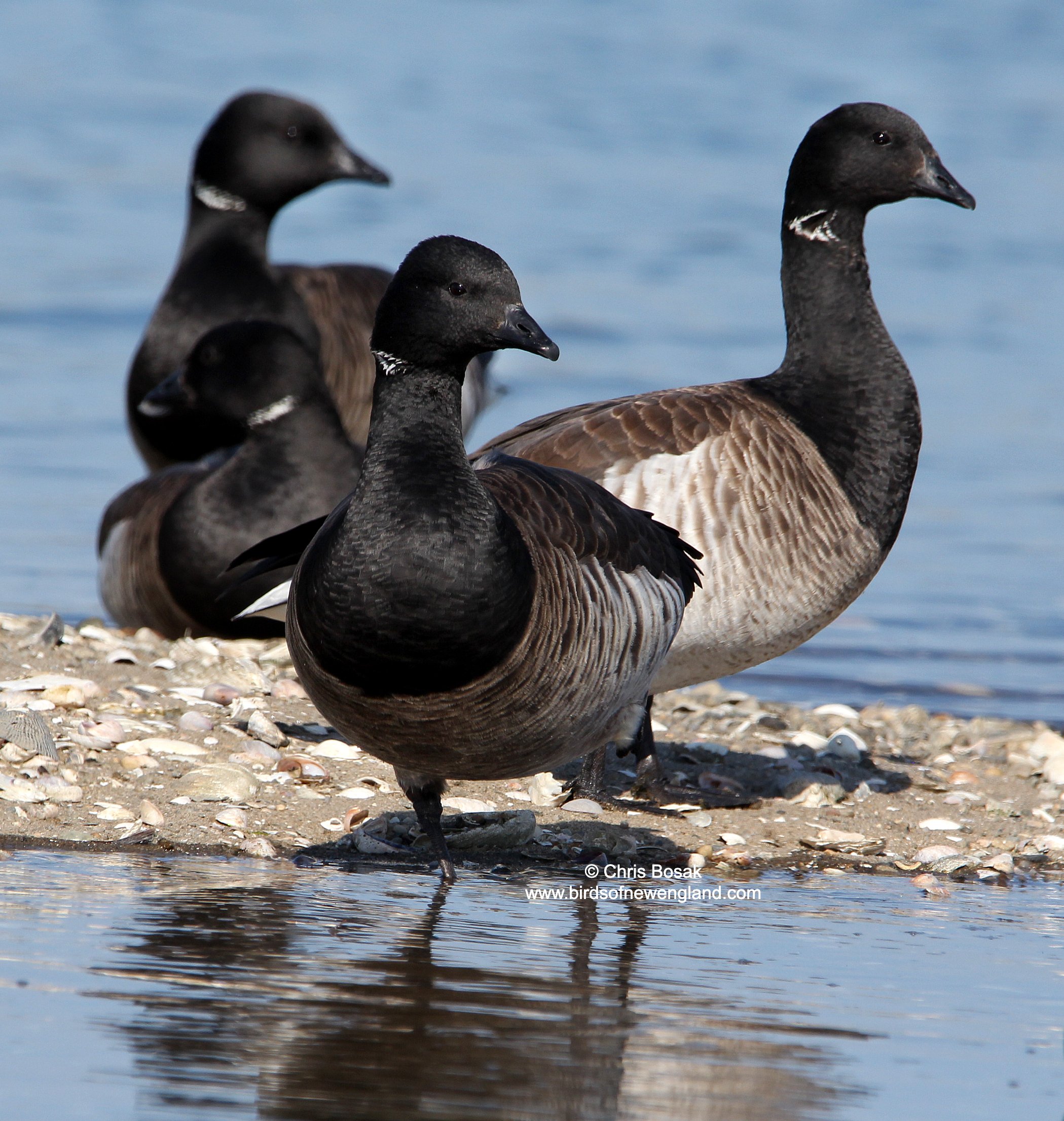
In terms of sheer numbers and variety, the action was OK, but in terms of quality, it was a well worthwhile trip. One side of the sanctuary is a large tidal bay, and I immediately spotted an osprey pair on its usual nesting platform, as well as dozens of brant and a sizable number of green-winged teal.

The other side of the sanctuary, which features a long sand spit and the whole of Long Island Sound, is where the real action takes place in April, as piping plovers and American oystercatchers return to their breeding grounds. 

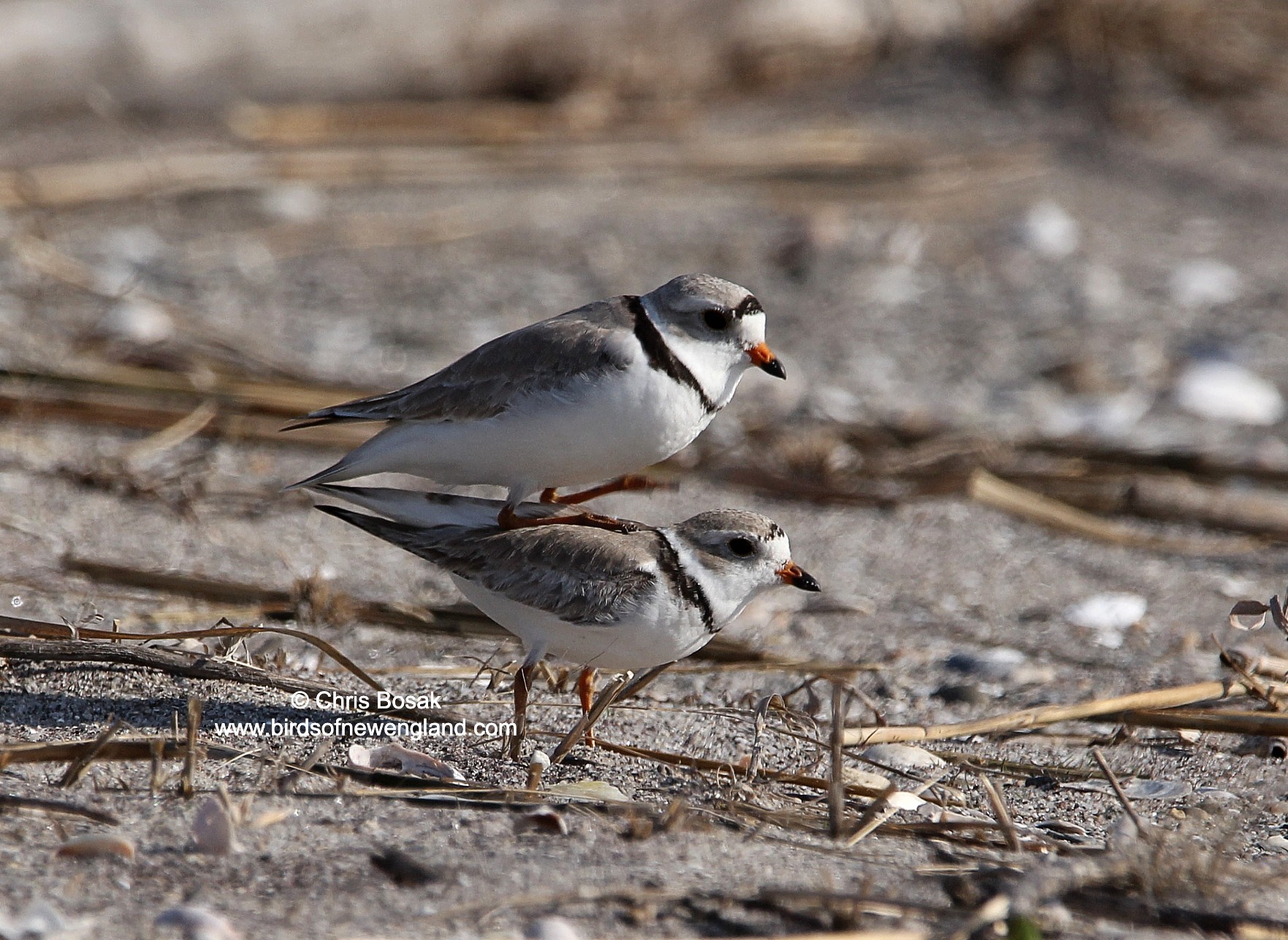
Last year, I made a similar trip a little later in April and was lucky enough to find a piping plover mother with two chicks following closely behind. This year, by chance, I timed it to coincide with the mating season and saw several males displaying and chasing females, and even caught one pair in copulation.

It was good to see the breeding activity, as piping plovers are a species in decline. The Cornell Lab of Ornithology has a paragraph on its website explaining the conservation status as such: “The 2025 State of the Birds report lists Piping Plover as an Orange Alert Tipping Point species, meaning that it has lost more than 50% of its population in the past 50 years and has shown accelerated declines within the past decade. Partners in Flight estimates a global breeding population of 8,400 individuals and rates the species a 16 out of 20 on the Continental Concern Score.”

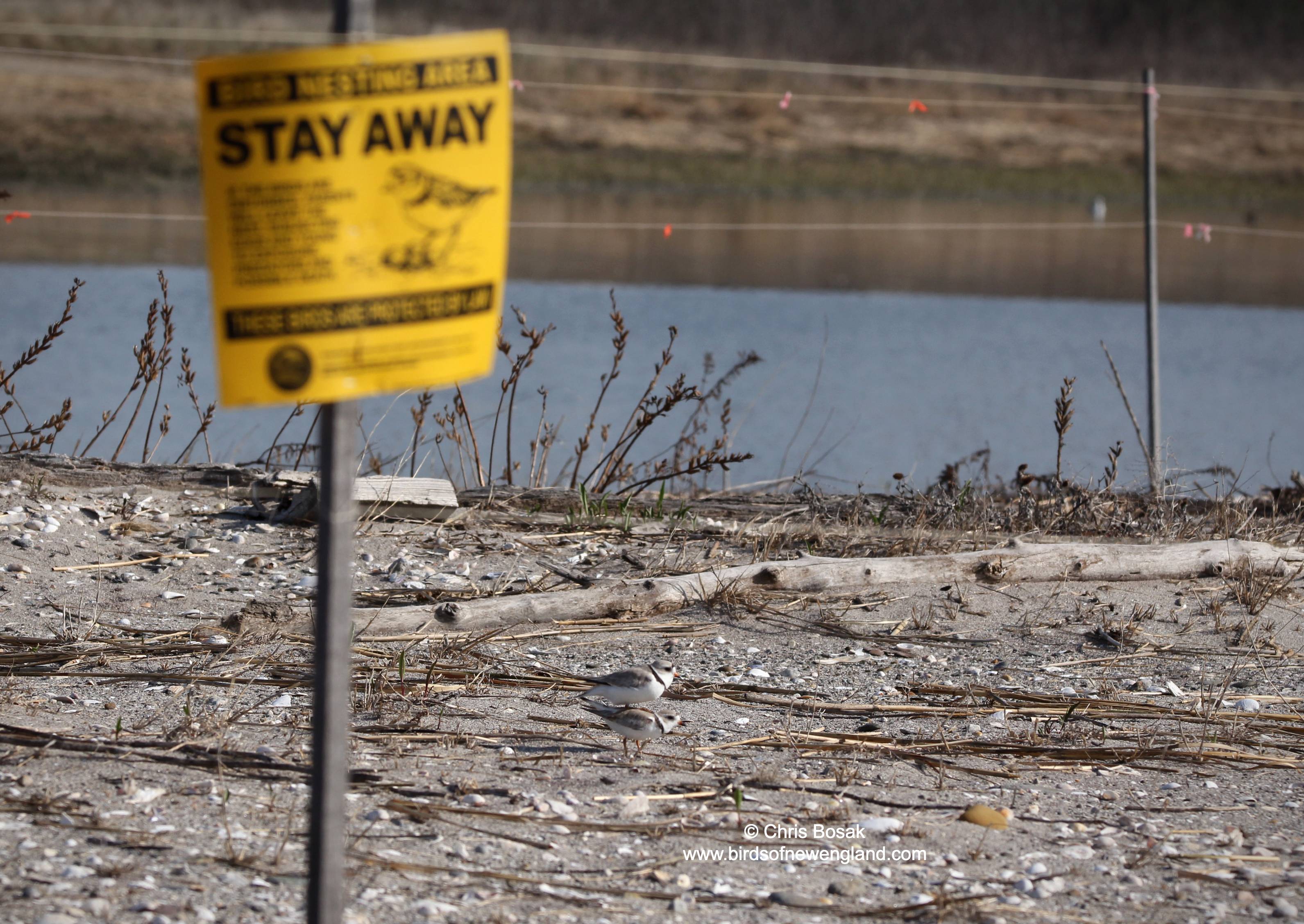
The sand spit offers a good opportunity to get relatively close to piping plovers. The area where nesting activity occurs is generously roped off to give the birds plenty of space to do their thing. 

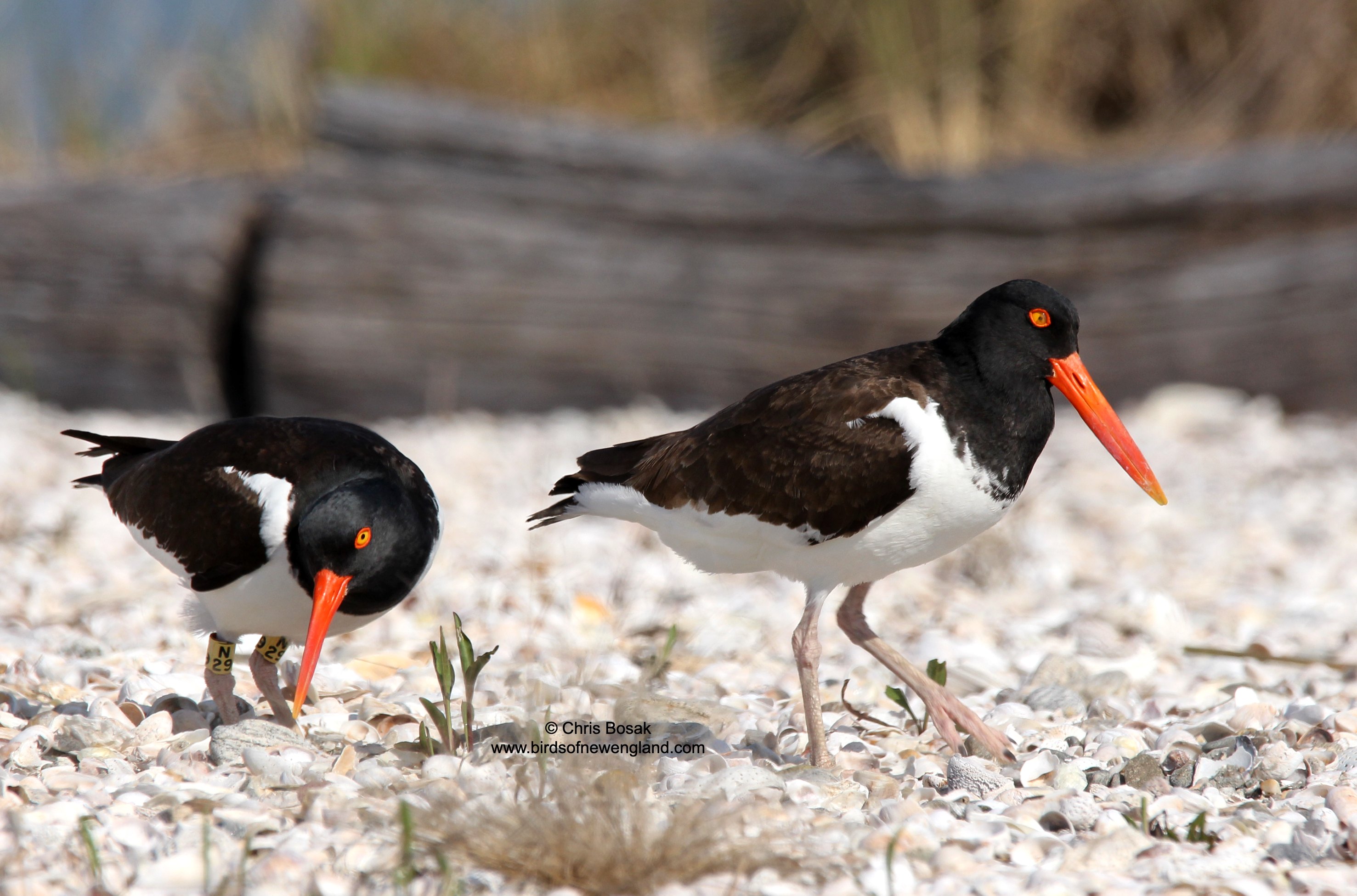
There were several pairs of oystercatchers as well. Oystercatchers, with their large size, massive orange bills and ubiquitous high-pitched call, are consistently on my ever-changing list of favorite birds. 

Given the choice, I would pick the woods over the shore almost every time. The shore, however, does call to me on occasion, and I’m always glad when I hearken to the call.

(See more photos in my previous post here.)

Piping plovers and oystercatchers highlight trip to shore

Photo by Chris Bosak
A male piping plover (back) pursues a female at Milford Point in New England, April 16, 2026.

I took a trip to the Connecticut Audubon Society Coastal Center at Milford Point today to see piping plovers, American oystercatchers, and whatever else may be around. I timed it nicely, as I found several piping plover pairs doing their mating ritual and even saw one pair copulating.

The male plovers followed the females around the rocks and sand, standing tall and performing a type of stomp dance with their feet and legs. It was quite entertaining.

While the plovers and oystercatchers were the highlight, there were dozens (hundreds maybe) of brant still hanging around New England.

Photo by Chris Bosak
A male piping plover (back) pursues a female at Milford Point in New England, April 16, 2026.
Photo by Chris Bosak
A male piping plover (back) pursues a female at Milford Point in New England, April 16, 2026.
Photo by Chris Bosak
Piping plovers copulate at Milford Point in New England, April 16, 2026.
Photo by Chris Bosak
Piping plovers copulate at Milford Point in New England, April 16, 2026.
Photo by Chris Bosak
Piping plovers copulate at Milford Point in New England, April 16, 2026.
Photo by Chris Bosak
American oystercatcher pair at Milford Point in New England, April 16, 2026.
Photo by Chris Bosak
Brant at Milford Point in New England, April 16, 2026.
Photo by Chris Bosak
A male piping plover (back) pursues a female at Milford Point in New England, April 16, 2026.

For the Birds: New England birding from top to bottom

Photo by Chris Bosak Piping plover, Milford, Connecticut, summer 2025.

I’ve looked for birds in New England from top to bottom this month. At the beginning of July, I drove to Pittsburg, NH, near the Canadian border, and last week, I visited a beach/nature preserve on Long Island Sound in southern Connecticut.

Yes, technically, northern Maine would be top of New England, but let’s not split hairs here.

It was quite a contrast in habitat and birdlife between the two points, from the boreal forest up north to the marsh and shoreline down south. 

Continue reading

Clearing out my 2014 photos, Take 2: Piping Plover preening

Photo by Chris Bosak A Piping Plover preens on the beach at Milford Point, Conn., in April 2014.

Photo by Chris Bosak
A Piping Plover preens on the beach at Milford Point, Conn., in April 2014.

Here’s my next photo in the series of 2014 photos that I never got around to looking at and posting. I ran a similar photo in April, but here’s another look at a Piping Plover _ an endangered bird in New England _ preening at Audubon Coastal Connecticut Center at Milford Point. The photo was taken in April 2014.

Click here to read more about Piping Plovers and to see more photos of this spectacular shorebird. 

Help protect shorebirds on the beaches this Memorial Day Weekend

Photo by Chris Bosak An American Oystercatcher walks along the beach at Coastal Center at Milford Point this spring.

Photo by Chris Bosak
An American Oystercatcher walks along the beach at Coastal Center at Milford Point this spring.

Photo by Chris Bosak Piping Plover at Coastal Center at Milford Point, April, 2014.

Photo by Chris Bosak
Piping Plover at Coastal Center at Milford Point, April, 2014.

I’ve been volunteering to monitor shorebirds at a Connecticut beach this spring. This involves looking for Piping Plovers, American Oystercatchers and other birds that rely on coastal areas to raise their families. I’ve found several nests of plovers and oystercatchers and it’s a thrill to know they are using our beaches to raise the next generation of shorebirds. The areas are roped off and nests are further protected by fencing.

Until now, traffic has been fairly light on the beaches. A few beach walkers, some with dogs on leashes, are all I’ve come across. (Of course I monitor the birds on Monday mornings, so beach traffic is expected to be light.) But with the Memorial Day weekend upon us, beach traffic will increase tremendously — just at a time when the birds are most vulnerable with eggs and babies to take care of.

Photo by Chris Bosak Piping Plover egg. Plovers typically lay four eggs in their nest, which is nothing more than a small depression in the ground.

Photo by Chris Bosak
Piping Plover egg. Plovers typically lay four eggs in their nest, which is nothing more than a small depression in the ground.

When you visit beaches this weekend and throughout the summer, please keep in mind that shorebirds may be nesting nearby and to give them a wide berth. The most vulnerable areas along our beaches are roped off, so mind the barriers and keep dogs on leashes (if dogs are even allowed at your favorite beach.) The crowded beaches are not likely to have nesting shorebirds, but be mindful when visiting the less traveled coastal areas.

Thank you and have a great weekend.

Here’s more information from the American Bird Conservancy on protecting shorebirds.


There’s the plover

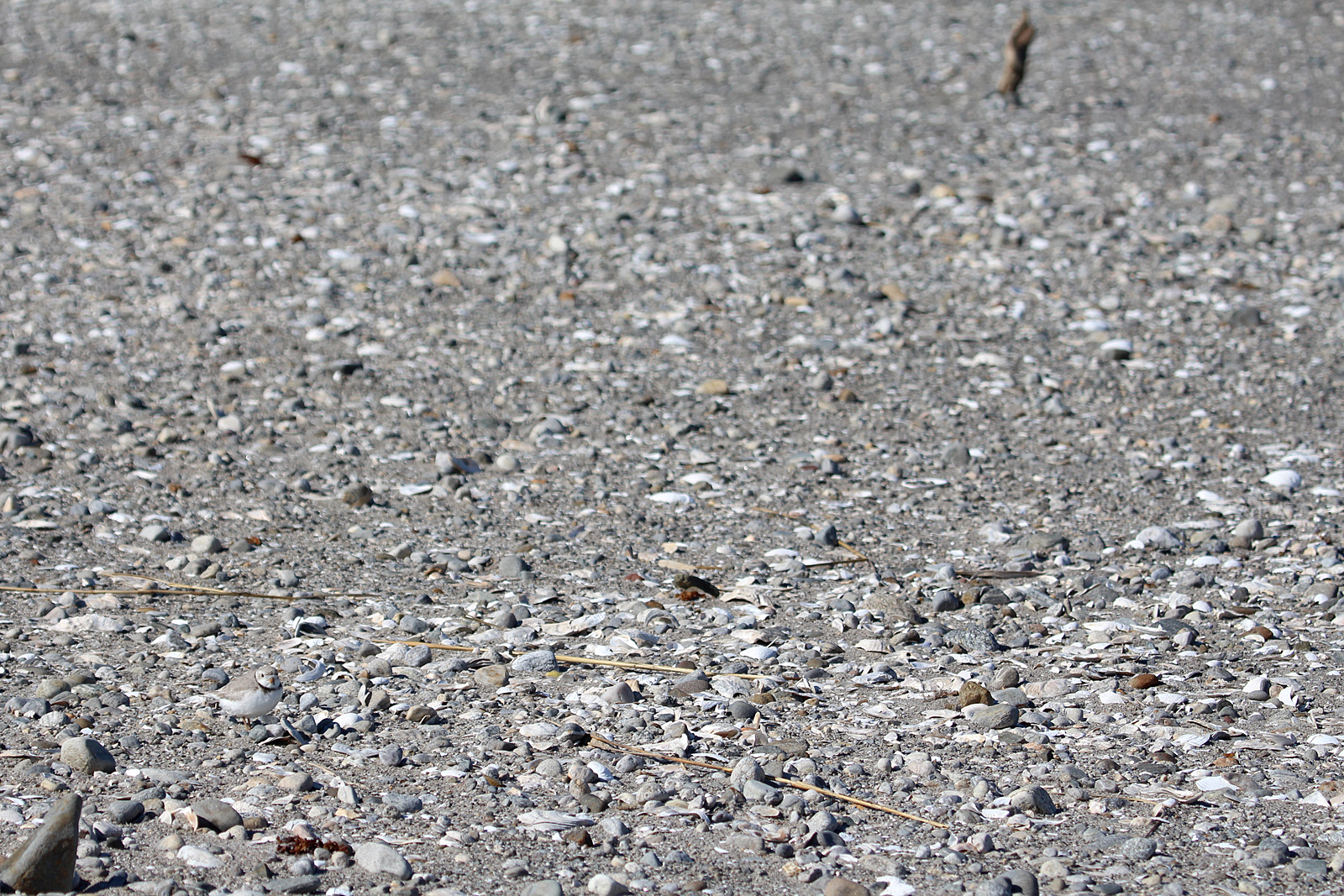
Did you find the Piping Plover in the photo I posted last week? Most people did, at least eventually, based on the poll results at the end of the post.

The answer is below. Click on “continue reading” to see the photo again with an arrow pointing to the bird.

For those who missed the photo, scroll down a few posts and see how long it takes you to find the Piping Plover. Then come back here for the answer. Thanks for checking out http://www.birdsofnewengland.com

Continue reading

Shorebird quiz time: Find the Piping Plover

Photo by Chris Bosak Piping Plover at Coastal Center at Milford Point, Conn., April 2014.

Photo by Chris Bosak
Piping Plover at Coastal Center at Milford Point, Conn., April 2014.

My latest For the Birds Column focuses on the Audubon Alliance for Coastal Waterbirds, or in other words, volunteering to monitor Piping Plovers, Least Terns, American Oystercatchers and other shorebirds. The program is important in order to help protect these threatened birds. (See the column here.)

To give you an idea of the challenges faced by volunteers in finding Piping Plovers, here’s a fun little quiz for everybody. When on the beach you really have to look for motion in order to find the birds most of the time as they blend in so terrifically with their beach surroundings. With that in mind … the task of the quiz is simple: find the Piping Plover in the above photo.

Let me know how you did. I’ll post the answer later this week for those who can’t find it.

Piping Plover monitoring update

Photo by Chris Bosak Piping Plover at Coastal Center at Milford Point, April, 2014.

Photo by Chris Bosak
Piping Plover at Coastal Center at Milford Point, April, 2014.

So I woke up the boys for school, got them breakfast and rushed them to the car for drop off. I turned into the school parking lot: empty. No school. Scheduled “staff development” day. If I had a nickel for every time I’ve done that. Damn.

Oh well. I’ve committed to monitoring Piping Plovers and other shorebirds and, later, Least Terns on a volunteer basis on Monday mornings through the spring and summer. “Boys, we’re going shorebird monitoring.”

They didn’t object and Will was actually excited and wanted to carry the camera with him. I filled them in on what we were looking for and, more importantly, why we were looking for them. Piping Plovers are a threatened species and protecting their nesting areas is critically important.

We saw about 10 Piping Plovers today (Monday, April 21, 2014), including a pair copulating. “That’s how they make babies,” I told Andrew and told him how to spell ‘copulation.’ He was the official note taker for the day.  Wonder if he’ll try to use that word in one of his fifth-grade essays. It’s OK as long as he uses it correctly and age appropriately, I guess.

We also saw eight American Oystercatchers, a pair of Osprey and countless shells, which entertained the boys as much as the birds.

All in all, a good, educational day with the boys. Thank goodness school was out.

Photo by Chris Bosak A Piping Plover preens at Milford Point in spring of 2014.

Photo by Chris Bosak
A Piping Plover preens at Milford Point in spring of 2014.