Bluebirds are back at Mather Meadows

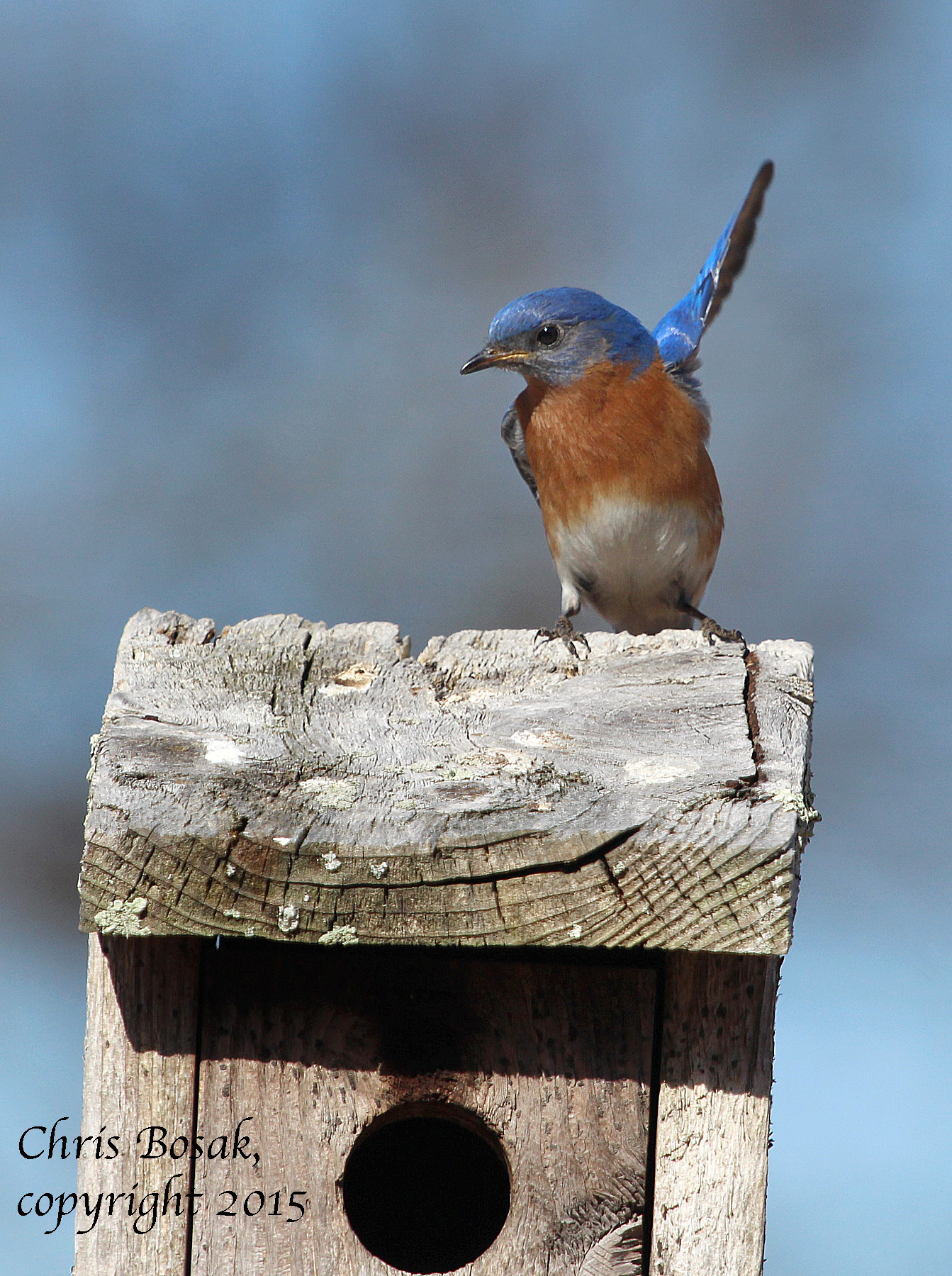
Photo by Chris Bosak An Eastern Bluebird stretches a wing as it rests on a birdhouse at Mather Meadows in Darien, Conn., April 2015.

Photo by Chris Bosak
An Eastern Bluebird stretches a wing as it rests on a birdhouse at Mather Meadows in Darien, Conn., April 2015.

Last spring I had a post on this site featuring a pair of Eastern Bluebirds at Mather Meadow, a property of the Darien Land Trust. This weekend I paid a visit to the property again and, sure enough, the bluebirds are back. I checked quickly and noted four blue eggs in the house. It’s so good to see them nesting there year after year. It wouldn’t have been possible without the hard work and determination of so many people at the Darien Land Trust. If the property (which is largely critical meadow property)  Continue reading

Bird Book Look: “Inside a Bald Eagle’s Nest”

Cover of "Inside A Bald Eagle's Nest"

Cover of “Inside A Bald Eagle’s Nest”

Here’s the first of many (hopefully) posts about bird books, or Bird Book Look, as I will call the posts. They will not be full reviews of the book, but rather quick posts with some information about the book and a few thoughts about the text and images. These bird book posts will be used mainly to let everyone know that the books are out there and give a general sense about it.

The first book to be featured here is “Inside A Bald Eagle’s Nest,” by Teena Ruark Gorrow and Craig A. Koppie, published by Schiffer Publishing. The nonfiction book is rich with pictures and accompanying text about a Bald Eagle pair raising young in a neighborhood outside Washington DC. It includes Continue reading

Did the Norwalk eagles have babies yet?

Hour photo/Chris Bosak Rick Potvin, manager of the Stewart B. McKinney NWR, holds a sign before it was posted on Chimon Island on Wednesday. The U.S. Fish & Wildlife officials were on the island to mark off areas to protect a bald eagle nest.

Hour photo/Chris Bosak
Rick Potvin, manager of the Stewart B. McKinney NWR, holds a sign before it was posted on Chimon Island on Wednesday. The U.S. Fish & Wildlife officials were on the island to mark off areas to protect a bald eagle nest.

The answer is a definite “probably.”

I wrote my latest For the Birds column in The Hour newspaper (Norwalk, Conn.) about the topic.

Here’s the start of the column:

Now for the answer to the burning question in the Norwalk birding world: Most likely.

The question, of course, is: Did the Bald Eagles have babies yet?

Again, the answer is “most likely.” Without climbing the tree or somehow hovering above the tree on Chimon Island where the nest is located, it’s hard to tell with all certainty. Since no one is going to climb the tree or otherwise hover above it, it’s basically a waiting game.

The eagles are still out there and one is sitting on the nest at all times. You could see that from Calf Pasture Beach with a spotting scope or good pair of binoculars. In talking with Norwalk’s Larry Flynn, the eagles have been sitting on the nest long enough that eggs would have been laid and hatched by now. Flynn is monitoring the birds for the state DEEP.

The vantage point from Calf Pasture and, indeed, even closer from Long Island Sound, is such that only the adult eagle’s head and maybe part of its body is visible. There is no way to tell what, if anything, it is sitting on.

If there are actually eaglets in the nest, it will be several weeks until they are large enough to be seen in the nest. So we play the waiting the game. Hopefully our patience will pay off and eventually we’ll all get to see fledgings flying about Long

Click here for the rest.

Warbler season has arrived in New England

Photo by Chris Bosak Palm Warbler

Photo by Chris Bosak
Palm Warbler

The title of this post is a bit misleading because warbler season actually arrived a few weeks ago. But there early warblers are still around and the next wave hasn’t arrived in force yet, so the topic is still timely.

Anyway, warblers (small and usually colorful Neotropical migrants) move through New England starting in late March/early April. The migration continues through early June. Many warbler species nest in New England, particularly Continue reading

Long-tailed Ducks in transition

Photo by Chris Bosak A pair of Long-tailed Ducks in transition plumage swims in Long Island Sound, April 2015.

Photo by Chris Bosak
A pair of Long-tailed Ducks in transition plumage swims in Long Island Sound, April 2015.

Here’s a shot of a pair of Long-tailed Ducks transitioning from their mostly white winter plumage to their mostly dark summer plumage. Some birds looks the same year-round and some birds look different in the summer and winter. Most ducks (but not all) go through a few different plumages as the year goes on.

These Long-tailed Ducks (formerly Oldsquaw) will be heading to their Arctic breeding grounds soon. When they are along coastal New England in the winter, we see their white plumage. It’s one of the few birds, in my opinion anyway, that look more decorated in the winter than in the summer. Take the Common Loon for instance. It sports its famous black-and-white spotted plumage in the summer, but changes to a much more drab grayish plumage in the winter.

We are lucky to have many Arctic nesters spend their winters in New England. It’s interesting to see their plumage transitions, giving us a glimpse of what they look like when they are “up north.”

An extra winter bird photo

Photo by Chris Bosak A male Northern Cardinal in Stamford, Conn., March 2015.

Photo by Chris Bosak
A male Northern Cardinal in Stamford, Conn., March 2015.

As spring takes over from this long winter, here is a photos I took this winter that never saw the light of day _ until now. Happy spring, everybody.


Brant, Brant and more Brant

Photo by Chris Bosak A large flock of Brant at Calf Pasture Beach, April 2015.

Photo by Chris Bosak
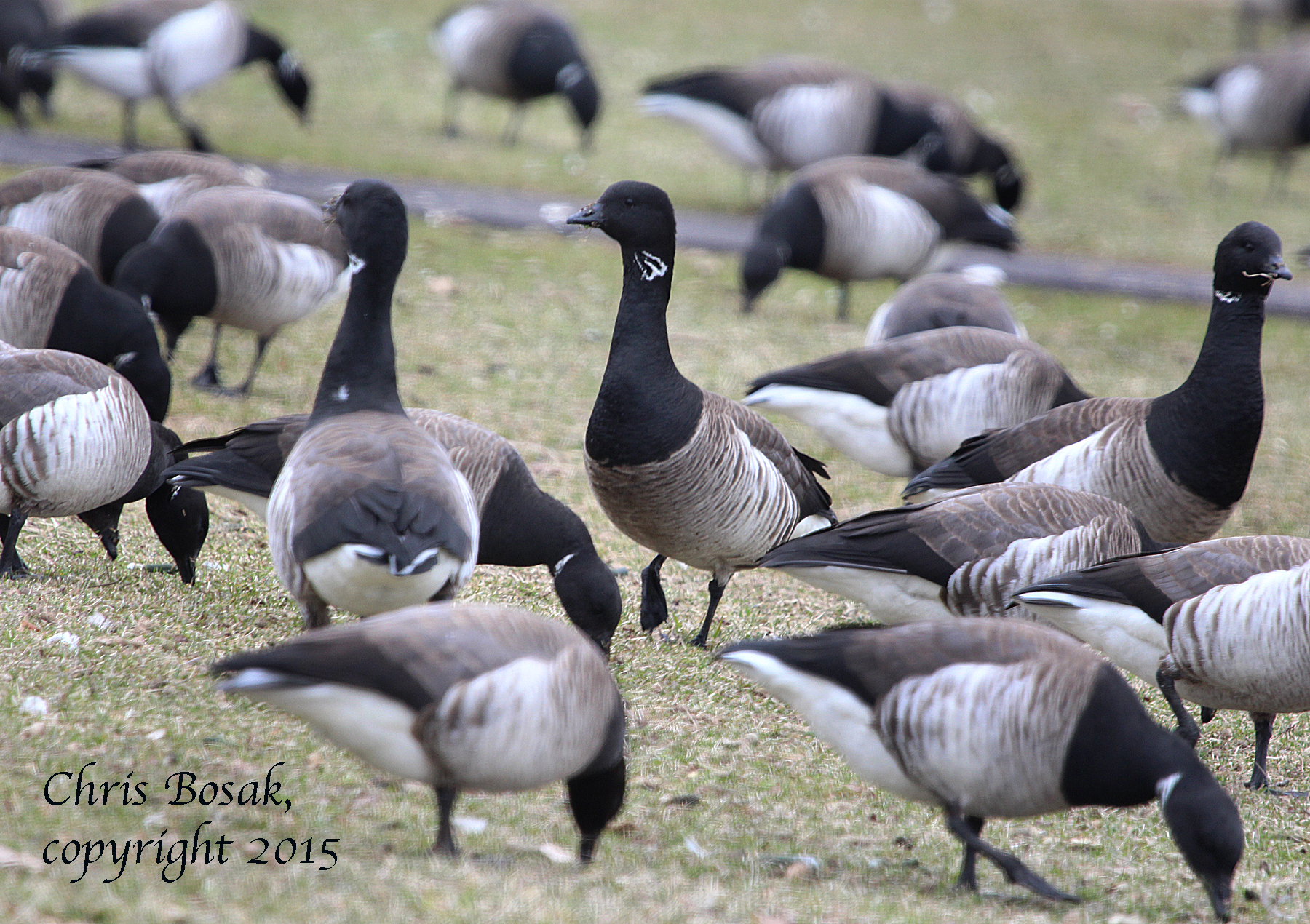
A large flock of Brant at Calf Pasture Beach, April 2015.

I love seeing Brant along Long Island Sound. It’s fascinating knowing a bird that is so close in the winter will be spending its summer in the Arctic. Of course, lots of birds we see in New England during the winter _ especially waterfowl _ nest far north of here, but few are as easily seen as Brant.

Brant, which look similar to Canada Geese but are smaller and have different markings, gather in massive flocks along parts of Long Island Sound from late fall to early spring. Many Brant are Continue reading

Ospreys at Calf Pasture are back

Photo by Chris Bosak An Osprey perches atop a light pole and is dwarfed by the huge lights at Calf Pasture Beach in Norwalk, Conn., in this April 20015 photo.

Photo by Chris Bosak
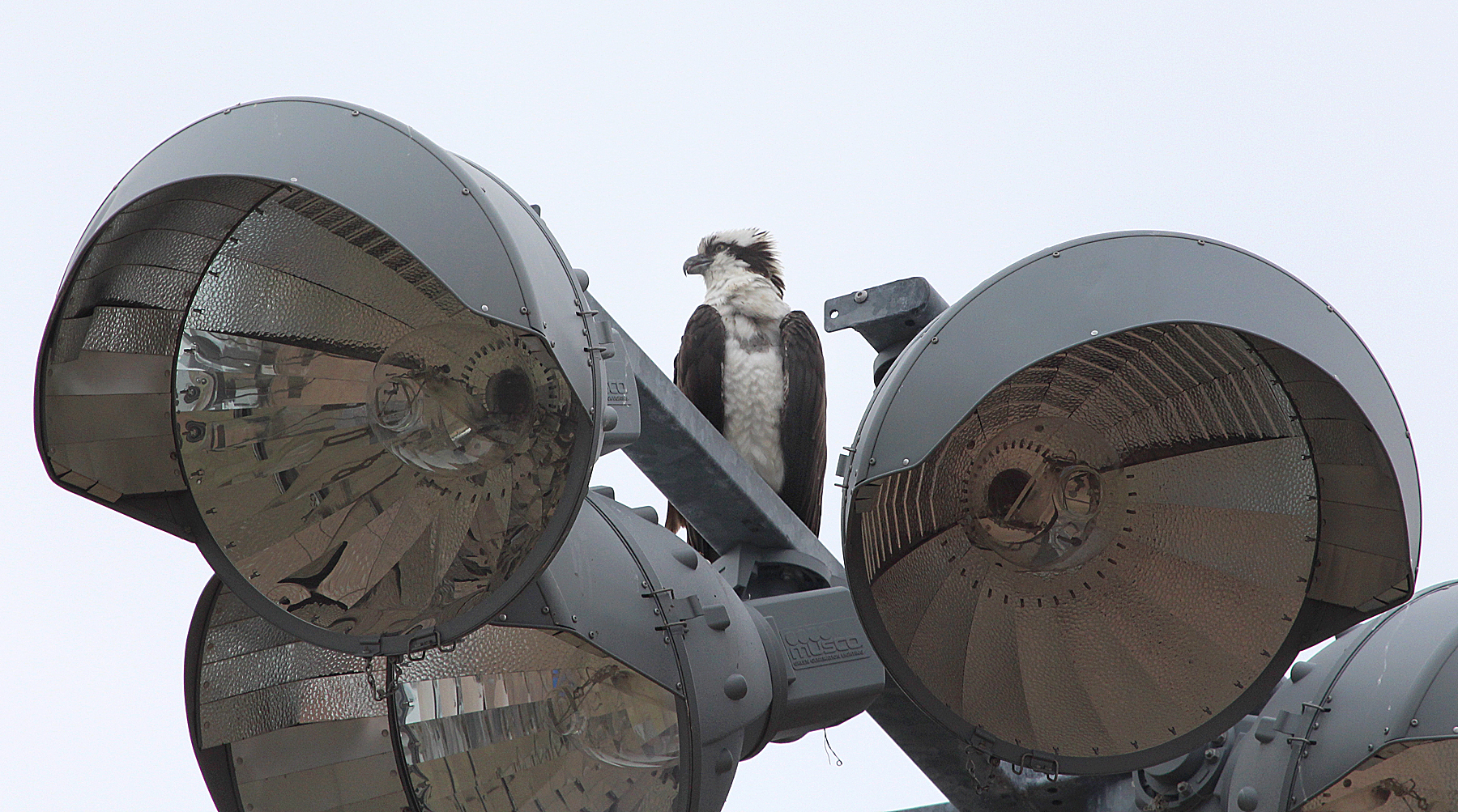
An Osprey perches atop a light pole and is dwarfed by the huge lights at Calf Pasture Beach in Norwalk, Conn., in this April 20015 photo.

The Osprey(s) at Calf Pasture Beach (Norwalk, Conn.) have returned. I saw one yesterday (Thursday) on top of a light pole next to the pole with the nest. The Ospreys have nested there for several years now and they are comfortable making their home above the bustling activity of the public beach.

I like how the bird _ a large bird of prey _ is dwarfed by the lights.

Connecticut Osprey and how you can help

Photo by Chris Bosak An Osprey soars over the Norwalk River on Monday, Sept. 1, 2014.

Photo by Chris Bosak
An Osprey soars over the Norwalk River on Monday, Sept. 1, 2014.

Here’s a recent column I wrote for The Hour newspaper in Norwalk, Conn. Most of the Osprey have returned to New England by now and Connecticut Audubon is once again holding its Osprey Nation program whereby citizens monitor the nests of “fish hawks.” There are now dozens of Osprey nests along Continue reading

Must be spring, the phoebes are back

Photo by Chris Bosak An Eastern Phoebe perches on a branch in Selleck's Woods in Darien, Conn., in late March 2015.

Photo by Chris Bosak
An Eastern Phoebe perches on a branch in Selleck’s Woods in Darien, Conn., in late March 2015.

A very quiet walk in a patch of woods the other day suddenly turned interesting when a lone Eastern Phoebe made an appearance. Overall, the phoebe is somewhat drab, but its habit of bobbing its tail constantly gives its identity away immediately.

I’ve always liked phoebes despite their nondescript appearance and quiet voice. Perhaps it’s because they migrate so early and offer some hope that winter is finally in the rearview mirror.

I’ve been seeing them almost daily now, so it’s nice to know spring is here. Phoebes, just like chickadees and several birds, are named after the song they sing.