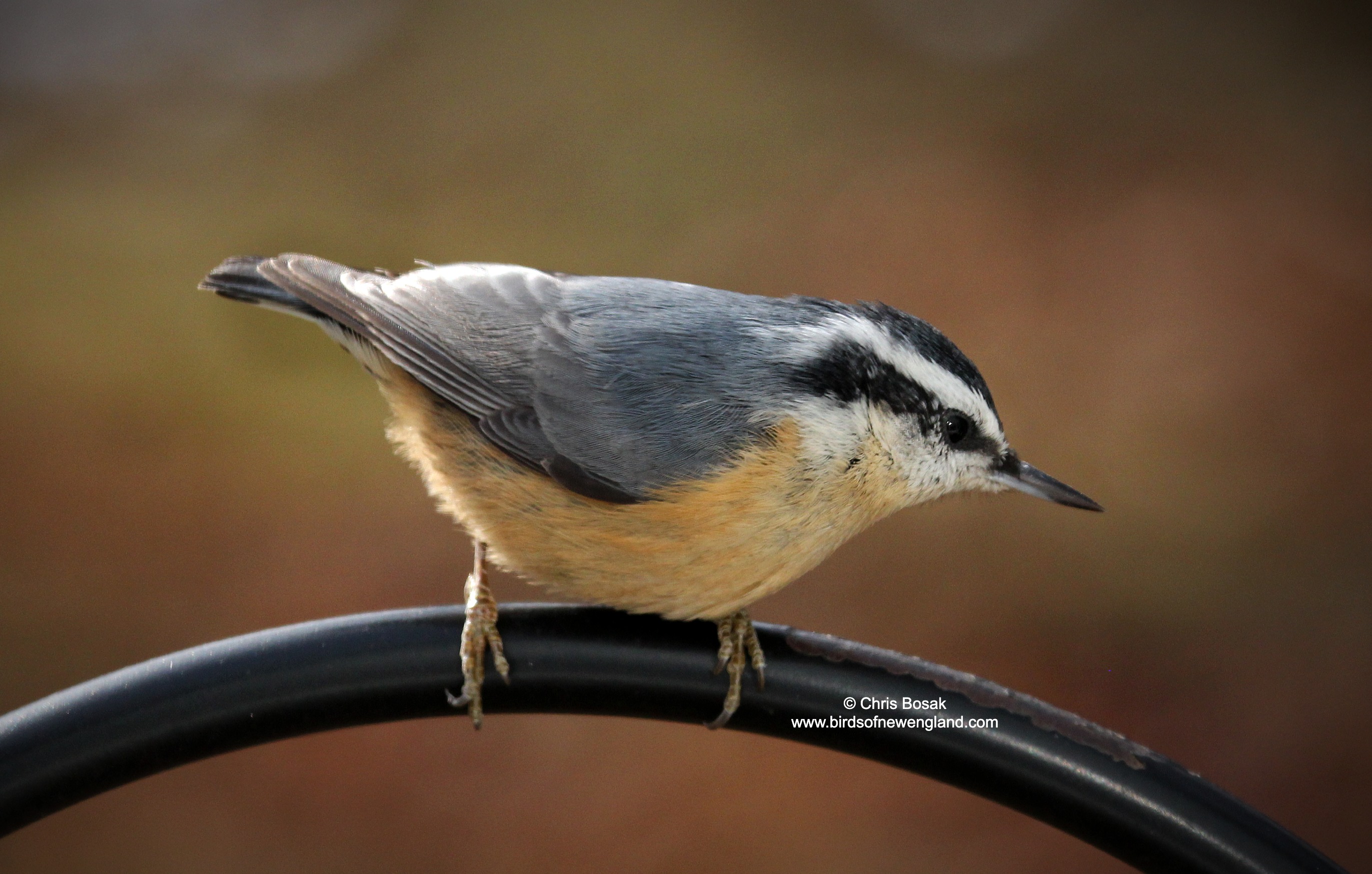
Photo by Chris Bosak – Red-breasted nuthatch in New England, December 2025.
I wrote about the winter finch forecast a few weeks ago. The annual forecast predicts which and how many finches will irrupt into New England from the north each winter. An irruption occurs when birds that are not typically seen in an area appear, sometimes in great numbers, during the winter.
Food, of course, is the main driver of these irruptions. If the seeds of a bird species’ diet are scarce up north, the birds will come south to find a food source.
Photo by Chris Bosak
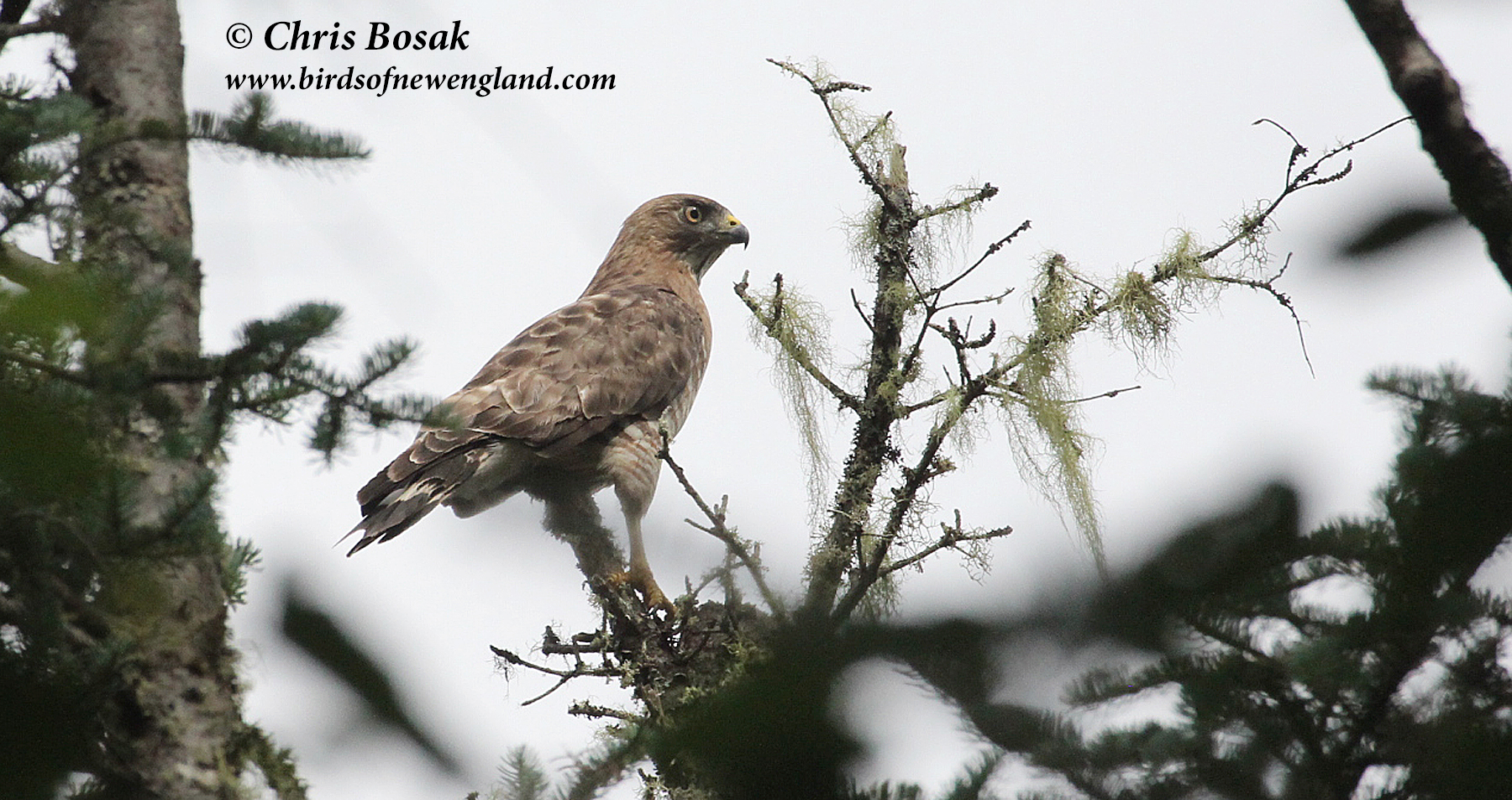
A broad-winged hawk perches in a tree in northern New Hampshire, July 2020.
The fall hawkwatching season is winding down. Raptor sightings at the various dedicated locations are slowing down, with only a handful of birds counted each day as November progresses.
It’s a good time, therefore, to check in to see how the various hawkwatching sites fared this year. New England has several popular sites, but Pack Monadnock at Miller State Park in Peterborough is New Hampshire’s most active and popular site. The hawk count is a project of the Harris Center for Conservation Education in Hancock.
Photo by Chris Bosak
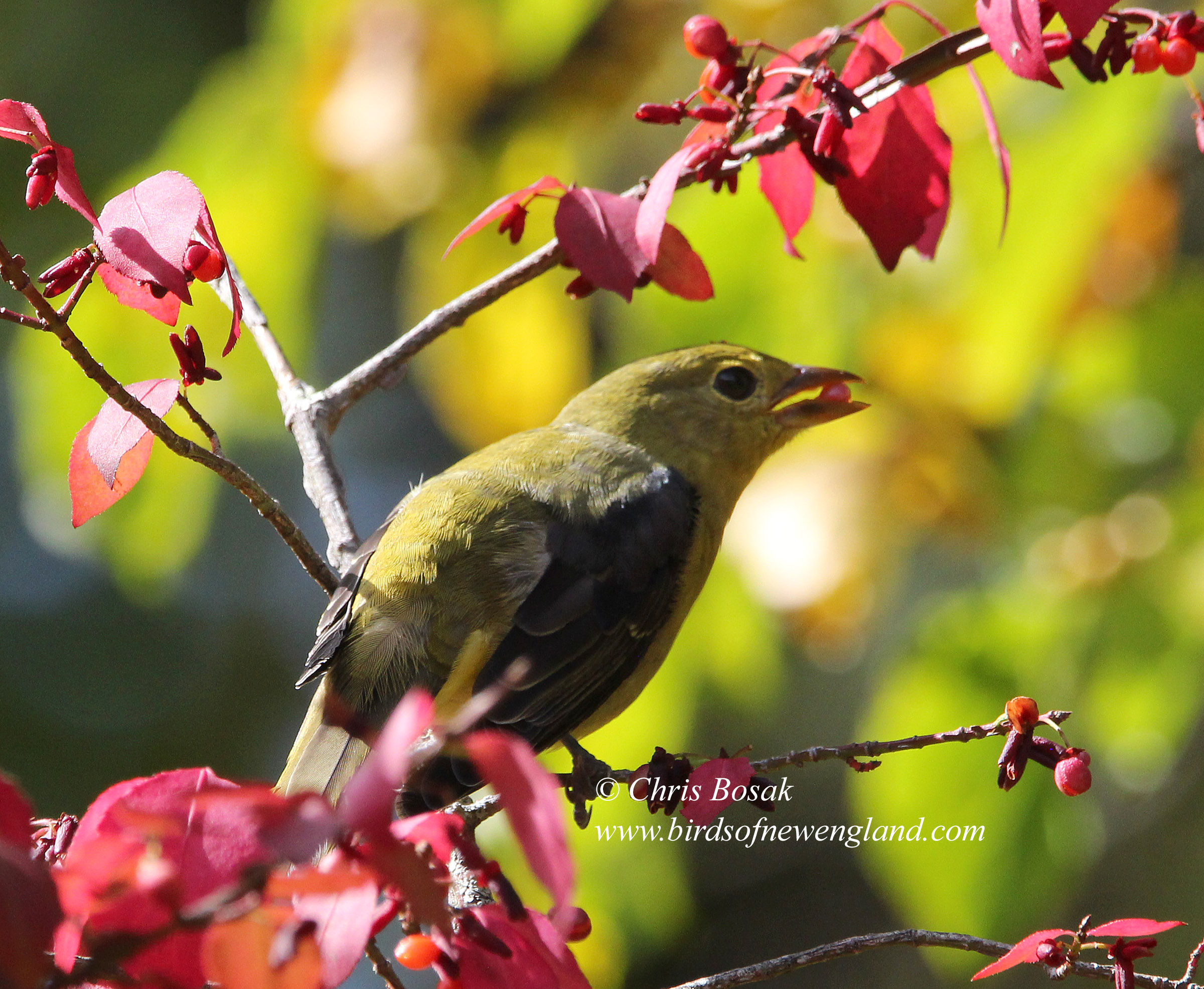
A male scarlet tanager in the fall.
It seems like just yesterday we were welcoming back the warblers and other songbirds during spring migration and here we are at fall migration already.
Many of the birds we saw in the spring heading north will look the same on their southward journey. Many others, however, will look different.
Some, like male scarlet tanagers, will bear little resemblance to what they looked like in the spring. When we saw them in May and June, they were the most brightly colored birds in the woods. A sighting always yielded a gasp of excitement as we wondered how a bird in New England could be so brilliant. After the breeding season, however, they molted and are now dull yellow with less shiny black wings. They are still awesome-looking birds but not the striking birds they were in the spring.
In addition to many adult birds molting, the fall migration includes first-year birds that haven’t attained familiar adult plumage yet. They often resemble females or a mix of male and female plumage.
Photo by Chris Bosak
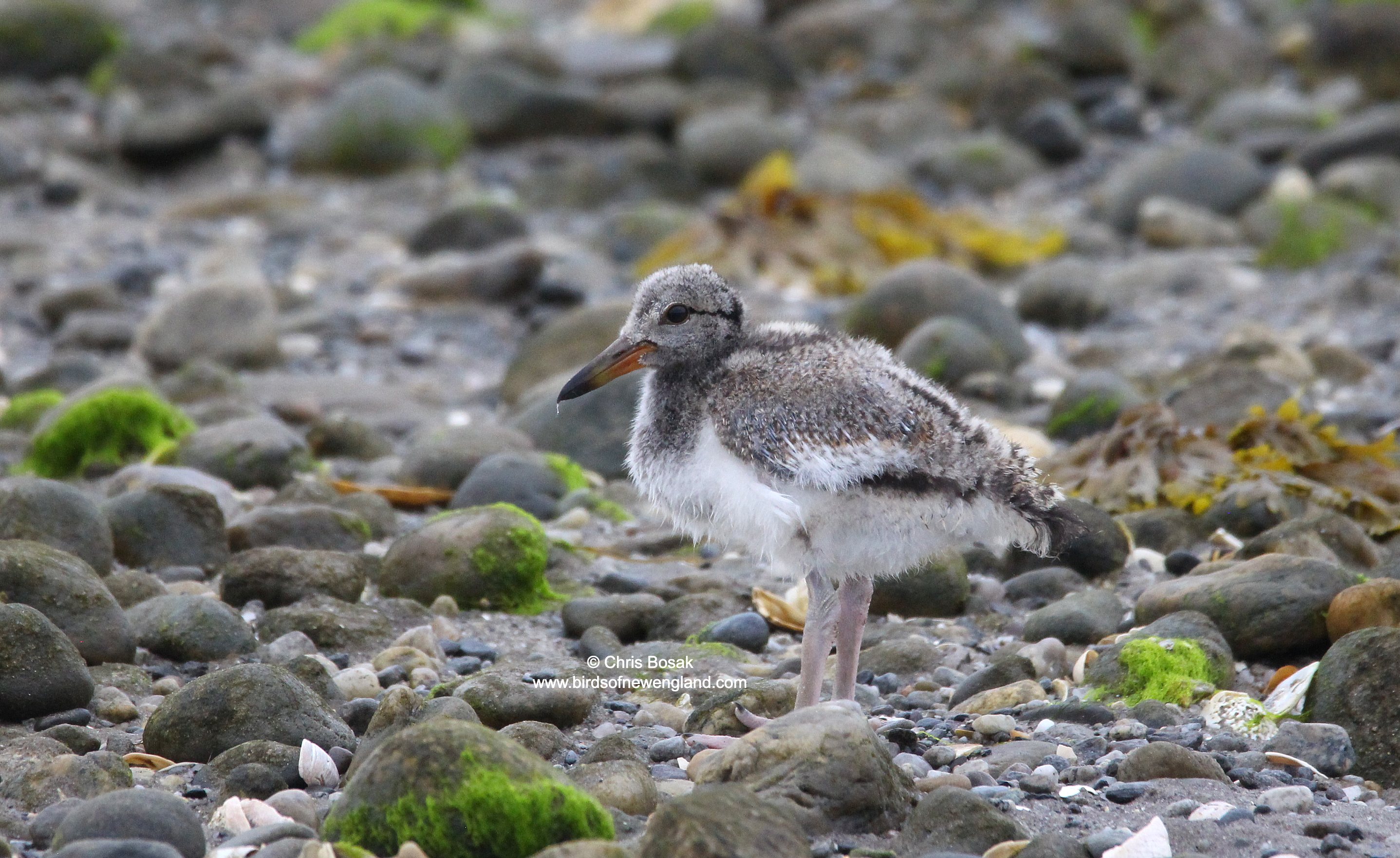
American oystercatcher chick, Milford, Connecticut, summer 2025.
The Cooper’s hawk I wrote about last week was a bit of an anomaly for me.
It’s not that I don’t see Cooper’s hawks often, but I typically see immature Cooper’s hawks. The one featured last week was an adult. Looking back through my photo collection, the vast majority of Cooper’s hawks I have photographed were immature birds.
With many birds, differentiating young birds from adults can be tricky as the time period between immature plumage and adult plumage is relatively short. With Cooper’s hawks, it’s easier as they retain their immature plumage into their second year. Bald eagles, similarly, do not obtain their classic white heads and tails until they are four or five years old.
As immature birds, Cooper’s hawks (as well as closely related sharp-shinned hawks) are brown with tan-streaked white chests and bellies. As adults, they are blue-gray with reddish-streaked white chests and bellies. Immature Cooper’s hawks have yellow eyes, and adults have red eyes. Interestingly, ospreys are the opposite with adults having yellow eyes and immatures having orange-red eyes.
Photo by Chris Bosak
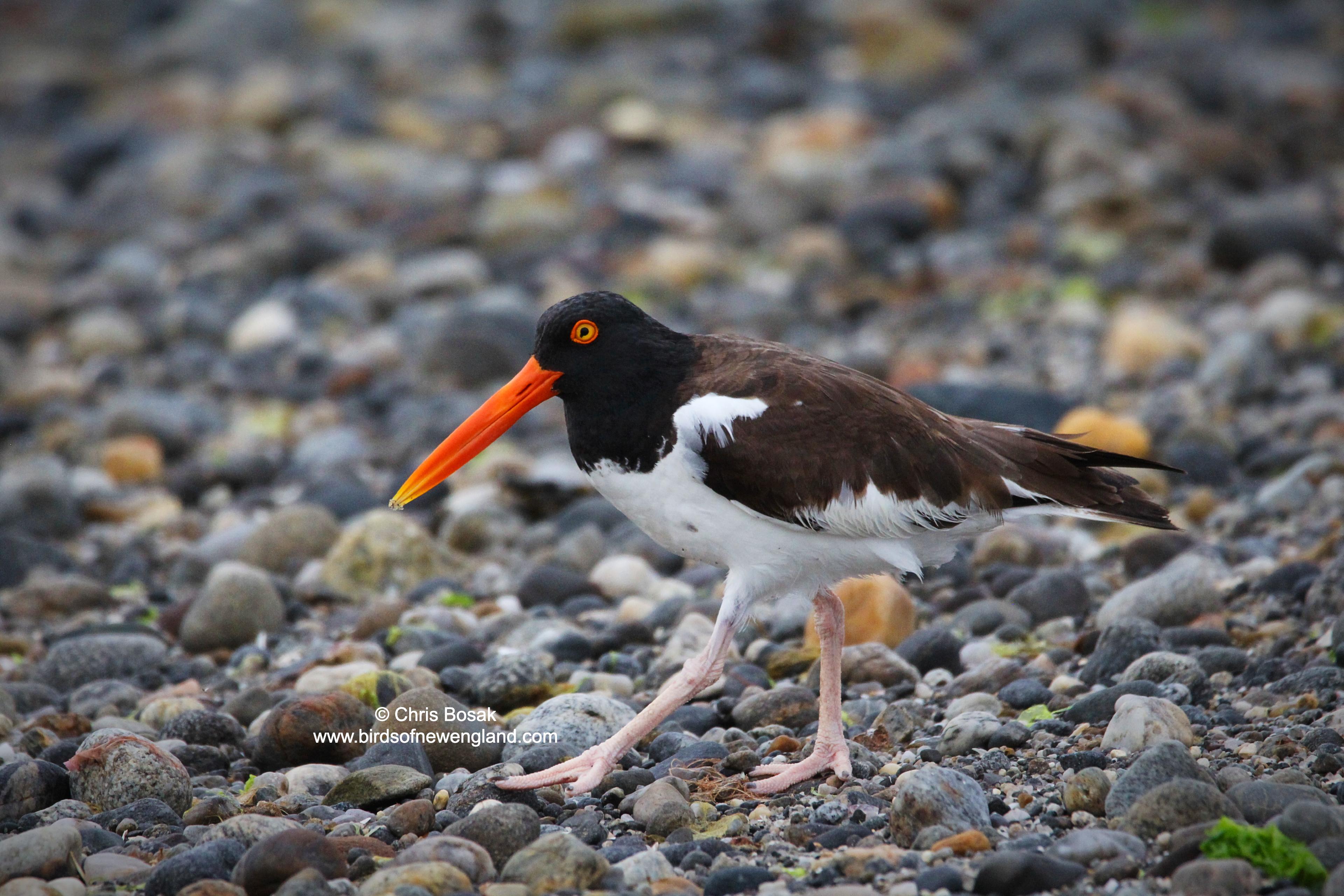
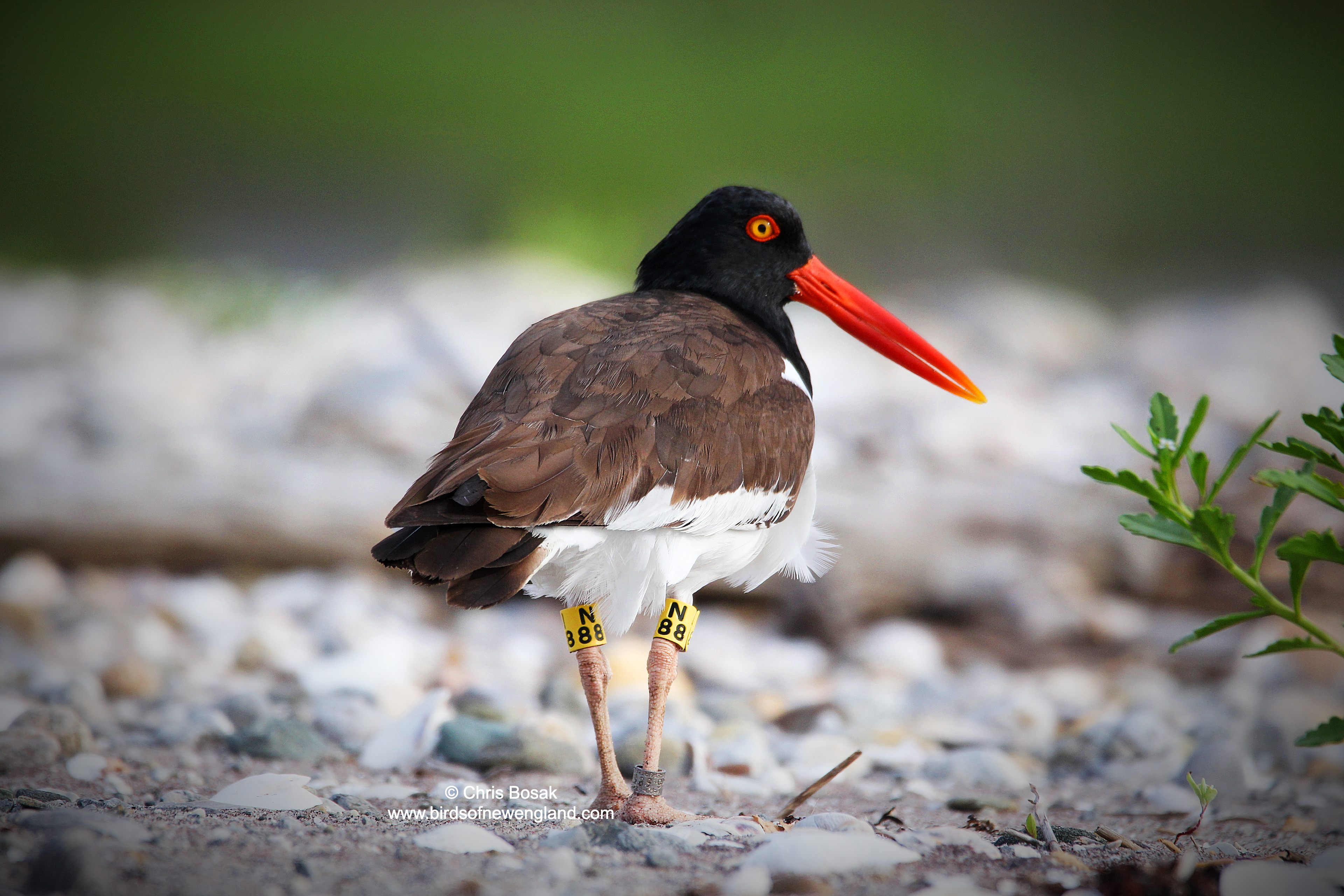
American oystercatcher, Milford, Connecticut, summer 2025.
They aren’t particularly rare, especially if you know where to look, but American oystercatchers are always a thrill to see. I saw these beauties during a short birdwalk at Connecticut Audubon Society Coastal Center at Milford Point the other day. One of the coolest looking birds in New England, if you ask me. Check out the youngster below.
Photo by Chris Bosak
American oystercatcher, Milford, Connecticut, summer 2025.Photo by Chris Bosak
American oystercatcher chick, Milford, Connecticut, summer 2025.
Photo by Chris Bosak
A pair of loons at Second Connecticut Lake in Pittsburg, NH, June 2025.
It had been several years since I had been to Pittsburg, NH, a place I used to visit three times a year or more back in the day.
My visits gradually became more infrequent as I got older, gained work and family responsibilities and grew less inclined to make the long drive. Besides, moose sightings had become increasingly rare up there, while they used to be a sure thing. Moose had always been the main attraction for me and many others who visit there.
Even so, the area has retained a special place in my heart, and I often long to be there. I just wish I could teleport there with my truck, canoe and camping equipment.
Photo by Chris Bosak
A Canada warbler in Pittsburg, NH, June 2025.
Here are a few warblers I saw on my trip up north. Previously, I had posted photos of loons and an eagle. Canada warblers and magnolia warblers are similar looking with their bright yellow chests and bellies streaked with black. There some obvious differences, such as the eyes. Canada warblers have an obvious eye ring, while magnolia warblers have a black mask with less obvious broken eye ring.
Photo by Chris Bosak
A magnolia warbler in Pittsburg, NH, June 2025.Photo by Chris Bosak
A Canada warbler in Pittsburg, NH, June 2025.
Photo by Chris Bosak
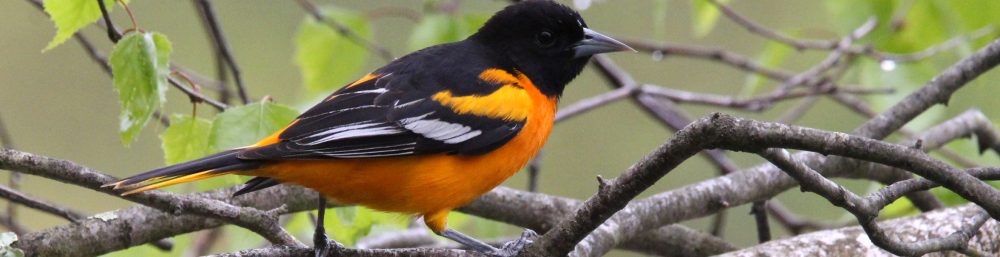
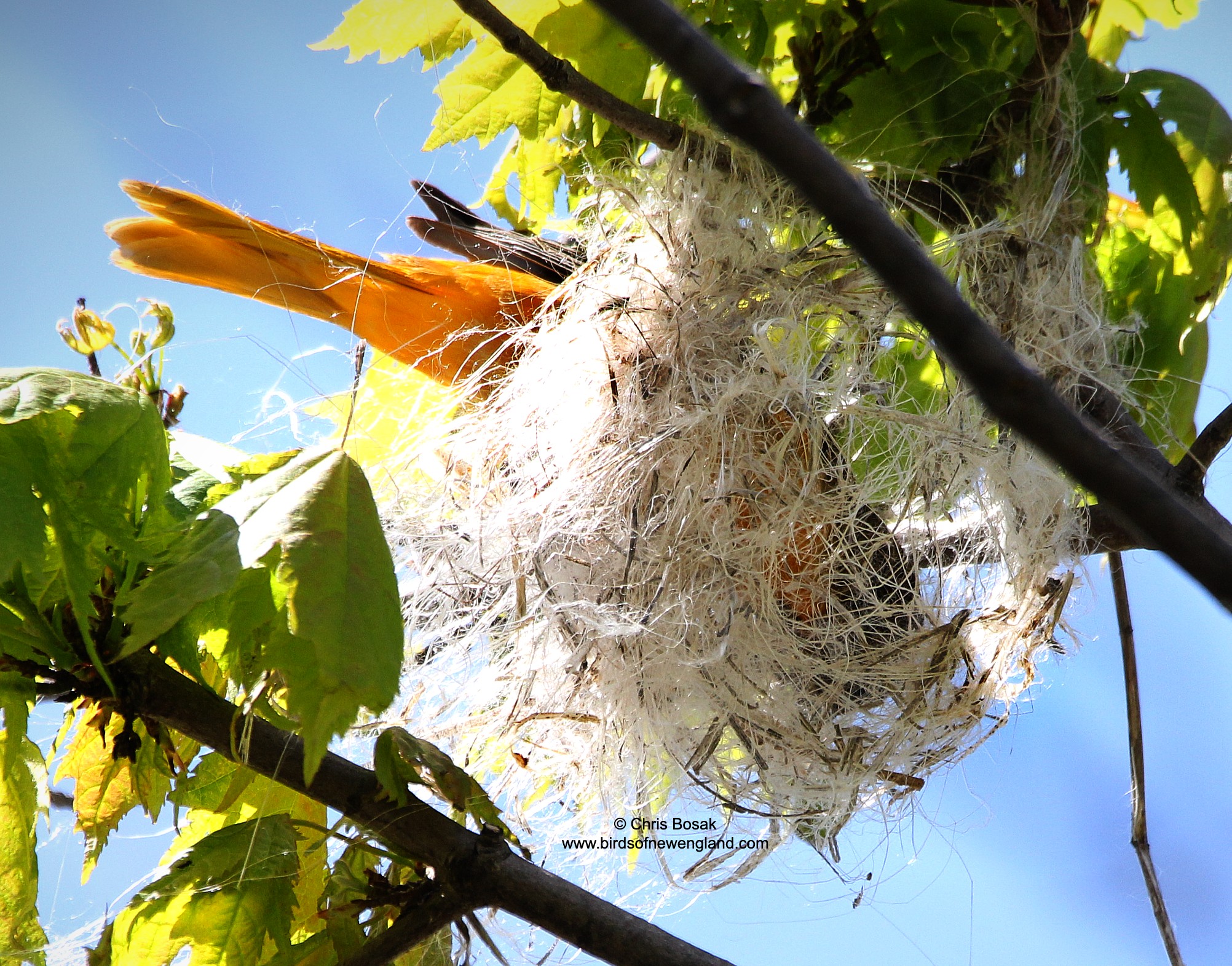
A Baltimore oriole builds a nest at Presque Isle State Park, Erie, Pa., May 2025.
Everything about a Baltimore oriole nest is ingenious. From the design and materials to the location selection, the nest is a perfect haven to raise young birds safely from predators (for the most part).
Fall is the best time to find oriole nests, after the leaves have fallen. Of course, by that time, the orioles are long gone, and the nest is a mere relic of the past breeding season, but it’s still interesting to see one of the pouch-like nests dangling from the end of a branch.
The other week, I was lucky enough to watch a female oriole build one of those remarkable nests. I was walking along a trail that was teeming with yellow warblers, catbirds, and Baltimore orioles when I glanced up and saw an oriole perched at the end of a branch overhead.
Photo by Chris Bosak
A cedar waxwing eats border privet berries in New England, February 2025.
Blue jays give and blue jays take away.
During a walk in the woods the other day, I heard a bunch of blue jays squawking up a storm. It was too loud and frantic to be simple alarm calls for a potential threat. This threat had to be real. The calls and squawks reached a fever pitch as more and more blue jays appeared onto the scene from all directions.
I knew it had to be a hawk or owl that had the jays all riled up. I just had to find it.
After a minute or two of peering into the thick hemlock branches, I noticed a large bird being harassed. The blue jays may have been smaller, but it was at least 15 to 1 in their favor. From my angle, the larger bird was still well hidden. I took a few steps to change my perspective, and my suspicions were confirmed that it was a barred owl.
Photo by Chris Bosak
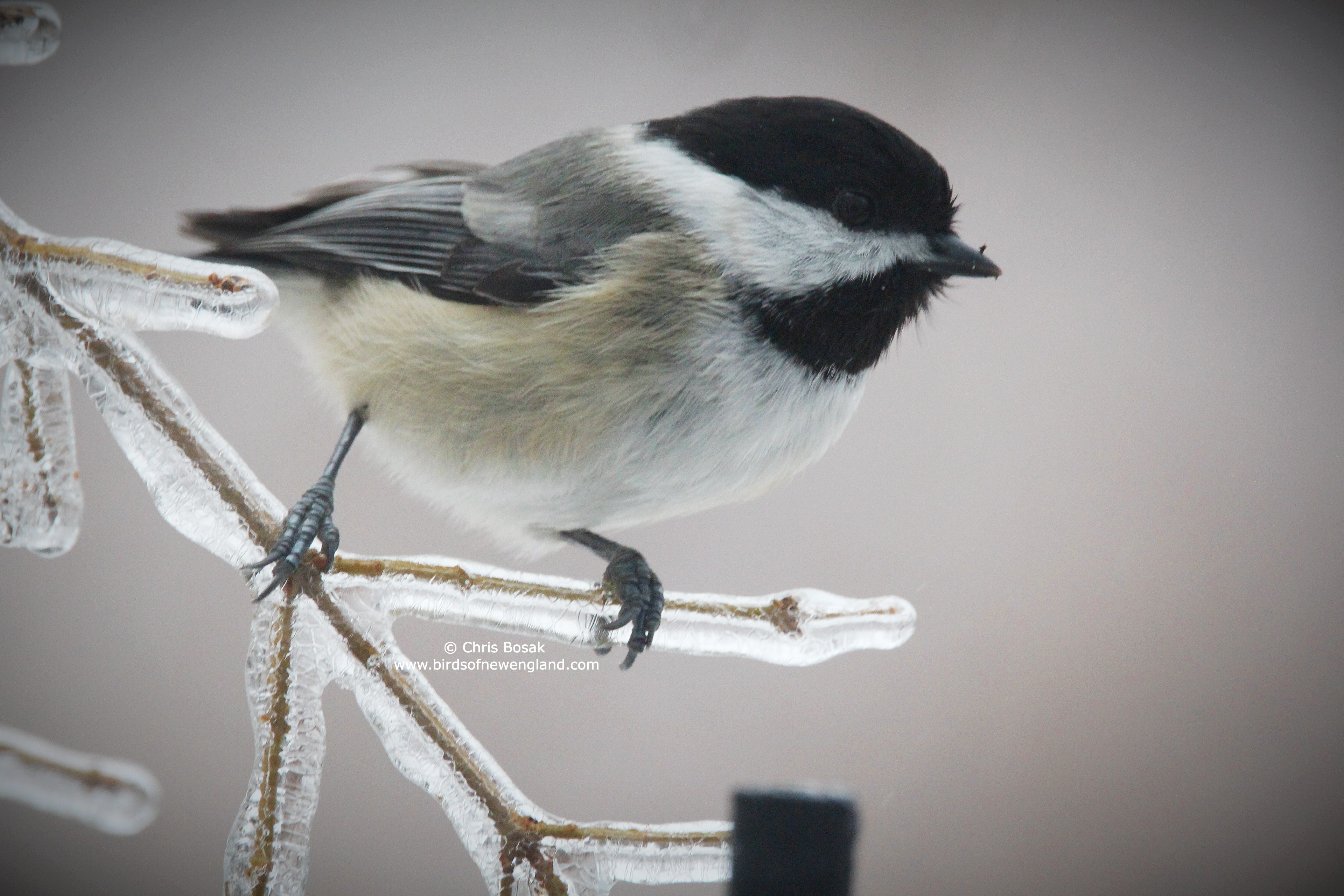
Black-capped chickadee perches on an icy branch, February 2025.
Every so often in New England, everything is covered in ice. I’m not talking about lakes and rivers freezing or icicles dangling from the edge of roofs. I’m talking about when literally everything outside is covered in ice. Every branch, every leaf, every pine needle, every blade of grass is sheathed in its own covering of ice.
It doesn’t happen often. Sometimes it’s once or twice a winter. Sometimes it’s once every couple of years. The conditions have to be just right.
The other week, the conditions were just right. A near-freezing rain fell hard in the evening, and, when the temperature dropped just a bit after the sun went down, it turned into freezing rain. By morning, everything was ice, including a slick covering on the remaining snow.



 Birds of New England.com