A “colorful” little warbler

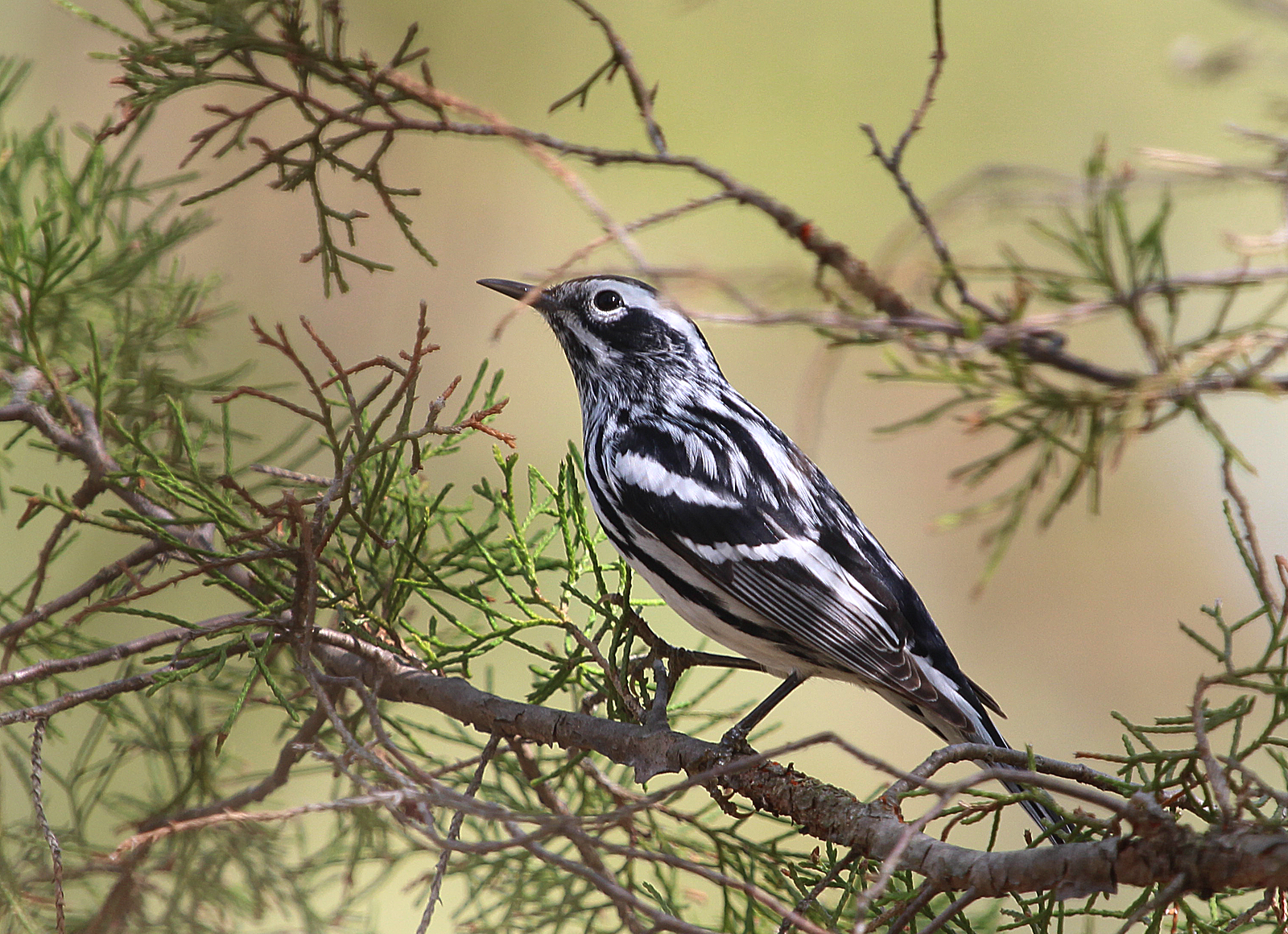
Photo by Chris Bosak A Black-and-White Warbler looks throughout an evergreen for food at Selleck's Woods in Darien, Conn., 2015.

Photo by Chris Bosak
A Black-and-White Warbler looks throughout an evergreen for food at Selleck’s Woods in Darien, Conn., 2015.

I saw plenty of warblers on my latest bird walk. Most of them were Yellow-rumped Warblers. I was hoping for more variety, but I’ll take a bunch of Yellow-rumped Warblers any day. There were also Prairie Warblers, Northern Parula, Magnolia Warbler and Chestnut-sided Warbler.

The second-most abundant warbler was the Black-and-White Warbler. True to its name, this warbler has no flashy colors to make it stand out among the leaves. Which is fine because this warbler is usually found on the trunks and lower branches of trees anyway. It’s one of the few warblers that does most of its hunting on the trunks of trees. It will often hunt low in trees, making it one of the easiest warblers to find on a bird walk. Many warblers hunt almost exclusively among the leafy tops of trees, making them very difficult to find.

It may lack the color of other warblers, but it’s still a striking little bird with its streaked plumage.

So what’s your warbler story? Feel free to comment or send me an email.
It’s that time of year again. Warblers abound.

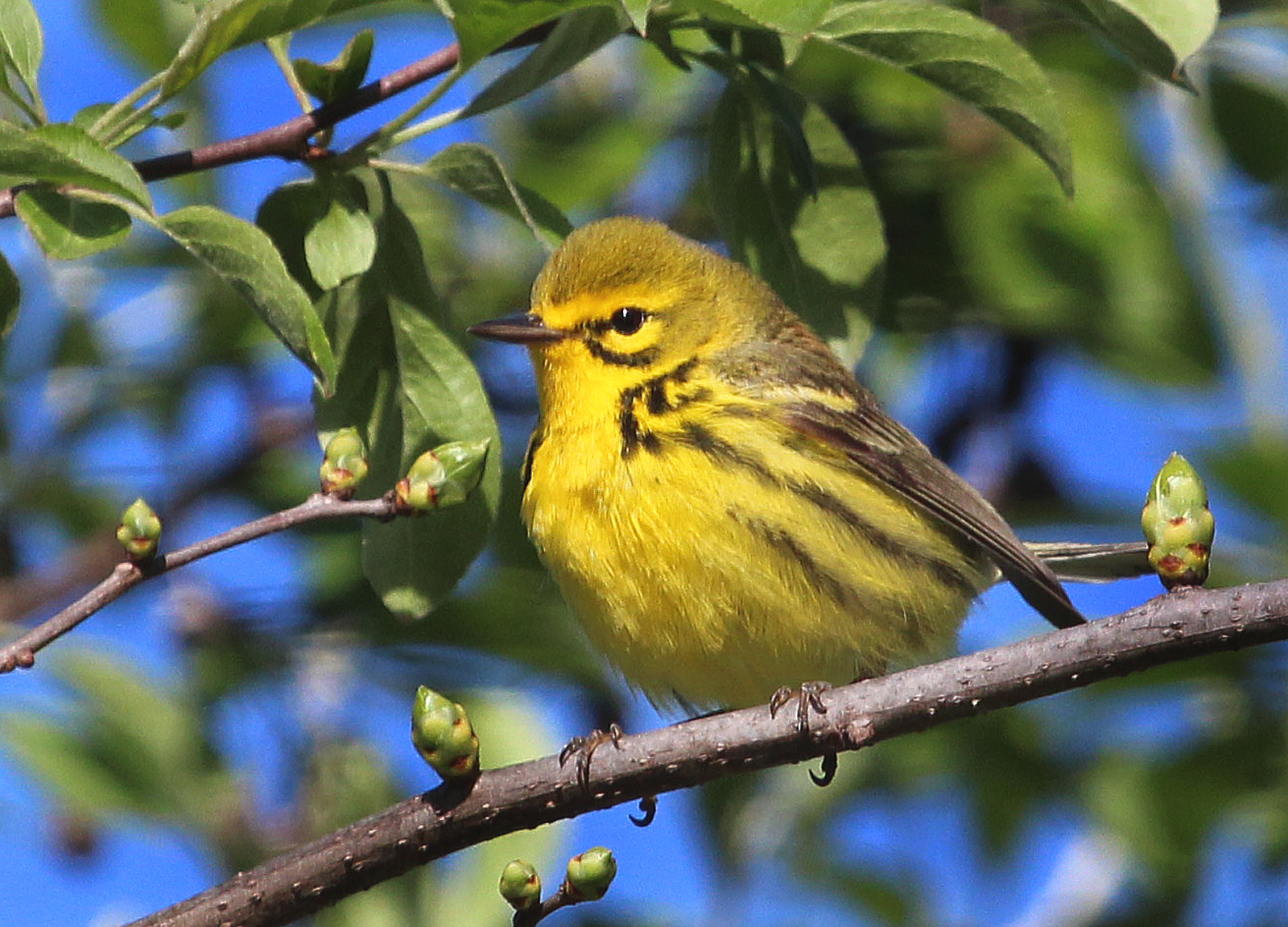
Photo by Chris Bosak A Prairie Warbler perches in a tree at Selleck's/Dunlap Woods on May 5, 2014.

Photo by Chris Bosak
A Prairie Warbler perches in a tree at Selleck’s/Dunlap Woods on May 5, 2014.

I took a quick walk before work this morning. As usual, I was running behind getting my third-grader to school, so I had only about 15 minutes for this walk. But it was enough to know that we are in what many birders consider the most exciting two weeks of the year. The warbler migration started with a trickle a few weeks ago in New England. Based on what I saw on my quick walk this morning, the warbler season is picking up fast. A Prairie Warbler was the first bird I saw — not a bad start to a walk. A few Yellow Warblers darted here and there, too. Yellow Warblers nest at Selleck’s Woods, so hopefully they are looking to set up shop for the summer.

The walk included a few other warbler species as well as the sounds of other colorful songbirds, such as Baltimore Orioles and Blue-gray Gnatcatchers. It’s a great time to be out there. Let me know what you are seeing.

Here’s a post from last year featuring some of the warblers you may see out there this time of year. Click here.

Warbler season has arrived in New England

Photo by Chris Bosak Palm Warbler

Photo by Chris Bosak
Palm Warbler

The title of this post is a bit misleading because warbler season actually arrived a few weeks ago. But there early warblers are still around and the next wave hasn’t arrived in force yet, so the topic is still timely.

Anyway, warblers (small and usually colorful Neotropical migrants) move through New England starting in late March/early April. The migration continues through early June. Many warbler species nest in New England, particularly Continue reading

Good day for Christmas Bird Count (lots of photos)


Photo by Chris Bosak Peregrine Falcon at Veterans Park in Norwalk, Conn., seen during the 115th Christmas Bird Count.

Photo by Chris Bosak
Peregrine Falcon at Veterans Park in Norwalk, Conn., seen during the 115th Christmas Bird Count.

The weather was actually quite nice (cold, but calm) and the birds were plentiful. A story about the Christmas Bird Count (Westport Circle) is posted on http://www.theour.com.

I personally had a good day, too, in terms of finding birds. Below are more photos from the interesting birds I found during the count. Yes, I realize the photos aren’t of great quality, but it was very overcast and the photos were taken mostly to prove what was seen. Some of the photos aren’t too bad, though. Anyway …

The highlight was the three warblers I saw at Oystershell Park in Norwalk. Even one warbler species is pretty rare for a New England Christmas Bird Count, but I had three at one location. The warblers were an Orange-crowned Warbler, Continue reading

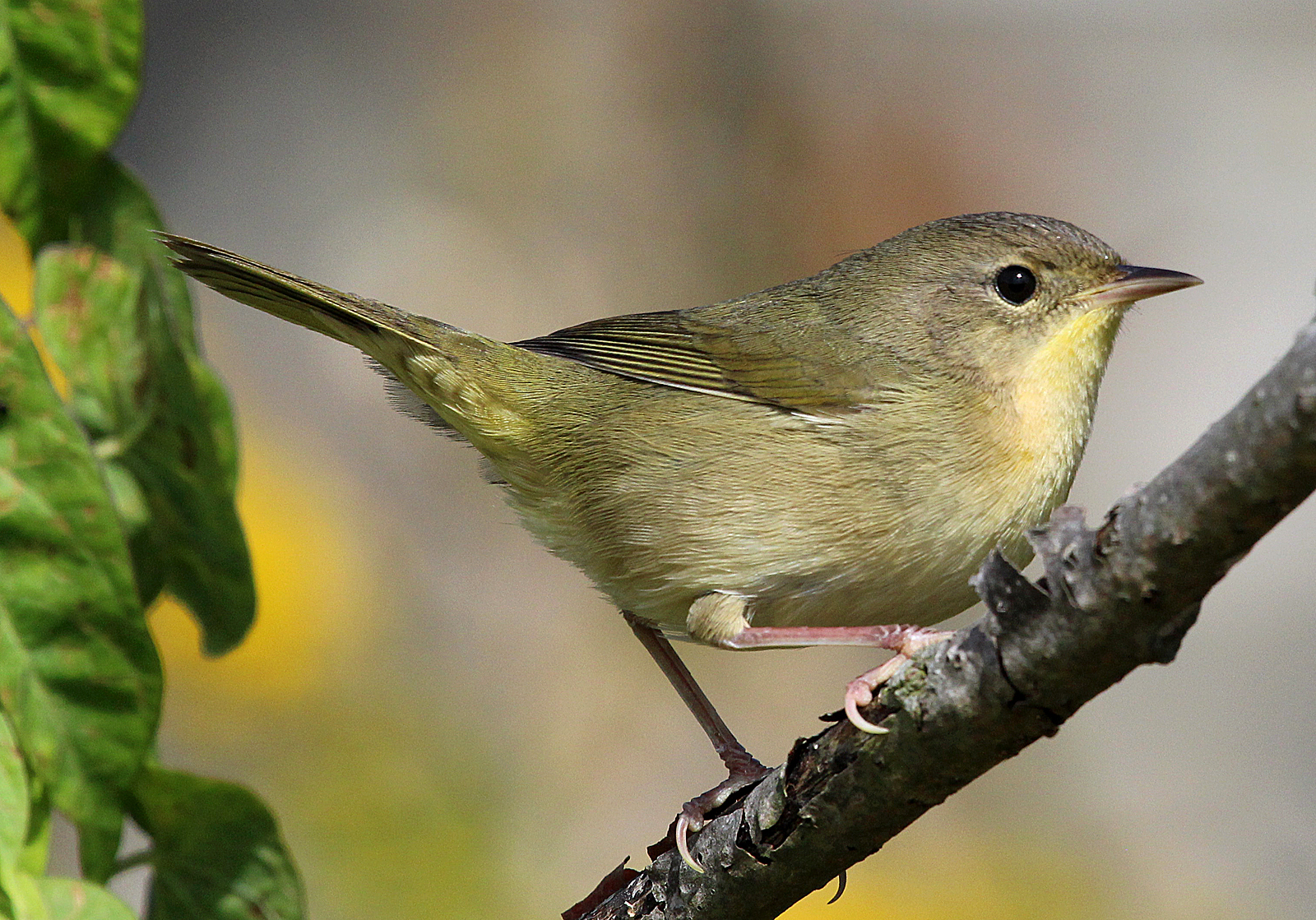
Female Common Yellowthroat

Here’s a female Common Yellowthroat, one of the many confusing fall warblers to watch out for as you hit your favorite birdwatching spots this fall.

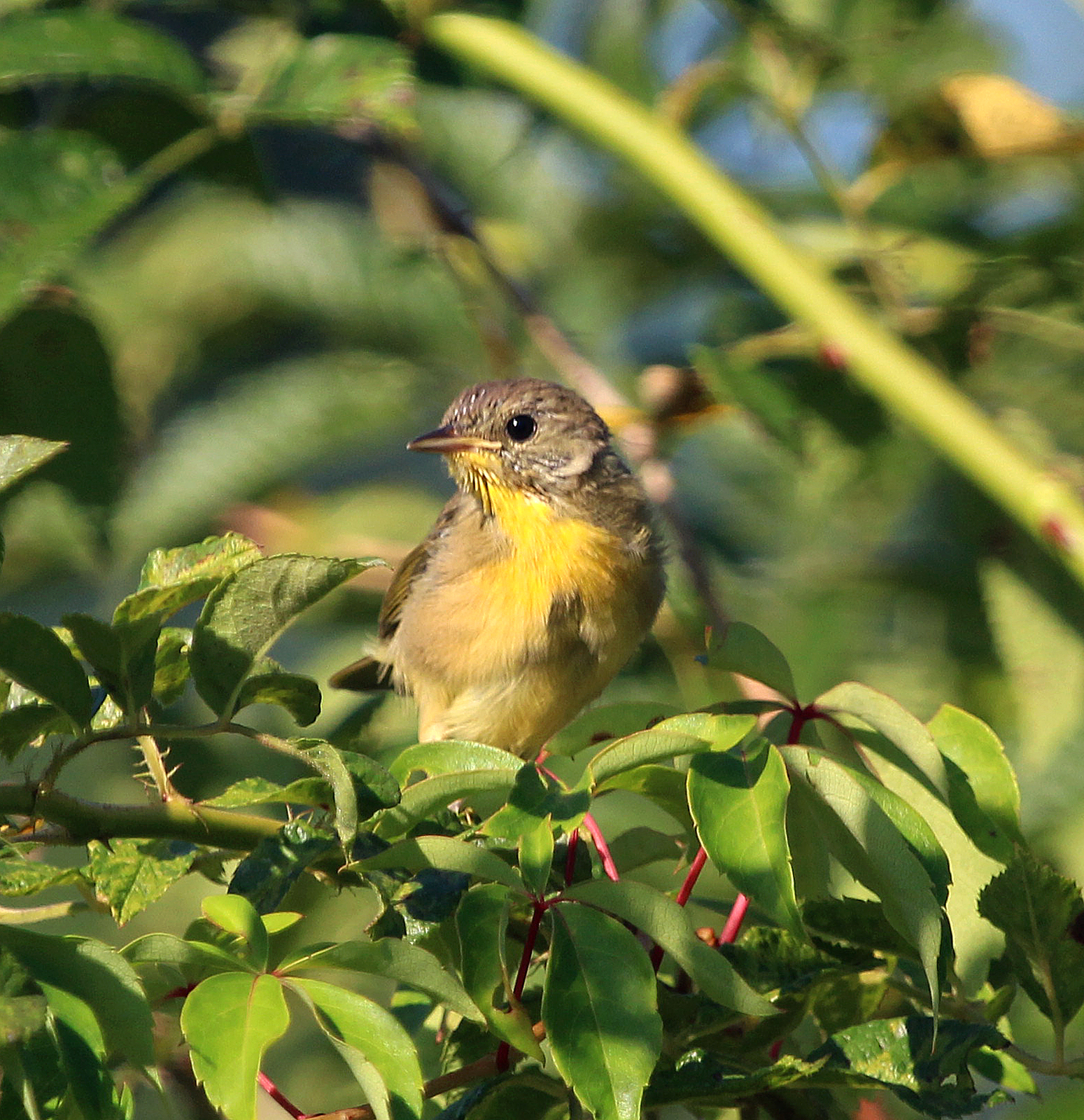
Photo by Chris Bosak Common Yellowthroat, first year, southern New England, Sept. 2013

Photo by Chris Bosak
Common Yellowthroat, first year, southern New England, Sept. 2013

Are birds in our future? State of the Birds 2014 Report

Photo by Chris Bosak A Piping Plover preens at Milford Point in spring of 2014.

Photo by Chris Bosak
A Piping Plover preens at Milford Point in spring of 2014.

The State of the Birds 2014 report was released this week. It is a comprehensive look at how our bird populations are faring and how they might fare in the future. It’s fascinating stuff and a must read for anyone interested in birds and conservation.

Here’s my column on it, with input from Connecticut Audubon officials. 

Visit www.stateofthebirds.org for the full report.

Tricky fall migration

Photo by Chris Bosak A female Common Yellowthroat perches in a tree in West Norwalk late this summer.

Photo by Chris Bosak
A female Common Yellowthroat perches in a tree in West Norwalk late this summer.

Here’s the latest For the Birds column, which runs weekly in The Hour (Norwalk, CT) and The Keene Sentinel (Keene, N.H.)

I’ve mentioned before that the fall migration, for the most part, is less ballyhooed by the birding community.

There are many reasons for this. The spring migration is so eagerly anticipated because it follows winter (usually a harsh one in New England) and birders are itching to see signs of rejuvenation in the natural world. The early flowers do a good job of heightening our spirits, but there’s nothing like the birds’ returning to really get us out of the winter doldrums.

The spring migration is also marked with a wide variety of colorful birds, most notably the warblers and other songbirds that pass through in April and May. The males are in their bright breeding plumage and singing their hearts out. The females are not as brightly colored and not as vocal, but are still a sight for sore eyes in the spring. The birds have a real sense of urgency in the spring migration, too. They need to get to their breeding grounds to get a good nesting spot and get down to th Continue reading

Warbler ID challenge

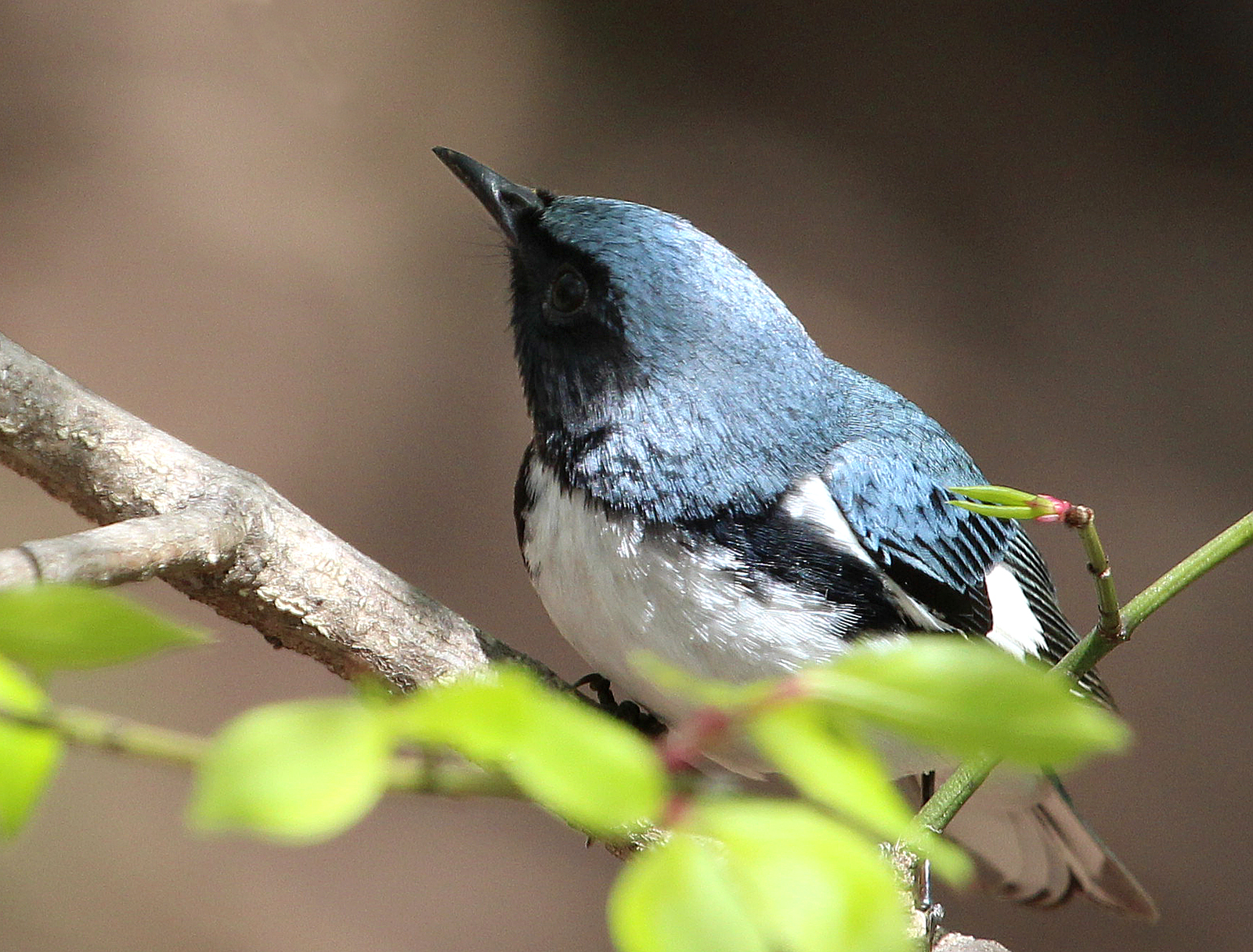
black-throated blue female

Wait a minute here. Aren’t warblers supposed to be colorful and obviously marked? Many are, but of course plenty are not. So, instead of just blurting out the answer, I’ll make this post a birding ID quiz.

So what do we have here? I’ll post the answer in a day or two.

Stumped? Drop me a line at bozclark@earthlink.net and I’ll give you a hint.

Today’s warbler photo

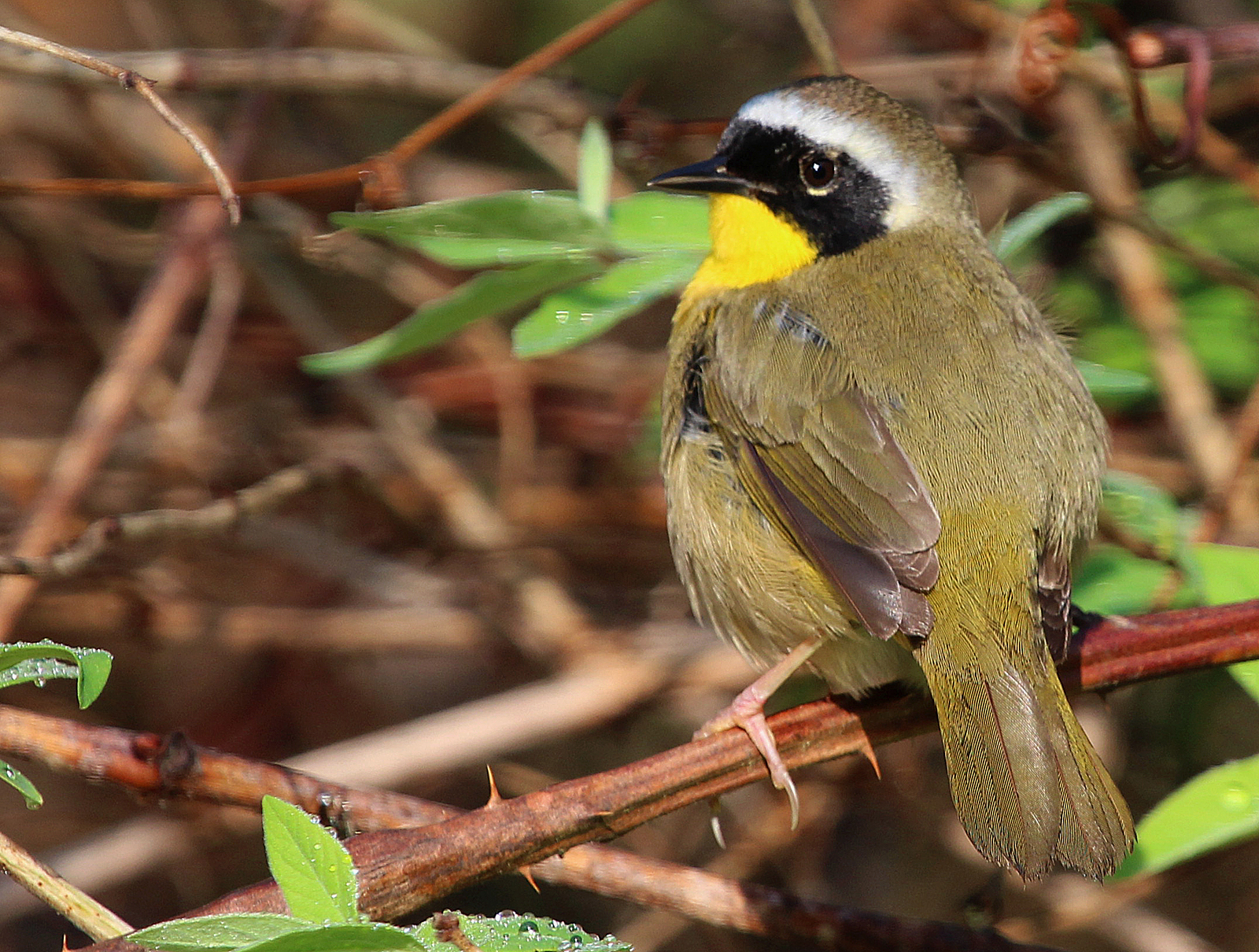
Photo by Chris Bosak A Common Yellowthroat perches on a branch at Selleck's/Dunlap Woods on Sunday, May 11, 2014.

Photo by Chris Bosak
A Common Yellowthroat perches on a branch at Selleck’s/Dunlap Woods on Sunday, May 11, 2014.

Here’s another warbler photo taken this weekend at Selleck’s/Dunlap Woods in Darien.

Last week I had a post with several warbler species included. The Common Yellowthroat was not included in that post, but I found a fairly cooperative one this weekend. Yellowthroats can be tricky to photograph because they are usually hidden among thick brush, often near wetlands.

On Saturday, I led a bird walk with a great group of people and we saw 10 warbler species, in addition to several other types of birds, such as vireos, egrets and thrushes. The warbler season in New England is still in full swing. Let me know what you’re seeing out there, send photos and sightings to bozclark@earthlink.net

Warbler season chugging along; lots of warbler photos

Photo by Chris Bosak A Black-throated Green Warbler perches in a tree at Selleck's/Dunlap Woods on Sunday, May 4, 2014.

Photo by Chris Bosak
A Black-throated Green Warbler perches in a tree at Selleck’s/Dunlap Woods on Sunday, May 4, 2014.

The New England spring warbler season is upon us in a big way and my favorite hang out, Selleck’s Dunlap Woods in Darien, Conn., is no exception. On Sunday, I counted 11 warbler species — with huge numbers of Black-and-white Warlbers and Black-throated Green Warblers — in addition to plenty of Baltimore Orioles, Gray Catbirds, and two vireo species.

Warblers are small, often colorful songbirds that winter in Central or South America and return to New England and points north each spring to breed. The spring warbler season is the highlight of the year for many birdwatchers.

It was a good day photographically, too, as I was able to get some decent shots for the first time of several species. So here, in no particular order, are a slew of spring migrant songbird photos — all taken either Sunday, May 4, or Monday, May 5.

I will be leading a walk from 7:30 to 9 a.m. on Saturday, May 10, at Selleck’s/Dunlap Woods. It is presented by the Darien Land Trust and open to all. Hope to see you there.

Lots more photos below. Click “continue reading.”

Photo by Chris Bosak A Black-throated Blue Warbler perches in a tree at Selleck's/Dunlap Woods on Sunday, May 4, 2014.

Photo by Chris Bosak
A Black-throated Blue Warbler perches in a tree at Selleck’s/Dunlap Woods on Sunday, May 4, 2014.

Continue reading