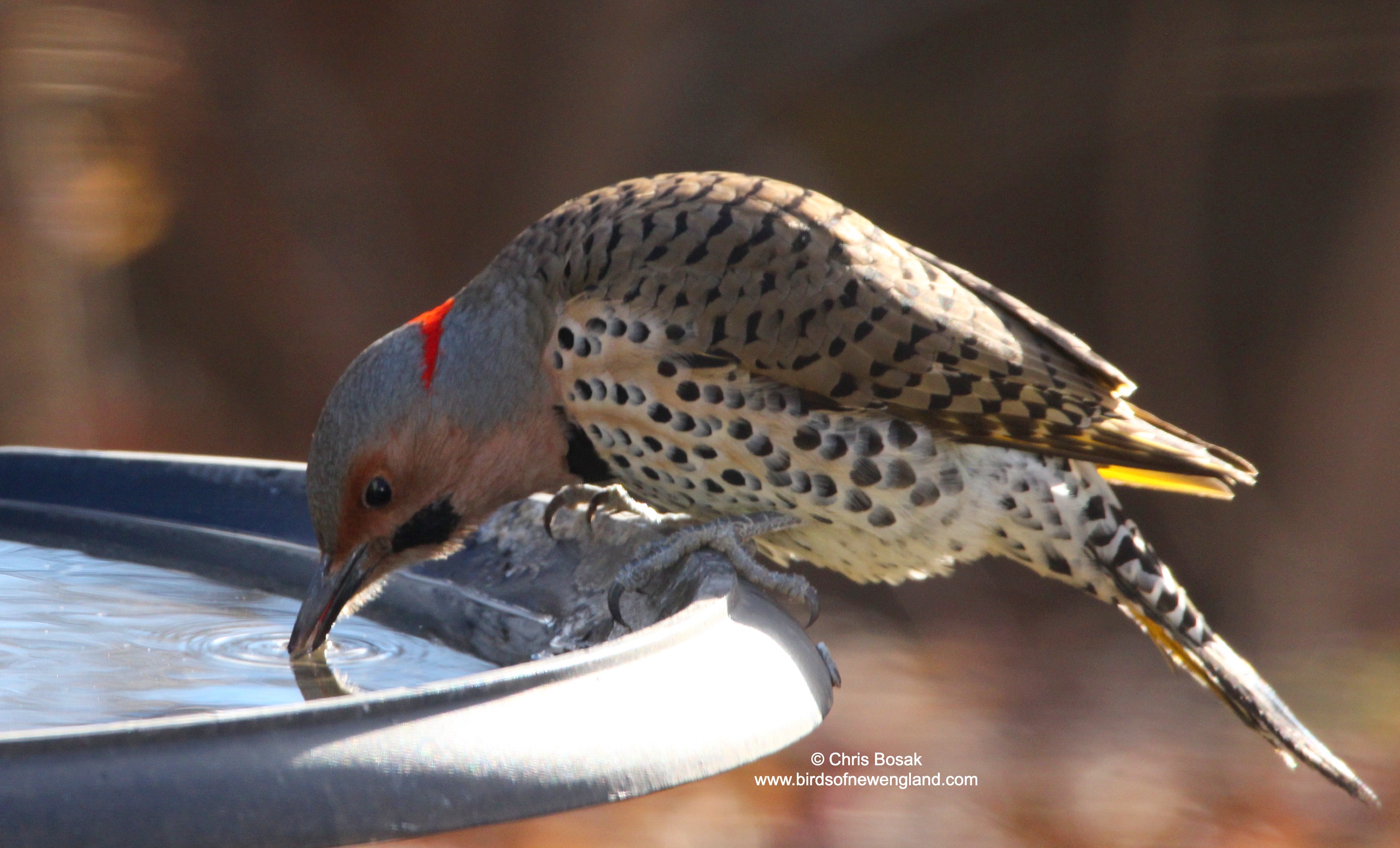
Photo by Chris Bosak A northern flicker drinks from a birdbath in New England, December 2025.
Last week, I wrote about the evening grosbeak and the various sightings that have occurred throughout New England.
This week, I want to turn the attention to some of the other sightings and questions that have reached my inbox recently. I appreciate hearing from others and what they are seeing at their feeders and in the wild.
Mike Quinn of Ticonderoga, N.Y. had these evening grosbeaks visit recently (December 2025.)
There is a thing in birding called a “spark bird.”
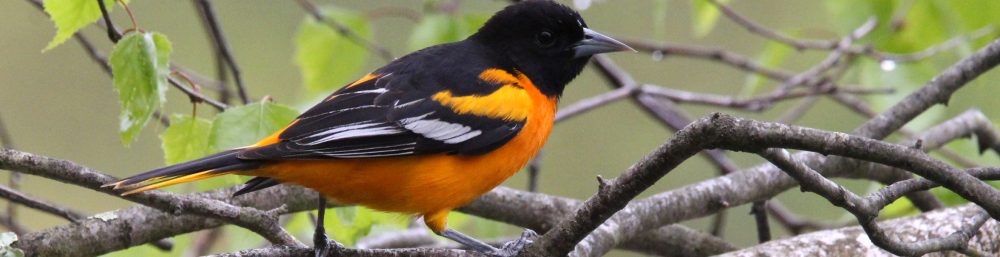
It is not a species of bird like a bluebird, mockingbird or blackbird, but rather the type of bird that piqued (or sparked) someone’s interest in birding and got them hooked. For many people, it is something big or colorful, like a loon or eagle or Baltimore oriole or great blue heron.
Because I have to be different, my spark bird is actually a moose. Yes, I know a moose is not a bird, but my quest to see a moose in the Vermont woods led me to my love of birdwatching.
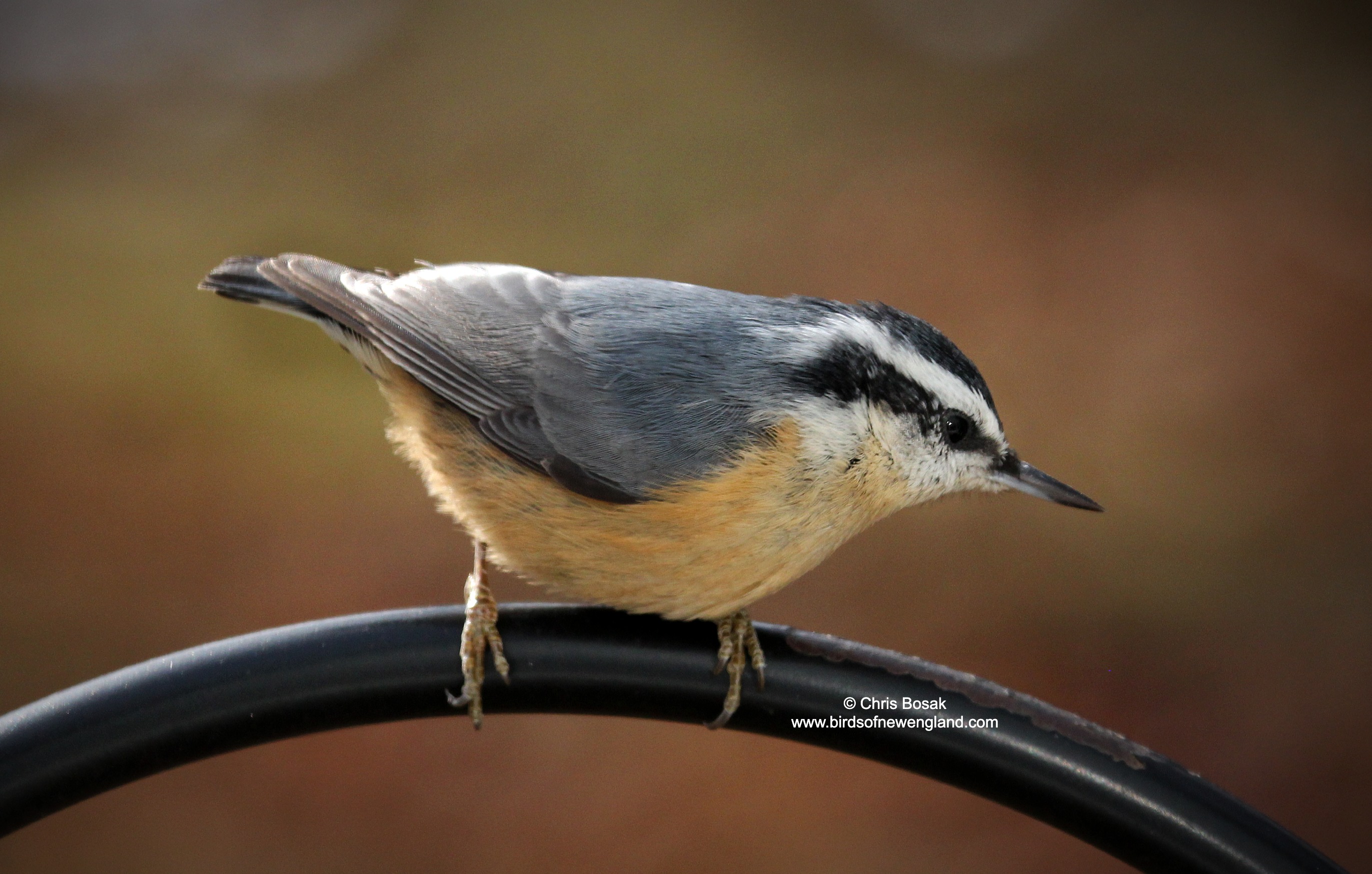
Photo by Chris Bosak – Red-breasted nuthatch in New England, December 2025.
I wrote about the winter finch forecast a few weeks ago. The annual forecast predicts which and how many finches will irrupt into New England from the north each winter. An irruption occurs when birds that are not typically seen in an area appear, sometimes in great numbers, during the winter.
Food, of course, is the main driver of these irruptions. If the seeds of a bird species’ diet are scarce up north, the birds will come south to find a food source.
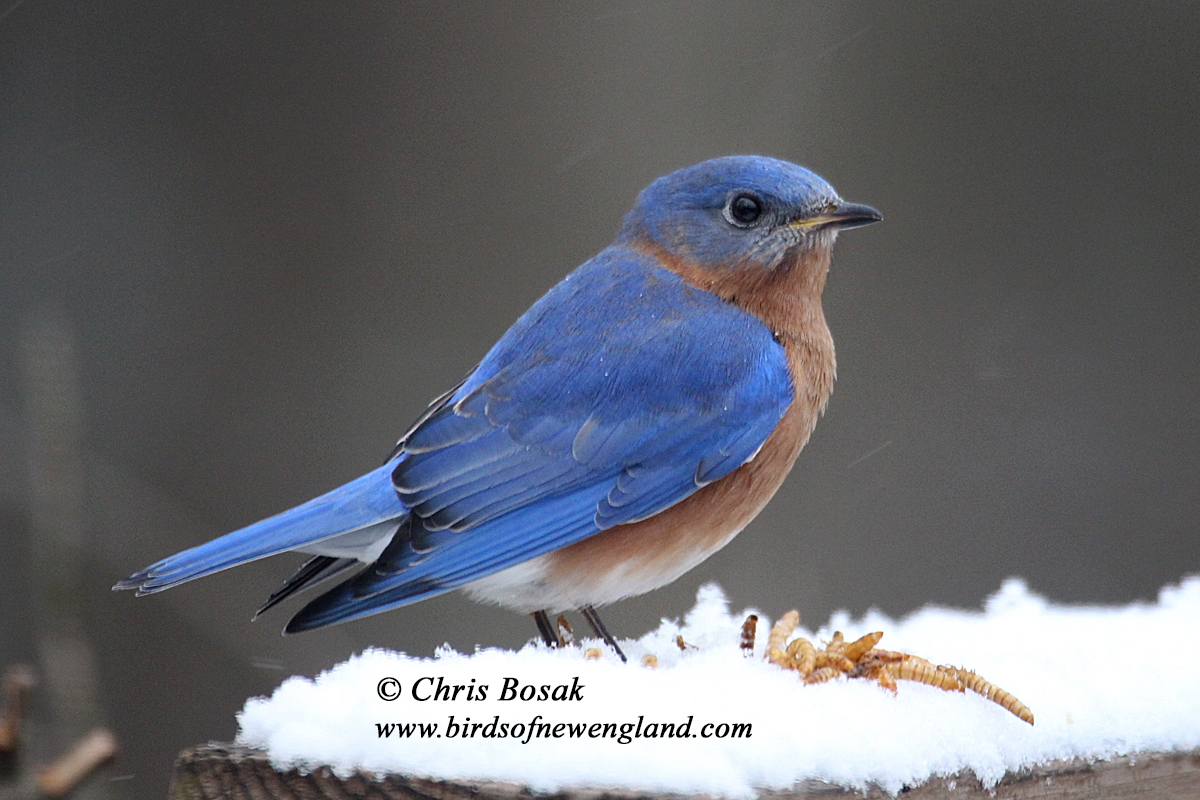
Photo by Chris Bosak An eastern bluebird braves a New England winter and visit a backyard for mealworms, winter 2020.
The calendar may not show it yet, but in the New England bird world, we’ve officially entered what could be called winter birding season. The vast majority of southbound migrants have left, and the birds we get to enjoy for the next couple of months are either trusty year-round residents or northern visitors who have traveled as far south as they intend to go.
Winter is, of course, the prime time when juncos and white-throated sparrows are found in high numbers. My personal favorite part of winter birdwatching is tracking down different species of ducks. That is, if you can find some open water.
Photo by Chris Bosak A pine siskin perches on a log in New England, November 2020.
I never did post this photo of a siskin that visited a few weeks ago. It showed up on the same day that the purple finch did. The finch stayed for only about an hour, while this siskin remained for a few days before disappearing. Here’s the story regarding those visits.
Here are a few more recent shots from this fall …
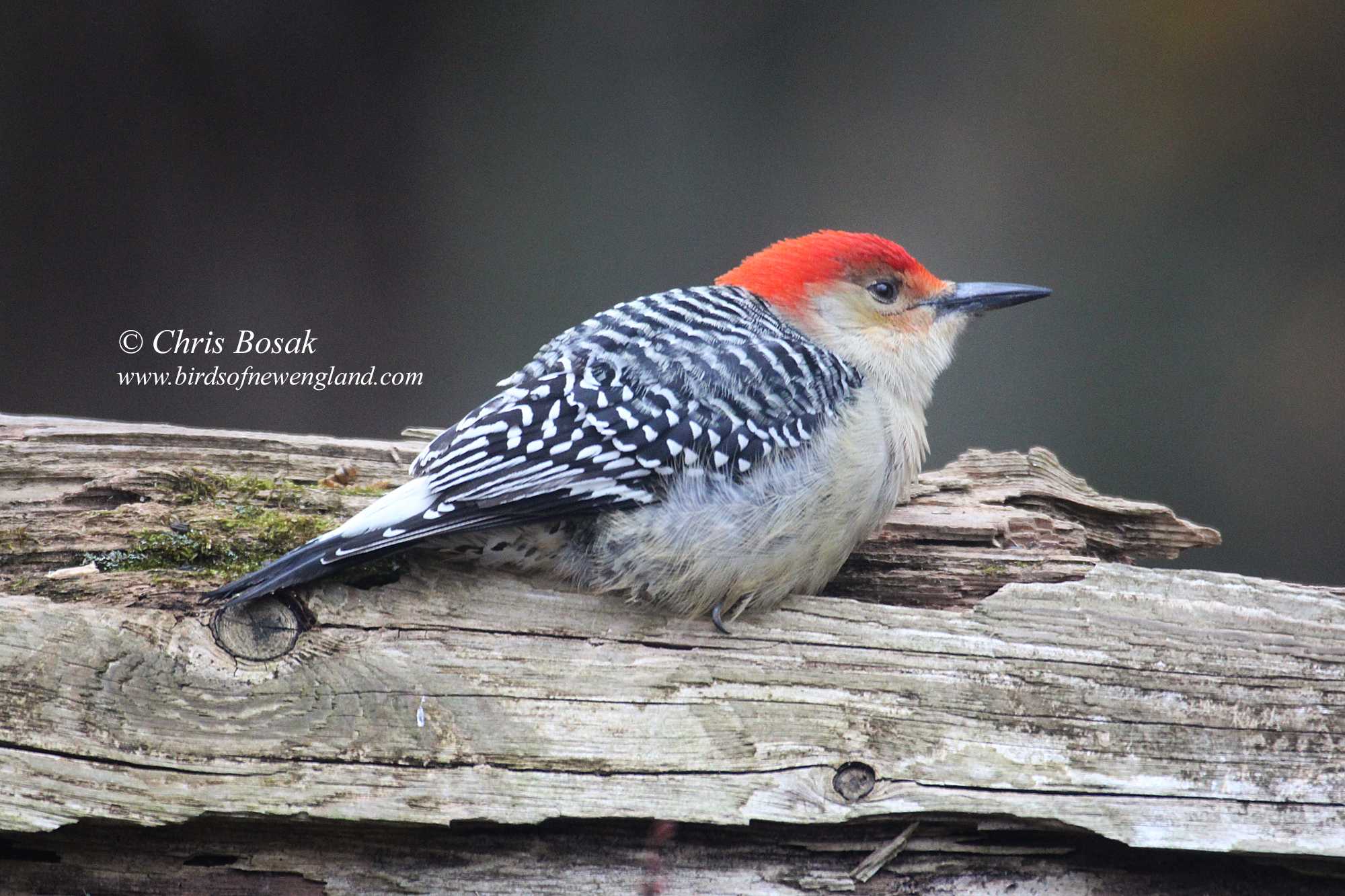
Photo by Chris Bosak A red-bellied woodpecker perches on a log in New England, November 2020.
Here is a video I put together on the current pine siskin (fall 2018) irruption. Also a description on how to tell siskins and goldfinches apart. Subscribe to my YouTube channel by clicking here.
Photo by Chris Bosak
Pine siskins visit a feeder in Danbury, Connecticut, fall 2018.
It started out as two yesterday morning. Now there are more than 20 pine siskins at my backyard feeding station in Danbury, Conn. That’s often the way it goes with these winter finches: The visits start with a few birds and they multiply and eat the host out of house and home. Not that I’m complaining …
Every perch on the hopper is filled and the rest are on a nearby hopper feeder or on the ground. They are eating Nyjer and sunflower seeds.
Photo by Chris Bosak
A pine siskin eats Nyjer seeds at a feeder in Danbury, Conn., fall 2018.
After reading about pine siskins being seen throughout New England for several weeks, I woke up this morning to three of them at my feeding station. Pine siskins are one of the winter finches that irrupt from the north into New England and points south in sporadic winters. (Related post may be found here.)
Pine Siskins are often confused with goldfinches because they look fairly similar and prefer Nyjer (or thistle) seeds. Siskins are a bit larger, more sleek, more streaked and have a longer, pointed bill. The heavy streaking, especially on the sides, and yellow wing and tail markings are the best clues to differentiate the species. The male siskins have more prominent yellow markings.
So today I celebrate that the siskins have arrived. The birds, however, have a very healthy appetite and Nyjer seed is not cheap, so we’ll see how I feel if their numbers multiply. I’m sure I’ll continue to be inspired by their presence. After all, it’s been about 10 years since I was a part of one of their irruptions. I think I can splurge once a decade on them.
Here is a photo of them with goldfinches. Note the differences in plumage. The goldfinch is on the lower right.
Photo by Chris Bosak
Pine siskins visit a feeder in Danbury, Connecticut, fall 2018.




 Birds of New England.com