A few red-bellied woodpecker shots

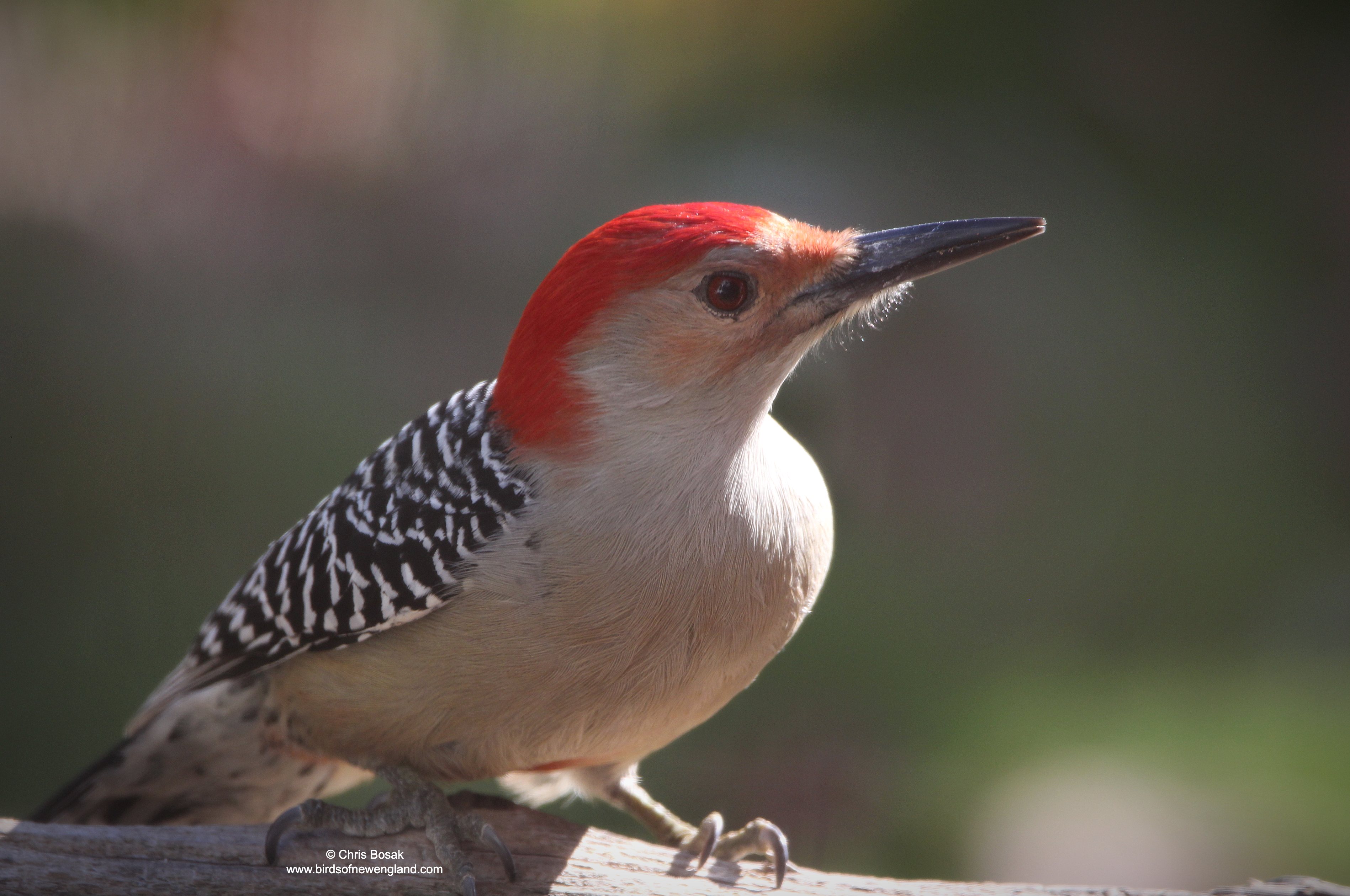
Photo by Chris Bosak – A red-bellied woodpecker visits a feeding station in New England, Nov. 2025.

Here are a few photos of a red-bellied woodpecker, taken simply because it was a cool bird that visited my feeder today. Note the faint red on the belly, hence the name.

Photo by Chris Bosak – A red-bellied woodpecker visits a feeding station in New England, Nov. 2025.

For the Birds: Red-headed woodpecker makes surprise visit to New Hampshire

Photo by Chris Bosak A red-headed woodpecker in Pennsylvania earlier this year.

It wasn’t long ago, just last week, in fact, that I wrote about uncommon birds showing up unexpectedly now and then.

You never know where or when they will appear, I wrote, but being vigilant is the key to finding them.

Not long after that column went to print, I received an email that really drove home that point. Eric from Surry wrote to say he had seen a red-headed woodpecker in his backyard.

When I opened the email, I could see only the text, not the photos. I have no way of knowing one’s bird identification skills when I get an email, so it’s always nice when a photo is attached, regardless of quality, to confirm the sighting.

Continue reading

For the Birds: More surprises on winter walks

Photo by Chris Bosak — A yellow-bellied sapsucker taps on a tree in New England, January 2024.

The woods seem to be full of surprises this winter.

Last week I wrote about the gray catbird I have been seeing on my walks this winter. On a walk last week, which was done when it was about 15 degrees outside, I had four species that were marked as “unusual” by eBird, a maassive database of bird sightings. That doesn’t necessarily mean that the birds are rare, but rather they are not commonly seen in New England during the winter. The species were: catbird, hermit thrush, purple finch and yellow-bellied sapsucker. 

The catbird, thrush and finch were all species I had seen on previous walks this winter. In fact, it seems as though I typically find a hermit thrush or two each winter in New England. Like the catbird, hermit thrushes typically migrate south of New England before winter, but some remain in our region, opting to tolerate the cold weather rather than take on the risks of migration.

Continue reading

For the Birds: Readers take over

Photo by Chris Bosak A red-bellied woodpecker perches on a log.

You’ve heard from me; now find out what others are seeing out there.

Red-bellied woodpeckers continue to proliferate in southern New Hampshire. It wasn’t too many years ago that these large, handsome and sometimes aggressive birds were extremely rare sightings in the Granite State. Their northern expansion has been impressive and now they are seen with much greater frequency throughout the southern part of the state.

I wouldn’t say they are common sightings here yet, but they are getting there. They are now very common in Connecticut, Massachusetts and Rhode Island, so it stands to reason New Hampshire and Vermont are next.

In the last few weeks, I have heard from Monadnock Region residents Cindy and Richard who have each hosted red-bellied woodpeckers at their feeders recently. Cindy from Keene wrote that her bird visits every day. She wrote that the bird’s red head is “almost neon” when the sun hits it just right.

Continue reading

Feeder birds with New England fall backdrop

Photo by Chris Bosak A red-bellied woodpecker perches on a log and grabs a peanut in New England, October 2020.

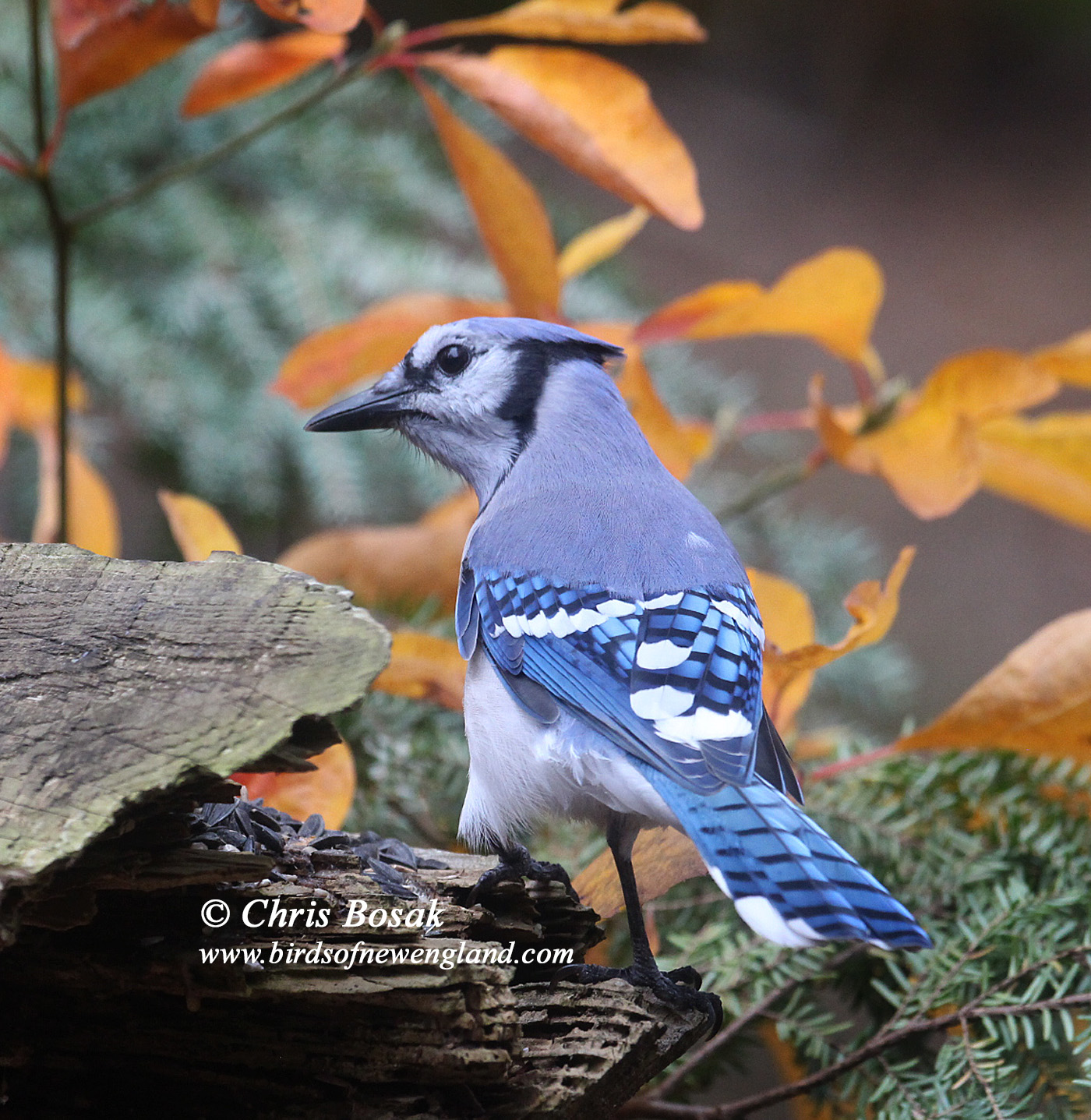
There’s nothing like a New England fall, especially when it provides a colorful backdrop for bird photos. I found a rotted log in my backyard, positioned it on my deck railing in front of a small sassafras tree, sprinkled some sunflower seeds and peanuts on the log and enjoyed the show. It was nonstop action for hours. I hope to make a video soon as well.

Photo by Chris Bosak A tufted titmouse perches on a log in New England, October 2020.
Photo by Chris Bosak A blue jay perches on a log in New England, October 2020.
Photo by Chris Bosak A blue jay perches on a log and grabs a peanut in New England, October 2020.

For the Birds: Woodpeckers and rhythm

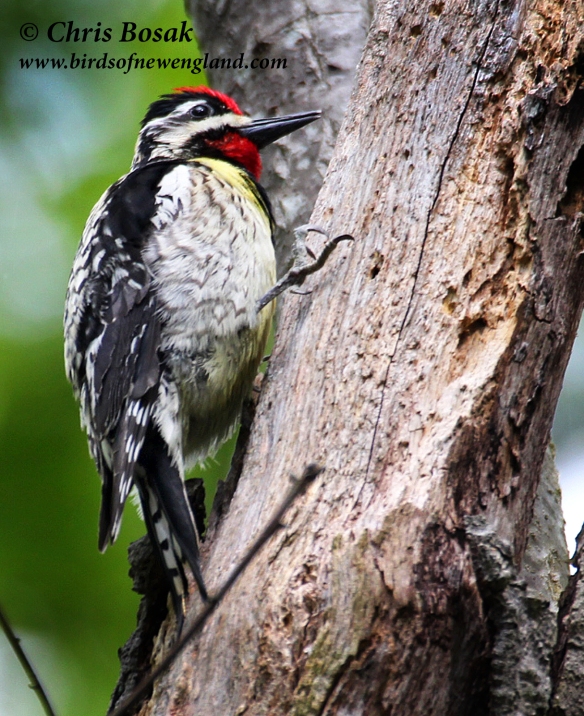
Photo by Chris Bosak A male yellow-bellied sapsucker perches on a dead tree branch in New England, June 2020. Merganser Lake.

I am quite sure I am not his intended target, but when the yellow-bellied sapsucker drums on the hollow branch in my side yard, I come running. I mentioned in last week’s column that I have a yellow-bellied sapsucker that drums on a branch in my side yard and a pileated woodpecker that drums on a branch in the backyard. Woodpeckers often drum on objects such as hollow branches, the sides of houses, gutters, and chimney flashings. They pick objects such as these because the noise resonates far and wide. This drumming is done to attract mates or announce territory. Obviously, they do not tap on gutters or chimney flashings to find food or make homes.

They may pick hollow branches to make homes, naturally, but the territorial and mate-attracting drumming is more rhythmic and the cadence is specific to individual woodpecker species.

I also mentioned in last week’s column that I was impressed the first time I saw a birdwatcher identify the type of woodpecker from its drumming in the distance. I still do not have that skill down very well, but I am getting a lot of practice distinguishing the yellow-bellied sapsucker and the pileated woodpecker. Just as it is exciting when a bird chooses your property to eat, drink, or make a home, it is also exciting when a woodpecker chooses a branch on your property for its drumming.

It may not be so exciting when they return to your siding, gutter or chimney flashing for this purpose, however. If this is happening, there are measures you can take to try to stop it. Of course, nothing is a guarantee when we are talking about wildlife.

There are literally dozens of products on the market to deter woodpeckers from tapping on your house. Do a simple Internet search for “stop woodpecker damage” and they will all pop up.

New England has several woodpecker types. Most of New England has the aforementioned yellow-bellied sapsucker and pileated woodpecker, as well as downy and hairy woodpecker, and northern flicker. Southern New England and increasingly the middle part of the region also has red-bellied woodpecker. The northern part of New England features the black-backed woodpecker and, to a lesser degree, the American three-toed woodpecker.

The red-headed woodpecker is also an occasional sighting in New England. Many people mistakenly call the red-bellied woodpecker the red-headed woodpecker because it does indeed have a red head, or at least mostly red. The red-bellied woodpecker has a faint pinkish wash on the belly, which gives it its name. The red-headed woodpecker, indeed, has a fully red head. They are more common south and west of New England but, as I mentioned, are occasionally seen in our region.

This is just my own theory, and it hasn’t been scientifically proven to my knowledge, but the dreaded diseases that have ravaged so many of our tree species have greatly benefited woodpeckers. They build their nests in dead trees and branches, and sadly, between hemlock woolly adelgid, chestnut blight, Dutch elm disease and locust borers, they have plenty of dead trees to choose from. And, of course, lots of drumming branches.

Sapsucker drumming

Photo by Chris Bosak A male yellow-bellied sapsucker perches on a dead tree branch in New England, June 2020. Merganser Lake.

A Day on Merganser Lake

Woodpeckers bang their bills on objects for a variety of reasons, such as looking for food, hollowing out a hole for nesting, and proclaiming their territory. To proclaim their territory, they find an object that is particularly loud, such as a hollow branch, side of a house or chimney flashing. This guy (you can tell it’s a guy from the red throat) found a hollow branch in my side yard for that purpose. I posted a photo of a female sapsucker (sans red throat) not too long ago and included a classic bit from The Honeymooners. Click here for that post.

Hairy woodpecker stops to smell the flowers

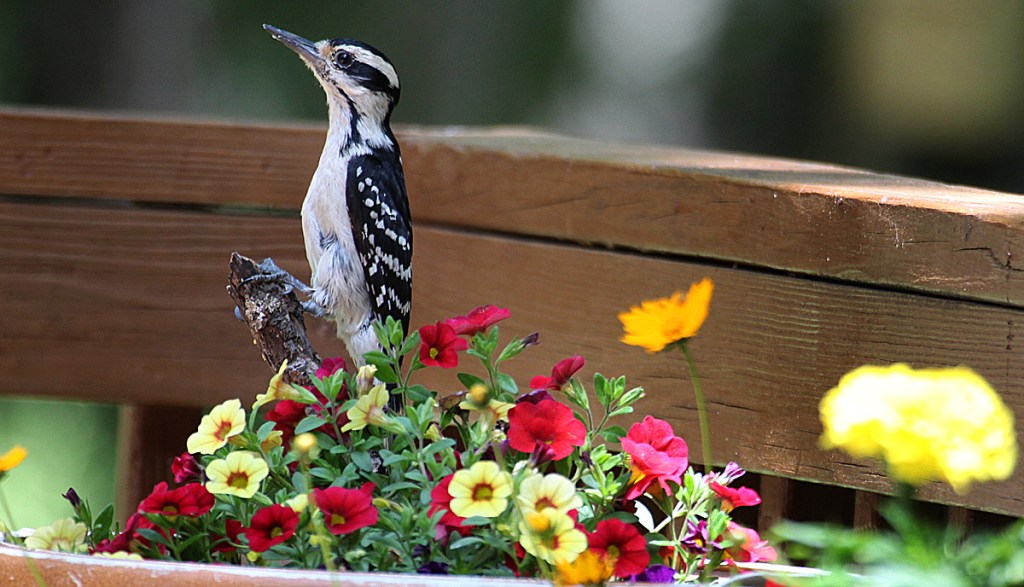
Photo by Chris Bosak A hairy woodpecker perches on a broken branch in New England, June 2020. Merganser Lake.

A Day on Merganser Lake

I don’t normally keep flowers alive for very long so I was happy when this female hairy woodpecker stopped by to check out the blooms.

Birds to brighten your day: May 19

Photo by Chris Bosak
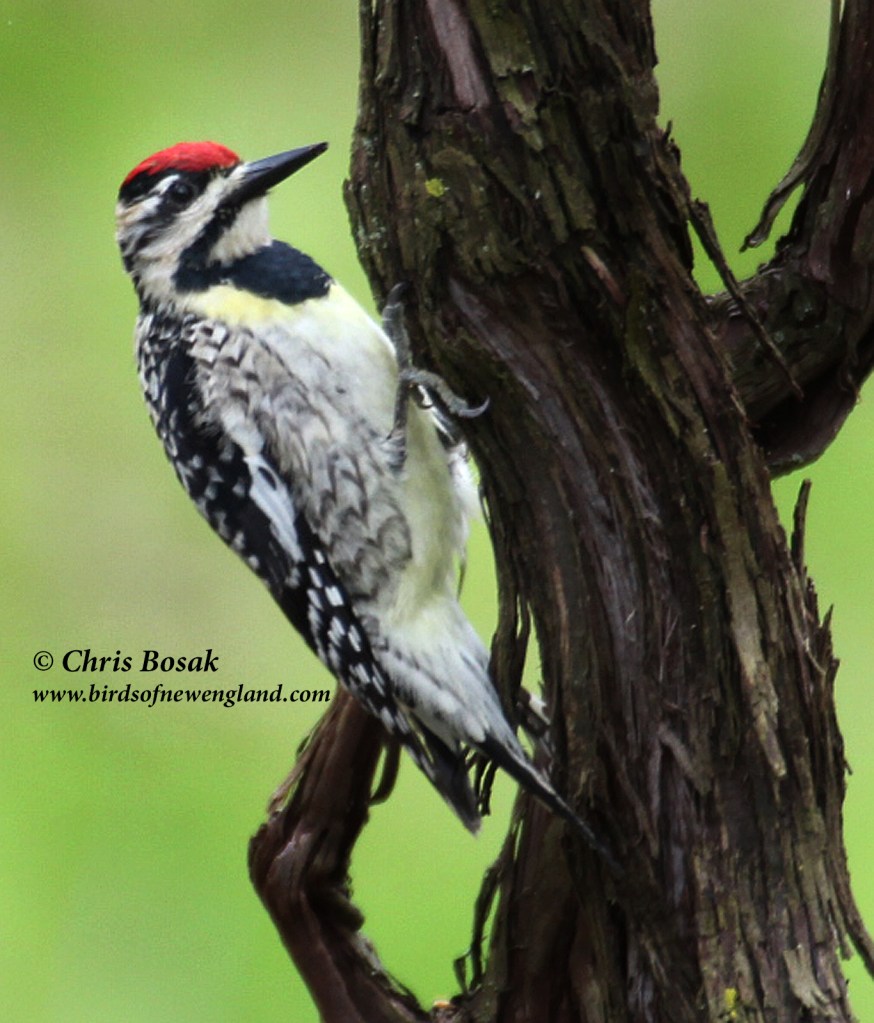
A yellow-bellied sapsucker perches on a vine in New England, May 2020. Merganser Lake.

A Day on Merganser Lake

The yellow-bellied sapsucker is one of the more underrated woodpeckers in New England, in my opinion. Perhaps it’s because they aren’t seen as often as downy, hairy or red-bellied woodpeckers or have the wow factor of flickers or pileated woodpeckers. It’s always a treat to see these handsome birds with an interesting eating habit. This is from allaboutbirds.org: “They feed at sapwells—neat rows of shallow holes they drill in tree bark. They lap up the sugary sap along with any insects that may get caught there.”

And, of course, there’s always this:

(Repeat text for context:  I’m running out of COVID-19 lockdown themes so from now until things get back to some semblance of normalcy, I will simply post my best photo from the previous day. You could say it fits because of its uncertainty and challenge. I’ll call the series “A Day on Merganser Lake,” even though that’s not the real name of the lake I live near in southwestern Connecticut, it’s just a nod to my favorite duck family.)

The sapsucker shown is a female. Males have red throats.

Photo by Chris Bosak
A yellow-bellied sapsucker perches on a vine in New England, May 2020. Merganser Lake.

Birds to brighten your day: May 7

Photo by Chris Bosak
A pileated woodpecker works over a tree in New England, May 2020. Merganser Lake.

A Day on Merganser Lake XVI

I heard a loud tapping (no make that banging) coming from the backyard. I glanced out the window and noticed a male pileated woodpecker giving a dead hemlock tree a good working over. Chips and even bigger pieces of wood broke free and scattered under the ground. He didn’t stay long, maybe five minutes, but I got some nice shots of him.

Female and male pileated woodpeckers both have red heads, but only the male has the red “mustache.”

(Repeat text for context:  I’m running out of COVID-19 lockdown themes so from now until things get back to some semblance of normalcy, I will simply post my best photo from the previous day. You could say it fits because of its uncertainty and challenge. I’ll call the series “A Day on Merganser Lake,” even though that’s not the real name of the lake I live near in southwestern Connecticut, it’s just a nod to my favorite duck family.)