Birds to brighten your day: April 29

Photo by Chris Bosak A male northern cardinal feeds its mate in a backyard in New England, April 2020. Merganser Lake.

A Day on Merganser Lake XX

I like this shot because it reminds me of shy teenagers kissing behind the bushes. I remember those days, even though they were many moons ago. Last week, you may recall, I posted a photo of bluebirds feeding each other. Now, it’s the cardinals’ turn. My latest For the Birds column looks at this behavior. I’ll post the column on this site on Sunday, as usual.

(Repeat text for context:  I’m running out of COVID-19 lockdown themes so from now until things get back to some semblance of normalcy, I will simply post my best photo from the previous day. You could say it fits because of its uncertainty and challenge. I’ll call the series “A Day on Merganser Lake,” even though that’s not the real name of the lake I live near in southwestern Connecticut, it’s just a nod to my favorite duck family.)

Birds to brighten your day: April 28

Photo by Chris Bosak
A blue jay sits on a nest in a rhododendron bush in a yard in Danbury, CT, April 2020. (Merganser Lake)

A Day on Merganser Lake XIX

With the front door not being used as often as usual, a blue jay pair took advantage of the situation to build a nest in the large rhododendron bush right outside the door. I never even noticed the nest until it was completely built and the female was sitting on eggs. The birds don’t seem to mind when the front door is used, thankfully. Two years ago, a mourning dove pair built a nest in the bush but soon abandoned it. The blue jays seem to be seeing this one through.

(Repeat text for context:  I’m running out of COVID-19 lockdown themes so from now until things get back to some semblance of normalcy, I will simply post my best photo from the previous day. You could say it fits because of its uncertainty and challenge. I’ll call the series “A Day on Merganser Lake,” even though that’s not the real name of the lake I live near in southwestern Connecticut, it’s just a nod to my favorite duck family.)
Birds to brighten your day: April 27

Photo by Chris Bosak
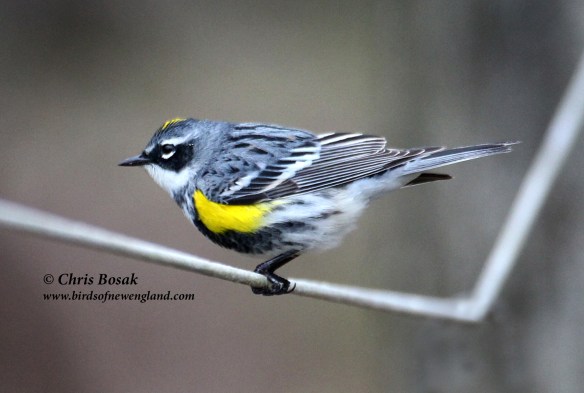
A yellow-rumped warbler perches on a clothesline in Danbury, CT, April 2020. (Merganser Lake)

A Day on Merganser Lake XVIII

Here’s a solo shot of the yellow-rumped warbler. Warblers aren’t known as feeder birds, but I’ve had three yellow-rumpeds and at least two pine warblers all over my suet feeders the last few days. Warblers are small, often colorful birds that winter in parts south and migrate north each spring. Some nest in New England and some pass through New England on their way farther north.

(Repeat text for context:  I’m running out of COVID-19 lockdown themes so from now until things get back to some semblance of normalcy, I will simply post my best photo from the previous day. You could say it fits because of its uncertainty and challenge. I’ll call the series “A Day on Merganser Lake,” even though that’s not the real name of the lake I live near in southwestern Connecticut, it’s just a nod to my favorite duck family.)
Birds to brighten your day: April 26

Photo by Chris Bosak
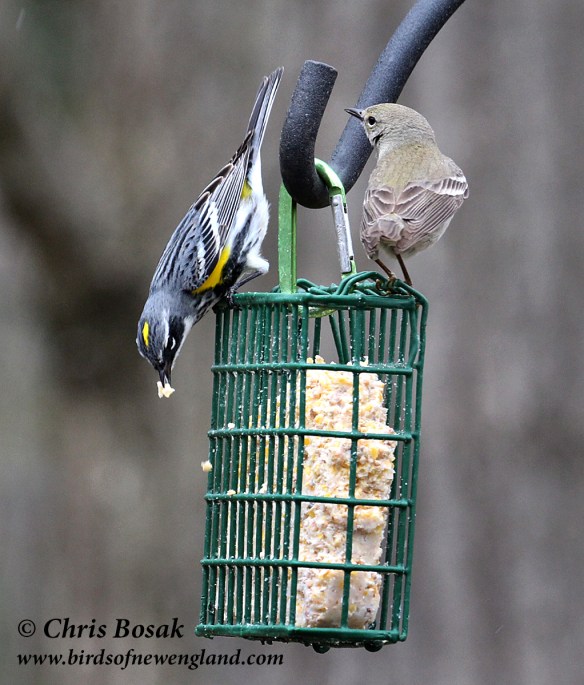
A yellow-rumped warbler and pine warbler share a suet feeder in New England, April 2020. Merganser Lake.

A Day on Merganser Lake XVII

Here’s a bonus posting since I’ve already posted my latest For the Birds column today. I couldn’t resist posting this as soon as possible. I’ve said on this site before that warblers rarely visit feeders. That is still true considering there are dozens of types of warblers in New England and only two or three species will somewhat regularly visit feeders. Well, since making the statement, I’ve had pine warbler every day, and today, I had a pine warbler and yellow-rumped warbler on the same feeder at the same time. A warming scene on yet another unseasonably cold late April day.

(Repeat text for context:  I’m running out of COVID-19 lockdown themes so from now until things get back to some semblance of normalcy, I will simply post my best photo from the previous day. You could say it fits because of its uncertainty and challenge. I’ll call the series “A Day on Merganser Lake,” even though that’s not the real name of the lake I live near in southwestern Connecticut, it’s just a nod to my favorite duck family.)

Photo by Chris Bosak
A yellow-rumped warbler and pine warbler share a suet feeder in New England, April 2020. Merganser Lake.

For the Birds: Beavers helping geese

Photo by Chris Bosak A Canada goose sits on a nest atop a beaver den as another goose remains alert to potential danger in New England this spring.

I received an interesting email the other day from Tricia from Alstead. She relayed that she and a few other people — and a couple of dogs — were taking a walk when they noticed a strange lump on the top of a beaver den.

It turned out that the lump was a Canada goose, presumably sitting on eggs, as the bird remained hunkered down, despite the proximity of the humans and dogs. Tricia hypothesized that the goose nest was built over a vent hole in the den, which kept the eggs warm.

I couldn’t confirm nor deny that hypothesis but it does make sense.

The email did spur me to research the relationship between Canada geese and beavers. It turns out that they have a very beneficial Continue reading

Birds to brighten your day: April 25

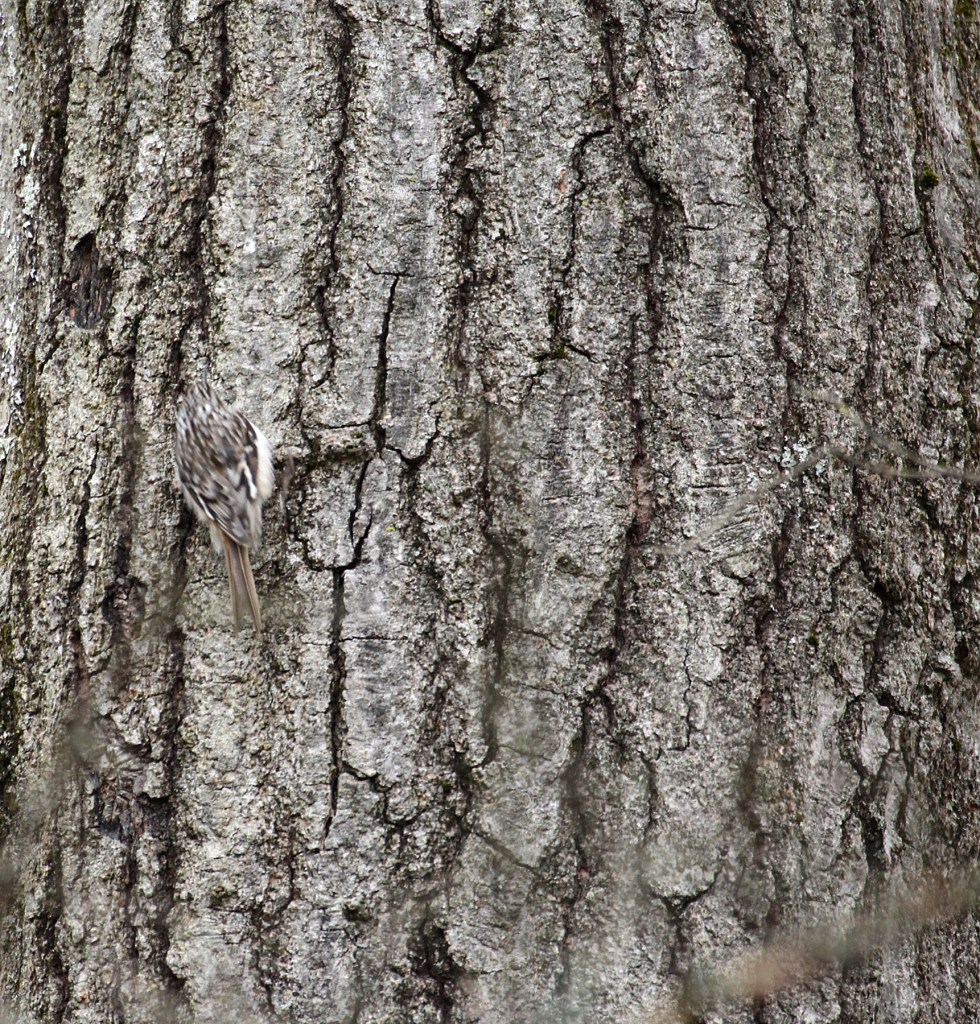
Photo by Chris Bosak A brown creeper clings to the trunk of a tree in New England, April 2020. Merganser Lake.

A Day on Merganser Lake XVI

Here’s a photo more for education than its quality — admittedly not the best photo. Animals, including birds, have different strategies for survival. For the brown creeper, that strategy is obviously camouflage. It spends most of its day creeping up tree trunks looking for morsels to eat. If you’re going to spend your days clinging to tree trunks, you may as well look like a tree trunk.

(Repeat text for context:  I’m running out of COVID-19 lockdown themes so from now until things get back to some semblance of normalcy, I will simply post my best photo from the previous day. You could say it fits because of its uncertainty and challenge. I’ll call the series “A Day on Merganser Lake,” even though that’s not the real name of the lake I live near in southwestern Connecticut, it’s just a nod to my favorite duck family.)
Birds to brighten your day: April 24

Photo by Chris Bosak
A black-capped chickadee checks out a birdhouse in a backyard in New England, April 2020. Merganser Lake.

A Day on Merganser Lake XV

Well, it doesn’t look like the bluebirds are going to nest in the bluebird box I got a few weeks ago. My property is not ideal habitat for them as it’s more wooded than open. At least they are still visiting every day and keeping me entertained. The good news is that black-capped chickadees keep checking it out. Hopefully a pair will decide to move in. They are not bluebirds but I’d certainly take it.

(Repeat text for context:  I’m running out of COVID-19 lockdown themes so from now until things get back to some semblance of normalcy, I will simply post my best photo from the previous day. You could say it fits because of its uncertainty and challenge. I’ll call the series “A Day on Merganser Lake,” even though that’s not the real name of the lake I live near in southwestern Connecticut, it’s just a nod to my favorite duck family.)

Photo by Chris Bosak
A black-capped chickadee checks out a birdhouse in a backyard in New England, April 2020. Merganser Lake.

Birds to brighten your day: April 23

Photo by Chris Bosak A palm warbler looks for food on the ground in a yard in Danbury, Connecticut, April 2020. Merganser Lake.

A Day on Merganser Lake XIV

I’ve been seeing palm warblers around my yard for about a week now. They are fairly brave as they sometimes approach closely in their search for food. They remain tricky photo subjects, however, because, like most warblers, they are constantly in motion. I got a decent shot of this bird as it hopped along a rocky area of my side yard yesterday.

Palm warblers are usually the second warbler to arrive in New England in the spring, following the pine warbler. Palm warblers are tail-pumpers so if you see a small, yellow bird with a rusty cap sitting on a branch pumping its tail, it’s a palm warbler.

(Repeat text for context:  I’m running out of COVID-19 lockdown themes so from now until things get back to some semblance of normalcy, I will simply post my best photo from the previous day. You could say it fits because of its uncertainty and challenge. I’ll call the series “A Day on Merganser Lake,” even though that’s not the real name of the lake I live near in southwestern Connecticut, it’s just a nod to my favorite duck family.)

Birds to brighten your day: April 22

Photo by Chris Bosak
A male eastern bluebird feeds his mate mealworms in a backyard in Danbury, Connecticut, April 2020. Merganser Lake.

A Day on Merganser Lake XIII

I caught these love birds (eastern bluebirds really) in an intimate moment yesterday as the male fed his mate some dried mealworms. How romantic, I know. I have been seeing them do this over the last few days but have never been quick enough with the camera. This time I was ready and got their special moment.

(Repeat text for context:  I’m running out of COVID-19 lockdown themes so from now until things get back to some semblance of normalcy, I will simply post my best photo from the previous day. You could say it fits because of its uncertainty and challenge. I’ll call the series “A Day on Merganser Lake,” even though that’s not the real name of the lake I live near in southwestern Connecticut, it’s just a nod to my favorite duck family.)

Birds to brighten your day: April 21

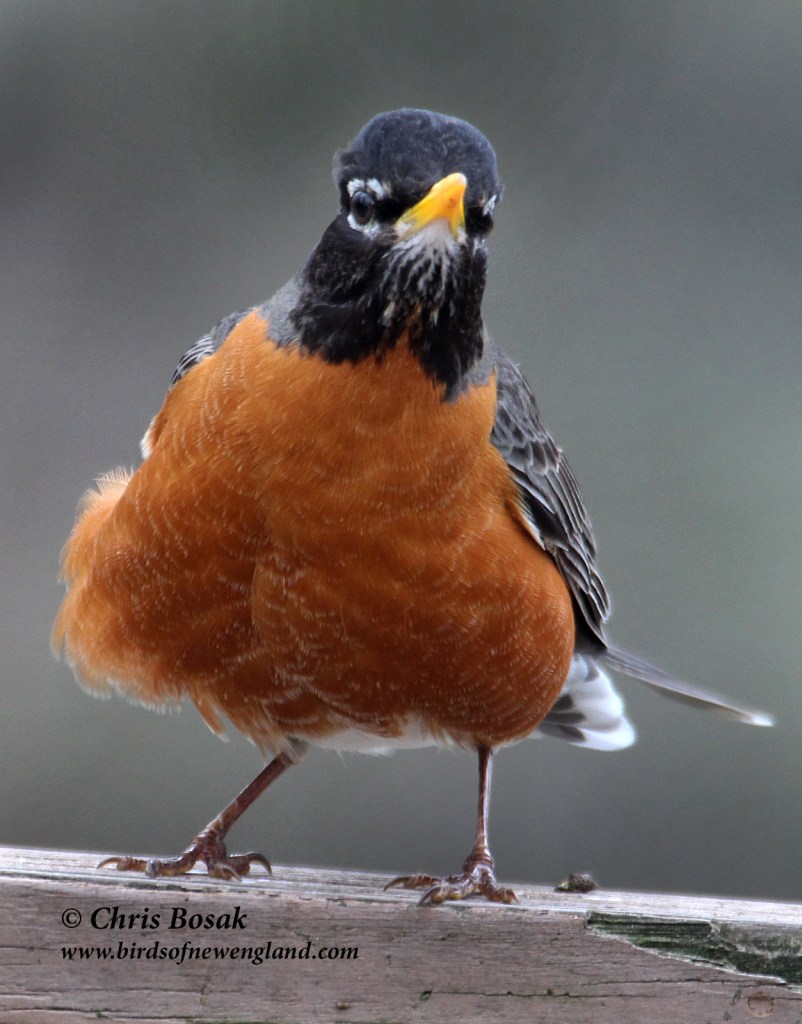
Photo by Chris Bosak An American robin visits a yard in Danbury, CT, April 2020. (Merganser Lake)

A Day on Merganser Lake XII

In all my years of feeding birds, I’ve never had American robins visit my feeders. Until a few days ago, that is. They technically haven’t visited my “feeders” yet, but they are regular visitors to my deck railing on which I place dried mealworms for the bluebirds and pine warblers. And robins, apparently.

We’ve all seen a million robins before, but we can’t ever really tire of them, can we? They are a traditional harbinger of spring (even though many spend all winter with us) and a beloved, easy-to-learn bird. So here’s a neat photo of a robin I got yesterday. Hail to the regular birds!

(Repeat text for context:  I’m running out of COVID-19 lockdown themes so from now until things get back to some semblance of normalcy, I will simply post my best photo from the previous day. You could say it fits because of its uncertainty and challenge. I’ll call the series “A Day on Merganser Lake,” even though that’s not the real name of the lake I live near in southwestern Connecticut, it’s just a nod to my favorite duck family.)