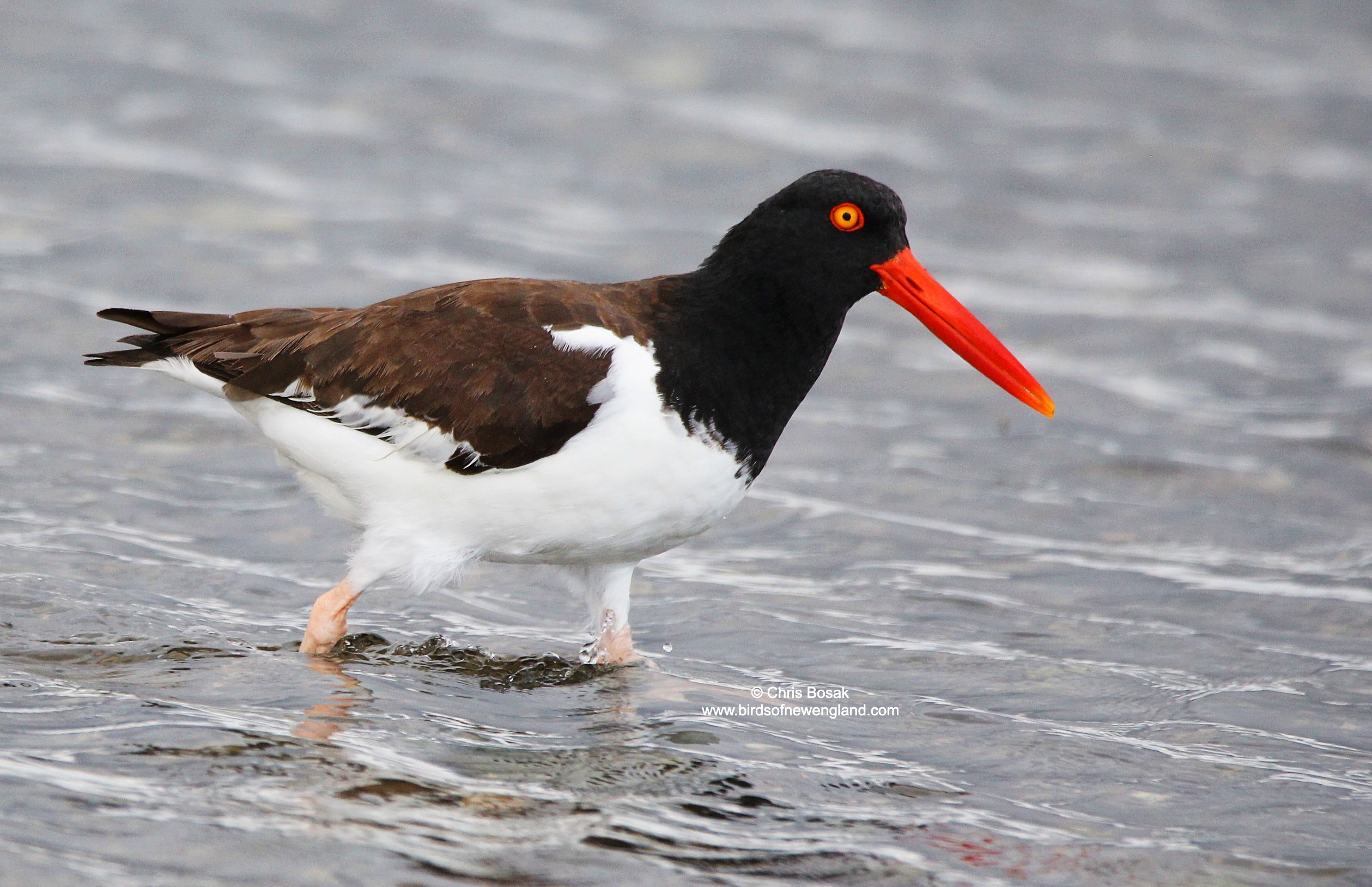
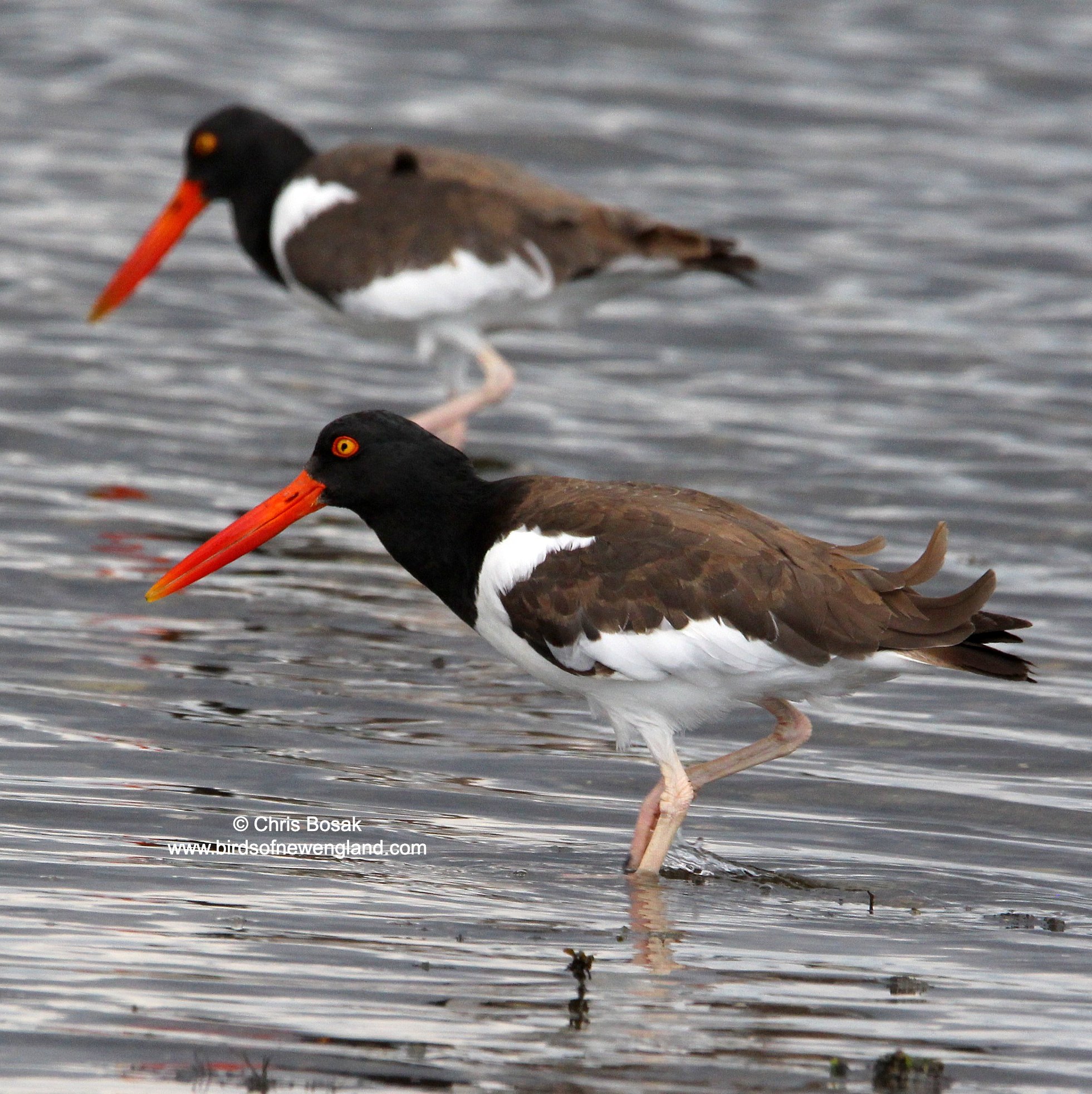
Photo by Chris Bosak American oystercatcher, summer in New England.
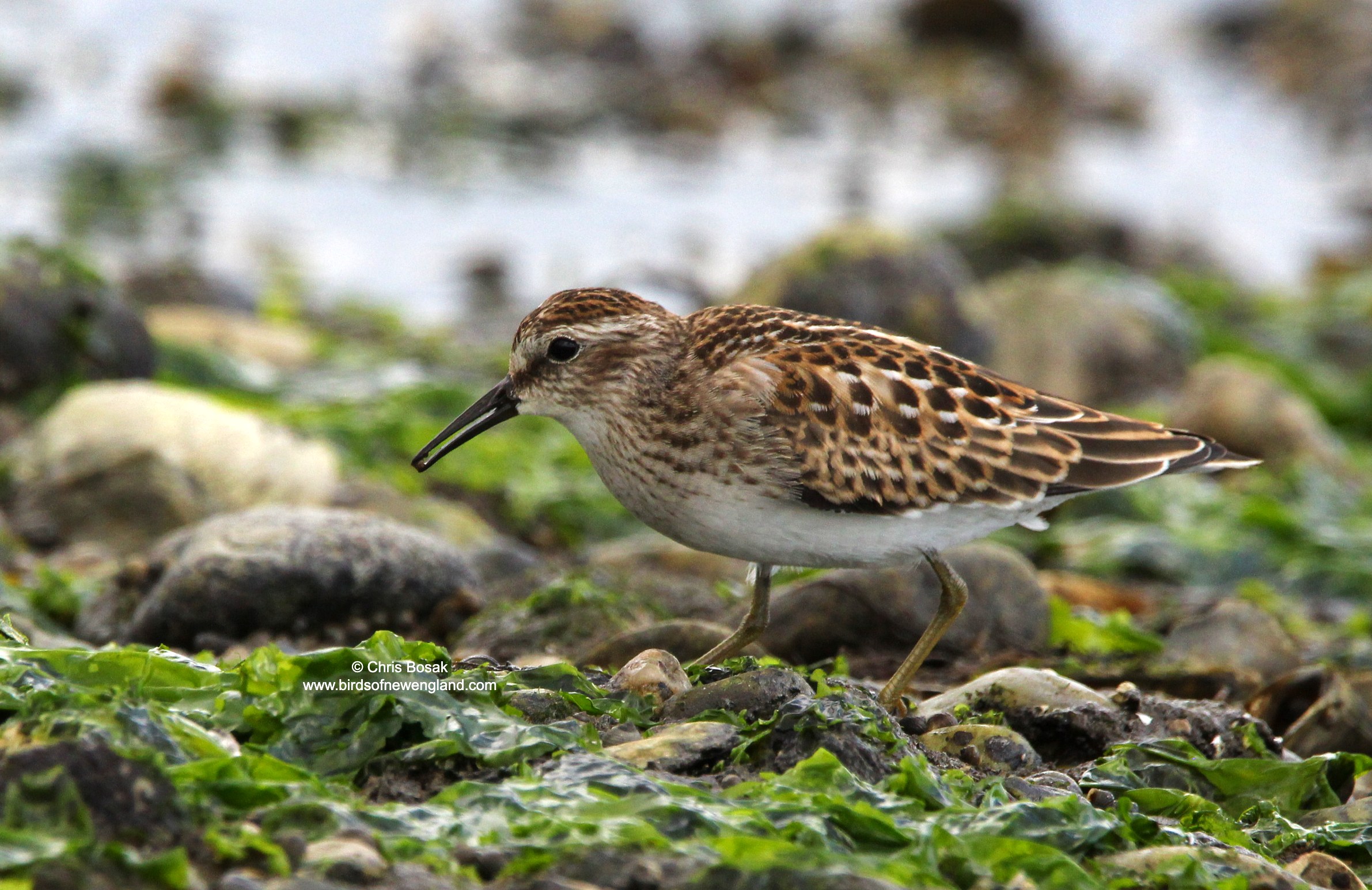
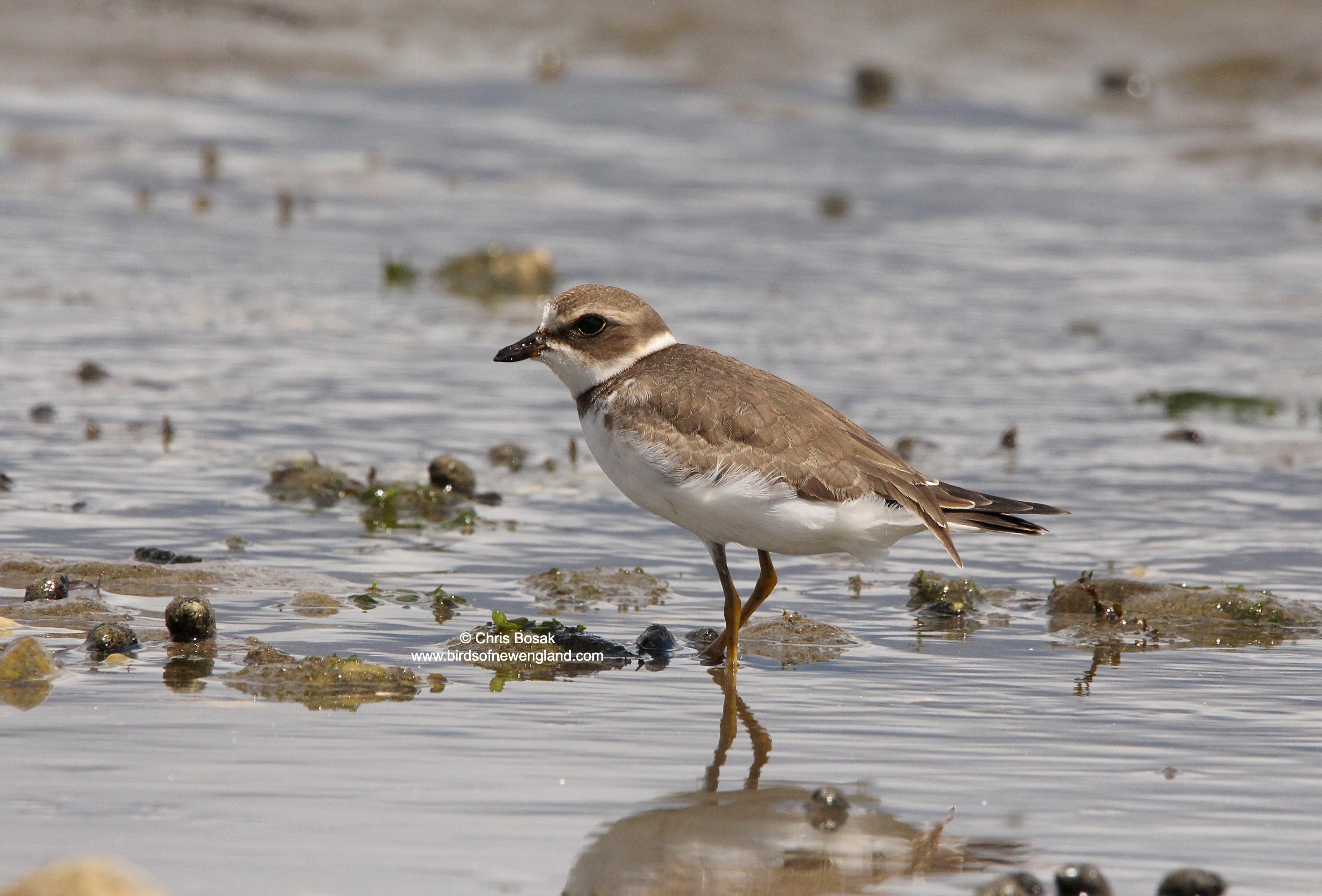
My friend Wayne and I took a walk at a preserve along the coast of southern Connecticut on Labor Day Weekend and found a dozen or more American oystercatchers, three semipalmated plovers, a small flock of least sandpipers, and a black-bellied plover. A few waders (snowy egret, great egret, yellow-crowned night heron) were around too.
Photo by Chris Bosak Least sandpiper, late summer in New England.Photo by Chris Bosak – Semipalmated plover, late summer New England.
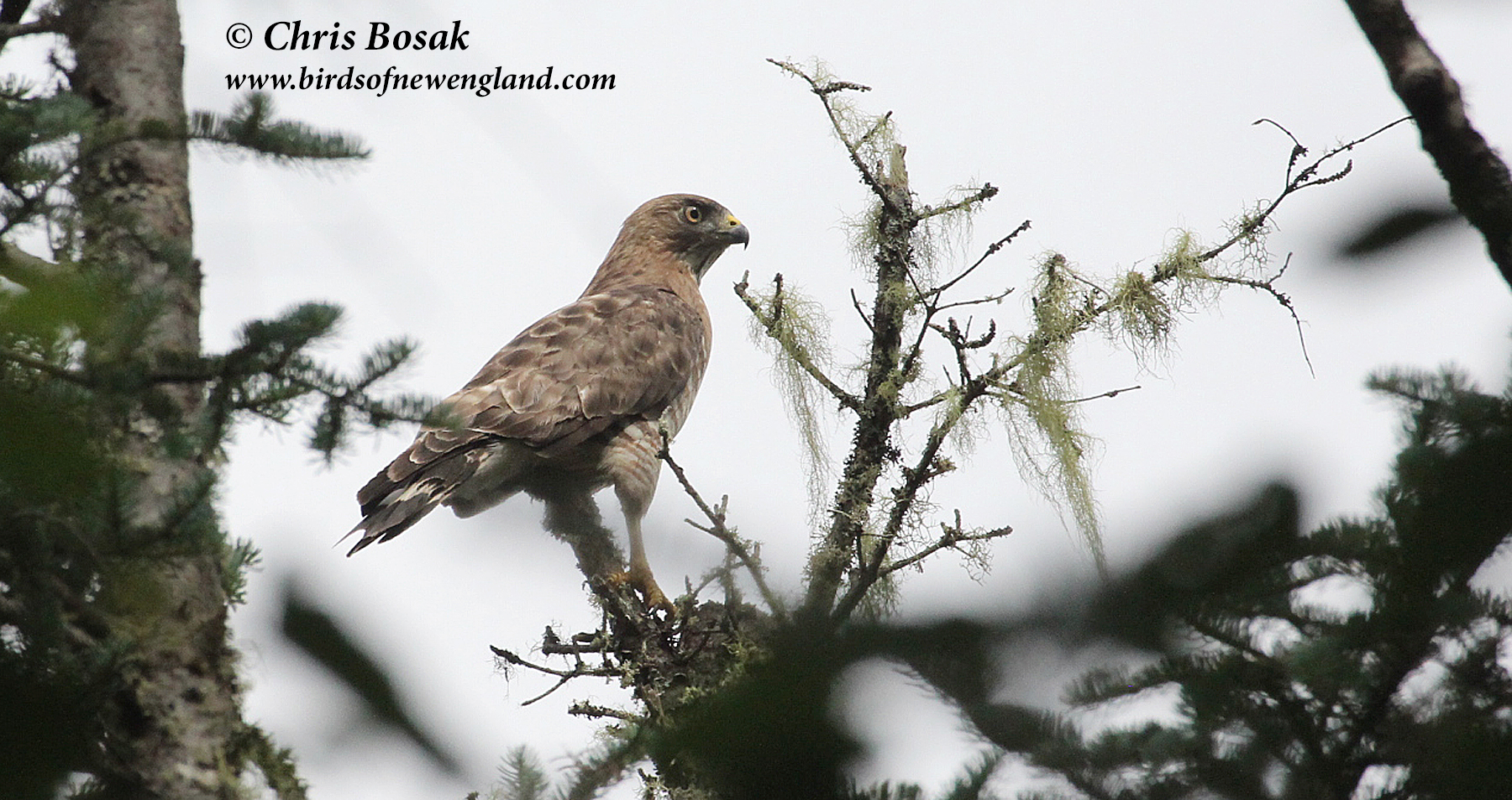
Photo by Chris Bosak A broad-winged hawk perches in a tree in northern New Hampshire, July 2020.
Last November, I wrote consecutive bird columns based on the results of the Pack Monadnock Hawk Watch. As I wrote the second column, I made a mental note to write another one before the start of the next hawk watching season. Well, here we are.
Instead of reading about what happened already, now you can get out there and see the spectacle for yourself. So here it is, all you need to know about planning a trip to see the thousands of raptors that will pass over southern New Hampshire this fall.
There are other hawk watch sites in New Hampshire, but Pack Monadnock is the most popular, and for good reason. Expert hawk watchers are on site from September 1 through the middle of November to count the hawks, lead talks and answer questions from visitors. Also, it is the place in the state where the most hawks and greatest variety of raptors may be seen heading south. Hawk watches include hawks, eagles, falcons, ospreys and vultures.
The Pack Monadnock Raptor Observatory, as it is officially called, is located near the top of Pack Monadnock Mountain within Miller State Park off Route 101 in Peterborough. Visitors can drive or hike to the site.
A few hawks have already been counted in August, but the numbers have not started to heat up yet. The most thrilling time at Pack Monadnock, and most other hawk watch sites, is when the broad-winged hawks pass through in staggering numbers. When that happens exactly is both predictable and unpredictable. It will happen sometime in mid-September, that much we know, but weather and wind conditions will determine the exact window.
Last year, I spoke with Phil and Julie Brown of Hancock about the timing. If anyone will know, it’s them. Phil is the Bird Conservation Director and Land Specialist at the Harris Center for Conservation Education. His wife, Julie, is the Raptor Migration and Program Director of the Hawk Migration Association.
Here are a few paragraphs from one of those columns from last November:
“While the broad-winged hawk migration is truly a spectacle, with as many as 3,000 or more seen on a single day, it is very time-specific. September 14-20 is the sweet spot when nearly all of the broad-wingeds pass through, the Browns said. Phil said many people take the entire week off from work to not miss the right day.
“Mark your calendars for the middle of next September and keep your eyes out for a forecast that calls for light or variable winds from the north (or northeast or northwest), particularly following a cold front.”
Last year, the best two-day window by far at Pack Monadnock was September 14 and 15, when 3,160 and 562 broad-winged hawks, respectively, passed over the mountain. September 19 and 20 were also solid with 458 and 403 broad-winged hawks soaring past.
Mid-September is also the best time to see sharp-shinned hawks, the second-most-counted raptor at Pack Monadnock. Last year, there were two days (September 14 and 19) when more than 100 sharpies flew overhead.
Last year, September accounted for 7,280 of the 8,581 total raptors counted at Pack Monadnock. While September is obviously the best month to visit, October is still a strong month. The broad-winged hawks, which account for the majority of the birds counted each fall, are mostly gone by the time October rolls around, but there are still good numbers of species such as sharp-shinned hawks, turkey vultures, northern harriers and red-tailed hawks to be seen. American kestrels and merlins, both small falcons, are also passing through in decent numbers in October.
The hawk watch remains open until mid-November, but the action is fairly slow by then. Red-tailed hawks are still moving through at a decent clip, but most of the other species have stopped completely or slowed to a trickle.
This year I’ve given fair warning. Keep an eye on the forecast in mid-September, head to the mountain and see some hawks. Lots of them.
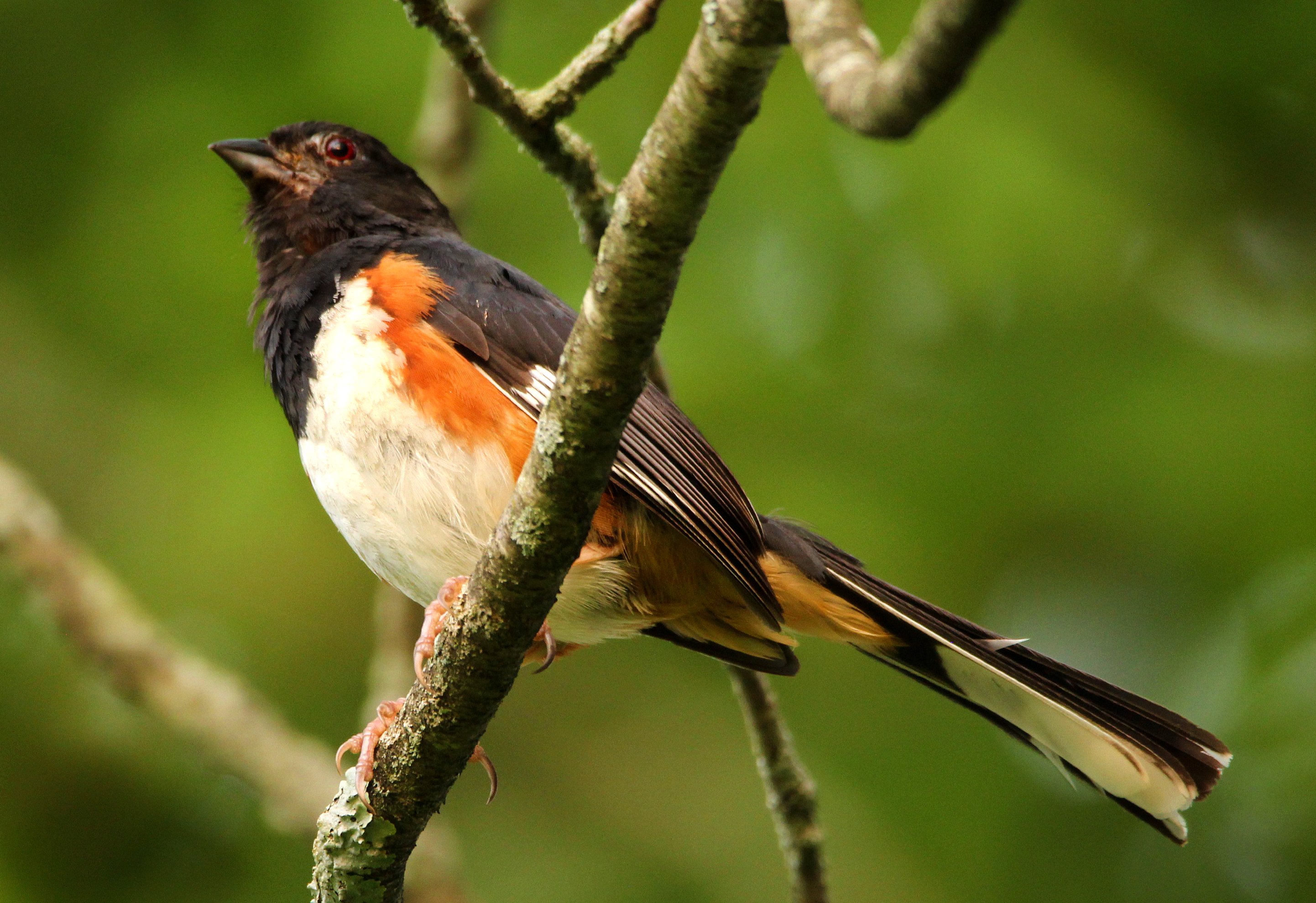
Photo by Chris Bosak – An eastern towhee perches on a tree branch in New England, August 2026.
I got home at 6 o’clock in the evening and had two hours of daylight left.
Did I have enough time to change and get to the park for a bird walk? Or should I sit around the house and do nothing?
I wouldn’t be writing a bird column about that evening if I chose the latter, so yes, I decided I did have enough time to look for some birds before it got dark.
It had been a long time since I had taken a decent bird photo, so my goal was to get one on this walk despite not having a lot of time. I didn’t care what bird it was, I just wanted to capture a good image.
As I pulled into the parking lot, I started making odds in my head about what bird would present itself for a good photo opportunity first. I was about 90 percent sure it would be a catbird. They are reliable sightings all throughout the summer and often are not shy about being seen. If not a catbird, I thought, perhaps a song sparrow, mourning dove or cardinal. But catbird was definitely my best shot, I figured.
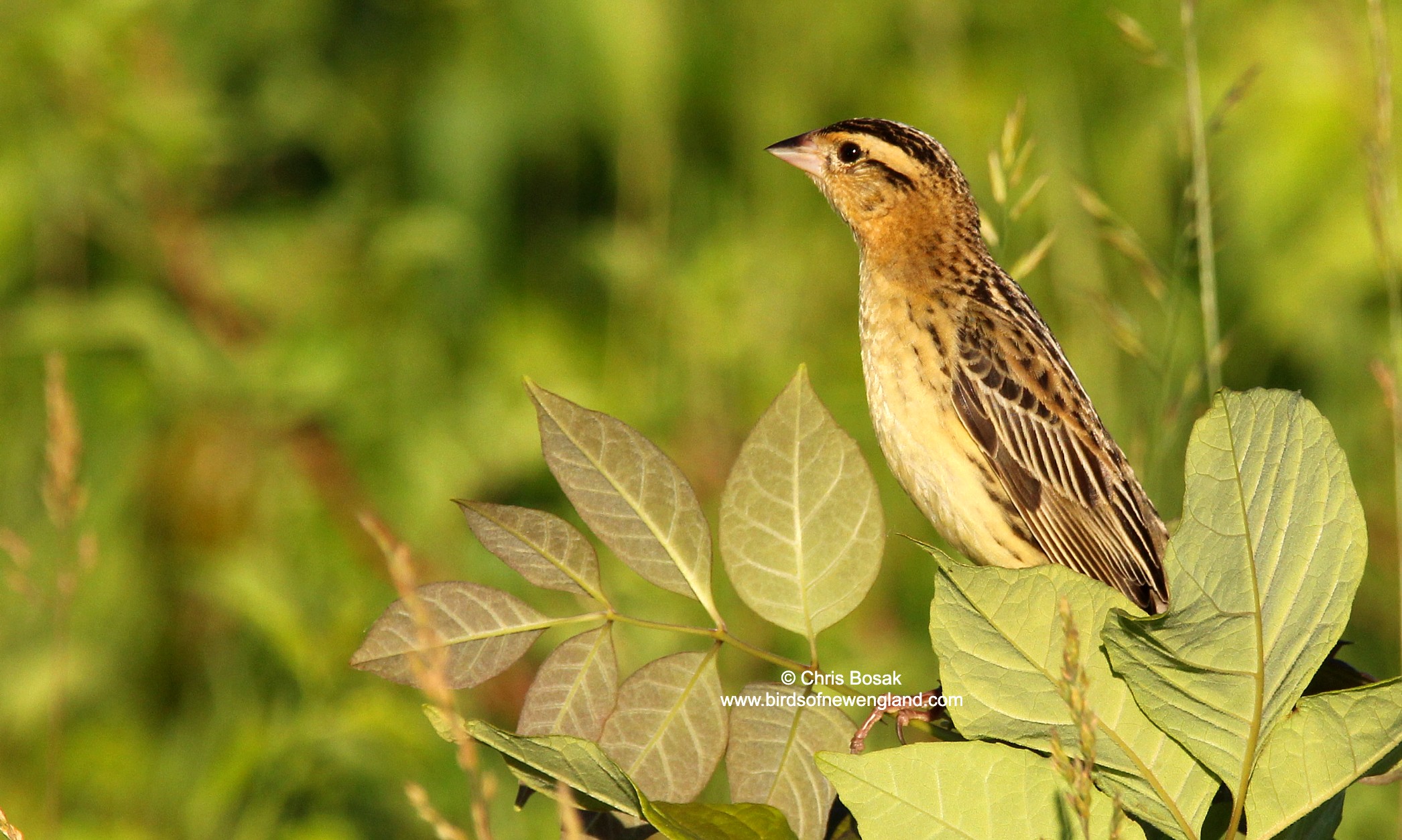
Photo by Chris Bosak A female bobolink perches in a field in Brookfield, Connecticut, summer 2026.
Every spring I head out to the same field to photograph bobolinks.
I know the hotspots to find them and wait patiently on the trails that cut through the fields for one to perch within reach of my zoom lens.
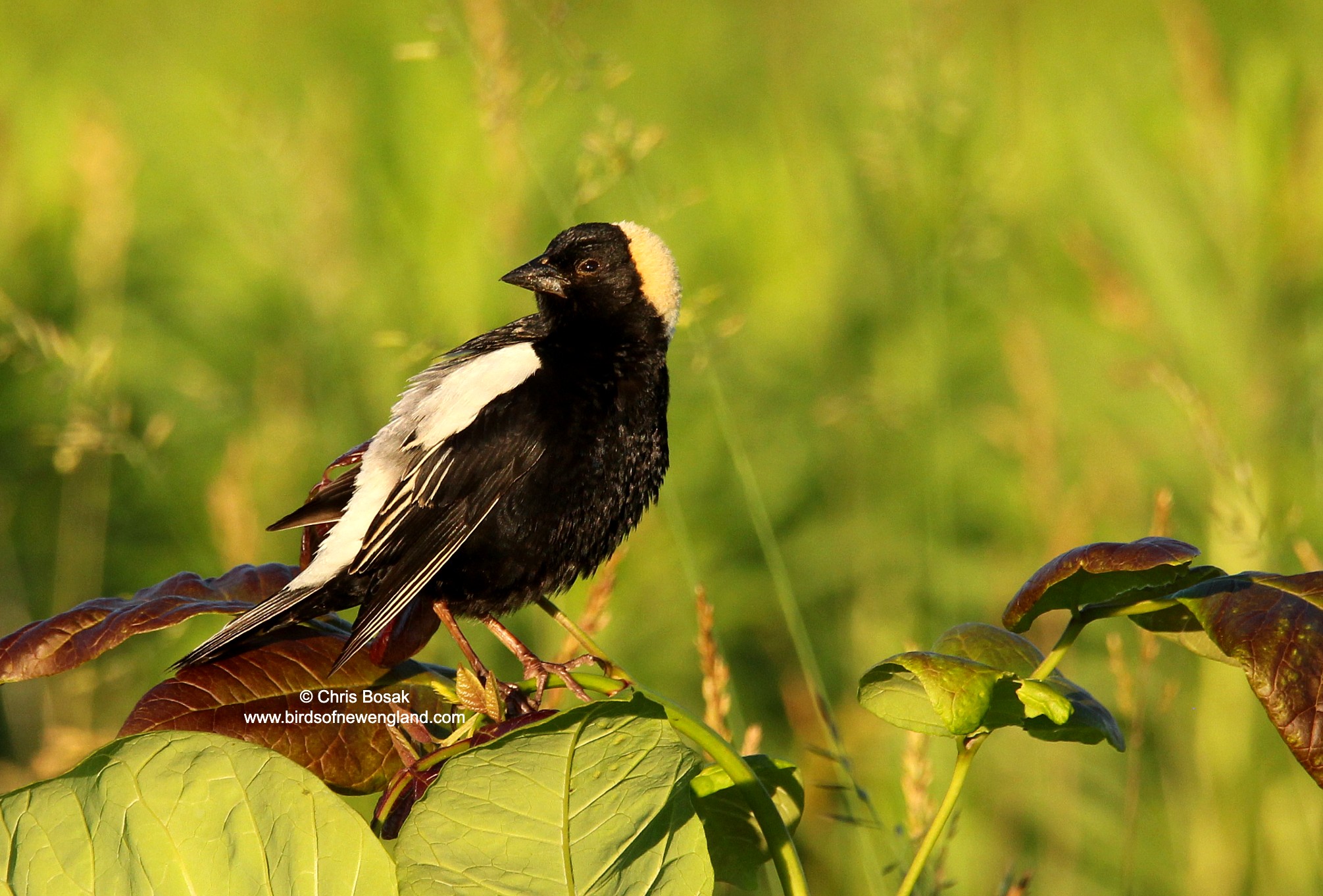
Even as I write this, several months after my latest adventure, I am picturing a male bobolink with its amazing black and white plumage accented by a large yellow patch on the back of his head. New England boasts many colorful birds, especially in the spring, and bobolinks certainly fit that bill.
As I was walking out of the field, I noticed a female bobolink perched among the tall grasses. I stopped in my tracks and snapped several photos of the willing subject. She didn’t have the striking colors or patterns of the male, but she had a subtle, understated beauty nonetheless.
The Cornell Lab of Ornithology describes the female bobolink as “warm buffy brown, streaked with dark brown on the back and flanks, and bold brown stripes on the crown.” That sounds about right. It must be a tough job having to write descriptions of brownish birds and capturing the subtle beauty they each possess.
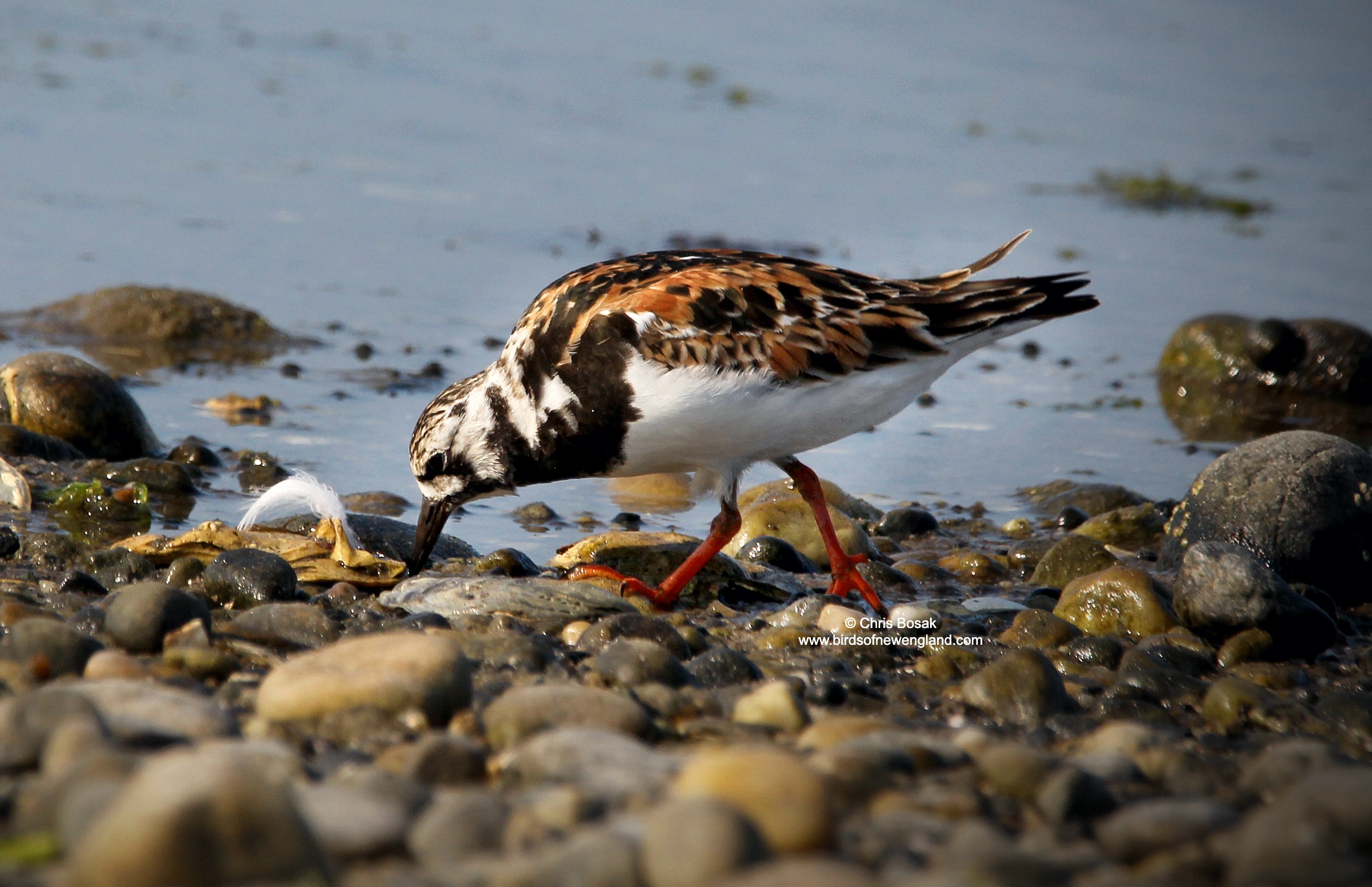
Photo by Chris Bosak A ruddy turnstone looks for food at Milford Point, Connecticut, summer 2026.
My son Andrew and I moved quickly along the beach to the fishing spot several hundred yards away. He lugged the heavy bag with a cooler, fishing supplies, and snacks. I carried the rods and chairs.
We passed dozens of shorebirds on the way to our spot at the mouth of a river that feeds into Long Island Sound. I noted mostly piping plovers, but there were also ruddy turnstones and a few American oystercatchers.
Normally, I would drop everything and obsess over trying to get photos of the birds, but we had this day planned for a while, and I didn’t want my hobby to take over the father-son time. Maybe I’ll stop for a few photos on the way back, I thought.
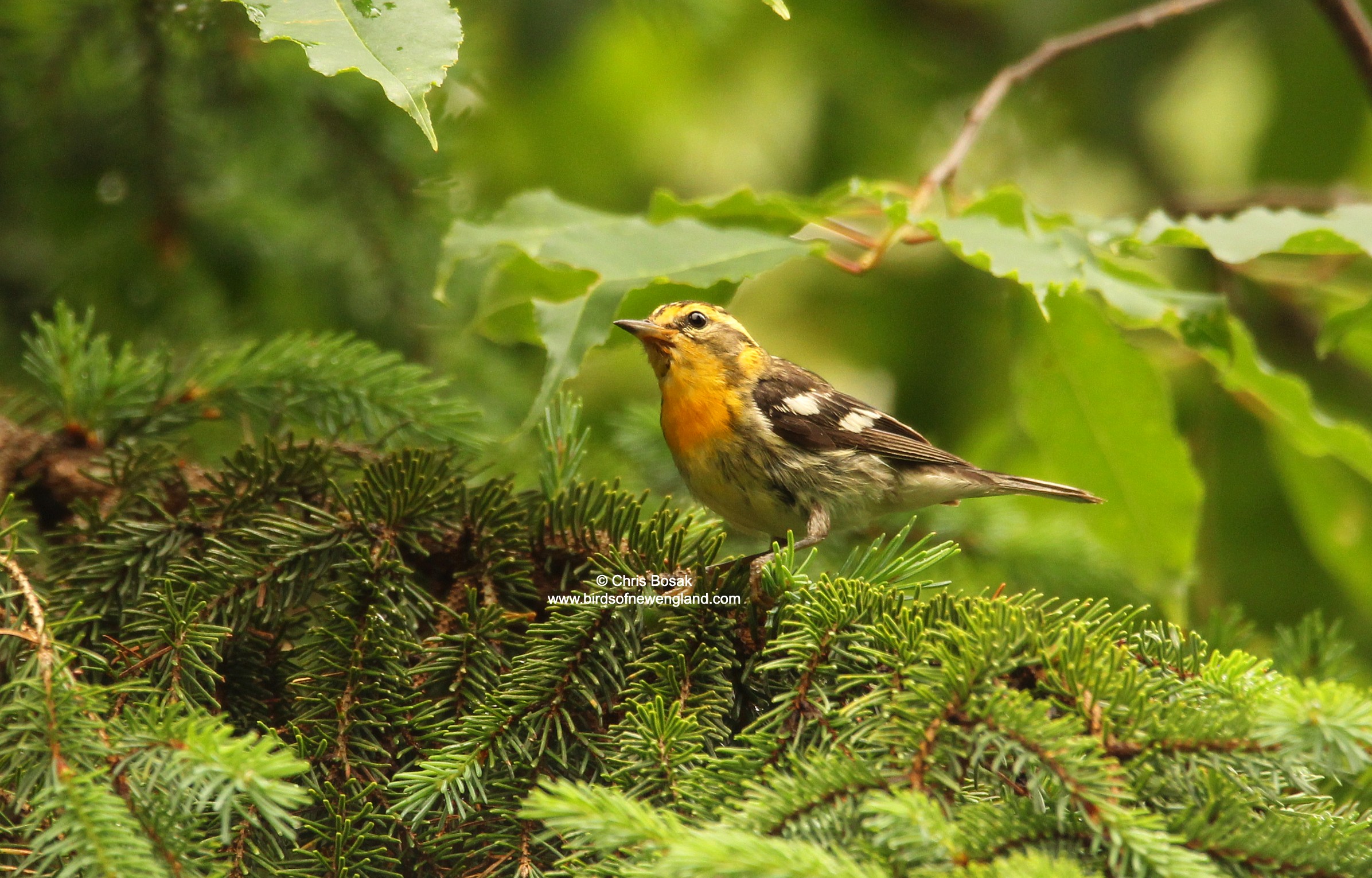
Photo by Chris Bosak A blackburnian warbler in Pittsburg, NH, summer 2026.
The birding action was relatively slow as we tromped along a skid trail used recently by loggers in the wilds of northern New Hampshire.
It was mid-afternoon in July, so the lack of birds was not a surprise. Merlin, the app that identifies bird sounds, picked up the calls of a magnolia warbler and a golden-crowned kinglet, and we found both of them with little effort.
Another bird, not detected by Merlin, flitted among the top of a spruce. Before lifting the binoculars, I would have guessed it was a magnolia warbler because I noted some yellow in the plumage, and magnolias had been plentiful the entire trip.
Through the binoculars, it was evident the bird in question was a blackburnian warbler. It lacked the brilliant fiery color of a breeding male, so it was either a female, first-year bird, or male transitioning to non-breeding plumage. Such is the challenge (and frustration) of summer and fall warbler identification.
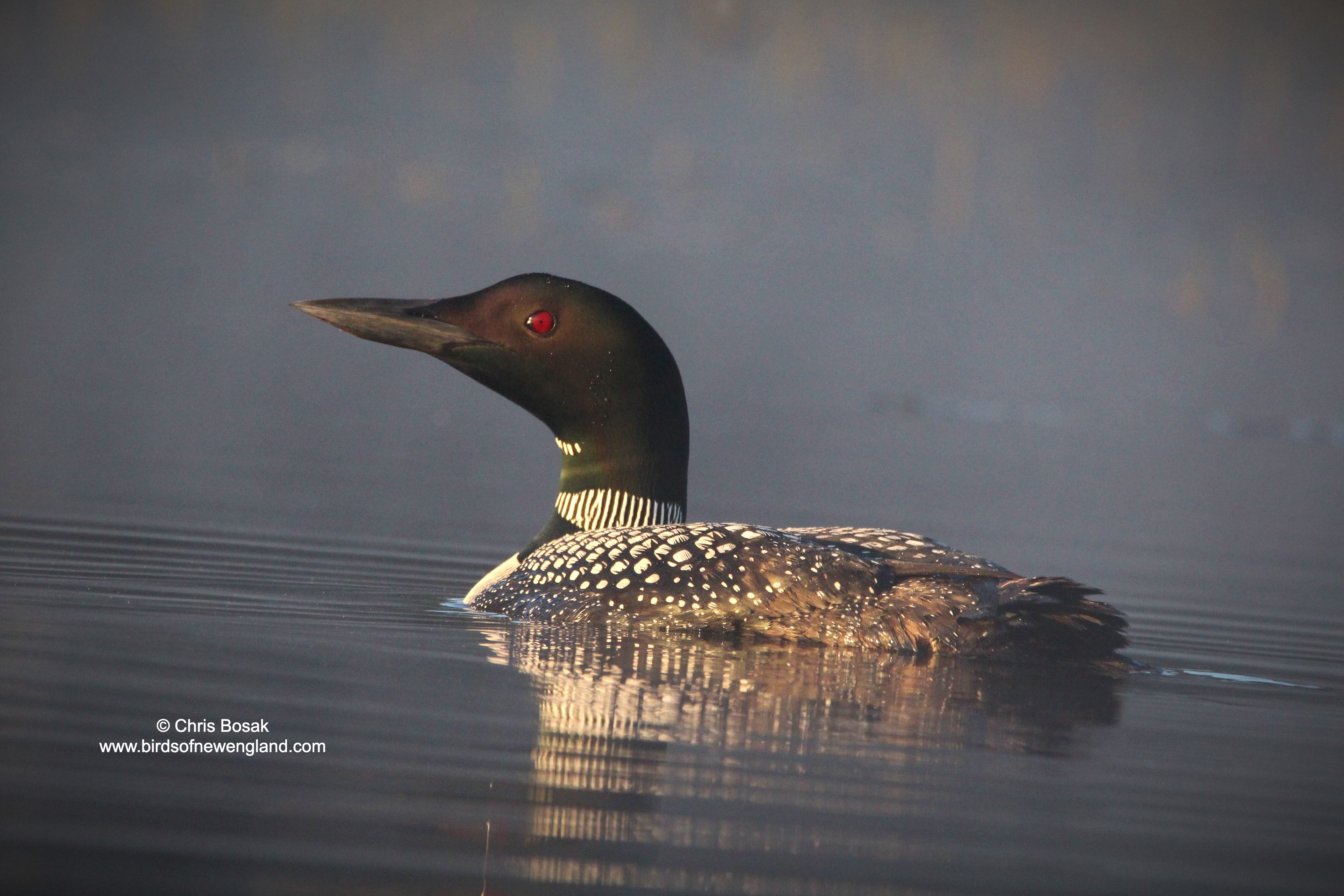
Photo by Chris Bosak A common loon rests on a pond in northern New Hampshire, summer 2026.
It was a scene you might see in the opening frames of a movie.
The mist was thick coming off the water, and the sunrise peaking over the distant mountain painted the eastern sky a brilliant orange. Tall pines marked the edge of the pond, and a pair of loons silently floated on the mirror-like water.
Heather and I slowly paddled toward the loons but kept a respectable distance so as to not disturb their morning routine, which seemed to be not much more than sitting still on the water. Neither one of the loons made any of their iconic sounds, but the scene was still quintessential New England regardless.
As we paddled east toward the rising and slowly brightening sun, belted kingfishers on either side of the pond rattled simultaneously, creating a stereo effect among the din of birdsong that filled the morning air. Based on what we heard, common yellowthroats, Swainson’s thrushes, red-winged blackbirds and red-breasted nuthatches were the dominant songbirds hiding in the thick woods.
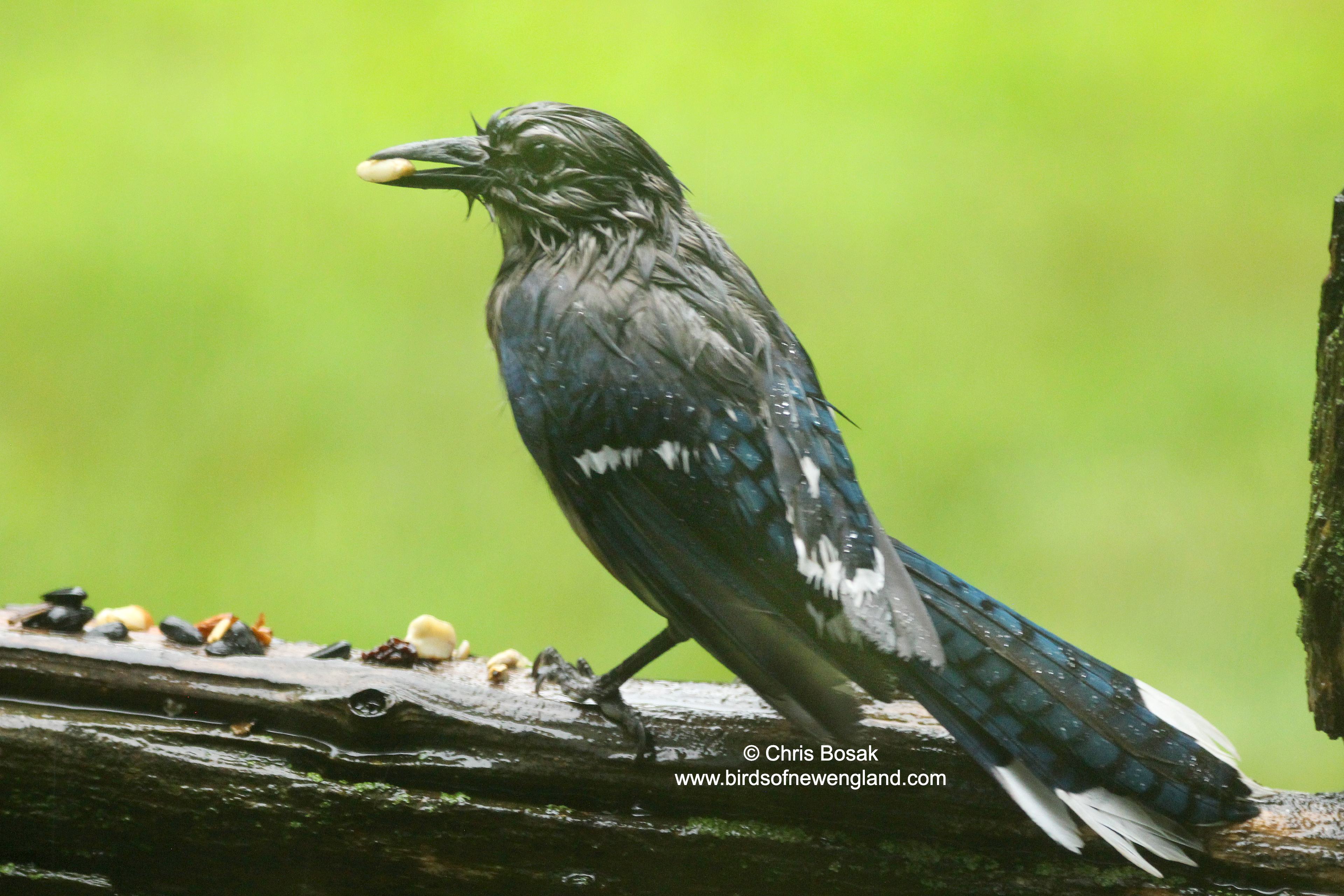
Photo by Chris Bosak A soggy blue jay visits a feeder during a heavy rain in New England.
A major storm blew through New England the evening of the Fourth of July, but it was the weather event that happened two days later that caught my attention.
It was a work-from-home day, so I had a front-row seat to the feeders all day. I thought it was going to be a slow day as it rained heavily all day. And the action was slow, at first.
After a few hours of relentless teeming rain, the birds started coming again. Not surprisingly, the first birds to show up in the rain were cardinals. They are usually the first to show up in the morning and the last ones left as darkness settles in, so it was only fitting that they would appear first on this wet, soggy day.
The blue jays appeared not long after. Then the catbirds, then the chickadees and titmice. At this point, all of the birds appeared at the feeder looking like drowned rats. Remember, this wasn’t a gentle shower where the water would bead up nicely on the birds’ oily feathers and eventually roll away. This was a driving rain that soaked right through the layers of feathers.
So why were the birds out during this rain? Why not remain hunkered down until the rain passed?
The answer, of course, is that they were hungry. Birds have a high metabolism and need to eat a lot to get through the hours and days. It is estimated that small songbirds eat between 25 and 35 percent of their body weight each day. The rain had been steady for hours and wasn’t going to let up anytime soon.
Birds face many risk-reward dilemmas in their lifetimes. Migrate and face the inherent dangers of traveling great distances, or remain up north and risk freezing during the winter? Fight, flight, or hide when a predator is near?
In this case, the possibility of starving finally outweighed the potential pitfalls of venturing out in a heavy rain. Other than their ragged appearance, the birds did not appear stressed. It was business as usual.
Photo by Chris Bosak A male bobolink perches in a field in Brookfield, Connecticut, summer 2026.
Just a few bobolinks I met the other day on a walk.
Photo by Chris Bosak A female bobolink perches in a field in Brookfield, Connecticut, summer 2026.Photo by Chris Bosak A bobolink perches in a field in Brookfield, Connecticut, summer 2026.
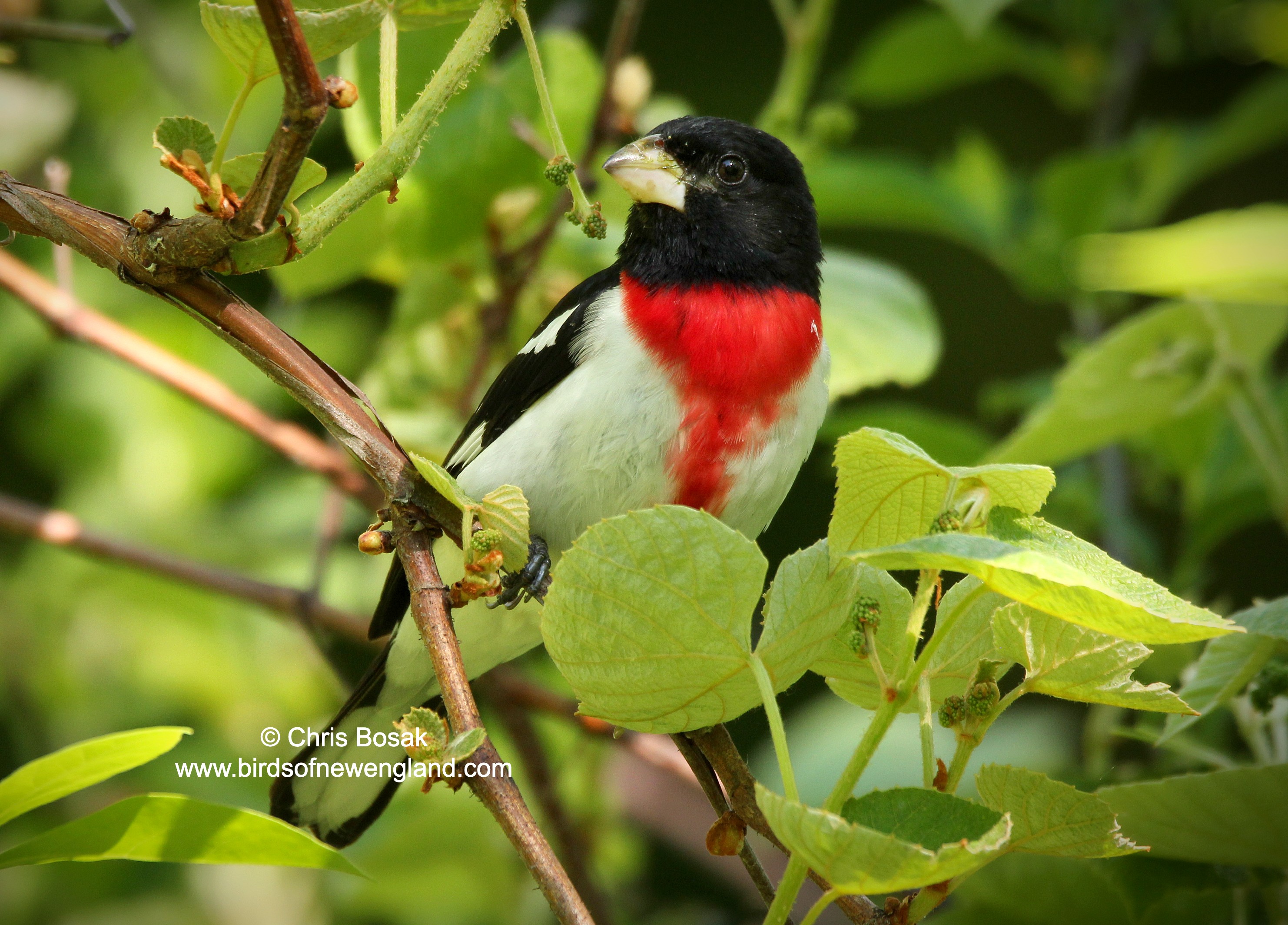
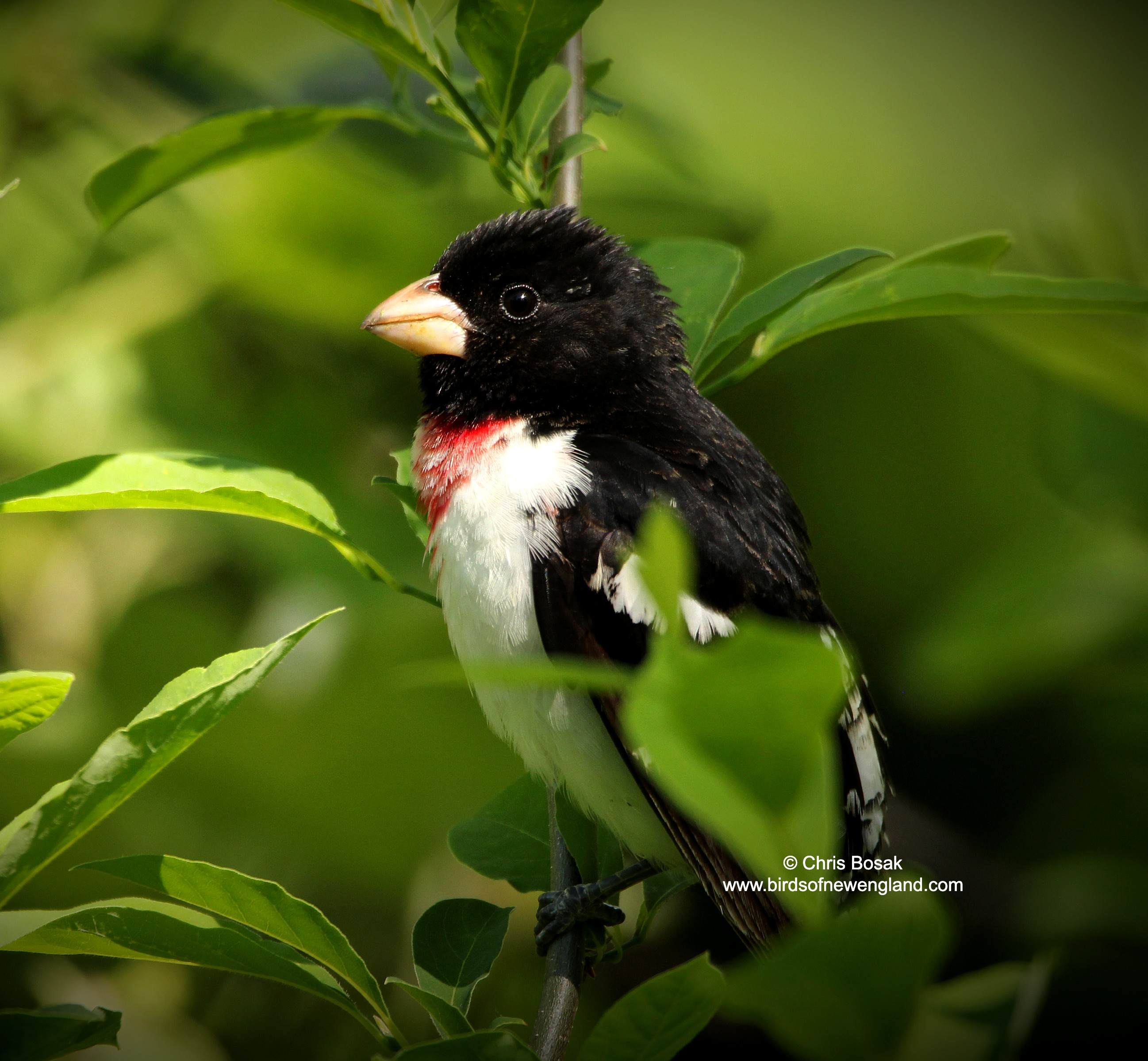
Photo by Chris Bosak A rose-breasted grosbeak perches in a bush at Huntington State Park in Redding, Connecticut, summer 2026.
Here are a few male rose-breasted grosbeaks I met on a recent walk.
Photo by Chris Bosak A rose-breasted grosbeak perches in a bush at Huntington State Park in Redding, Connecticut, summer 2026.Photo by Chris Bosak A rose-breasted grosbeak perches in a bush at Huntington State Park in Redding, Connecticut, summer 2026.