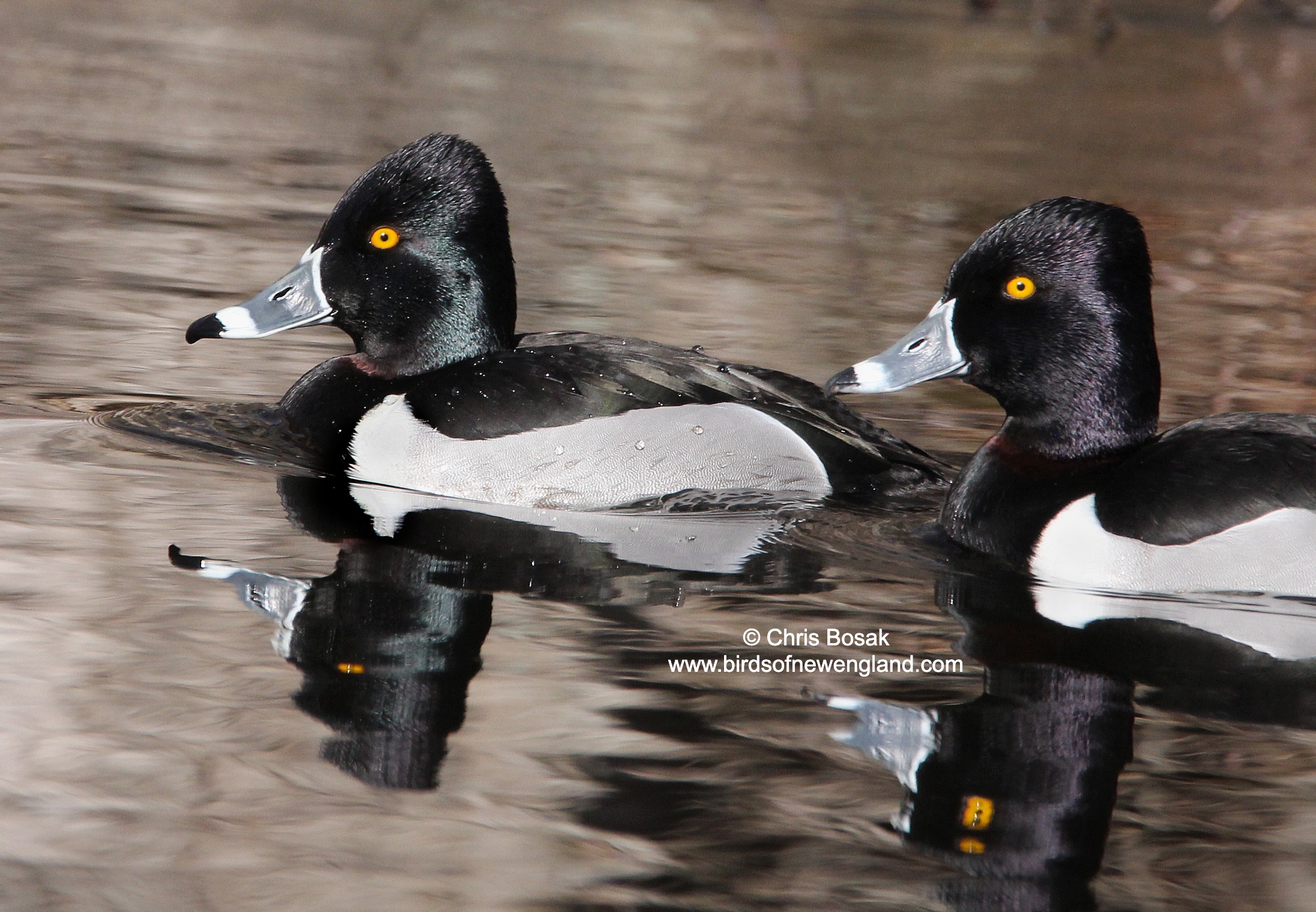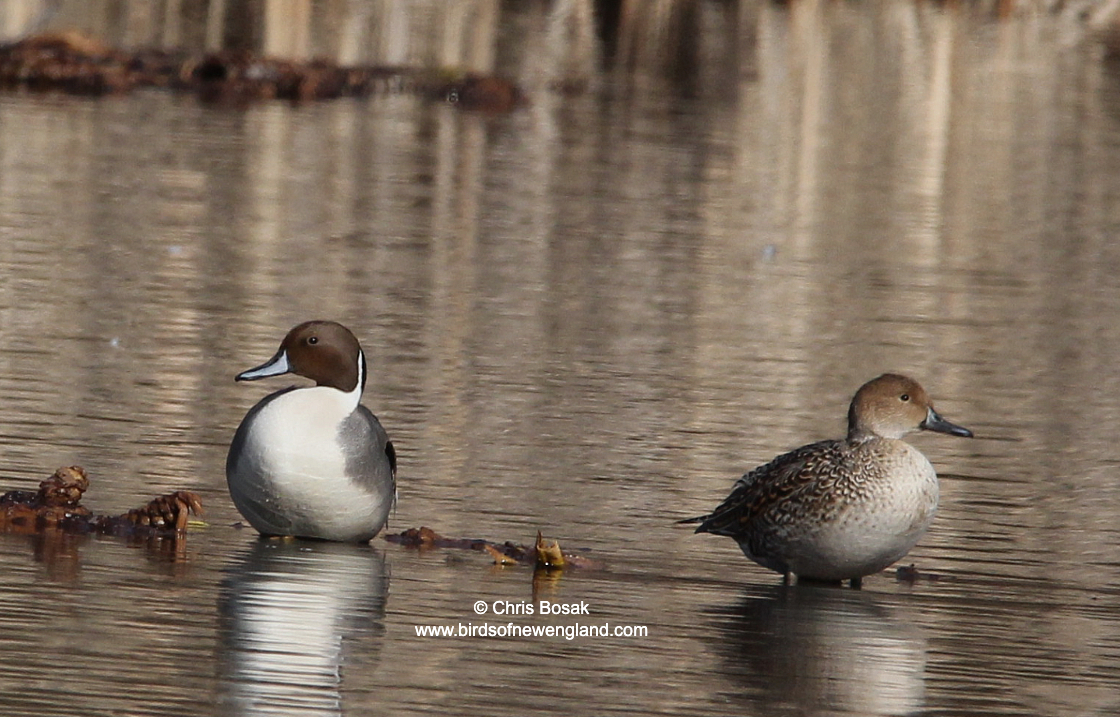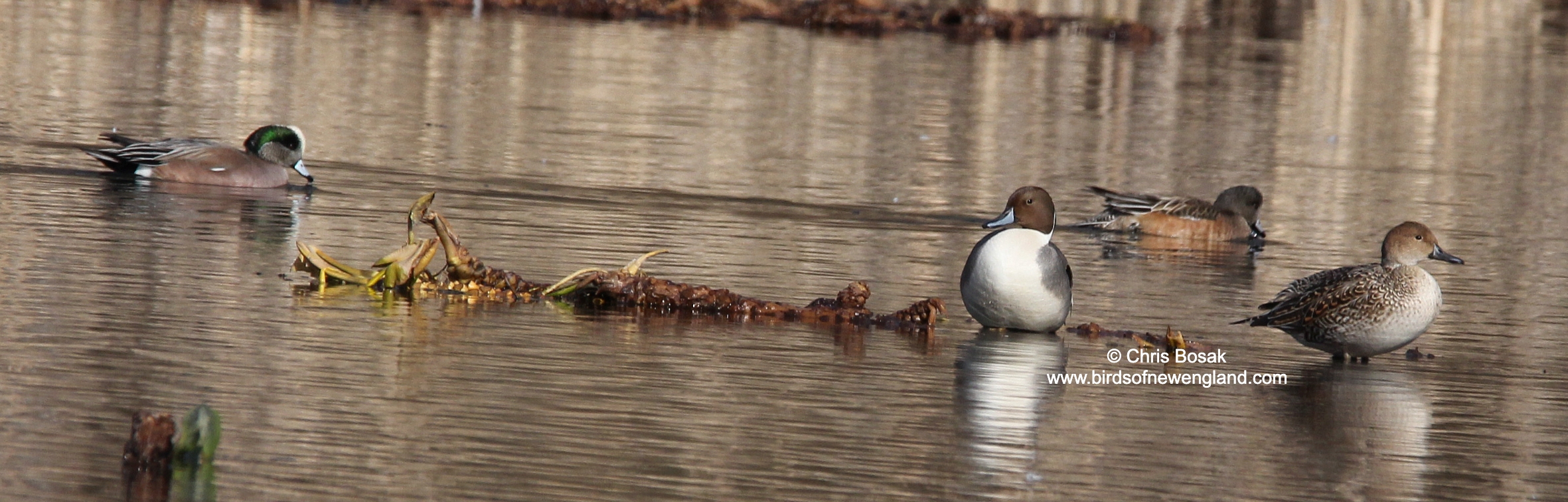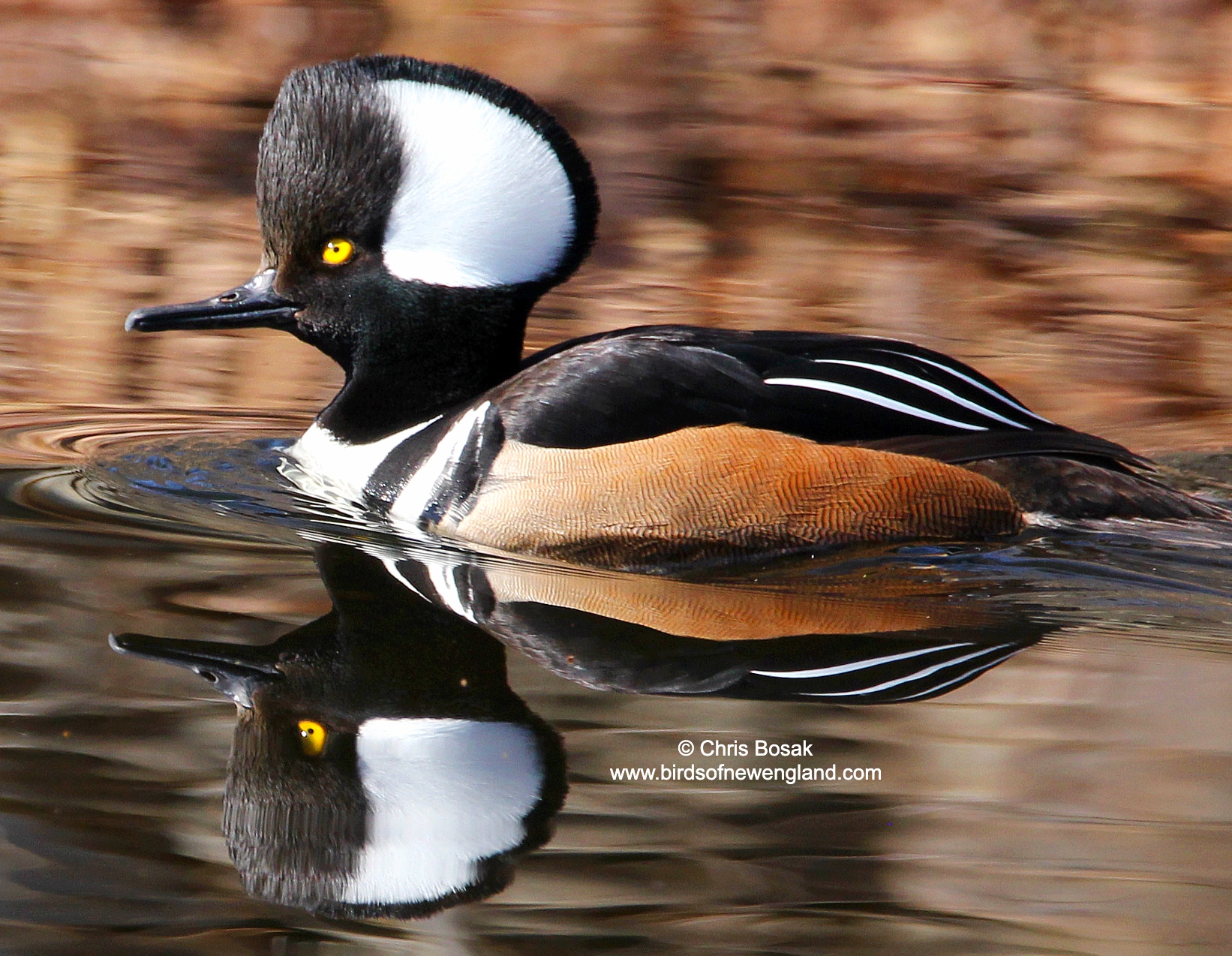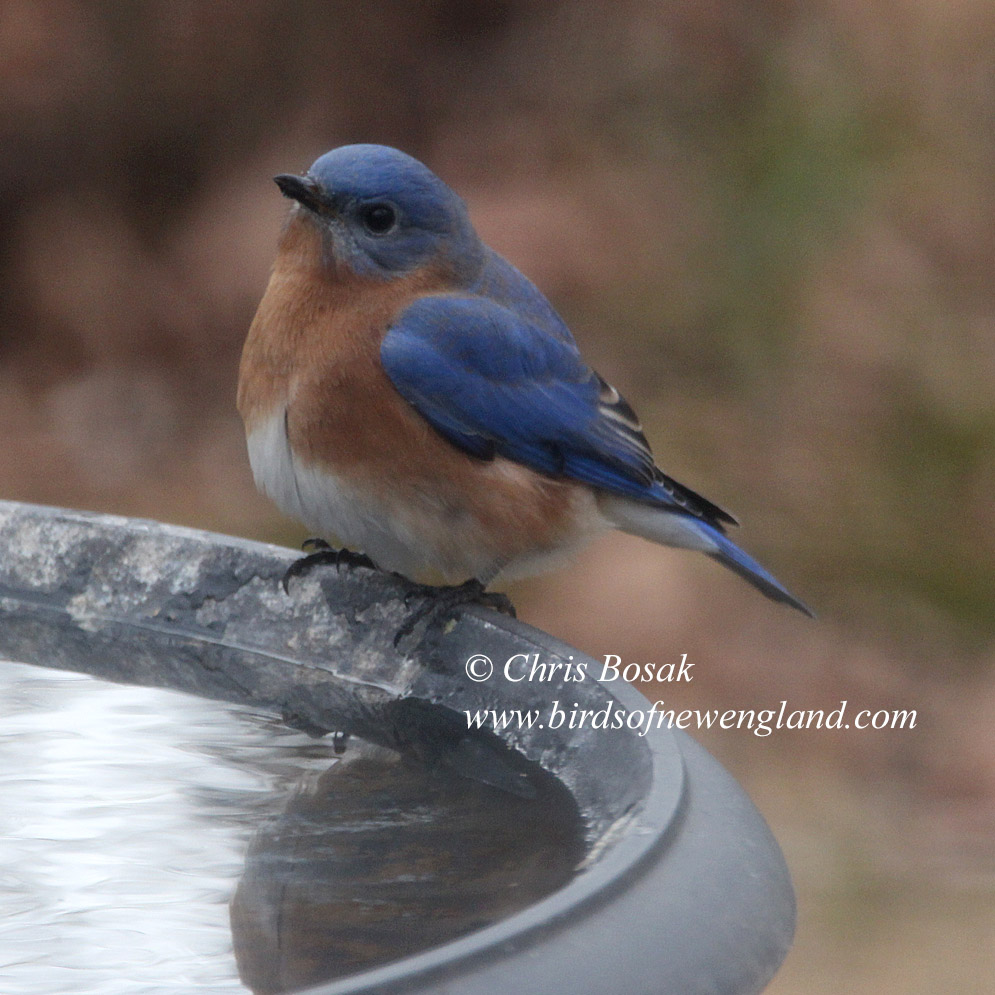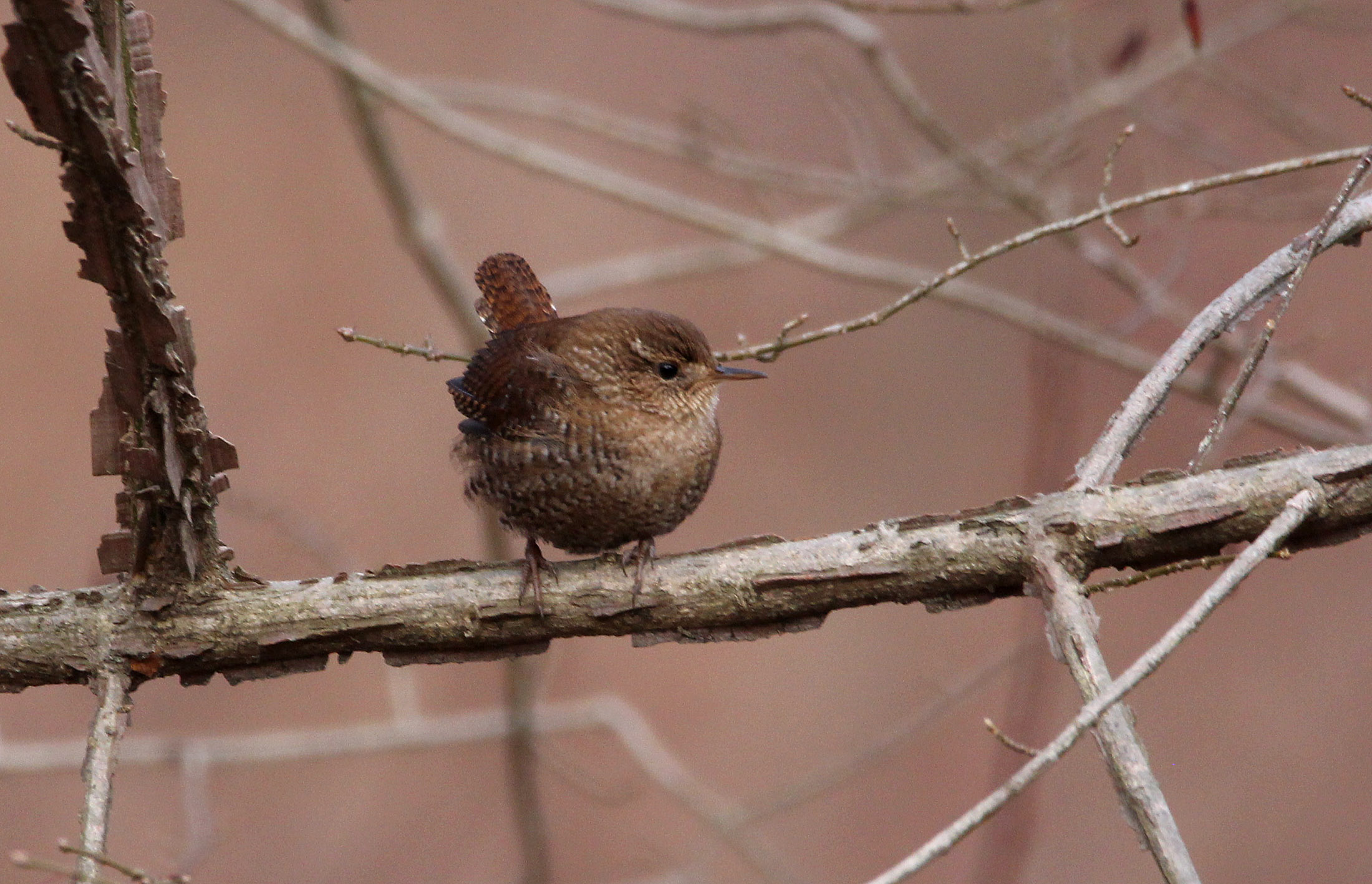
I had a nice bird walk this weekend and found 24 species in the bitter cold. When I got home, I was treated to a surprise eastern bluebird sighting in the yard. Below, a winter wren was one of the highlights of the walk.


I had a nice bird walk this weekend and found 24 species in the bitter cold. When I got home, I was treated to a surprise eastern bluebird sighting in the yard. Below, a winter wren was one of the highlights of the walk.


When birdwatching has been an integral part of your life for so long, almost everything has an association with birds. Christmas is no exception.
For this holiday season, I’m going to examine some of my favorite Christmas birding associations and memories.
This one is a little morbid, but it clearly sticks out in my mind. When the boys were little, about 7 and 4, we sat on the floor by the tree Christmas morning passing out their gifts one by one. I glanced out the sliding glass door onto the deck only to see a Cooper’s hawk devouring a mourning dove about six feet away.
Continue reading
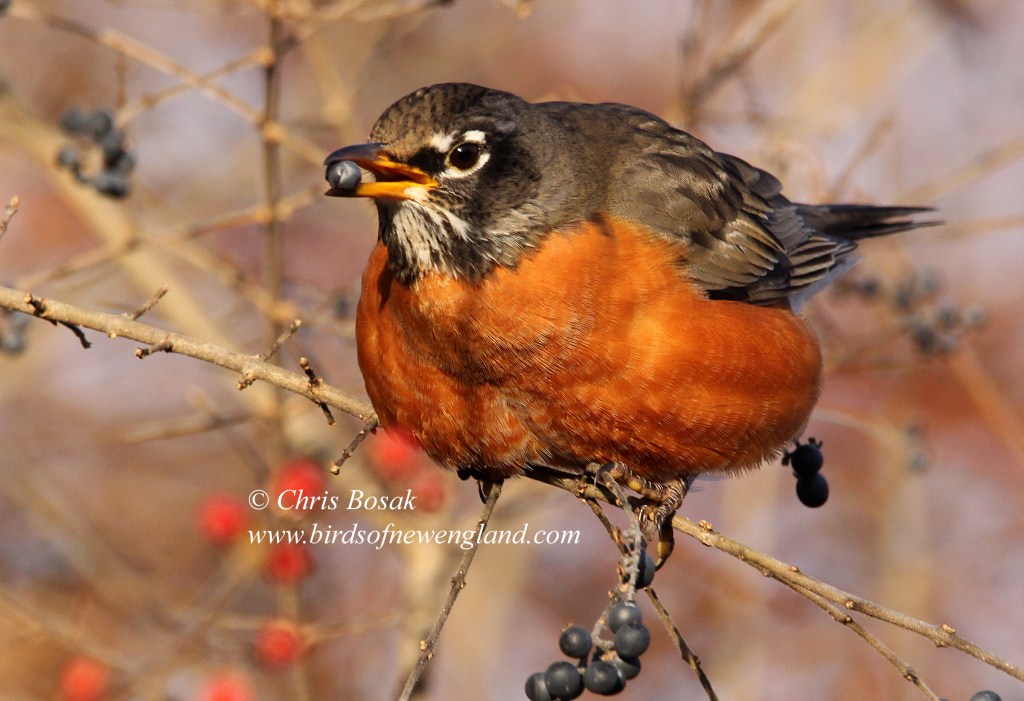
I got lucky with this photo. I assumed the birds did not like the dark berries in a small tree in the side yard because winter was moving along and nothing was touching them. As I sat at my desk working the other day, I noticed a flurry of activity out of the corner of my eye. It was a flock of a dozen or more robins descending upon the tree at once. I sneaked onto the covered porch by the tree and hoped the robins wouldn’t take off at the disruption. Most of the photos did not turn out well because of distracting branches in the way, but this one turned out pretty well.
I’ve had pretty good luck with birds-eating-berries photos this past week. I’ll post more photos soon. Thanks for checking out birdsofnewengland.com

I walked across the living room toward the large window that offers a view of the bird-feeding station and birdbath. I stopped dead in my tracks as a bird much larger than I expected to see was perched on the side of the birdbath.
Wisely, all of the other birds were nowhere to be seen.
It was a Copper’s hawk, one of the hawks in New England that commonly preys on small feeder birds. The large bird of prey had no interest in the birdbath’s water — either for drinking or cleaning. It was simply using the structure as a perch to get a better look at the feeders and nearby bushes. It hopped off the birdbath and onto a hemlock branch I had discarded to give the feeder birds a place to hide. After peering through the underbrush and finding nothing, the hawk flew off.
Continue reading
My destination was the northern part of Maine. I’m talking way north. Get to Baxter State Park and keep going for several more hours.
I drove pretty much through the night to get there. I took a few half-hour breaks to sleep and then continued on my way. I have been to northern New Hampshire dozens of times, and I have been to the middle of Maine many times. I’ve always wanted to see what Aroostook County was all about so I took the opportunity to head up there and finally see for myself.
I settled at the border town of Fort Kent where only the St. John River separates the U.S. from Canada.
Wildlife, of course, was the driving force behind the decision to drive up there. The boreal forest, to me anyway, is a magical place filled with so many interesting creatures. Moose are my favorite creatures, but things like lynx, loons, eagles, grouse, boreal chickadees, Canada jays, and other specialty species unique through the habitat are also a draw.
Continue reading
This has been the first spring/summer since I can remember in which I have not seen a scarlet tanager. I was hot on the trail of a few in the spring, but I never did spot the birds.
Granted, my birding this year has been hampered by foot ailments, but I have still spent enough time out there that I feel I should have seen one or two of these beauties.
The scarlet tanager is one of the most sought-after species in New England in the spring. Their electric red bodies with contrasting black wings make it one of our most unique and beautiful birds. The problem with tanagers is that they mostly hang around the tops of tall trees. Even a bird as bright as a teenager can remain hidden in a full canopy of oak or maple leaves.
Continue reading
The chirping was coming from the small tree right next to me. That much was clear. What wasn’t clear was where the bird was exactly or what type of bird it was.
I looked among the leaves for a minute or two to no avail. Then the bird jumped down to a dead branch just above eye level. It was a chipping sparrow. If it had been singing instead of chirping/calling I would have recognized it without having to see it. I can recognize many calls or chips but apparently not the chipping sparrow’s.
I was glad the bird hopped down to offer a good look. Too many times to count I’ve zeroed in on a bird following its song or call only to have the bird eventually fly off with me never having seen it or identified it. It’s one of the more frustrating things when it comes to birdwatching.
Continue reading
Here’s a shot of a male common yellowthroat. They are a common warbler that nests throughout most of the U.S. and into Canada. They migrate south in the fall, but in my observations, stick with us a little longer than many of the warblers.

I’m not going to try to emulate Dr. Seuss, but I think he would have drawn plenty of inspiration from a walk in the woods in New England in May.
His classic “Oh, the Thinks You Can Think!” comes to mind, but only altered to “Oh, the Colors You Can See.”
A recent walk made me think of this. The majority of the walk was along a wide dirt path with shrubby habitat on both sides. Beyond the thickets on one side was a large field and beyond the thickets on the other side were deep woods. It is perfect habitat for a bird walk.
The first bird I saw was a male eastern towhee. It was once called rufous-sided towhee because of the unique dark orange color of its sides that complement the otherwise white and black plumage of the bird. The bird’s red eyes are visible when it approaches among the shrubs closely enough. I did not see a female towhee on this particular day, but they are lighter brownish-orange where the male is black.
Continue reading
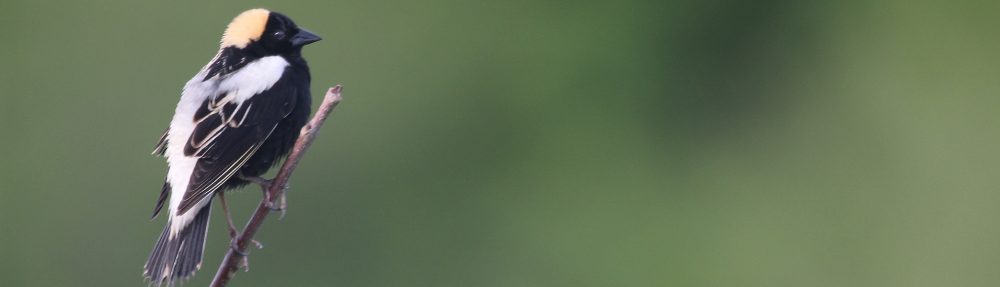
Here’s one more bobolink photo as a follow-up to my last post.