Photo by Chris Bosak
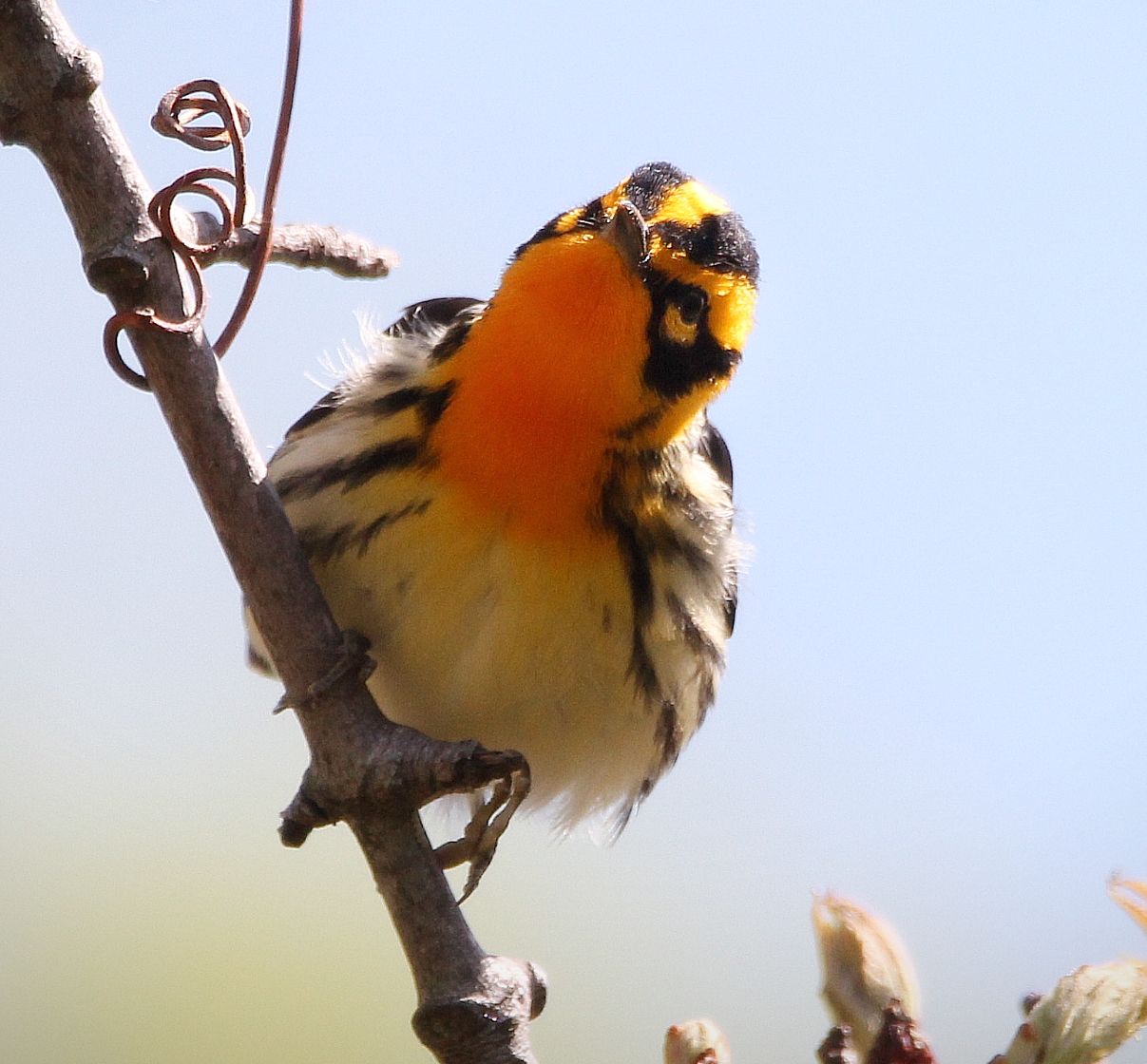
Blackburnian warbler at Presque Isle State Park, Erie, Pa., May 2025.
Here are a few warbler photos I took earlier this month and never got around to posting, until now. The photos don’t do it justice, but the blackburnian warbler is one of the more strikingly colored birds that pass through New England. The warbler migration is winding down, but the ones that nest in our region will keep us busy and occupied for the next few months.
Photo by Chris Bosak
Blackburnian warbler at Presque Isle State Park, Erie, Pa., May 2025.Photo by Chris Bosak
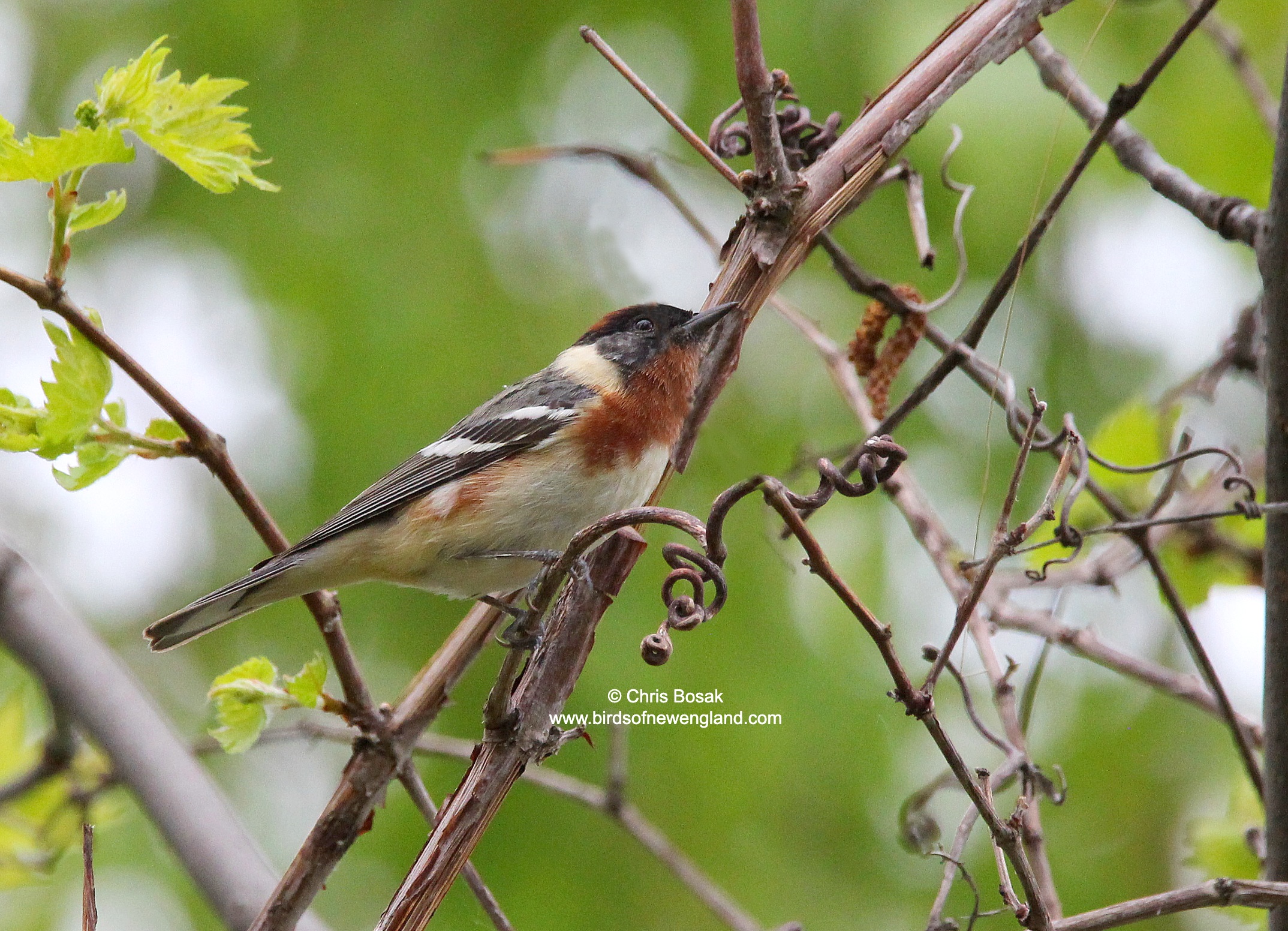
Bay breasted warbler at Presque Isle State Park, Erie, Pa., May 2025.Photo by Chris Bosak
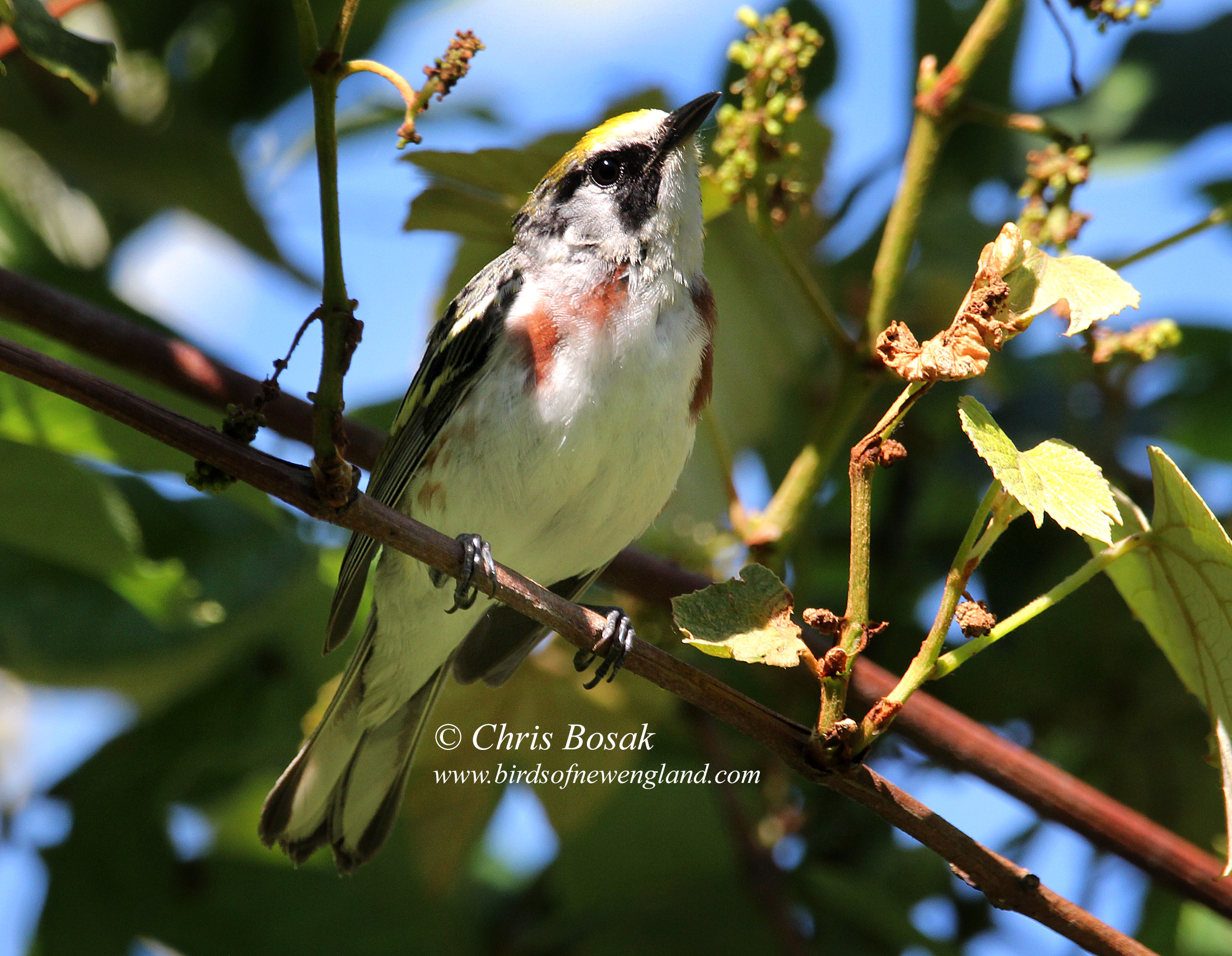
Chestnut-sided warbler at Presque Isle State Park, Erie, Pa., May 2025.Photo by Chris Bosak
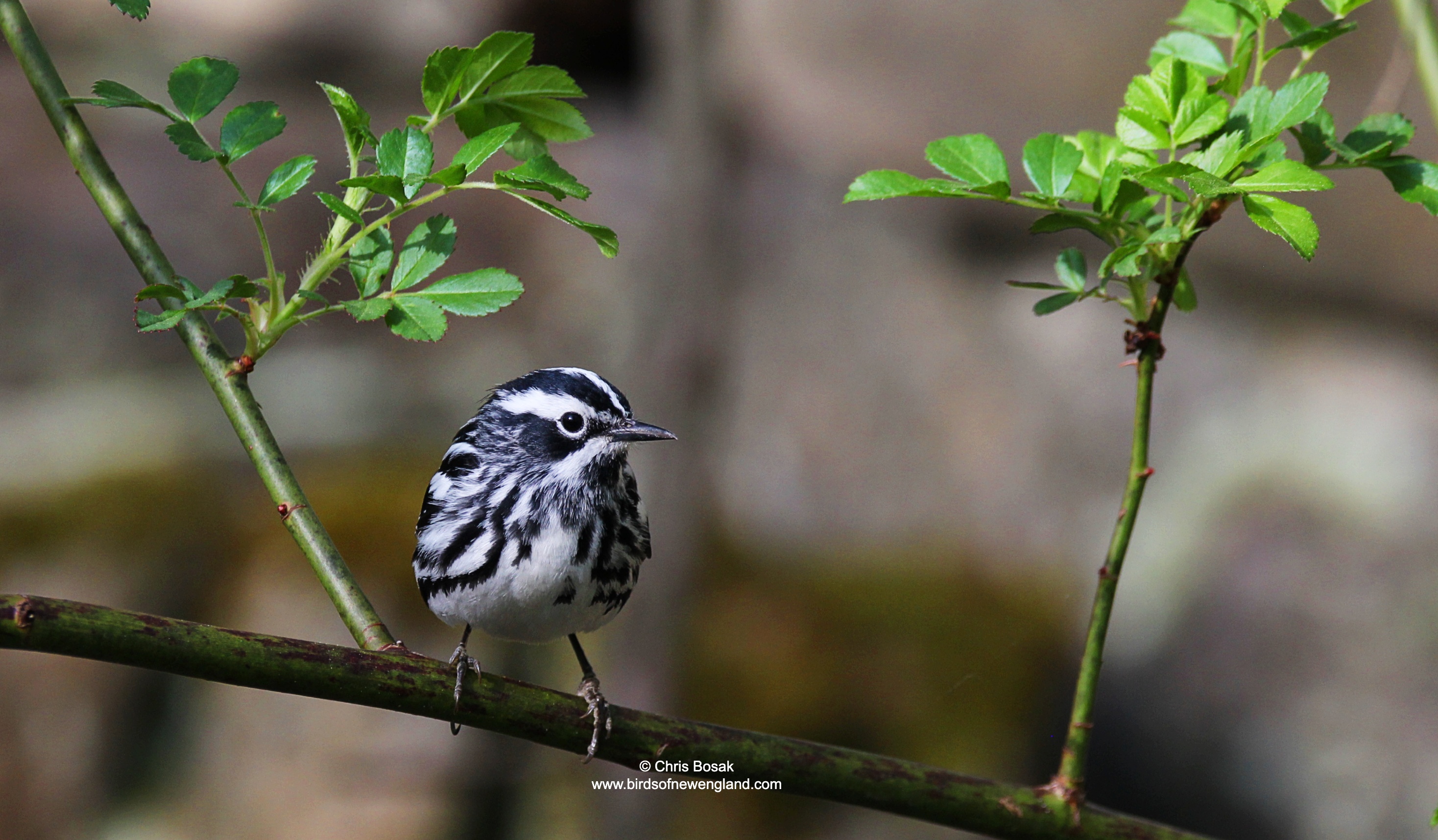
Black-and-white warbler, New England, spring 2025.Photo by Chris Bosak
Blackburnian warbler at Presque Isle State Park, Erie, Pa., May 2025.
Photo by Chris Bosak – A chestnut-sided warbler perches in the brush in New England, spring 2024.
It was one of the better spring migrations I’ve had in a long time. I got out there more than in previous years and visited a greater variety of places.
The big week, of course, was the visit to Erie, Pennsylvania, during the peak of the migration season. I was there for my niece’s wedding but arrived several days in advance of the event to stay with my brother and visit Presque Isle State Park, a birding hot spot. We saw over 70 species of birds over the three separate visits.
I also hit my local New England spots several times a week during migration, starting in late March and going into June. It’s always interesting to see how the spring migration starts with a trickle of very few species and peaks with several dozen species all moving through at once.
Photo by Chris Bosak – Baltimore oriole, New England, 2024.
When the peak of your favorite hobby lasts only a few weeks each year, you better make the most of that time.
For birdwatchers, that is spring. Specifically, the last week of April and the first two weeks of May. Of course, the spring migration started many weeks ago and will last into June, but the sweet spot is those few weeks.
As luck would have it this year, my niece planned her wedding for mid-May. The wedding was held in my old hometown of Erie, Pennsylvania. I didn’t know it when I was growing up, but Presque Isle State Park in Erie is one of the top birdwatching destinations in the country. Presque Isle is a peninsula jutting into Lake Erie and, in addition to the many birds that nest there, several others use the land as a stopover before crossing over into Canada.
Instead of going home for a long weekend, I took the week off and made a vacation of it. I visited the park for several hours on Monday, Tuesday, and Thursday. Each day I saw something a little different. On Monday’s walk, I saw 51 different species. I did not keep track on Tuesday’s walk as I wanted to focus on photographing some of the warblers.
The warblers are back and delighting, confusing, and frustrating birdwatchers throughout New England.
Warblers are small, usually colorful, passerine (perching) birds that migrate into New England every spring. Many nest here while others continue north to nest in Canada. In the fall, they head to points south such as southern U.S., the Caribbean, Central America or South America. The odd warbler shows up on New England Christmas Bird Counts from time to time, but for the most part, they are gone before the snow starts to fly.
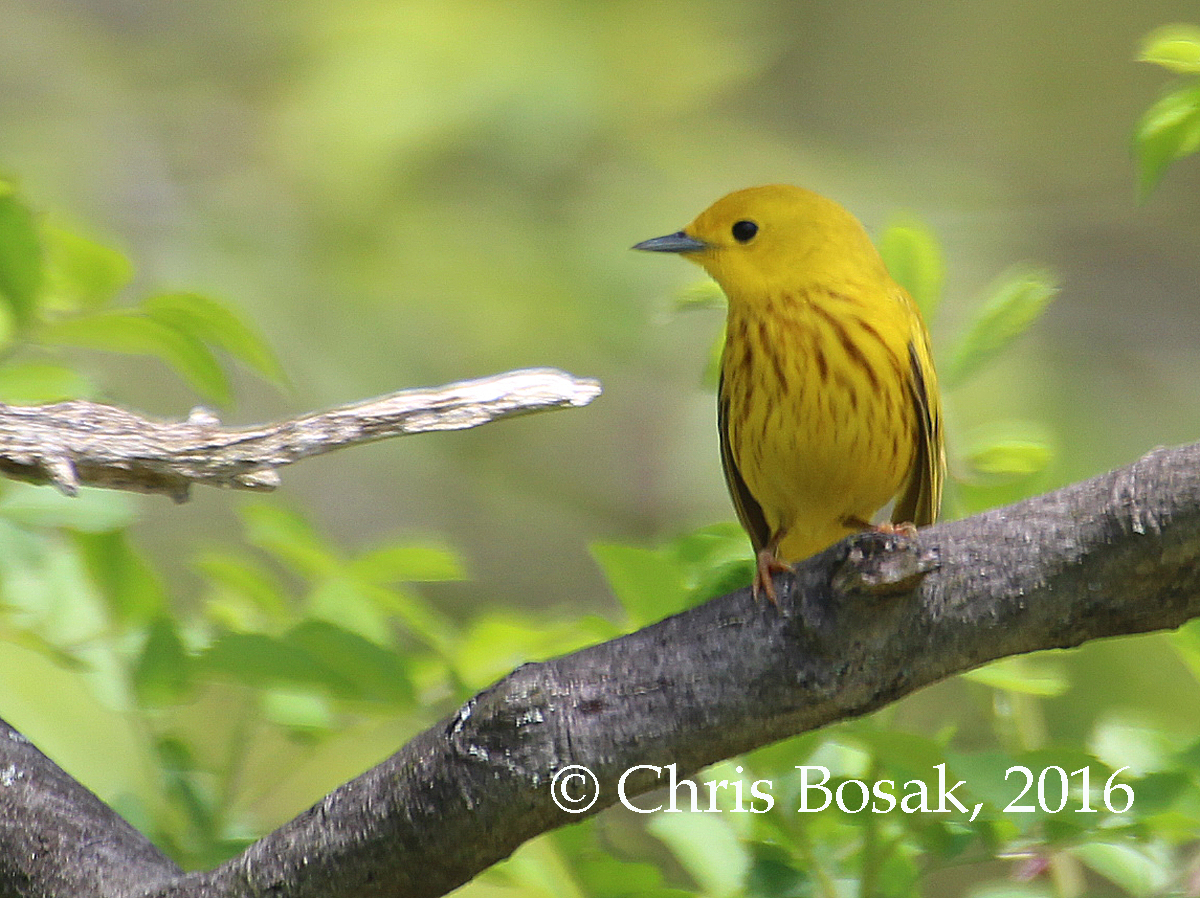
To me, the quintessential warbler is the yellow warbler. It is small, brightly colored, numerous throughout the region and sings its ubiquitous song (“sweet sweet I’m so sweet”) over and over from the brush. It is all yellow with some rusty streaking on its chest and belly.
Warblers come in all colors, however. Many are mostly yellow and many others have flashes of yellow in their plumage. Some are black and white, and some are mostly brownish. A few are mostly blue. It’s no wonder that the spring migration, highlighted by warblers, is the favorite time of year for most birdwatchers.
Photo by Chris Bosak
A yellow warbler perches in a tree in New England, spring 2021.
It was the type of walk you anticipate for about 11 months.
It started fairly slowly with robins and red-winged blackbirds as my only visible avian companions while a lone song sparrow sang in the distance. Soon enough, I heard a mockingbird going through its repertoire from a nearby shrubby patch. They usually belt out their songs from a fairly obvious perch and this guy was no different as I found him easily at the end of a branch.
As I watched and listened to this talented songster, a female ruby-throated hummingbird entered the scene. It hovered briefly at the honeysuckle but did not stay long as the blossoms were not quite ready to provide nectar.
A familiar song then permeated the area as dueling male yellow warblers proclaimed ownership of their respective patches. I was stuck in the middle of the rivals and enjoyed the sweet music. To us, it’s entertainment. To them, it’s a turf war with much at stake.
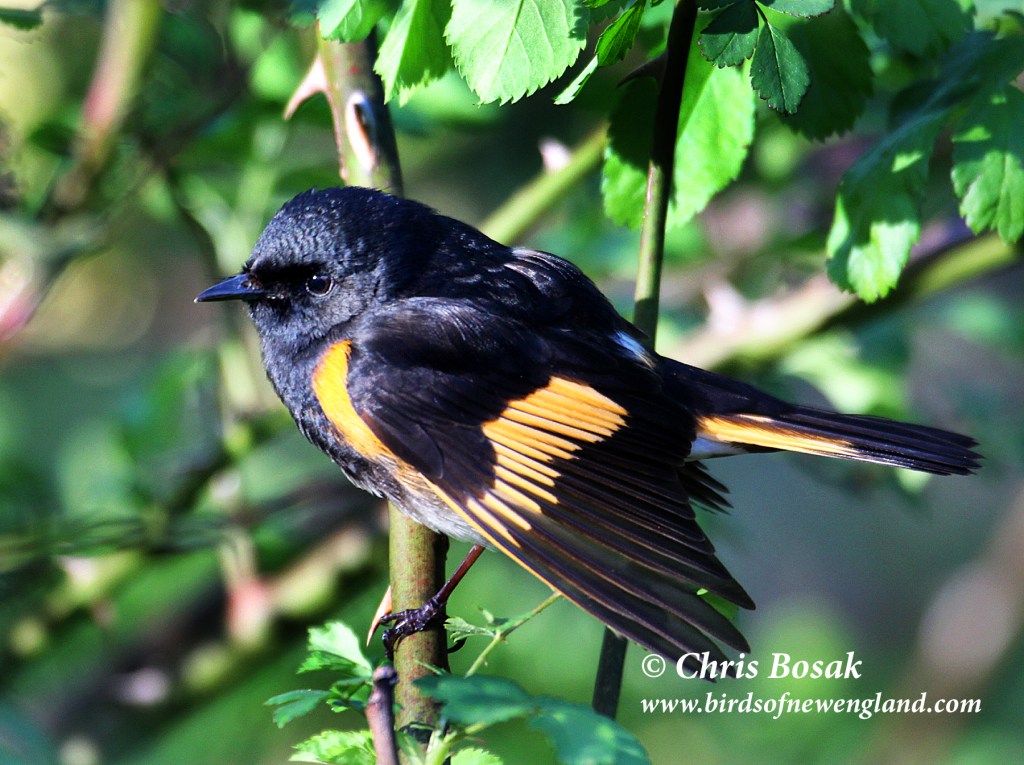
Photo by Chris Bosak An American redstart perches in a bush at Bennett’s Farm State Park in Connecticut, May 2020.
Something woke me up around 3:30 a.m. and I couldn’t fall back asleep. I gave up trying when the darkness outside my window started to brighten. What the heck, I told myself. It’s the height of warbler season so let’s go find some warblers. I made a cup of coffee and raced the rising sun to a nearby park. I headed down a path that has led to warblers in the past. It did again this time. There wasn’t a tremendous variety of warblers (maybe seven species) but the ones I did see kept me entertained.
My favorite was this American redstart that followed me along the path for an inordinate amount of time. It gave me great looks at it, but it would not sit still very well for photos. I managed a few decent shots despite his hyperactivity. A few more photos are below.
(Repeat text for context: I’m running out of COVID-19 lockdown themes so from now until things get back to some semblance of normalcy, I will simply post my best photo from the previous day. You could say it fits because of its uncertainty and challenge. I’ll call the series “A Day on Merganser Lake,” even though that’s not the real name of the lake I live near in southwestern Connecticut, it’s just a nod to my favorite duck family.)
Photo by Chris Bosak An American redstart perches in a bush at Bennett’s Farm State Park in Connecticut, May 2020.Photo by Chris Bosak
An American redstart perches on a branch at Bennett’s Farm State Park in Connecticut, May 2020.
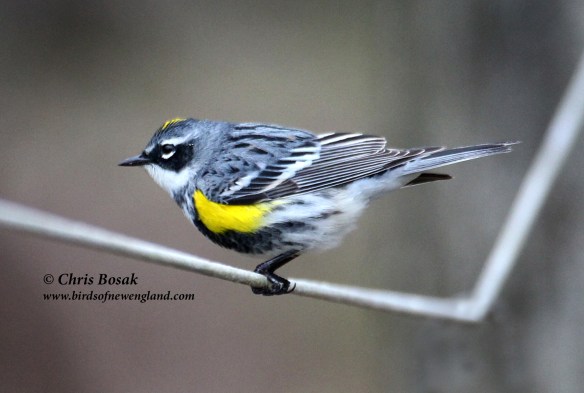
Photo by Chris Bosak A yellow-rumped warbler perches on a clothesline in Danbury, CT, April 2020. (Merganser Lake)
I doubt Tom Petty had birdwatching in mind when he wrote the lyrics “the waiting is the hardest part,” but it sure is appropriate for birders in the spring.
Signs of spring start as early as January or February when a few hardy flowers poke out of the ground. Owls also start their breeding season about this time but that is done in secret and largely unbeknownst to humans. March brings the first spring peeper calls, more flowers, red-winged blackbirds, American woodcock and, finally, eastern phoebes, at the end of the month. March also brings the official start to spring, of course.
April starts off fairly slowly until the first pine warblers arrive. Then it’s warbler season! The problem is, pine warblers are three weeks to a month ahead of most of the other warblers and other colorful migratory songbirds. Palm warblers and yellow-rumped warblers are the exceptions as they closely follow the pines.
Those three weeks to a month can seem like an eternity. We’ve endured winter and have slowly gotten small teases of spring. Bring it on already! We jump Continue reading →
Photo by Chris Bosak
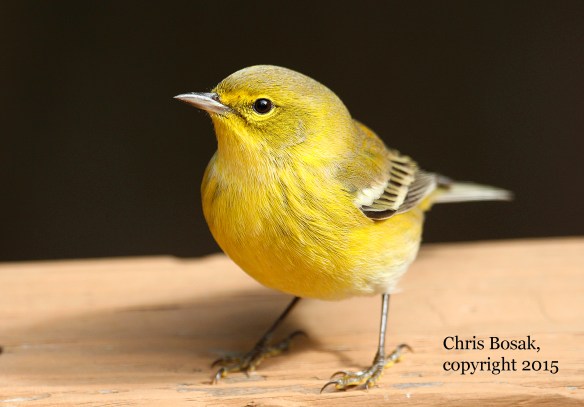
A Pine Warbler sits on a deck railing in New England this fall.
The early warblers started arriving in New England a week or two ago. Pine warblers and palm warblers are typically the first two species to make their way back this far north and, sure enough, both are back now. This post includes photos of both species so you know what you’re looking for. (Above is the pine warbler; below is the palm warbler.)
The spring warbler season is the highlight of the year for many birdwatchers. It will pick up gradually over the next week or so and then erupt from late April through the middle of May. At the height of the warbler migration, a New England birdwatcher can see between 20 and 30 warbler species in a single day. (It would take some effort, of course, but it’s very possible.)
Photo by Chris Bosak A Black-throated Green Warbler perches in a tree in Danbury, Conn., spring 2016.
Here are a few shots of warblers I got this spring but haven’t posted yet. So here they are, just kind of thrown at you in no particular order and without much description …
Oh, and there’s a few warbler shots at the end of the post that I took this year and had already posted. You can never have enough warbler photos.
Photo by Chris Bosak A Yellow Warbler perches on a branch in Greenwich, Conn., spring 2016.
Photo by Chris Bosak A female Yellow-rumped Warbler perches on a branch in Danbury, Conn., spring 2016.
Photo by Chris Bosak A Blue-winged Warbler seen at Fairchild Wildflower Sanctuary in Greenwich, Conn., May 2016.
Photo by Chris Bosak An Ovenbird stands on a log in Danbury, Conn., April 2016.
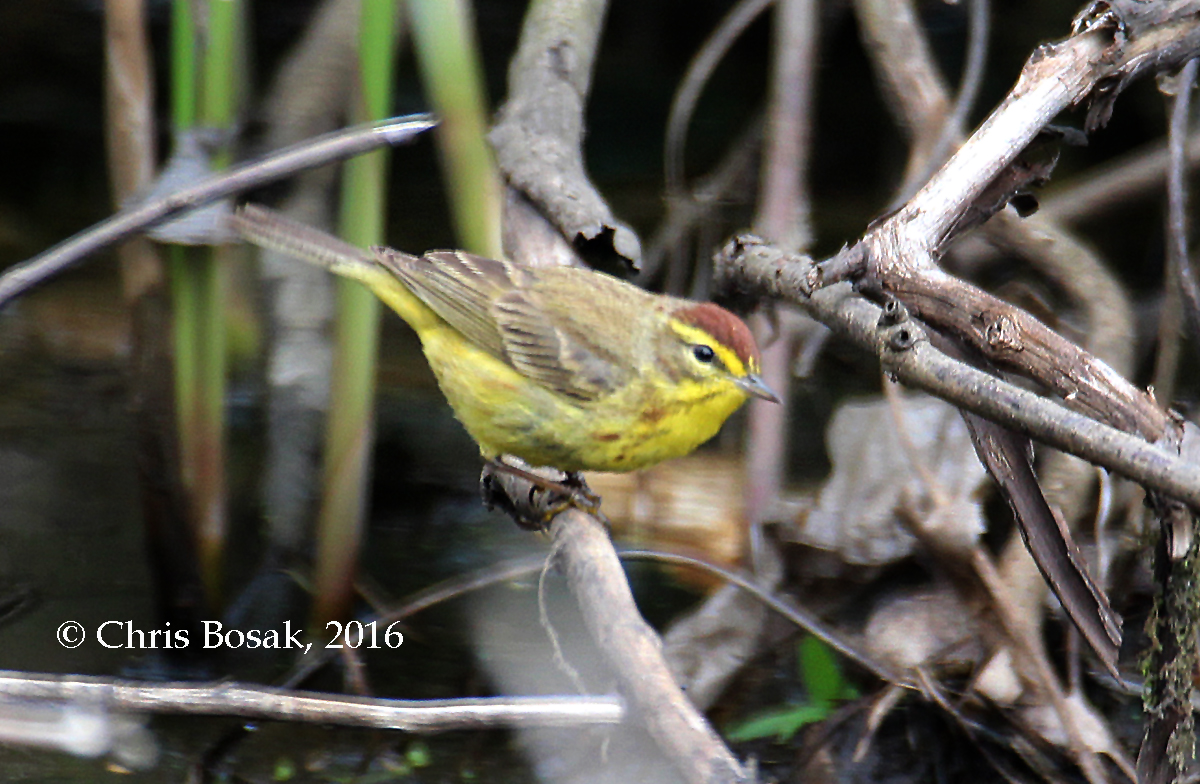
Photo by Chris Bosak A Palm Warbler perches on a branch near a pool of water in Selleck’s Woods in Darien, Conn., April 2016.
Photo by Chris Bosak A Yellow-rumped Warbler perches on a branch in Selleck’s Woods, Darien, Conn., April 2016.
Photo by Chris Bosak A Yellow-rumped Warbler perches on a branch in Selleck’s Woods, Darien, Conn., April 2016.
So far, early in this warbler season, Yellow-rumped Warblers are by far the most abundant species. That is true pretty much any year, but this year that really seems to be the case. I’ve seen only a handful of the other typical early arrivers — Pine Warblers and Palm Warblers — but dozens of Yellow-rumpeds nearly everywhere I go.
I visited my old favorite spot Selleck’s Woods the other day and Yellow-rumped were everywhere I looked. I also saw a Palm Warbler, two Brown Thrashers and an Eastern Towhee — but Yellow-rumpeds were the dominant species. Not that I’m complaining. How can you complain about such a beautiful bird?
Stay tuned for more warbler photos (I hope so anyway).
Photo by Chris Bosak A Yellow-rumped Warbler perches on a branch in Selleck’s Woods, Darien, Conn., April 2016.












 Birds of New England.com