Unknown's avatar

About Chris Bosak

Bird columnist and nature photographer based in New England.

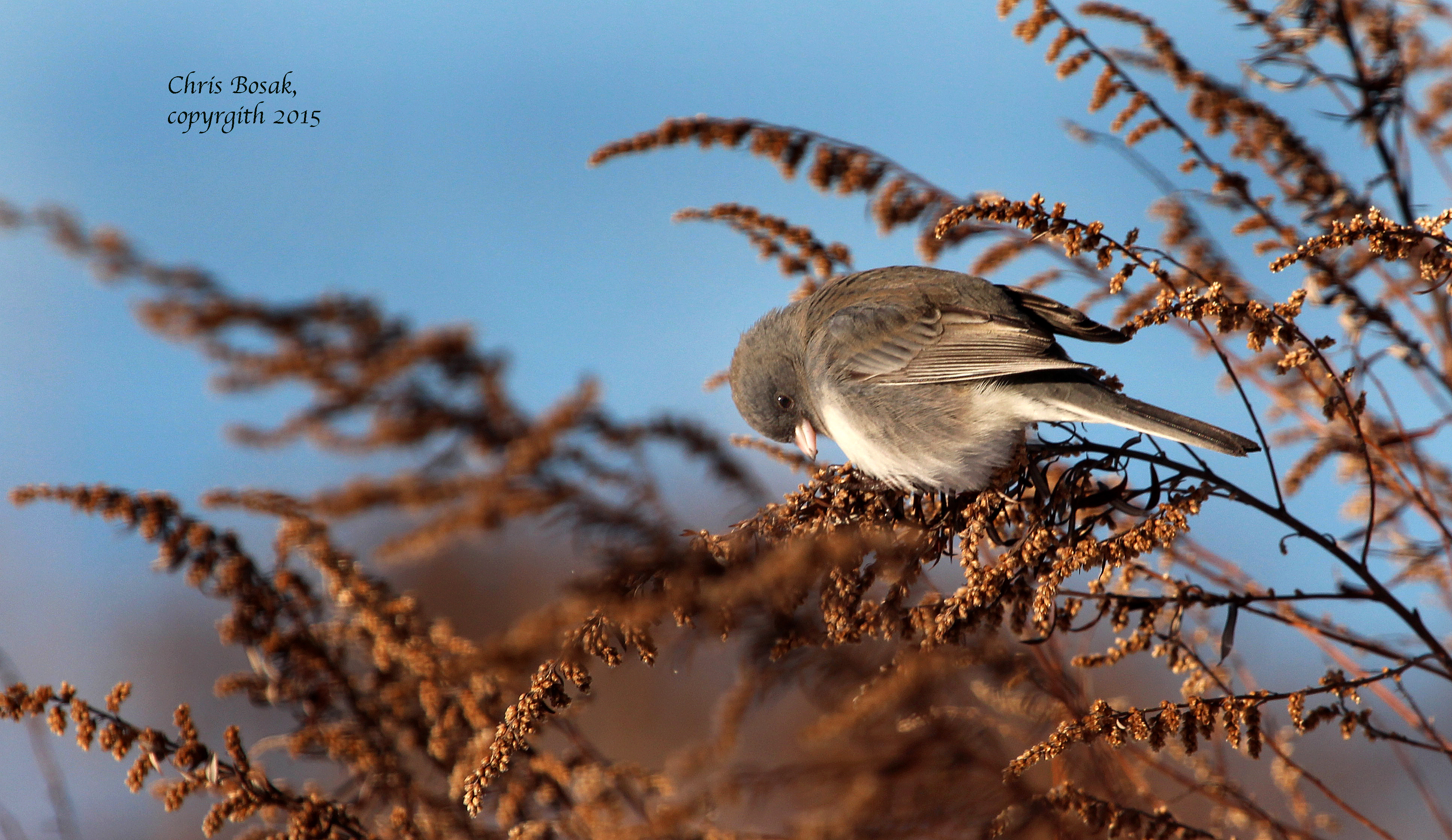
Quick quiz: Who’s got the seed?

A quick quiz for you as New England braces for another potential snowstorm coming up in the next few days.

There’s not much of the bird showing, but the bill may be a big enough clue. So what do you think? (Share this with your friends, too. See what they think?)

One more of the hawk

Photo by Chris Bosak A Red-tailed hawk at Weed Beach in Darien, Conn., January 2015.

Photo by Chris Bosak
A Red-tailed hawk at Weed Beach in Darien, Conn., January 2015.

I know I wrote in my first post about the Red-tailed Hawk that it would be a two-parter. I couldn’t resist, however, throwing this one up on the site, too. It’s a hawk’s world.

The Red-tailed Hawk under calmer conditions


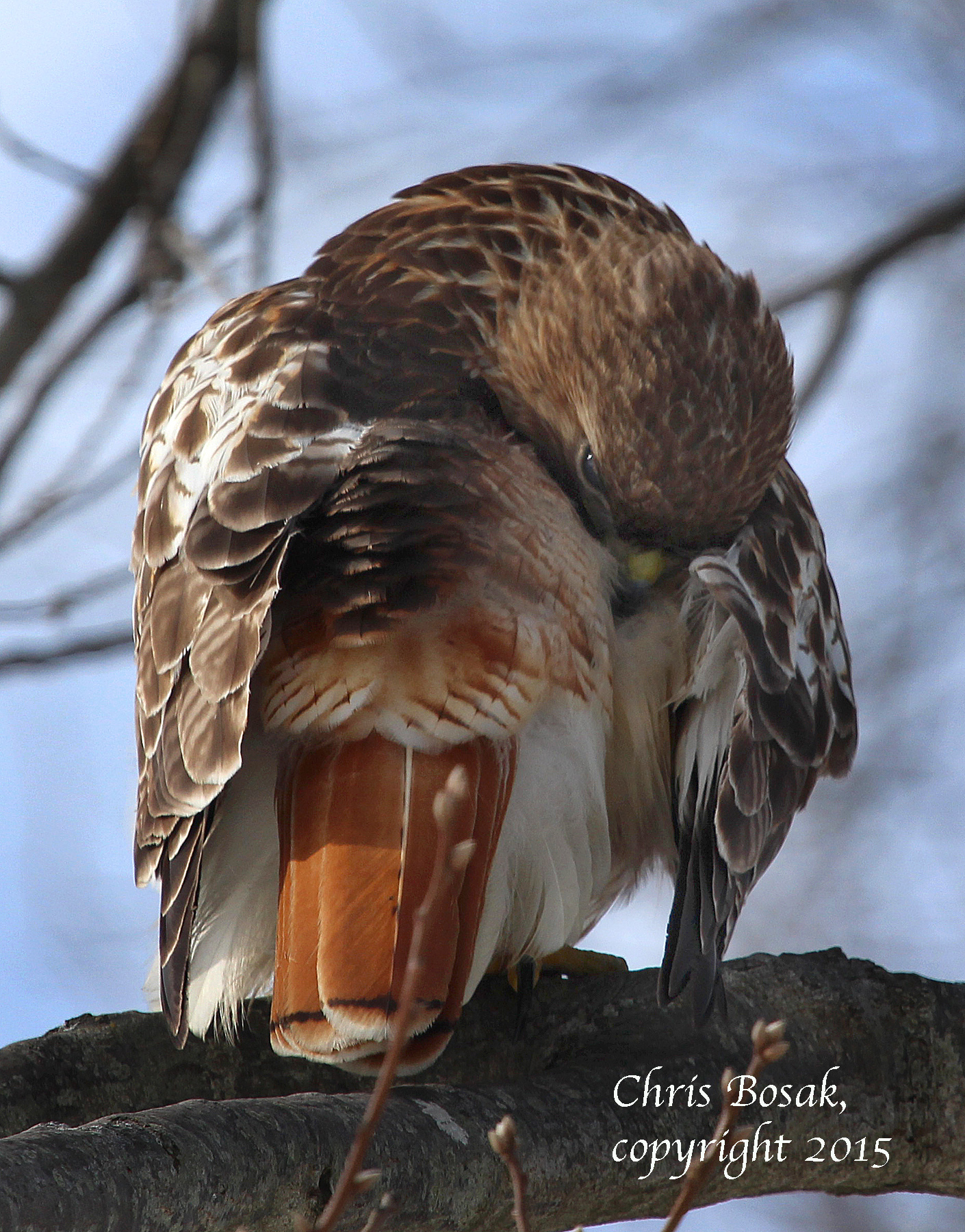
Photo by Chris Bosak A Red-tailed hawk preens at Weed Beach in Darien, Conn., January 2015.

Photo by Chris Bosak
A Red-tailed hawk preens at Weed Beach in Darien, Conn., January 2015.

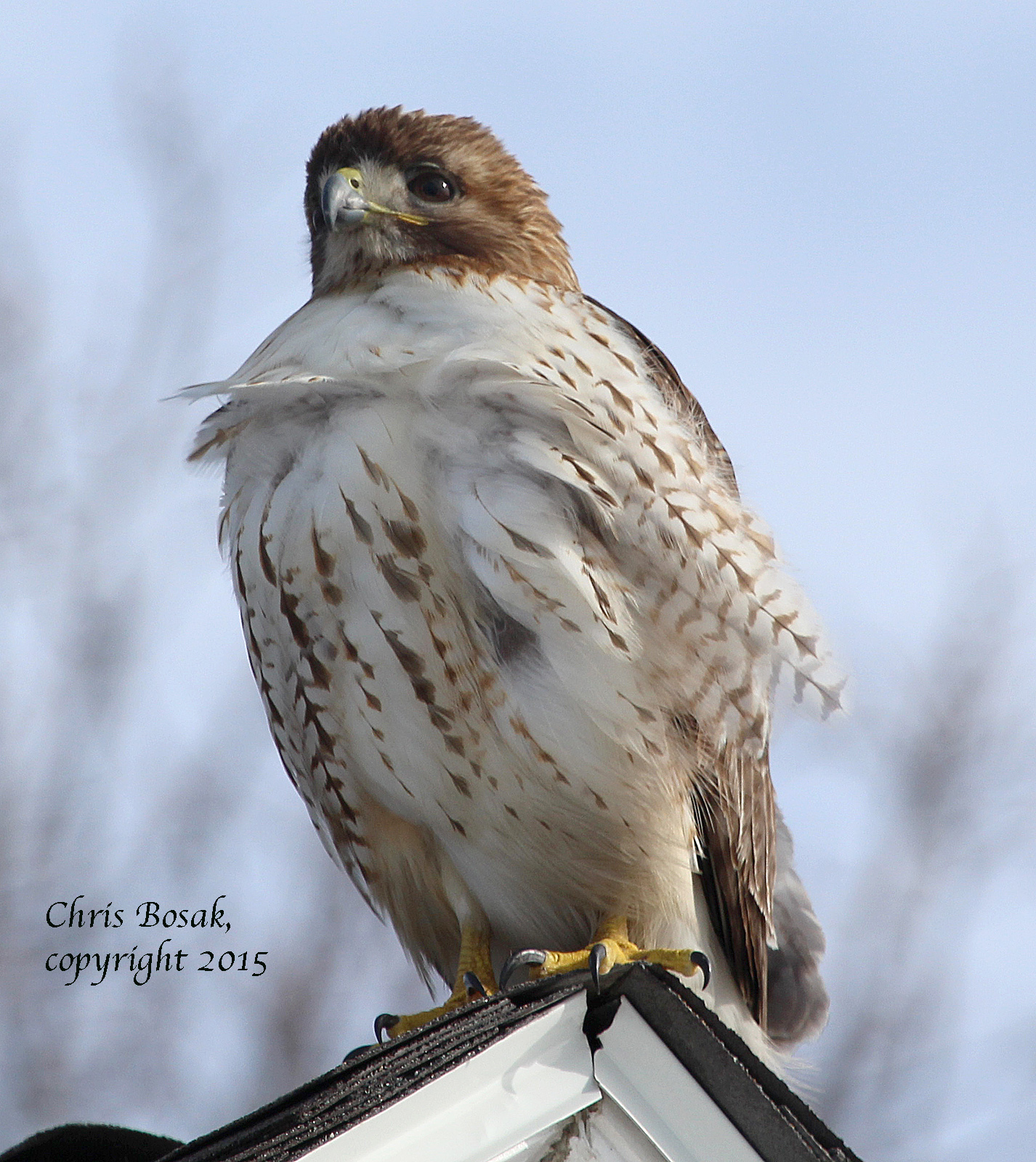
Here’s the second post about the Red-tailed Hawk I found at Weed Beach in Darien, Conn. the other day. The previous post explains the story, so here’s the photos of the impressive bird without the wind blowing its plumage.It is, however, preening and then looking back at me menacingly.

Photo by Chris Bosak A Red-tailed hawk at Weed Beach in Darien, Conn., January 2015.

Photo by Chris Bosak
A Red-tailed hawk at Weed Beach in Darien, Conn., January 2015.

Photo by Chris Bosak A Red-tailed hawk at Weed Beach in Darien, Conn., January 2015.

Photo by Chris Bosak
A Red-tailed hawk at Weed Beach in Darien, Conn., January 2015.

Red-tailed hawk in the wind

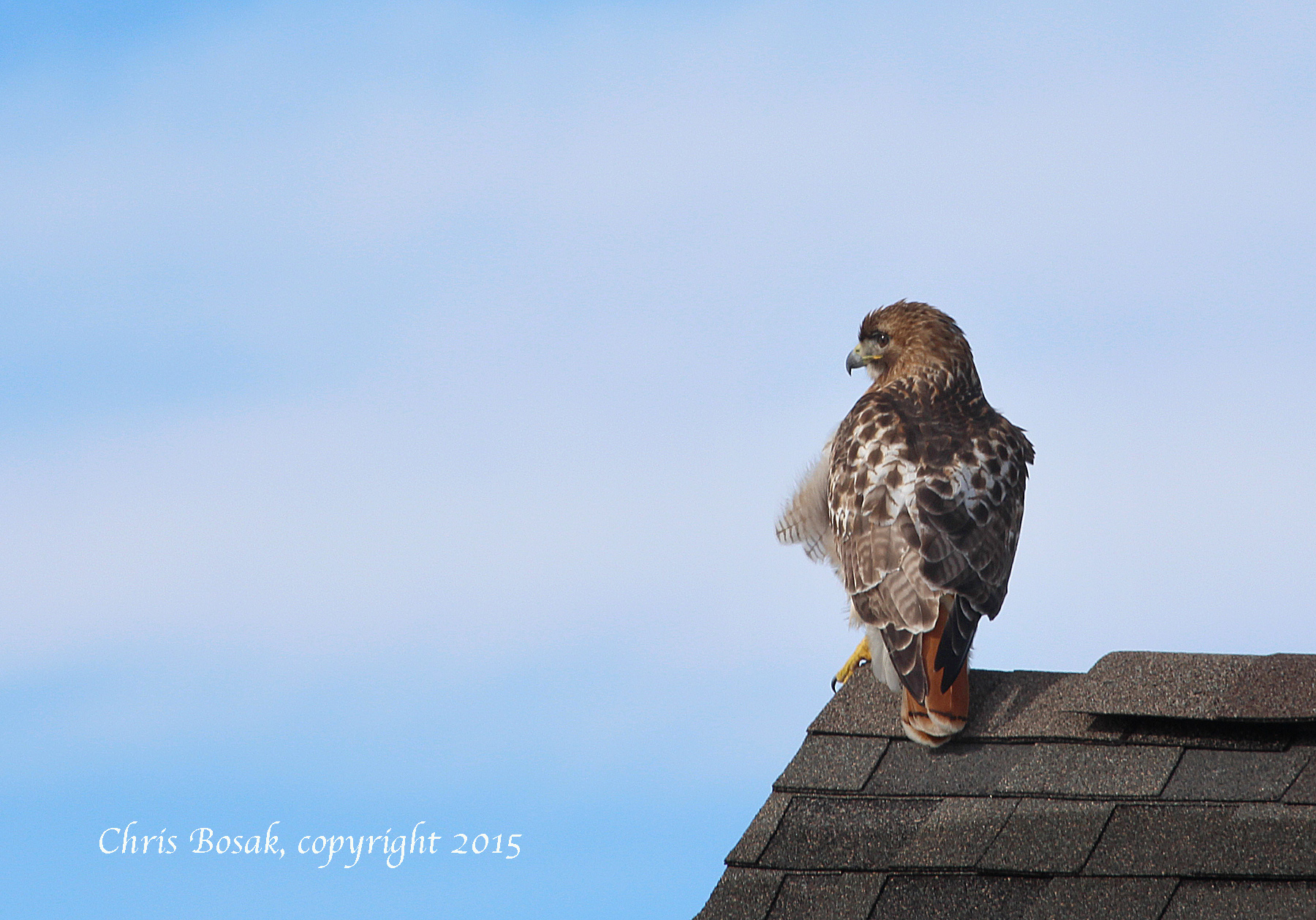
Photo by Chris Bosak A Red-tailed Hawk at Weed Beach in Darien, Conn., Jan. 2015.

Photo by Chris Bosak
A Red-tailed Hawk at Weed Beach in Darien, Conn., Jan. 2015.

Here’s the first of a two-part post about a Red-tailed Hawk I found at Weed Beach in Darien, Conn., last week.  These photos will show the hawk with gusts of wind blowing its plumage.

I was focused on a tree near the beach that had a White-breasted Nuthatch and a Downy Woodpecker in it. I thought I was getting good shots of the nuthatch, but when I checked the screen on my camera, the results were always subpar. I wasn’t sure what I was doing wrong, but I just wasn’t nailing it. Then I looked in an adjacent tree and spotted a much larger subject. Since I had been in that spot for several minutes, the hawk clearly did not mind that I was there. I gave up on the nuthatch and turned my attention toward the Red-tailed hawk.

I took several photos of the hawk in the tree and it eventually flew to a nearby structure where I was able to get a few more shots as the hawk seemingly watched a foursome play paddle tennis. The wind was whipping pretty good that day, making for some interesting shots of the hawk. The next posting (coming in the next day or two) will show the hawk under calmer conditions.

Photo by Chris Bosak A Red-tailed Hawk at Weed Beach in Darien, Conn., Jan. 2015.

Photo by Chris Bosak
A Red-tailed Hawk at Weed Beach in Darien, Conn., Jan. 2015.

Photo by Chris Bosak A Red-tailed Hawk at Weed Beach in Darien, Conn., Jan. 2015.

Photo by Chris Bosak
A Red-tailed Hawk at Weed Beach in Darien, Conn., Jan. 2015.

Here’s the grebe

Photo by Chris Bosak A Horned Grebe swims in Long Island Sound off the coast of Darien, Conn., Jan. 2015.

Photo by Chris Bosak
A Horned Grebe swims in Long Island Sound off the coast of Darien, Conn., Jan. 2015.

I mentioned in my last post about seeing a Horned Grebe on my quick trip to the beach the other day. Here’s a photo of the grebe I saw the other day in Long Island Sound from Weed Beach in Darien, Conn. Zoom in and check out its really cool red eye.

There are seven types of grebes in the U.S. and four are regularly seen in New England, although mostly only in the winter in their nonbreeding plumage _ so don’t expect to see a red neck on the Red-necked Grebe. The Pied-billed Grebe is the one most commonly seen in New England, while the Red-necked, Horned and Eared Grebes make occasional visits. The others _ Least, Western and Clark’s _ are not likely to be found in New England, but that doesn’t mean they never show up here.

The grebes we see here in the winter are in their much duller nonbreeding plumage, which can make identification tricky. Loons are another water bird that look much more dull in the winter. Loons are larger and stockier than grebes _ at least the grebes we see in New England.

I like talking about grebes because I get to say the word “grebe” over and over. It’s just one of those words that’s fun say out loud. Anyway, happy birding out there.

A sunny, cold winter’s day for a birdwatcher

Photo by Chris Bosak A junco looks for seeds on a dried up plant at Weed Beach in Darien, Conn., in Jan. 2015.

Photo by Chris Bosak
A junco looks for seeds on a dried up plant at Weed Beach in Darien, Conn., in Jan. 2015.

Photo by Chris Bosak An American Robin perches on a rock at Weed Beach in Darien, Conn., in Jan. 2015.

Photo by Chris Bosak
An American Robin perches on a rock at Weed Beach in Darien, Conn., in Jan. 2015.

I dropped off my third-grader at school and faced a decision heading out of the parking lot: Take a left to the beach and see what birds might be there; or take a right and basically start my work day earlier than I have to.

Of course I took the left. It’s a good thing, too, because there were some pretty cool birds down at the beach. Nothing too out of the ordinary, but some good photo opps of birds such as Continue reading

Project SNOWstorm seeks to unravel mysteries of the Snowy Owl

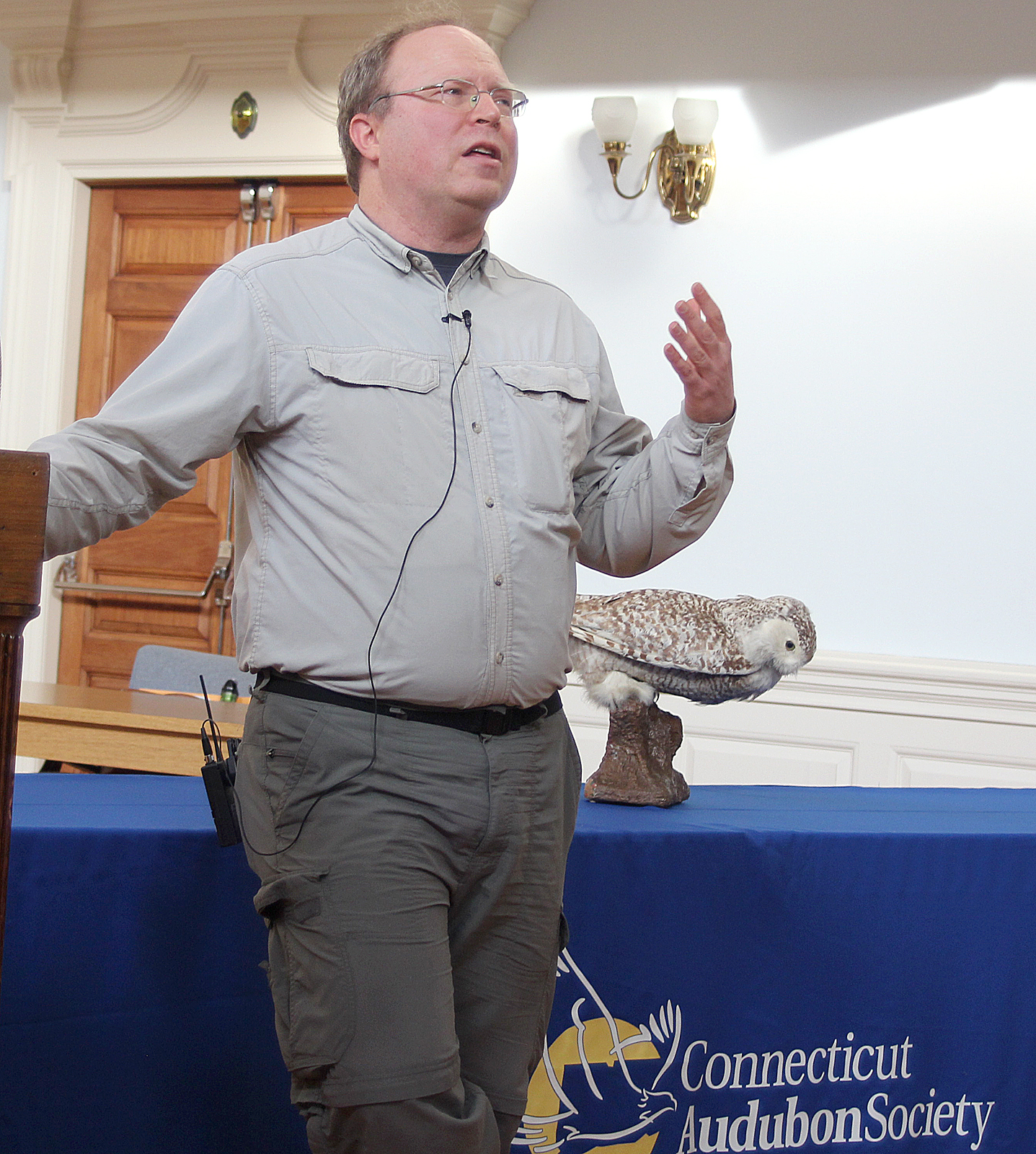
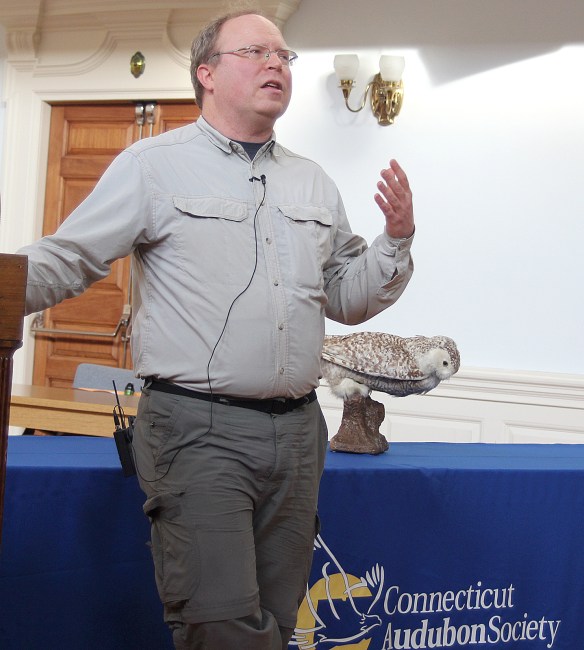
Photo by Chris Bosak Don Crockett of Project SNOWStorm talks about Snowy Owls at a presenation at Milford City Hall on Sunday, Jan. 25, 2015.

Photo by Chris Bosak
Don Crockett of Project SNOWStorm talks about Snowy Owls at a presentation at Milford City Hall on Sunday, Jan. 25, 2015.


(Here’s a little something I wrote up about a presentation on Snowy Owls I attended on Sunday. The event “The Hidden Lives of Snowy Owls” was presented by Don Crockett and sponsored by Connecticut Audubon.)

Last winter Snowy Owls enthralled the U.S. Even casual birdwatchers couldn’t help but be caught up in the historic irruption of the beautiful, yet powerful Arctic bird of prey.

The birds made their way down from their Arctic breeding grounds in record numbers during the winter of 2013-14. Birdwatchers flocked to beaches to try to find the owls. Unlike most winters, the birdwatchers were often successful in catching a glimpse of an owl.

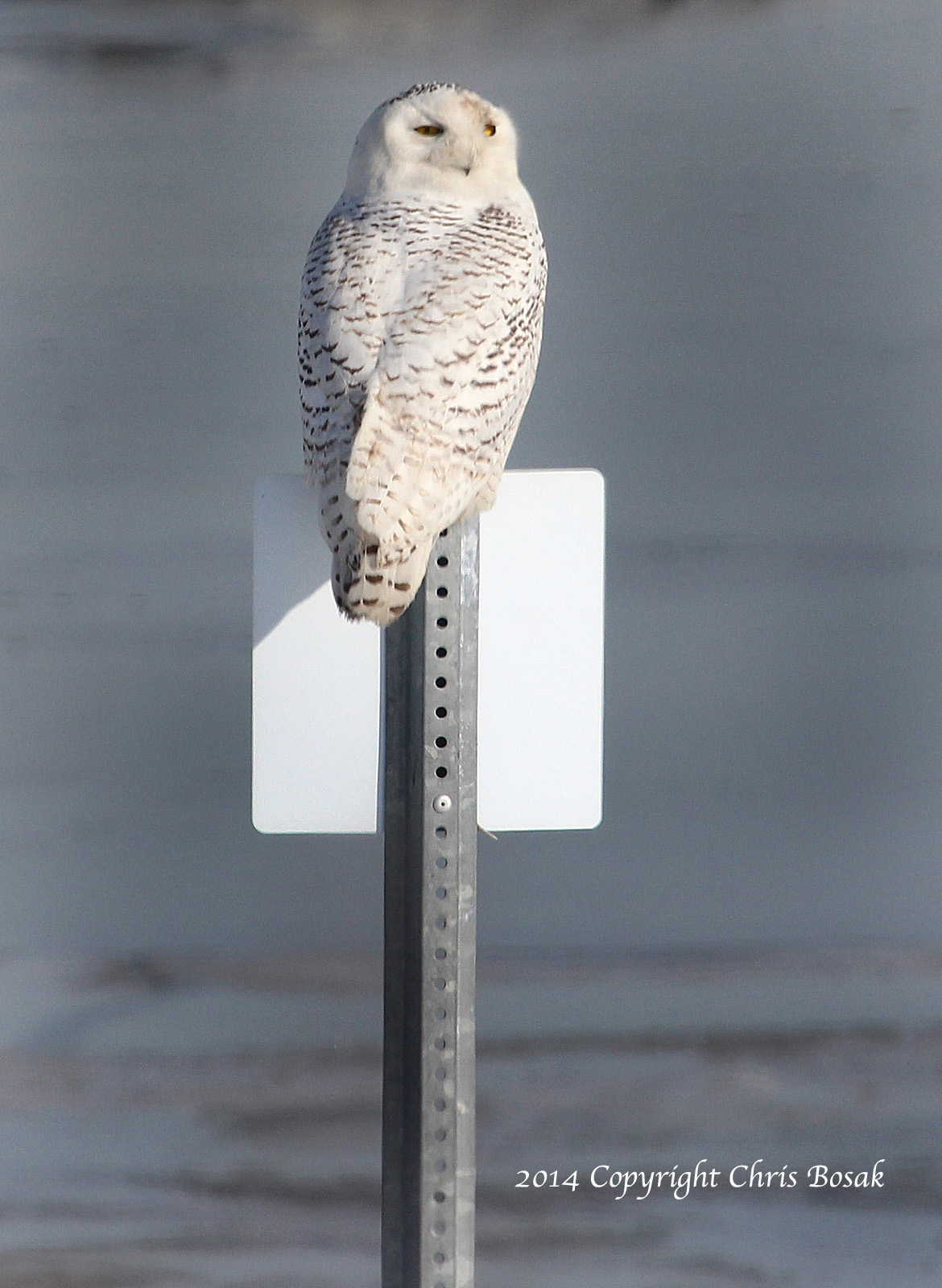
Photo by Chris Bosak A Snowy Owl sits on a sign at The Coastal Center at Milford Point in early March 2014.

Photo by Chris Bosak
A Snowy Owl sits on a sign at The Coastal Center at Milford Point in early March 2014.

While Snowy Owls can remain in one spot for hours on end, they do move around quite a bit, during the day and night. So where do the owls go when they aren’t under the watchful eye of birdwatchers? What do they do at night when even the best spotting scope can’t keep track of their whereabouts?

Information about what Snowy Owls do when they come down to the United States is valuable because it gives us a better understanding of these mysterious birds. As Arctic breeders, the more we know about them the better as we continue to grapple with the effects of climate change. They may offer clues as to the extent to which climate change is impacting our world.

To help gather more information on these owls, a group of volunteers started Project SNOWstorm last year. The project involves trapping Snowy Owls with a net and attaching a transmitter to each owl’s back using a harness. The transmitter is lightweight (about 40 grams) and the harness is designed to not effect an owl’s flight. The transmitters are solar-powered, which reduces the weight as no batteries are required, and use the cellular phone network as opposed to satellites. Using the Continue reading

Something to do on a snowy day: Learn the difference between hairy and downy woodpeckers

Photo by Chris Bosak A female Hairy Woodpecker clings to a suet feeder as snow falls in Jan. 2015.

Photo by Chris Bosak
A female Hairy Woodpecker clings to a suet feeder as snow falls in Jan. 2015.

If you live in New England you’re about to buried in snow so why not studies these photos and learn the differences between the hairy and downy woodpeckers. Beginning birders often confuse the two species. I know it took me a long time to be able to tell the two woodpecker species apart with confidence. Hopefully this posting will help some of you distinguish between the two.

The two species are hard to tell apart because they basically look exactly the same, hence the confusion. The major difference is the size. The downy is a dainty six inches, while the hairy is a beefy nine inches. That’s enough of a difference that you’d think it would be easy to tell one from the other. But if you’re new to this birding thing and don’t have a point of reference to judge size, it’s tough. I know, I’ve been there. Plus, like any birds, there can be size variations within a particular species. There can be smallish Hairy Woodpeckers and largish Downy Woodpeckers. So size can or can’t be a good way to tell them apart.

For me, the biggest difference is the size of the bill. In the most simple terms, downys have small bills and hairys have big bills. Beyond that, the bill of the downy just looks small and rather fragile. It isn’t fragile, of course, it’s quite strong. It just looks small and fragile. The bill of the Hairy Woodpecker, on the other hand, looks more sturdy and substantial. If one or the other lands on your feeder, check out the bill — dainty downy or hardy hairy.

Below is a side-by-side comparison. (Males of both species have a red patch on their heads. Females do not have have the red patch. Both birds below are females.)

Photos by Chris Bosak Side-by-side comparison of Hairy and Downy Woodpeckers' bills. Female Hairy on the left, female downy on the right.

Photos by Chris Bosak
Side-by-side comparison of Hairy and Downy Woodpeckers’ bills. Female Hairy on the left, female downy on the right.

A couple winter birds

Photo by Chris Bosak A female Downy Woodpecker perches next to a birdfeeder in New England, Jan. 2015.

Photo by Chris Bosak
A female Downy Woodpecker perches next to a birdfeeder in New England, Jan. 2015.

Yesterday (Saturday) coastal southern New England had its first significant snow of the year. And even so, it wasn’t that much of an event as we woke up to about four inches of snow and nothing else fell during the day (except some light rain off and on). But it was nice to see snow finally (I’m sure not everyone shares that opinion) and, for me, that always means checking out the feeding stations for photos opps.

I didn’t do so well in that department as the birds were surprisingly somewhat scarce. White-throated Sparrows were the most plentiful species, with 10 to 12 under the feeders at all times. A Downy Woodpecker showed up frequently, too. There were infrequent visits from cardinals, juncos and titmice. That’s about it. The Carolina Wren Continue reading

Carolina Wrens come a’singing — even in winter

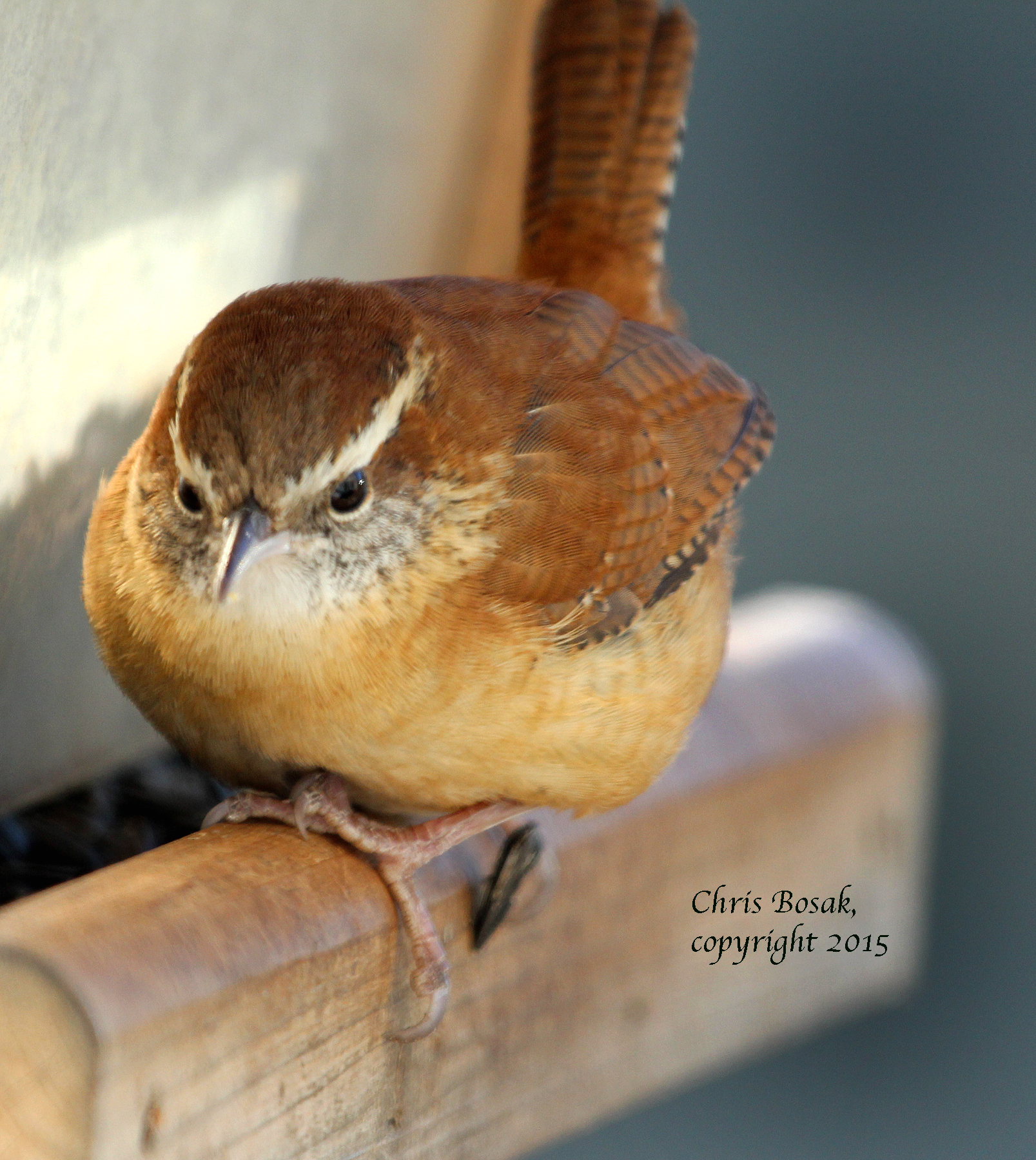
Photo by Chris Bosak A Carolina Wren perches on a feeder in New England in January 2015.

Photo by Chris Bosak
A Carolina Wren perches on a feeder in New England in January 2015.

I was sitting in my bedroom doing some work on the computer when I heard a familiar song behind me. It wasn’t coming from the clock radio. It wasn’t even that type of song. It was a bird song, of course, and it was being belted out richly by a Carolina Wren.

“Tea-kettle, tea-kettle, tea-kettle!” Loud and strong.

It was nice to hear the song. It’s been a long time since we’ve heard a lot of birdsong in New England. I’ve heard plenty of bird calls — non-melodic chips often coming from cardinals and White-throated Sparrows — but not a lot of songs. But this Carolina Wren was in full voice. Why? I’m not exactly sure. I’ve heard Carolina Wrens sing in the winter before, plenty of times. My guess is that it’s territorial posturing. That’s part of why birds sing in the spring, mostly over breeding territories. I think this wren was protecting his feeding station.

(Story continues below, with more photos, too.)

Continue reading