The brighter side of starlings

Photo by Chris Bosak European Starling visits feeding station in May, 2014.

Photo by Chris Bosak
European Starling visits feeding station in May, 2014.

Yes, European Starlings are overpopulated, outcompete native species for nesting sites, take over birdfeeding stations, destroy crops and really don’t belong in the United States in the first place, but … they sure can be a handsome bird in the breeding season, especially if the light hits them just right.

Starlings look markedly different from one season to the next. Their breeding plumage, seen above, features an array of dots, lines and colors, such as green, purple, blue and, of course, black.

I don’t often have good things to say about European Starlings, but this visitor to my feeder this morning at least temporarily softened my stance.

The story about how starlings ended up in the United States in the first place is very interesting. Here it is, from Wild Birds Unlimited:

“The European Starling was introduced into North America when the “American Acclimatization Society” for European settlers released some 80-100 birds in Central Park (New York City) in 1890-91. The head of this particular organization, Eugene Scheiffelin, desired to introduce all birds ever mentioned in the works of William Shakespeare.”
Read more by clicking here.


Look who’s back on the bridge (Peregrine Falcon)

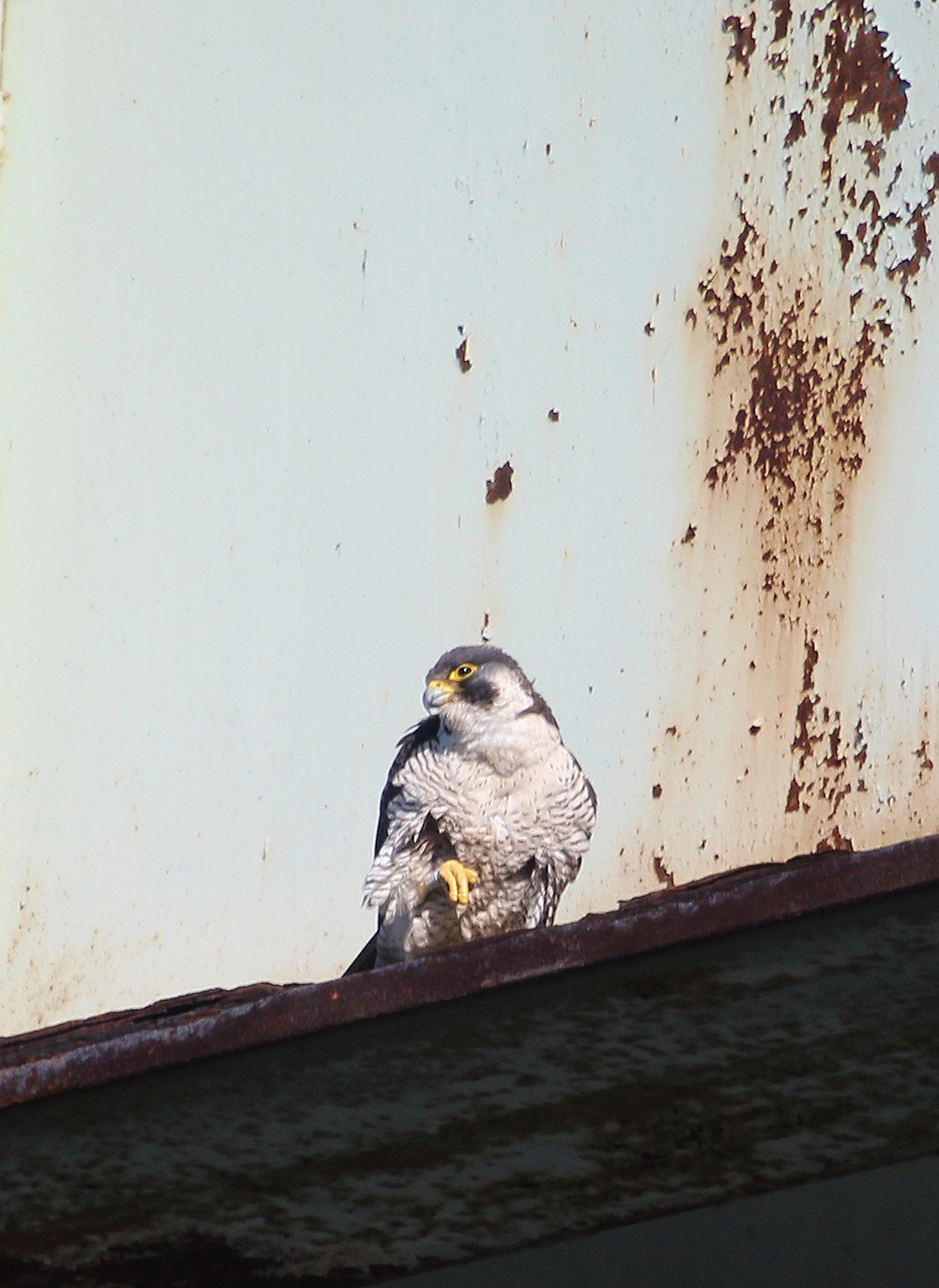
Photo by Chris Bosak Peregrine Falcon on Yankee Doodle Bridge on I-95 in Norwalk, Conn., April 2014.

Photo by Chris Bosak
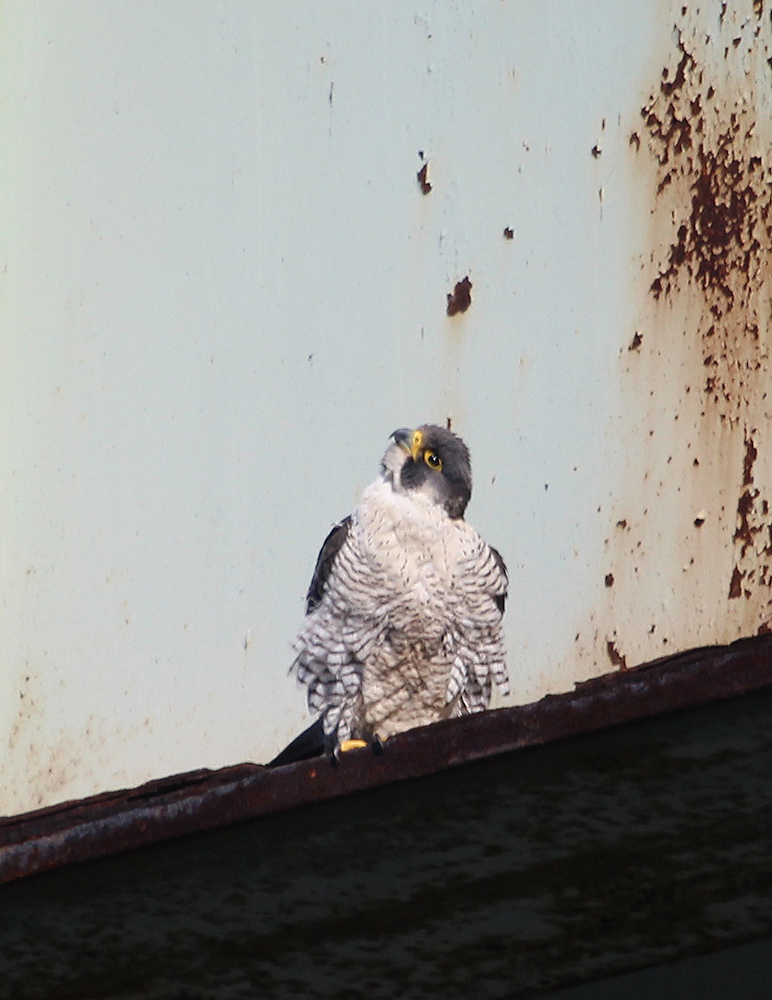
Peregrine Falcon on Yankee Doodle Bridge on I-95 in Norwalk, Conn., April 2014.

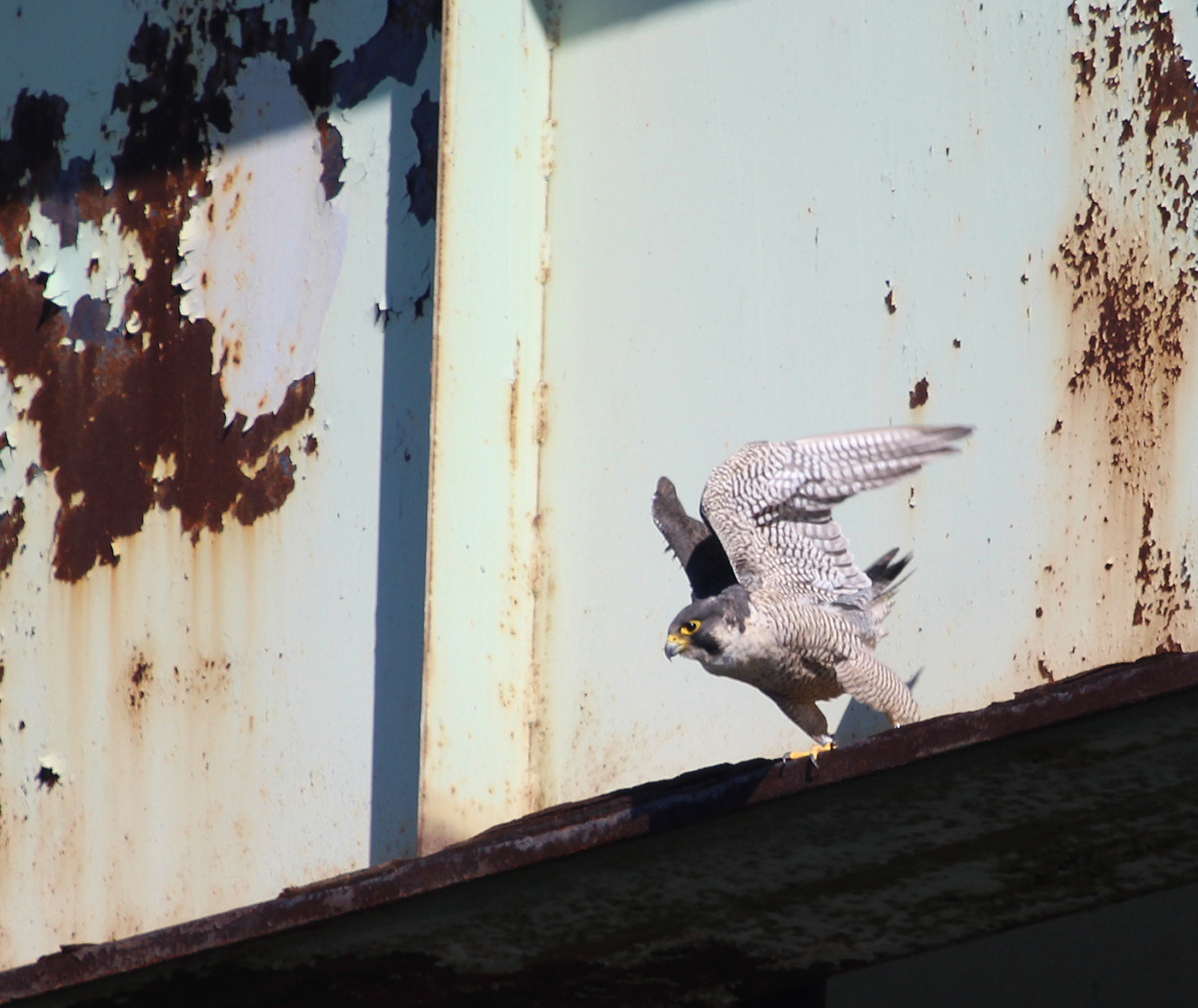
Two years ago a Peregrine Falcon pair nested and fledged two chicks under the bridge right next to where I work in Norwalk, Conn. I was lucky enough to see the birds every day as they flew, hunted and screeched around the Yankee Doodle Bridge (I-95).

The birds do not nest there anymore — which surprises me because they were successful when they tried two years ago — but they do come to the bridge fairly often. It’s a rare week that I don’t see them and typically it’s a few times a week I see them perched on the bridge. I like my work anyway, but seeing the falcons gives me another thing to look forward to as I start my days.

What birds brighten your days? Comment or email me to let me know.

More photos:

Photo by Chris Bosak Peregrine Falcon on Yankee Doodle Bridge on I-95 in Norwalk, Conn., April 2014.

Photo by Chris Bosak
Peregrine Falcon on Yankee Doodle Bridge on I-95 in Norwalk, Conn., April 2014.

Photo by Chris Bosak Peregrine Falcon on Yankee Doodle Bridge on I-95 in Norwalk, Conn., April 2014.

Photo by Chris Bosak
Peregrine Falcon on Yankee Doodle Bridge on I-95 in Norwalk, Conn., April 2014.

First warblers of the season

Photo by Chris Bosak Yellow-rumped Warbler in Selleck's Woods, Darien, Conn., April 2014.

Photo by Chris Bosak
Yellow-rumped Warbler in Selleck’s Woods, Darien, Conn., April 2014.

Typically a Pine Warbler is my first warbler of the spring, followed closely by a Palm Warbler. This year, with my time in the woods being limited by work and volunteer efforts monitoring shorebirds, I didn’t see my first warblers until April 24 in Selleck’s Woods in Darien, Conn.

Those warblers were Yellow-rumped Warblers, in their nice shiny, spring plumage. I see yellow-rumpeds a lot in the fall in their duller autumn plumage. It was nice to get the warbler season started, especially with a colorful one like the yellow-rumped. Hopefully the first of many.

What are you seeing out there? Comment or email me to let me know.

Photo by Chris Bosak Yellow-rumped Warbler in Selleck's Woods, Darien, Conn., April 2014.

Photo by Chris Bosak
Yellow-rumped Warbler in Selleck’s Woods, Darien, Conn., April 2014.

yellow rumped2

Piping Plover monitoring update

Photo by Chris Bosak Piping Plover at Coastal Center at Milford Point, April, 2014.

Photo by Chris Bosak
Piping Plover at Coastal Center at Milford Point, April, 2014.

So I woke up the boys for school, got them breakfast and rushed them to the car for drop off. I turned into the school parking lot: empty. No school. Scheduled “staff development” day. If I had a nickel for every time I’ve done that. Damn.

Oh well. I’ve committed to monitoring Piping Plovers and other shorebirds and, later, Least Terns on a volunteer basis on Monday mornings through the spring and summer. “Boys, we’re going shorebird monitoring.”

They didn’t object and Will was actually excited and wanted to carry the camera with him. I filled them in on what we were looking for and, more importantly, why we were looking for them. Piping Plovers are a threatened species and protecting their nesting areas is critically important.

We saw about 10 Piping Plovers today (Monday, April 21, 2014), including a pair copulating. “That’s how they make babies,” I told Andrew and told him how to spell ‘copulation.’ He was the official note taker for the day.  Wonder if he’ll try to use that word in one of his fifth-grade essays. It’s OK as long as he uses it correctly and age appropriately, I guess.

We also saw eight American Oystercatchers, a pair of Osprey and countless shells, which entertained the boys as much as the birds.

All in all, a good, educational day with the boys. Thank goodness school was out.

Photo by Chris Bosak A Piping Plover preens at Milford Point in spring of 2014.

Photo by Chris Bosak
A Piping Plover preens at Milford Point in spring of 2014.


Happy Easter weekend from BirdsofNewEngland.com

Photo by Chris Bosak A baby mallard stays dry during a rainfall by huddling under its mother's wing.

Photo by Chris Bosak
A baby mallard stays dry during a rainfall by huddling under its mother’s wing.

Here’s one of my favorite Mallard shots. The chick with its head sticking out was one of several tucked under the mother’s wing during a light rain. Even common subjects such as Mallards have their photographic moments. Happy Easter weekend from http://www.birdsofnewengland.com

A few late ducks — and other fowl sightings

Photo by Chris Bosak Horned Grebe at Cove Island Park in Stamford, CT, April 2014.

Photo by Chris Bosak
Horned Grebe at Cove Island Park in Stamford, CT, April 2014.

While watching a small flock of Ruddy Ducks at Cove Island Park in Stamford, CT, a Horned Grebe made an appearance. The grebe was in a transitional plumage and will look quite different a few weeks from now.

Most of our “winter ducks” have flown north already, but some still linger. The Ruddy Ducks were a good sighting and there are still several Red-breasted Mergansers around. Soon, It will be mallards and black ducks for southern New England.

The Ruddy Duck photos are below:

Continue reading

Purple Martins arrive in New England

Contributed photo Milan Bull, Senior Director of Science and Conservation at Connecticut Audubon, sets up the Purple Martin gourds at the Coastal Center at Milford Point on Monday, April 14, 2014.

Contributed photo
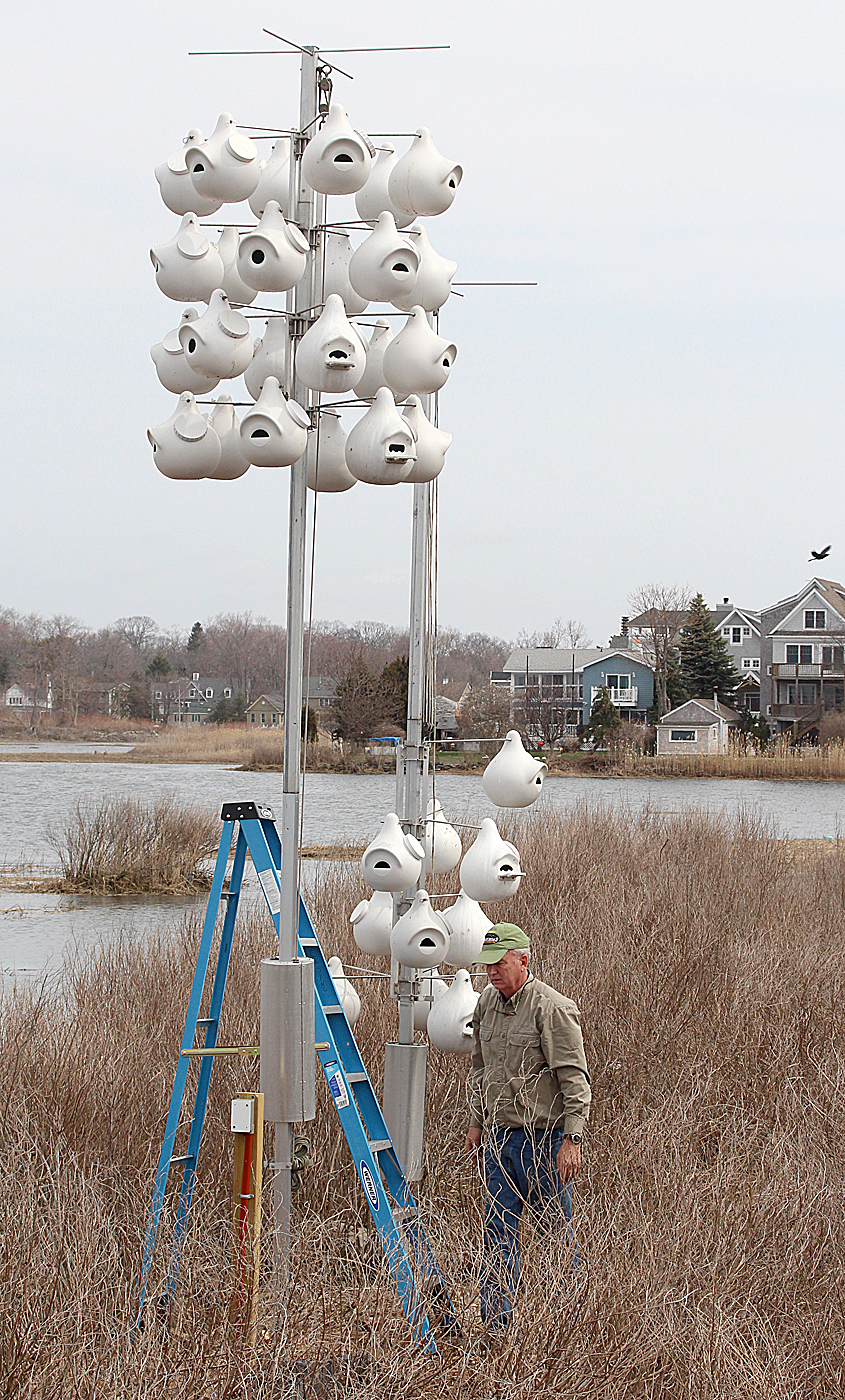
Milan Bull, Senior Director of Science and Conservation at Connecticut Audubon, sets up the Purple Martin gourds at the Coastal Center at Milford Point on Monday, April 14, 2014.

It’s Purple Martin season in New England! Last week I ran into David Winston and Patrick Duggan putting up the Purple Martin gourds at Cove Island Park in Stamford. On Monday, after finishing my volunteer Piping Plover monitoring duties at the Coastal Center at Milford Point (CT), I ran into Milan Bull of Connecticut Audubon putting up the gourds there.

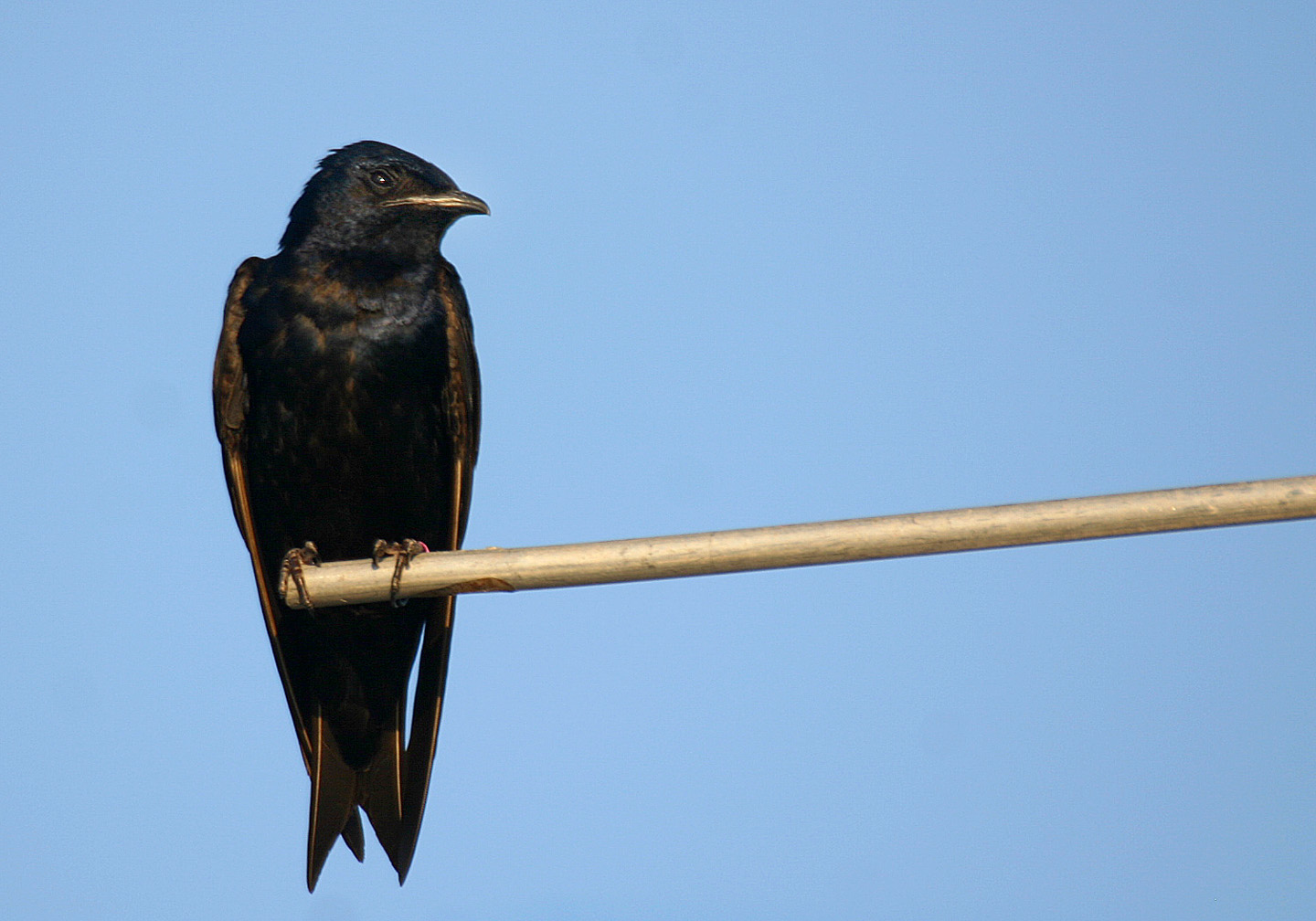
Purple Martin at Cove Island in Stamford.

Purple Martin at Cove Island in Stamford.

The Purple Martins had already arrived and many perched on the poles as Milan worked underneath to get the gourds ready. I even got my hands dirty and helped him out a bit (of course, he was nearly done by the time I got there.)

Purple Martins will return to the same site year after year, so if you were successful in getting Purple Martins last year, get your gourds or houses up soon. If you were not successful last year, or are trying for the first time this year, you can get the houses up now, or wait a few weeks. Younger birds seeking to start a new colony will arrive throughout the next several weeks, or even months. Just keep an eye on the gourds or houses for House Sparrows. Remove the nests if House Sparrows take up residence.

I’m far from an expert in attracting Purple Martins, so for more detailed information about Purple Martins, I’ll refer you to this site: http://www.purplemartin.org/

Thanks for visiting http://www.birdsofnewengland.com

David Allen Sibley talks about the Ivory-billed Woodpecker

In 2005, a bird sighting in Arkansas caused major waves in the birding world. It pitted experts against experts and beginners against beginners. The potential sighting was of an Ivory-billed Woodpecker, a large woodpecker long believed to be extinct. The sighting came along with a rough video, but not a clear enough one to answer any questions definitively. In fact, the video only separated the sides even more.

One of the skeptical experts was David Allen Sibley, who visited The Hour offices last month and I couldn’t resist asking his thoughts on the subject. The alleged sighting came in 2005, but the debate still rages on. Here are Sibley’s thoughts on the matter.


Just a few gratuitous Killdeer photos

Photo by Chris Bosak A Killdeer at a cemetery in Darien, CT, April 2014.

Photo by Chris Bosak
A Killdeer at a cemetery in Darien, CT, April 2014.


I’ve always liked Killdeer. They depend on large, flat open spaces to lay their eggs. As that habitat disappears, Killdeer have proven to be very resourceful. I’ve seen Killdeer nests (really just a small depression in the ground) in places such as parking lots, ball fields and cemeteries. These guys I photographed this week at a cemetery in Darien. I have plenty of Killdeer shots already, but I couldn’t resist.

To add in one fact about Killdeer to make this post at least a little informative — they are one of the species that will use the “broken wing” tactic to keep predators away from their eggs and young. As a predator (or unwitting human) approaches the nest, the parent will walk away from the eggs to divert the attention. To keep the interest of the predator the adult Killdeer will pretend it has a broken wing and limp along the ground. When the predator is sufficiently away from the nest, the adult will fly away, leaving the predator dumbfounded and hungry.

One more quick fact: Killdeer are shorebirds, and are indeed found along the shore at times, but are usually found far from the shore.

Thanks for visiting http://www.birdsofnewengland.com

Photo by Chris Bosak A Killdeer at a cemetery in Darien, Conn., April 2014.

Photo by Chris Bosak
A Killdeer at a cemetery in Darien, Conn., April 2014.

Some ducks still hanging on in southern New England

Photo by Chris Bosak Greater Scaup in Norwalk Harbor, March 2014.

Photo by Chris Bosak
Greater Scaup in Norwalk Harbor, late March 2014.

April, for me anyway, is a bittersweet month for birdwatching. I love watching ducks, so the period from when the “winter ducks” arrive in fall to the time they depart in the spring is perhaps my favorite time of year for birdwatching. Well, that time in spring is approaching. The ducks _ other than mallards and a few others _ will soon depart southern New England for their breeding grounds up north.

The flip side of that, of course, is that the songbirds, shorebirds, birds of prey and other spring migrants will be here soon (if they haven’t arrived already.)

I’ve been seeing fewer and fewer ducks at my normal haunting grounds over the last week or so. Remember my post last week when a Redhead shared a pond with Hooded Mergansers, Ring-necked Ducks and Wood Ducks? Well, that pond is now vacant. No winter ducks or any other ducks for that matter. I’m sure the mallards and hopefully some Wood Ducks will return. But the other ducks will likely not be seen there for another seven or eight months.

Long Island Sound and its harbors are slowing down, too, but not shutting down. I saw a few Long-tailed Ducks, Bufflehead, Red-breasted Mergansers and Greater Scaup on a recent visit to Norwalk Harbor _ but not in the numbers that I saw them just a few weeks ago. In a few more weeks, only a few straglers will be left _ until next fall, that is.