Photo by Chris Bosak
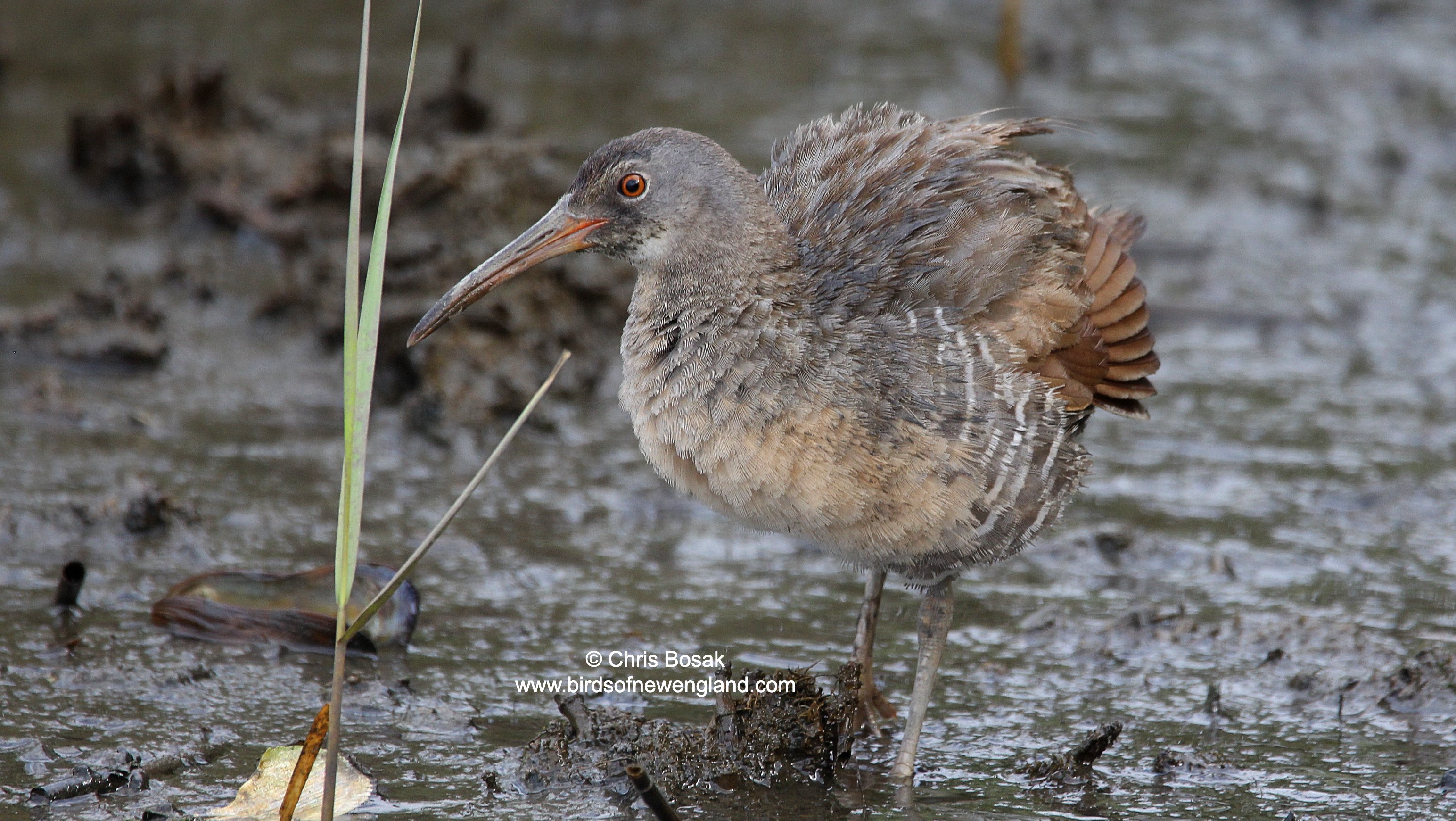
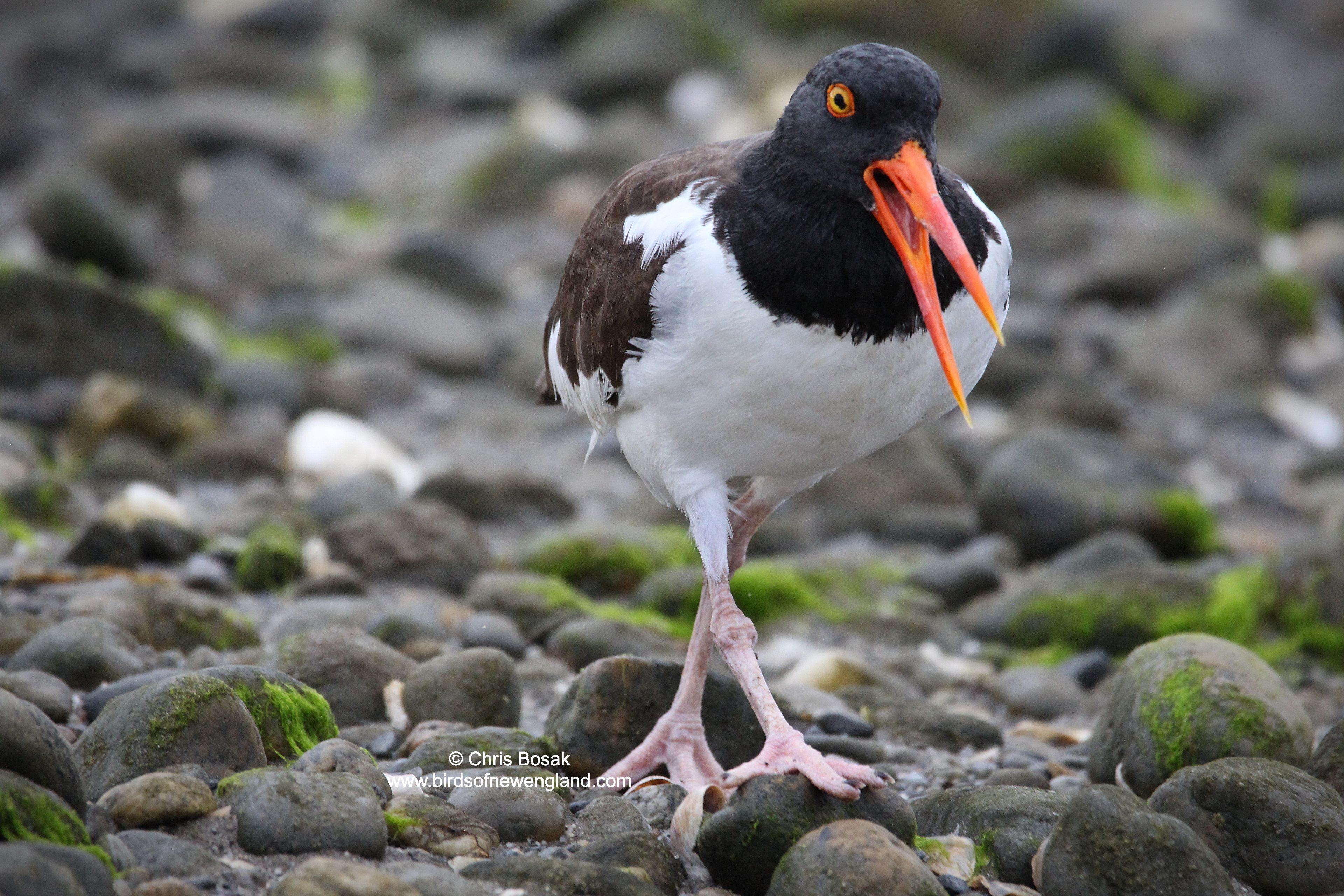
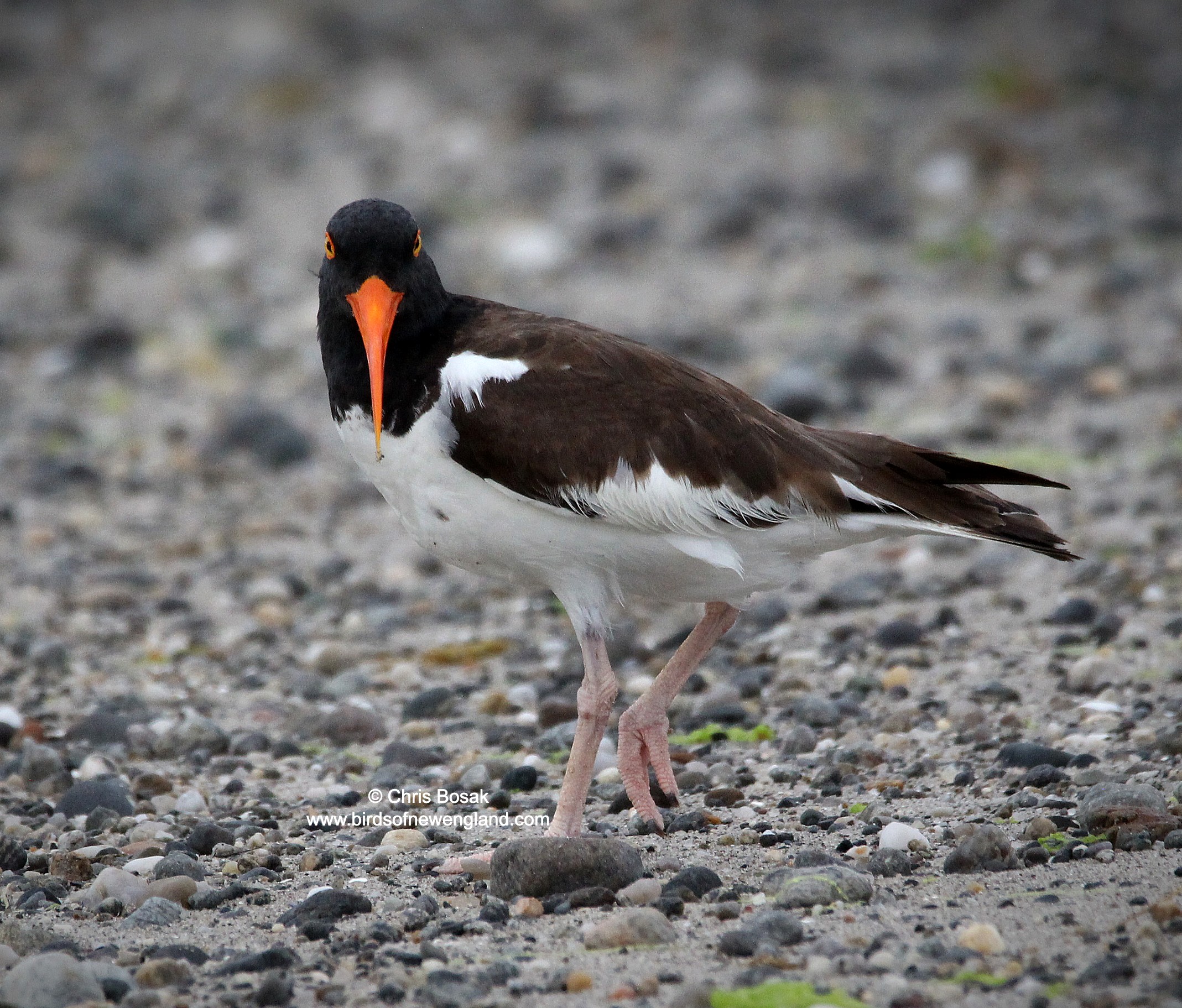
American oystercatcher, Milford, Connecticut, summer 2025.
Following up on yesterday’s post, here are a few more American oystercatcher photos. I find both of these photos rather humorous. The top photo looks like an unhappy customer storming away from the counter. The bottom photo looks like an oystercatcher giving someone the evil eye.
Photo by Chris Bosak
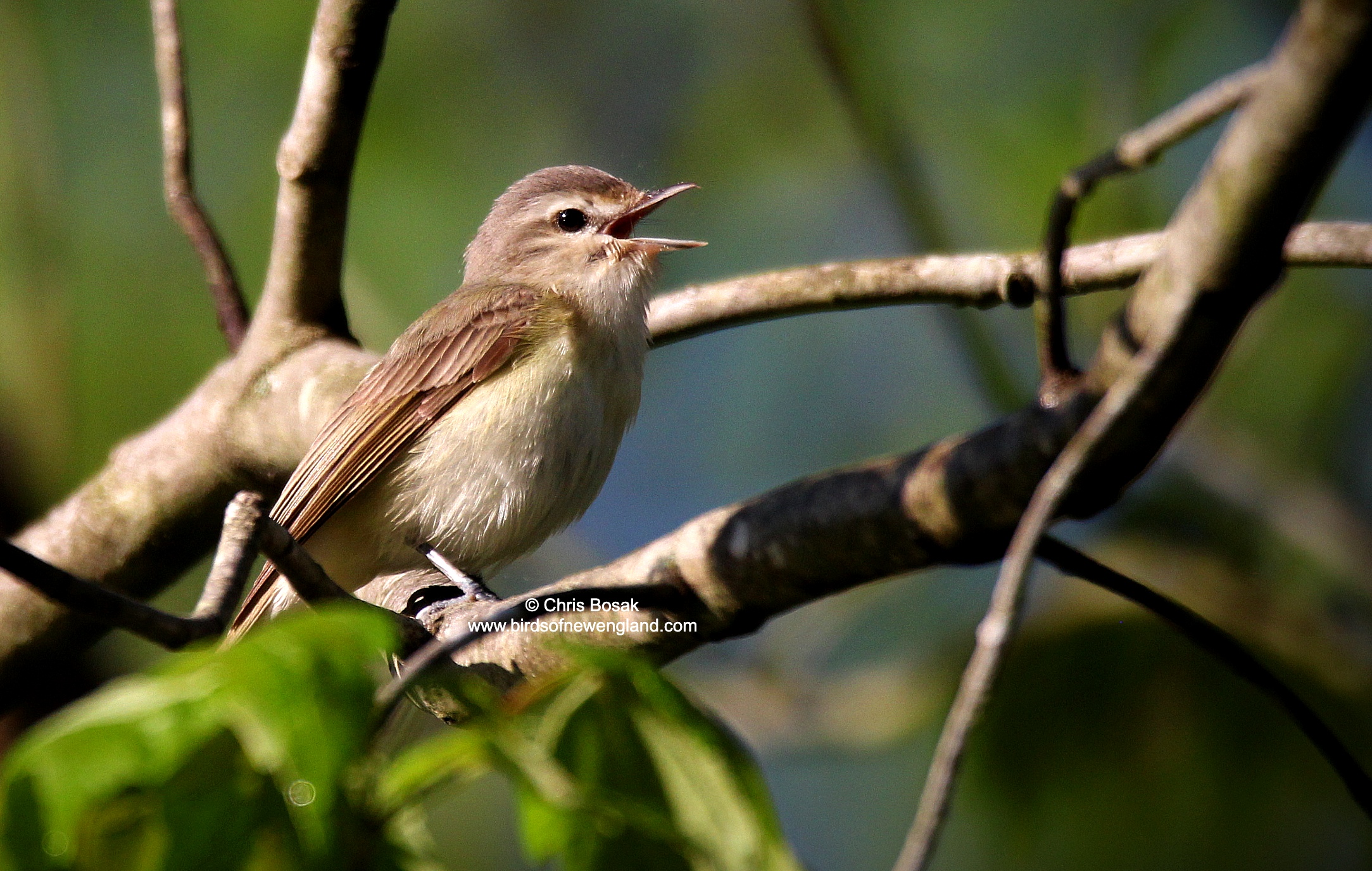
A warbling vireo sings from a branch in New England, spring 2025.
It’s funny how you can still discover new things after so many years.
I’m sure that applies to most hobbies, but it certainly applies to birdwatching. I have only recently “discovered” the warbling vireo. The small, loquacious bird, of course, has been around for far longer than I have been birdwatching, but I am only recently taking notice of it.
Part of the reason I may not have paid it much mind previously is that it is a small, fairly nondescript bird that typically hangs out in the middle to upper branches among the leaves. It is not like some birds that take an obvious perch somewhat low in the trees or brush and are easily found on a birdwalk.
Over the last couple of years, however, I have come to know warbling vireos not only because the males sing constantly, but I am finding them almost everywhere I go in the spring.
Photo by Chris Bosak
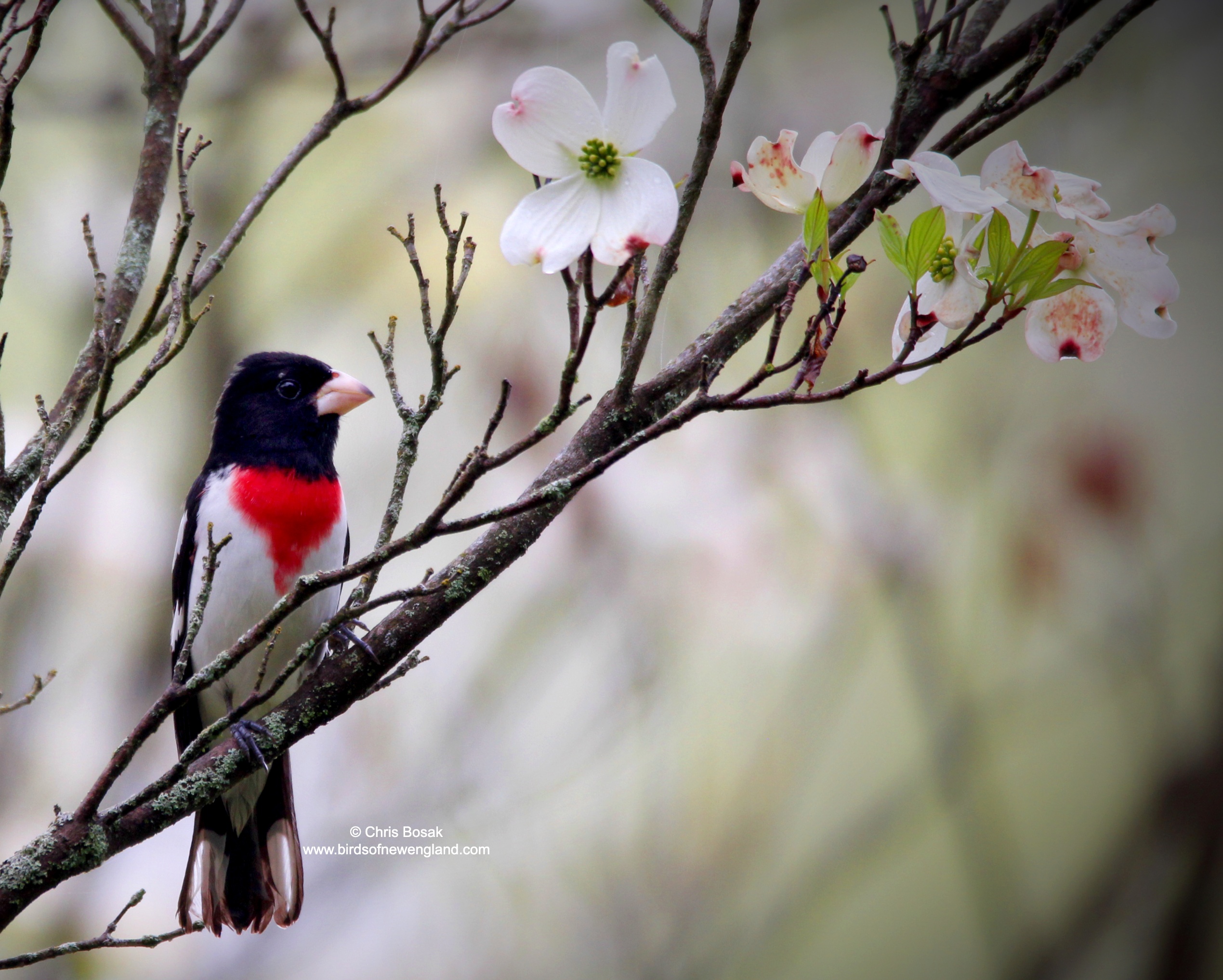
A rose-breasted grosbeak perches in a dogwood tree, New England, spring 2025.
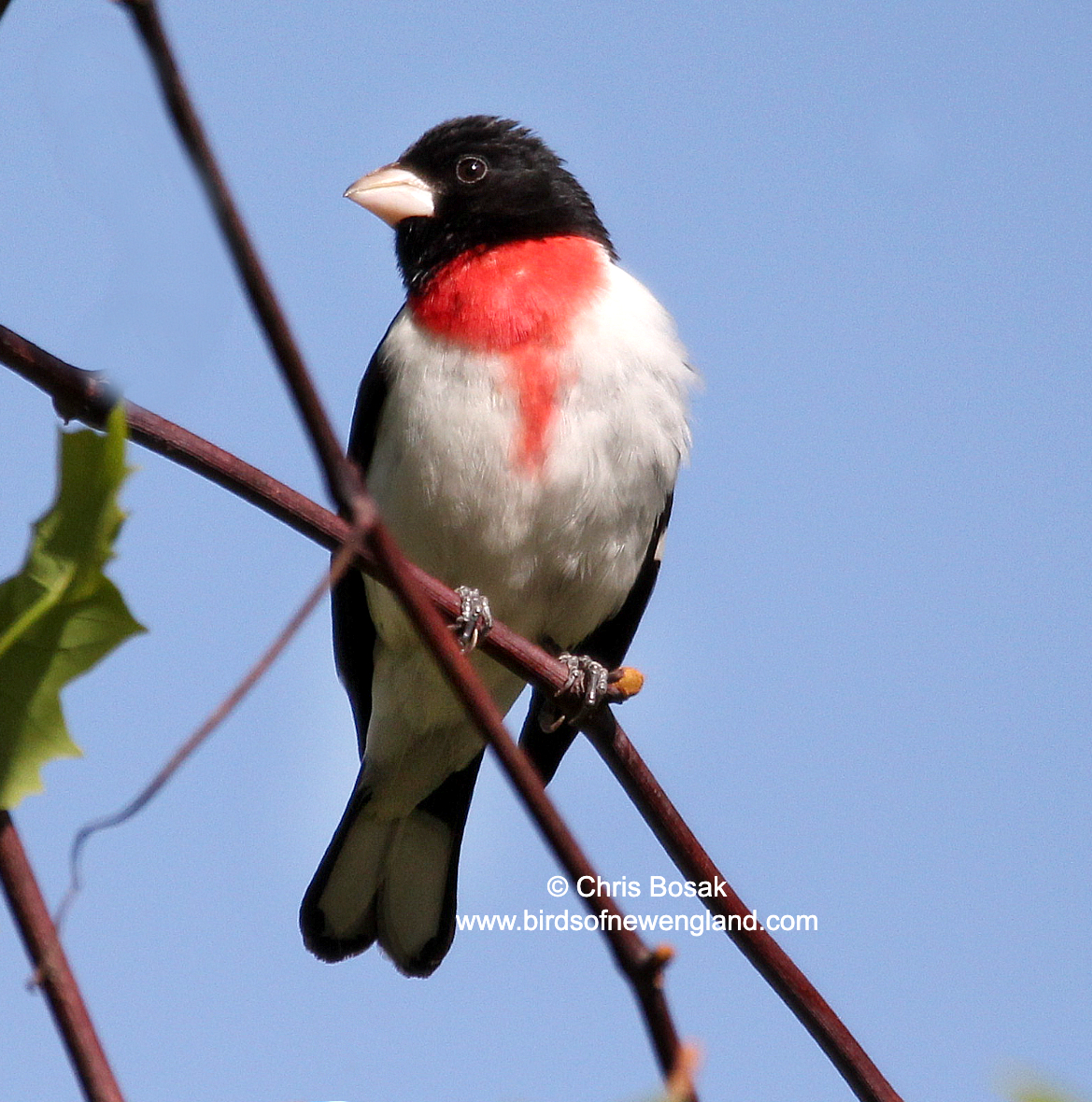
Yesterday, I used a photo of a rose-breasted grosbeak for my Singing in the Spring series. Today, I’m including a few bonus shots of a male rose-breasted grosbeak. You gotta love spring migration.
Photo by Chris Bosak
Rose-breasted grosbeak, New England, spring 2025.Photo by Chris Bosak
A rose-breasted grosbeak perches in a dogwood tree, New England, spring 2025.
Photo by Chris Bosak Lesser scaup drake in a river bay in New England, March 2025.
Scaup congregate in large numbers off the coast of Long Island Sound and its tributary rivers during the winter months. The flocks can be several hundred individuals strong, including drakes and hens. On occasion, a redhead may be found within the flock. Greater and lesser scaup are commonly seen in large numbers throughout New England in the winter.
Photo by Chris Bosak
Northern pintail pair at a pond in New England, March 2025.
The northern pintail is the next fowl up for birdsofnewengland’s Duck Week, a very unofficial declaration made by me because I have a lot of recent duck photos that need to be shared. Pintail drakes are one of the most handsome ducks we have in New England. If you missed the first Duck Week post, click here to meet the hooded merganser.
Photo by Chris Bosak
Male hooded merganser in New England, March 2025.
Welcome to Duck Week, birdsofnewengland.com’s very unofficial declaration to celebrate the spring duck migration. Duck Week will be a collection of duck photos I have snapped over the last few weeks. Now seems like a good time, as I’m starting to see fewer ducks as they make their way north to their breeding grounds.
I’ll start with the hooded merganser, one of my favorite birds of all time. I saw a ton of hooded mergansers this late winter/early spring. Look for them in fresh or brackish water, including relatively small bodies of water.
Photo by Chris Bosak
A horned lark at a Connecticut beach, February 2025.
I came across these horned larks during a recent walk along a beach in southern Connecticut the other week. Larks and buntings are often seen during the winter along the Long Island Sound coast. I’m yet to get a quality photo of one with its “horns” raised. Until then, enjoy these photos.
Photo by Chris Bosak
An American robin eats border privet berries in New England, January 2025.
I wrote a few weeks ago about robins being the frontrunner for the Bird of Winter. Click here to find out what that even means. The photo I ran with it showed a robin eating border privet berries. Separately, I also wrote recently about my fascination with photographing birds eating berries. Click here for that one.
Well, here are more photos of those robins eating berries.
Photo by Chris Bosak
An American robin eats border privet berries in New England, January 2025.Continue reading →